

According to the WHO, there is currently no vaccine or specific treatment for the Nipah virus.
Nipah virus is a dangerous infectious disease transmitted from animals to humans, with a high mortality rate of up to 75%, and according to the WHO, there is currently no vaccine or specific treatment.
What is Nipah virus disease?
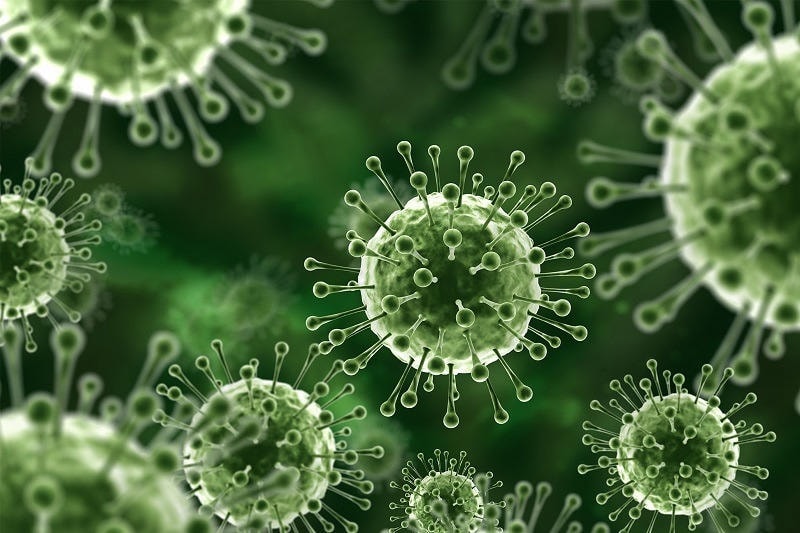
Nipah virus disease is a dangerous infectious disease caused by the Nipah virus (scientific name Henipavirus nipahense), a zoonotic virus, in which fruit bats of the Pteropodidae family are identified as the natural host of the virus in the wild, according to the World Health Organization (WHO).
Nipah virus not only causes illness in humans but can also infect and cause outbreaks in many livestock species such as pigs, cattle, goats, horses, and cats, thereby increasing the risk of transmission to humans and causing serious economic damage to the livestock industry, especially in South and Southeast Asian countries.
In humans, Nipah virus infection can lead to mild to very severe illness, including acute respiratory infection, encephalitis (brain edema), serious neurological disorders, and death, with outbreaks recorded almost annually in Bangladesh and India, according to WHO epidemiological surveillance data.
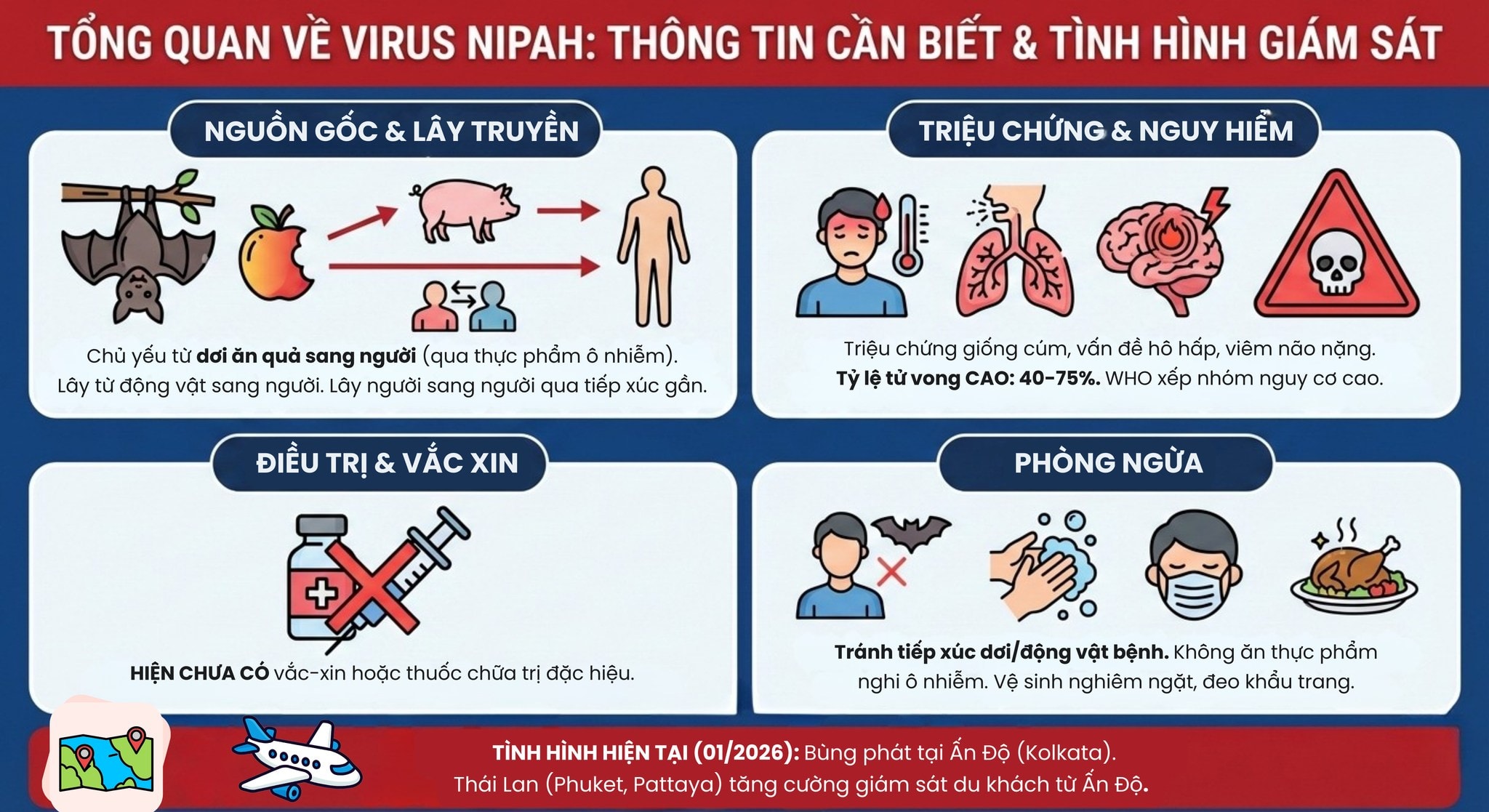
Nipah virus can be transmitted through multiple routes, including direct contact with infected animals, consumption of contaminated food (typically raw date sap or fruit bitten by bats), and person-to-person transmission through close contact with bodily fluids.
The level of danger posed by the Nipah virus.
According to the WHO, the Nipah virus has a very high mortality rate, ranging from 40% to 75%, depending on the strain, the time of detection, local healthcare capacity, and the underlying health status of the infected person, classifying Nipah as a high-risk pathogen for global public health.
The UK's Health Security Agency says that around 20% of patients who survive Nipah virus infection face long-term neurological sequelae, including chronic seizures, cognitive impairment, and changes in behavior or personality.
Notably, some rare cases have been reported where encephalitis may develop months or years after infection, due to viral reactivation within the body, increasing the complexity of long-term monitoring and treatment.
Symptoms of Nipah virus disease
According to the WHO and the US CDC, the incubation period of the Nipah virus typically lasts from 4 to 14 days after exposure, during which the disease begins with nonspecific symptoms such as fever, headache, and fatigue, which are easily mistaken for common viral infections.
After the initial stage, patients may experience respiratory symptoms such as cough, sore throat, and shortness of breath. In severe cases, the virus attacks the central nervous system, causing encephalitis with symptoms such as drowsiness, confusion, mental disorders, seizures, and can rapidly progress to coma within 24-48 hours.
The mortality rate is recorded as high, and even surviving patients are at risk of long-term neurological complications that severely impact their quality of life.
The history of the discovery of the Nipah virus.
Nipah virus is not a newly emerging pathogen, but was first discovered in 1999 after a severe outbreak of encephalitis among pig farmers in Malaysia and Singapore, according to internationally published epidemiological studies.
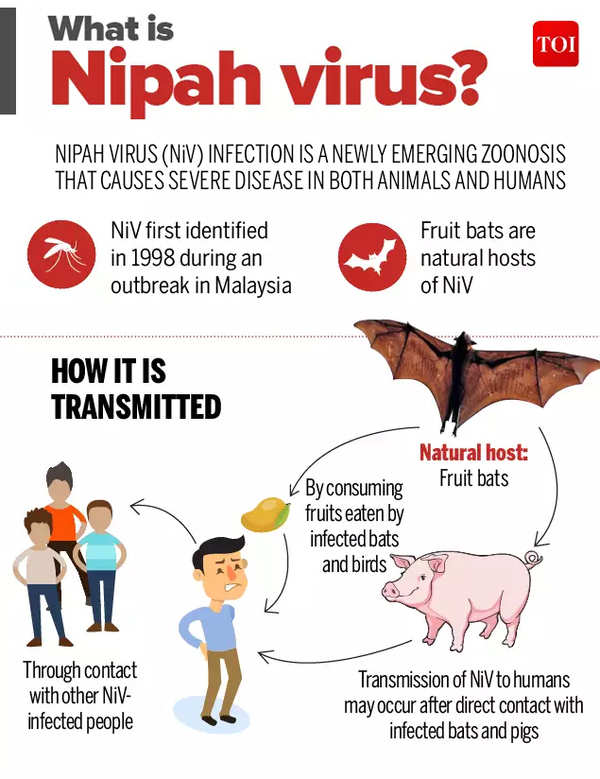
The majority of cases in the initial outbreak were directly linked to contact with infected pigs or pork products without protective measures, thus establishing Nipah as a dangerous virus capable of zoonotic transmission.
Since 1999, Malaysia and Singapore have not recorded any major outbreaks, while Bangladesh and India continue to experience scattered outbreaks, mainly linked to person-to-person transmission and contaminated food.
How does the Nipah virus spread from person to person?
According to the U.S. Centers for Disease Control and Prevention (CDC), the Nipah virus is transmitted from person to person primarily through close contact with bodily fluids such as saliva, nasal and throat secretions, respiratory secretions from coughing or sneezing, blood, and other excretions, especially in healthcare settings or in home care settings.
Unlike SARS-CoV-2 or measles viruses, the Nipah virus does not spread through the air over long distances and does not survive long in enclosed spaces, therefore the risk of infection from brief contact is relatively low.
WHO data shows that in Bangladesh, approximately 50% of infections between 2001 and 2008 were due to person-to-person transmission, mainly occurring during patient care without adequate protective measures.
Epidemiological studies estimate the basic reproduction number (R0) of the Nipah virus to be typically below 1, suggesting that it is unlikely to cause widespread outbreaks like influenza or COVID-19; however, its high mortality rate means each case carries significant risk.
Treatment and prevention of Nipah virus
Currently, according to the WHO and CDC, there is no vaccine or specific treatment for Nipah virus disease; treatment mainly focuses on controlling symptoms, supporting respiration, and treating neurological complications.
Since there is no specific treatment, the WHO emphasizes that prevention is the most important strategy, including limiting contact with bats and animals suspected of being infected, avoiding the use of fruit bitten by bats or raw date palm sap, and strictly implementing protective measures when caring for patients.
Raising public awareness, early epidemiological surveillance, and adherence to health recommendations are considered key factors in minimizing the risk of future Nipah virus outbreaks and spread.