

Spring arrives on the "rooftop" of western Nghe An.
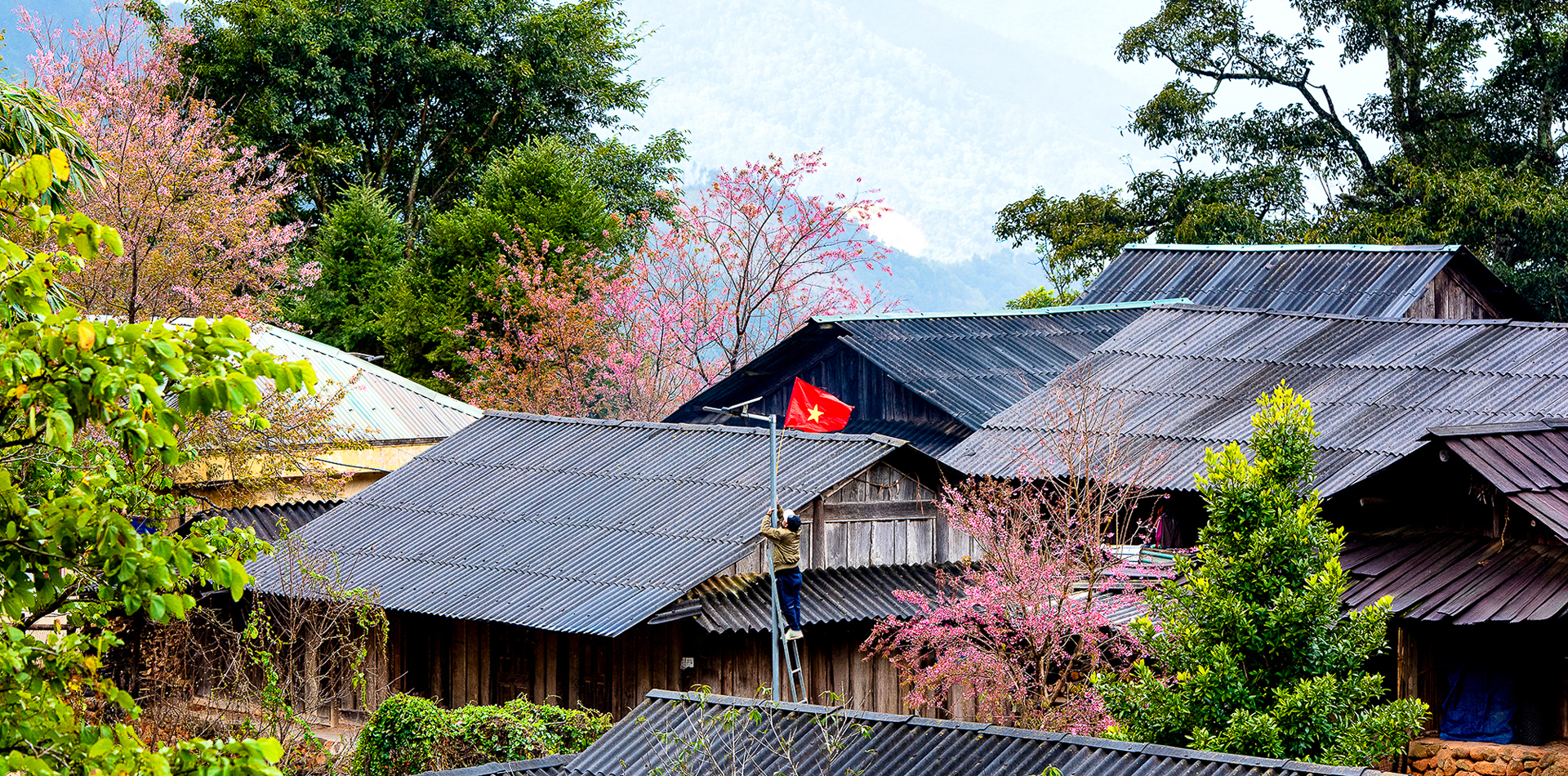
At the end of the year, while the mist still blankets the slopes of Pha Ca Tun and Huoi Moi, the Hmong villages in the "roof" of western Nghe An province enter spring. On the muddy slopes still bearing the marks of the flood, the villagers finish planting rice in the paddy fields, repair their houses, go into the forest to gather dong leaves, pound sticky rice cakes, adjust their clothes, and play their flutes... Another Tet (Lunar New Year) is approaching, not with boisterous noise, but with warmth stemming from persistent efforts and the faith that has remained after hardship, amidst the vast, misty mountains.
.png)
*****
Thanh Phuc - Khanh Ly/Present:Hong Toai• February 7, 2026
*****
At the end of the year, while the mist still blankets the slopes of Pha Ca Tun and Huoi Moi, the Hmong villages in the "roof" of western Nghe An province enter spring. On the muddy slopes still bearing the marks of the flood, the villagers finish planting rice in the paddy fields, repair their houses, go into the forest to gather dong leaves, pound sticky rice cakes, adjust their clothes, and play their flutes... Another Tet (Lunar New Year) is approaching, not with boisterous noise, but with warmth stemming from persistent efforts and the faith that has remained after hardship, amidst the vast, misty mountains.

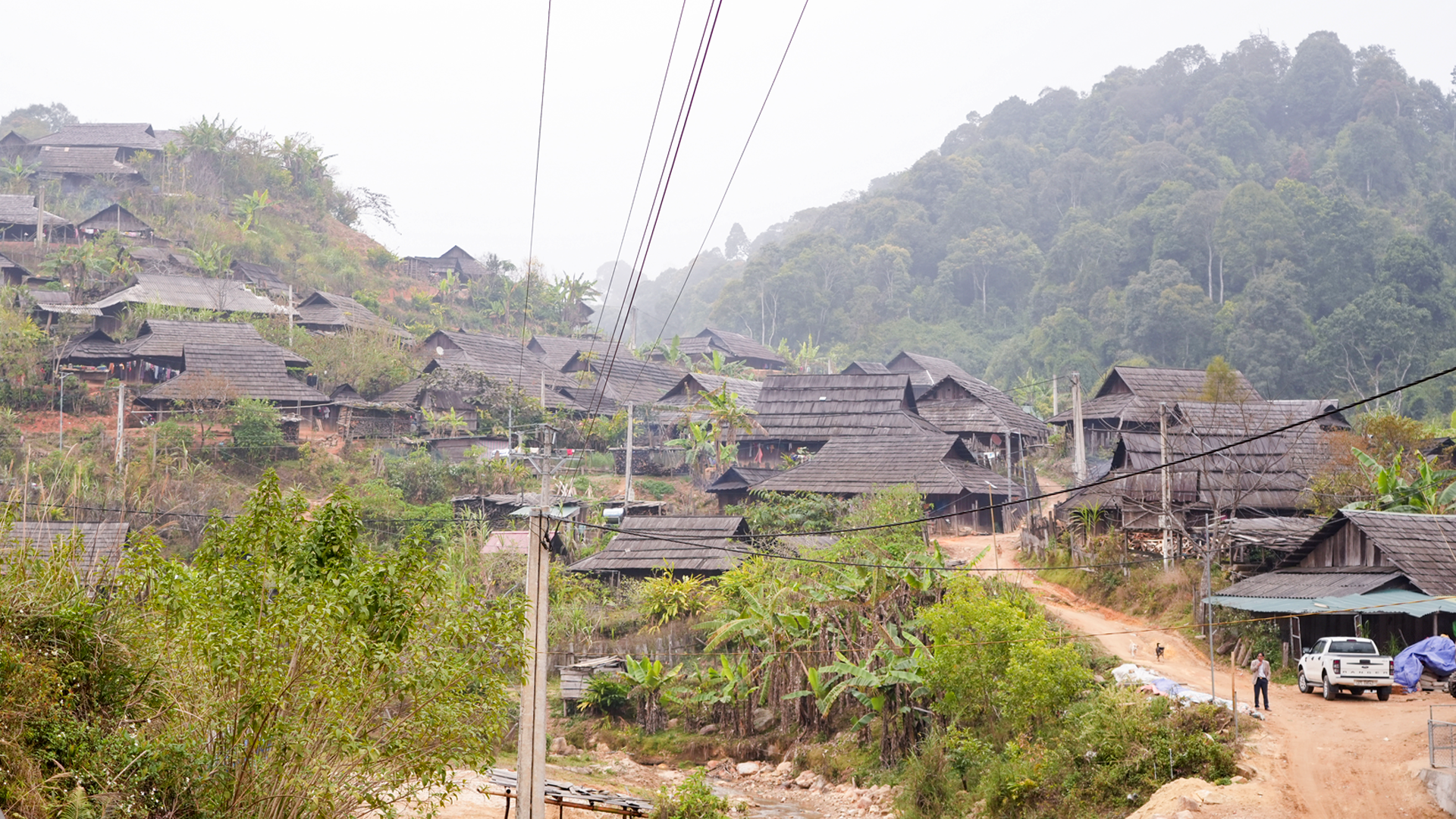
Huoi Moi is located on the Pha Ca Tun mountain range, home to Pu Hoat peak, the highest in Northwest Nghe An province. The Huoi Moi cluster of villages, including Huoi Moi 1 and Huoi Moi 2, are about a 30-minute walk apart and are home to a long-standing Hmong community in Tri Le commune. Situated at an altitude of over 1,000 meters above sea level, nestled against the Vietnam-Laos border, Huoi Moi is considered the "roof" of western Nghe An.
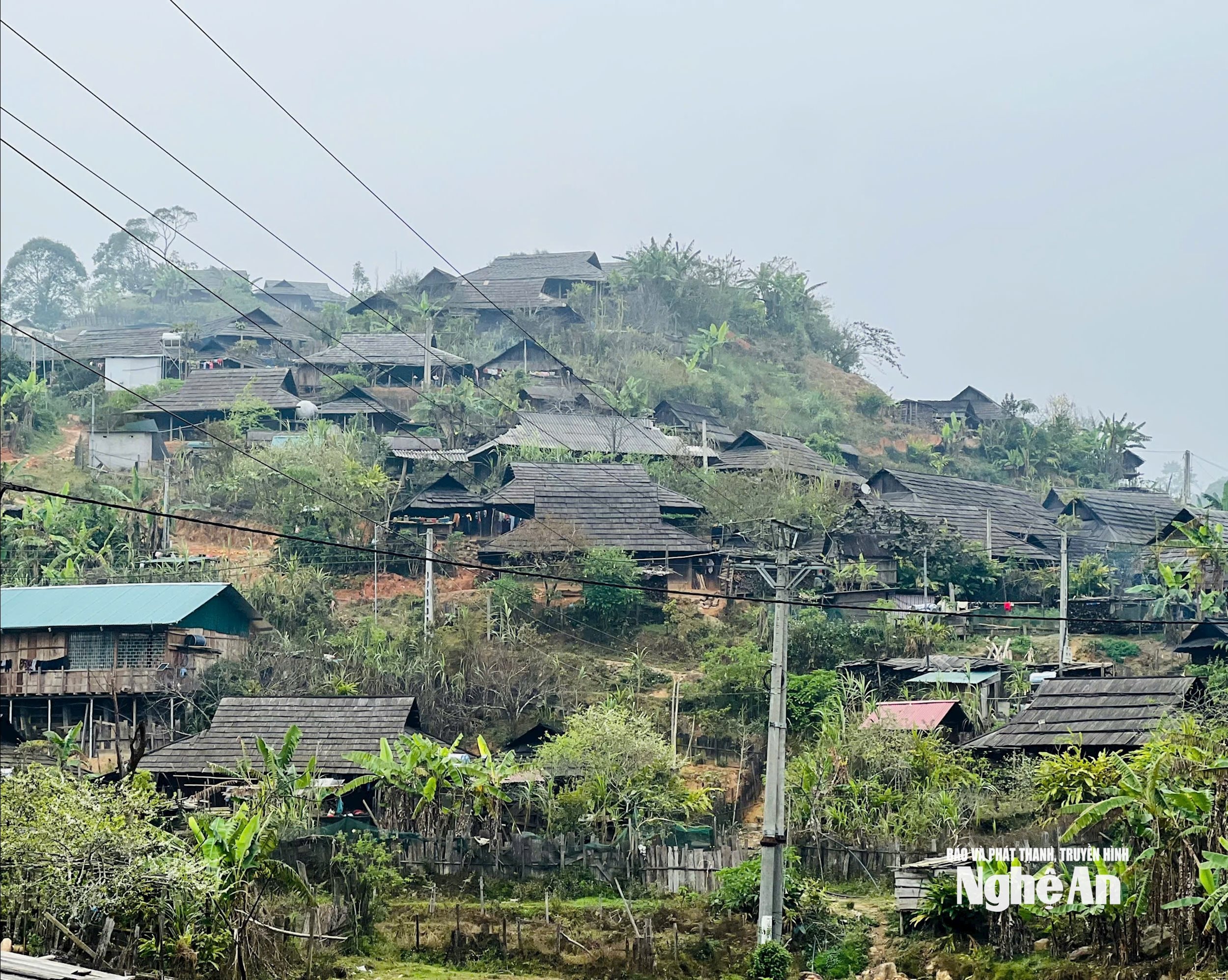
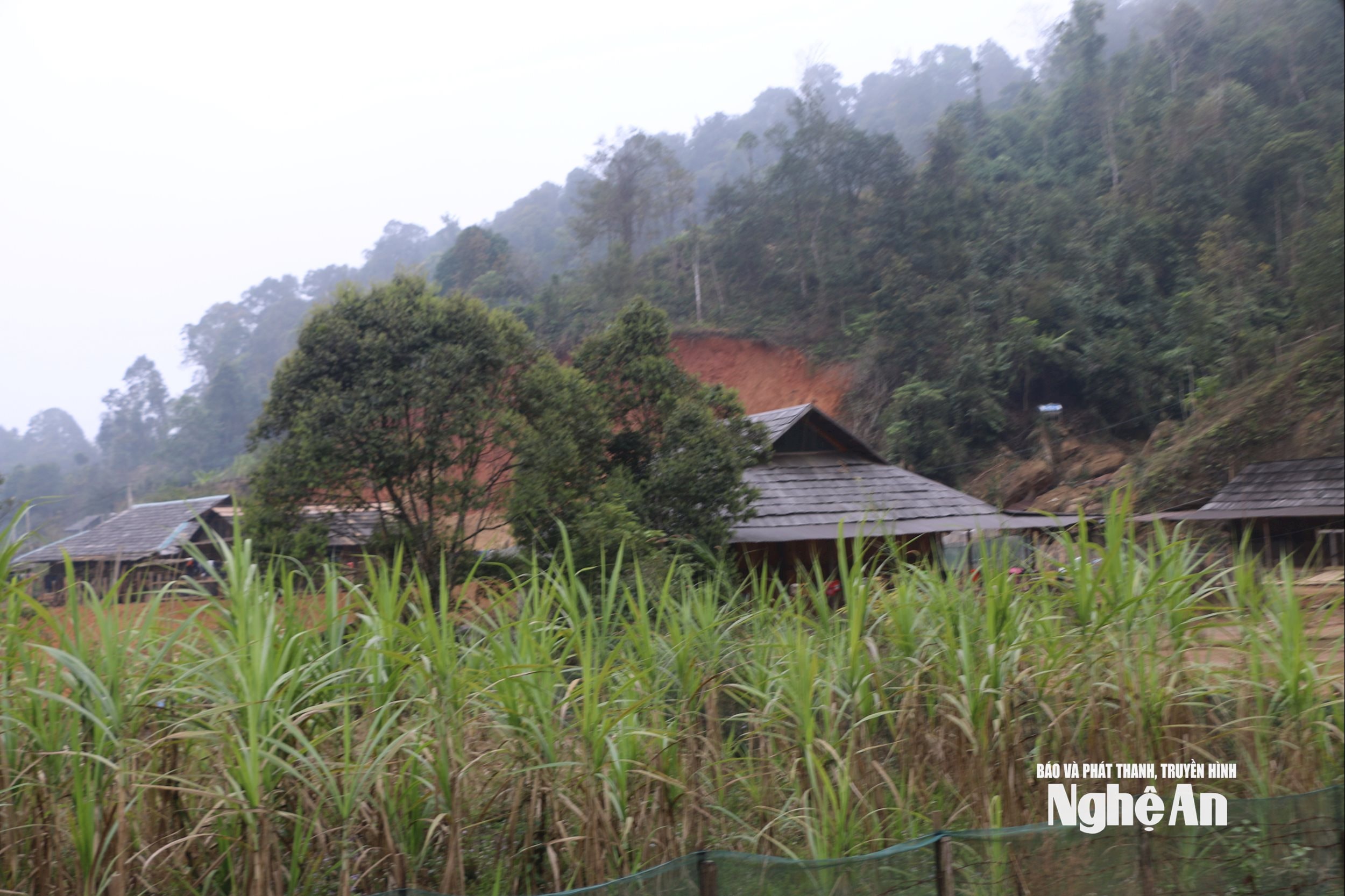
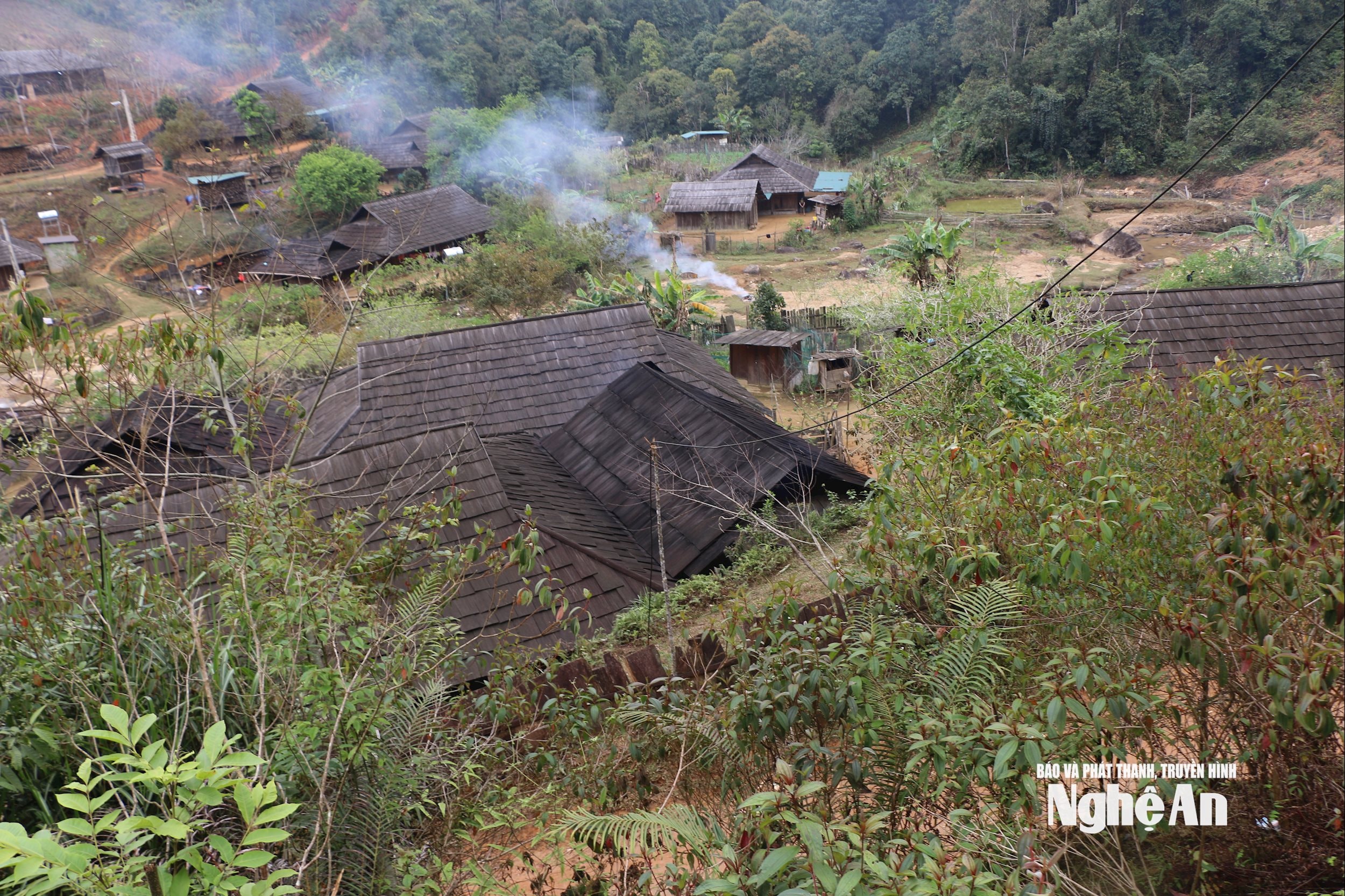
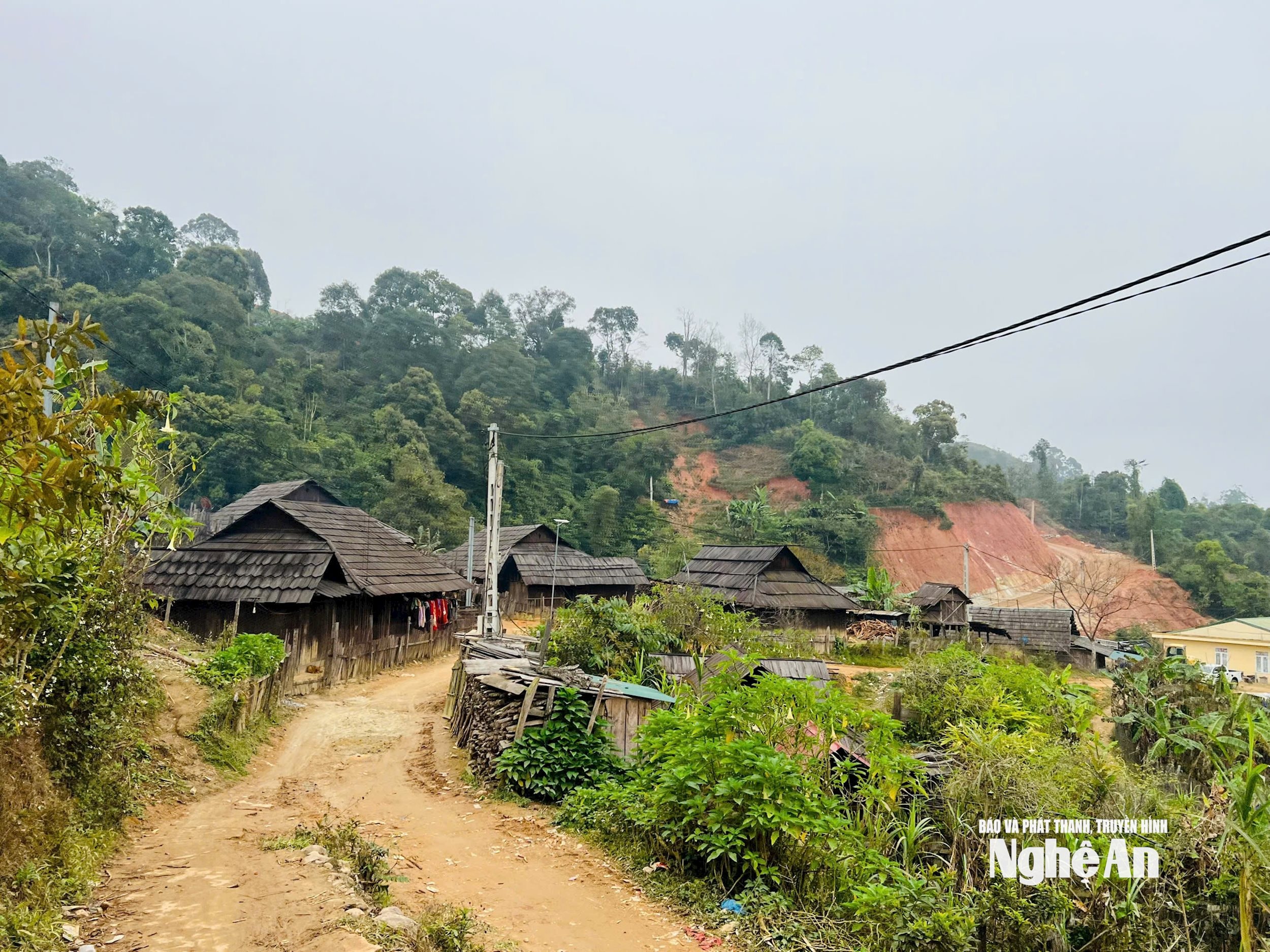
The single-lane road connecting Huoi Moi with the center of Tri Le commune remains the biggest challenge for the local people. Our motorbike bobbed up and down on the bumpy dirt road, with a sheer cliff on one side and a deep ravine on the other. Mountains followed mountains, forests followed forests, vast and boundless. Some sections were steep, requiring the driver to shift into first gear, the wheels spinning rapidly on the reddish-brown earth as the motorbike slowly crawled forward meter by meter. The recent storm made the already difficult road even more treacherous. Landslides occurred everywhere, and large puddles formed on the slippery surface. In some places, water flowed across, eroding the soil into deep trenches. Streams blocked the path with fallen trees and silt; hairpin bends followed one another amidst thick fog. “After the flood, some sections of the road were completely cut off, and the villagers had to piece together wooden planks to make a temporary crossing,” said Xong Ba Thong, head of the Fatherland Front committee in Huoi Moi village.
On rainy days, it's possible to ride a motorbike from the commune center to near the village, but to get there completely, the only option is often to walk, or to stay in the village and wait for the rain to stop.
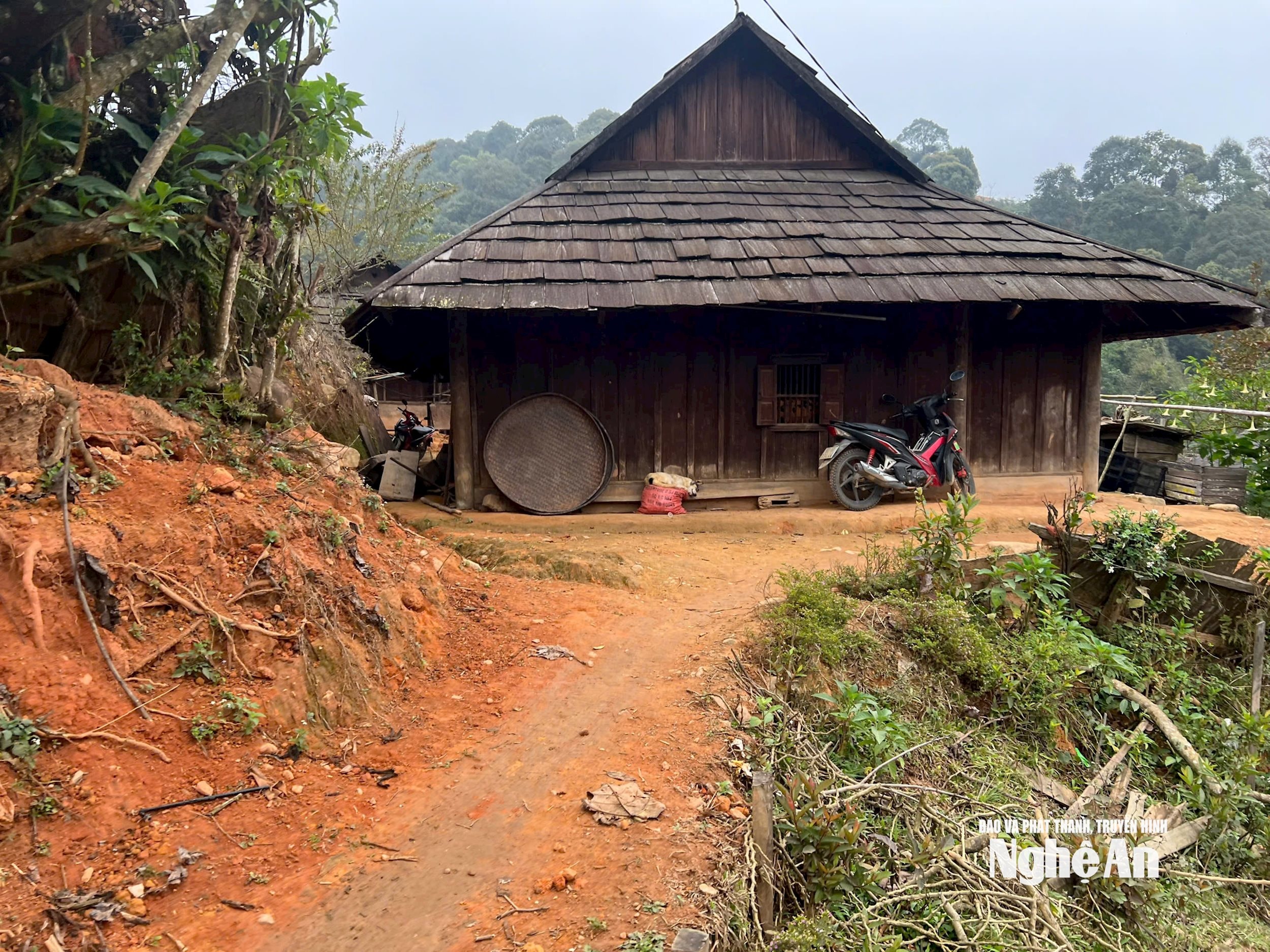
Beyond its challenging transportation links, Huồi Mới also tests people's endurance in their daily lives. The rainy season is long, and fog blankets the area almost year-round. The locals are accustomed to sunny mornings, rainy afternoons, foggy evenings, and nights when the cold penetrates deep into the wooden walls. Every trip outside the village requires careful consideration of the weather and terrain.
Rice, oil cans, salt sacks, animal feed… all were carried back by human strength up long, winding slopes. This isolation once made Huồi Mới an economically disadvantaged area, with little arable land, fragmented rice paddies, and far from villages. Each harvest season was a trade-off of hard work.
.png)
However, despite the hardships, the Hmong people of Huoi Moi did not give up. Following the guidance of the local government and border guards, the villagers gradually changed their way of doing business, starting with what was most familiar to them: livestock farming, forest conservation, and expanding rice paddies. According to village statistics, from only about 100 cows, Huoi Moi has now developed to more than 300. Many households boldly fenced off forests, created grazing areas, and raised 30-40 cows. The cows are sold in batches, mainly at the end of the year, becoming the main source of income for the villagers to cover living expenses, prepare for Tet (Lunar New Year), and reinvest in breeding stock.
Along with cattle, black pigs and black chickens – native livestock breeds – are raised in staggered batches in most households. Even the smallest farms have 5-7 pigs and several dozen chickens; wealthier families raise entire herds. Livestock and poultry are primarily for self-sufficiency, sold only when needed. This practice has helped many families accumulate small but steady savings, eliminating the pre-poverty period of the past.
The livelihoods of Huoi Moi also come from the characteristic crops of the highlands. Huoi Moi 1 alone currently has about 3 hectares of taro, each harvest bringing in 4-5 million VND for each household. During the pumpkin and melon seasons, the villagers earn an additional 2 million VND per household. Corn and cassava are grown to feed livestock; leafy greens, cabbage, and cauliflower are grown interspersed to ensure food self-sufficiency.
In particular, peach blossom trees are becoming a significant source of income for many families. On average, each household earns 10-15 million VND per Tet season from selling peach blossom branches. The family of Mr. Xong Ba Sua, with over 700 peach blossom trees planted 15 years ago, continuously receives orders from traders coming directly to the village to place orders in the days leading up to Tet. "Having money from selling peach blossoms means we can celebrate Tet with peace of mind," he said.
Another resource quietly supporting the village is migrant workers. Currently, about 30% of Huoi Moi's workforce works as factory workers, construction workers, or freelance laborers in the South and North of Vietnam. Each month, they send back 3-5 million VND, not only to cover living expenses but also to invest in buying more cattle and pigs, and renovating their houses.
Changes in Huoi Moi are happening slowly but steadily. Difficulties remain, but on the misty slopes of Pha Ca Tun, the footprints of an upward journey are clearly visible – a journey of clinging to the mountains, preserving the forest, and making a living to reach a more prosperous life.
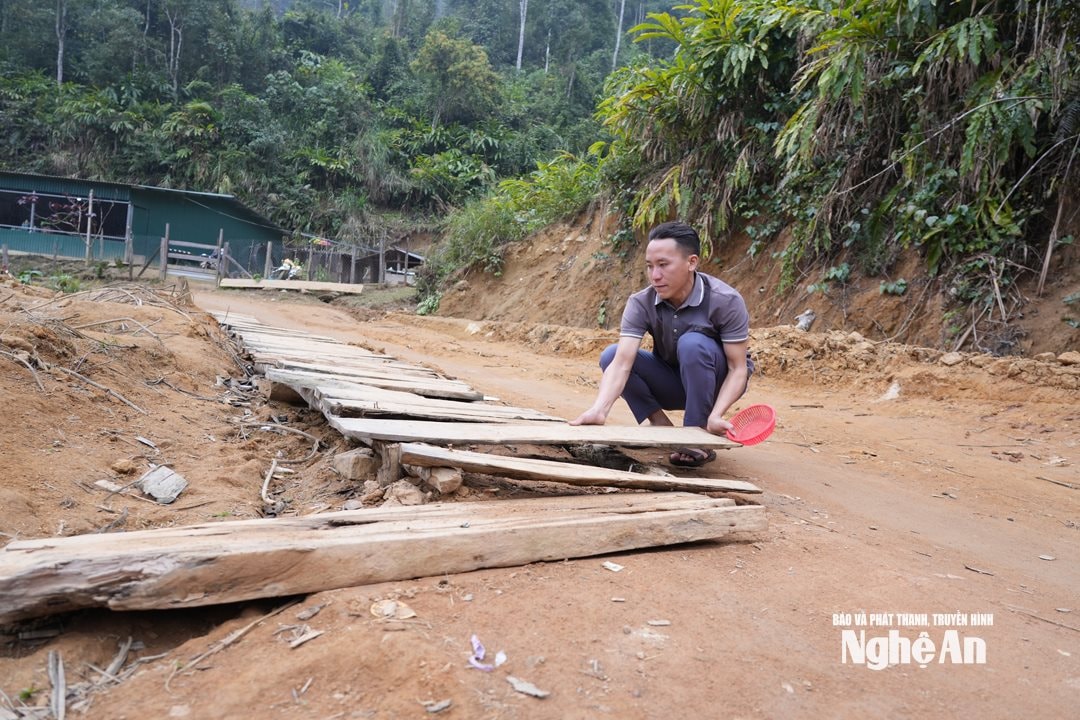
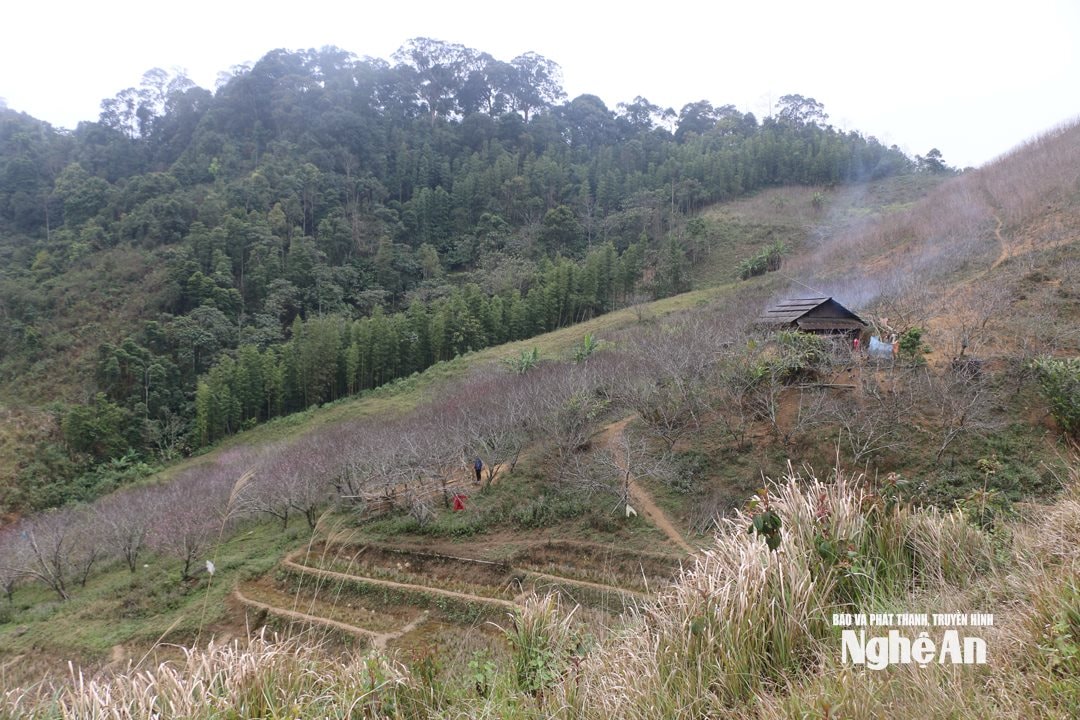

At the end of the twelfth lunar month, when the last rice paddies at the foot of the mountain have been planted, Huồi Mới enters a different rhythm of life. Gone are the days of carrying rice on their backs from dawn, eating hastily by the edge of the fields, and working until late at night; the villagers begin to dedicate their time to preparing for Tet (Lunar New Year). At the foot of the slope leading down to the fields, Ms. Vừ Nỏ Xư, washing the mud off her trousers, said: “The planting is finished, we can now celebrate Tet in peace. Every family in the village does the same; we can only think about Tet after the rice paddies are planted.”
.jpg)
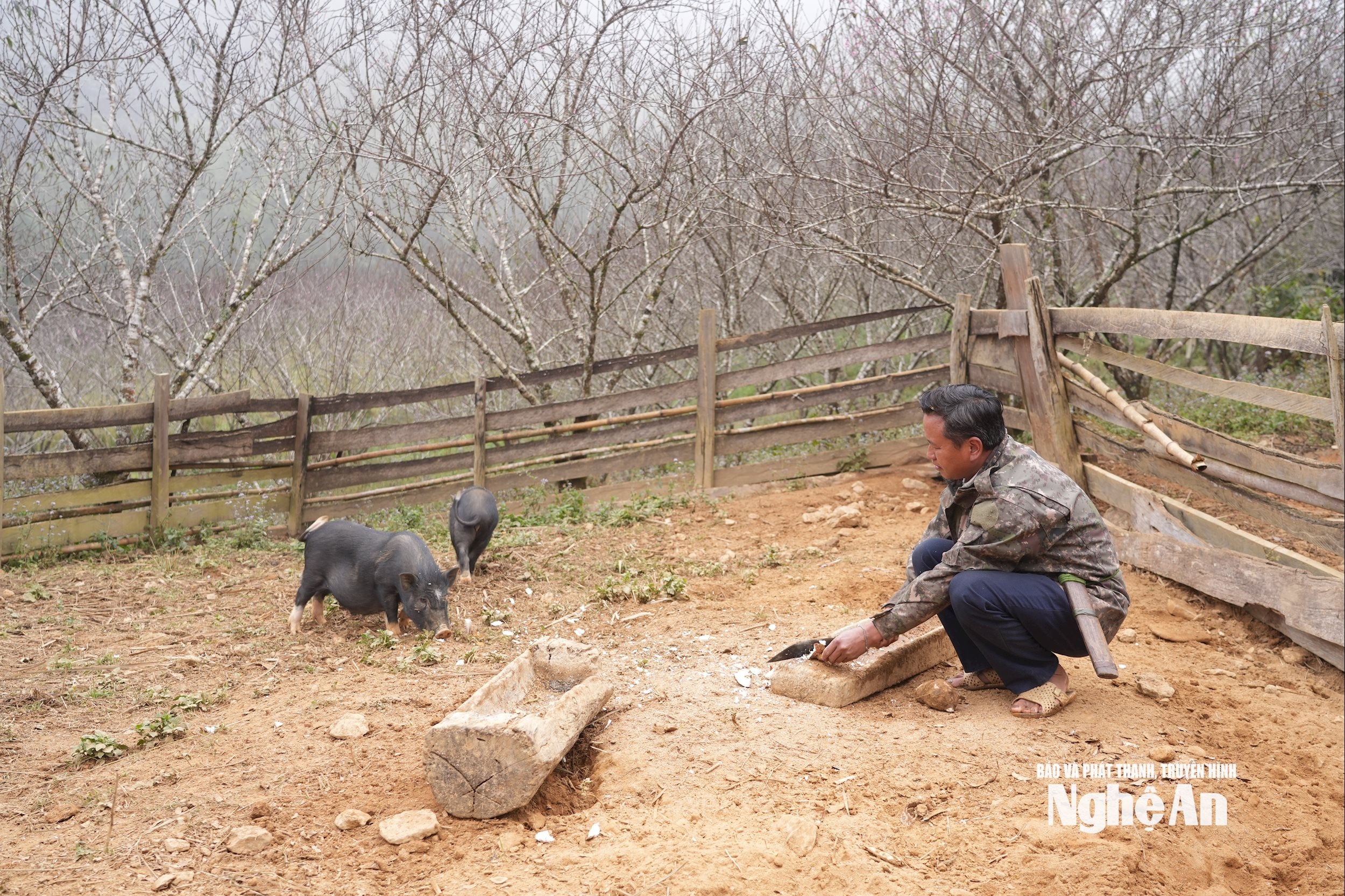
After the floods, many fish ponds in the village were filled with mud and rocks, making immediate restoration impossible. To avoid disrupting their livelihoods, the villagers flexibly adapted. The head of the village's Fatherland Front Committee, Xong Ba Thong, pointed to the newly fenced-off gardens: "Since the ponds are gone, the villagers are using them to raise pigs and chickens. Some are sold for Tet (Lunar New Year), some are kept for consumption, so the land isn't left fallow."
In the village, even the smallest households raise 5-7 black pigs, and several dozen free-range chickens. All livestock and poultry are raised by the villagers themselves, slaughtered only as needed for consumption. Va Ba Cu, who had just returned from the South for Tet (Lunar New Year), pointed to the pigsty behind his house: “Working far away, I send money home each month, and my wife and children buy more piglets to raise. We slaughter one for Tet and keep the rest to start a new herd.” For the Hmong people of Huoi Moi, the Tet pig is not just food, but the culmination of a year of hard work and nurturing.
.jpg)
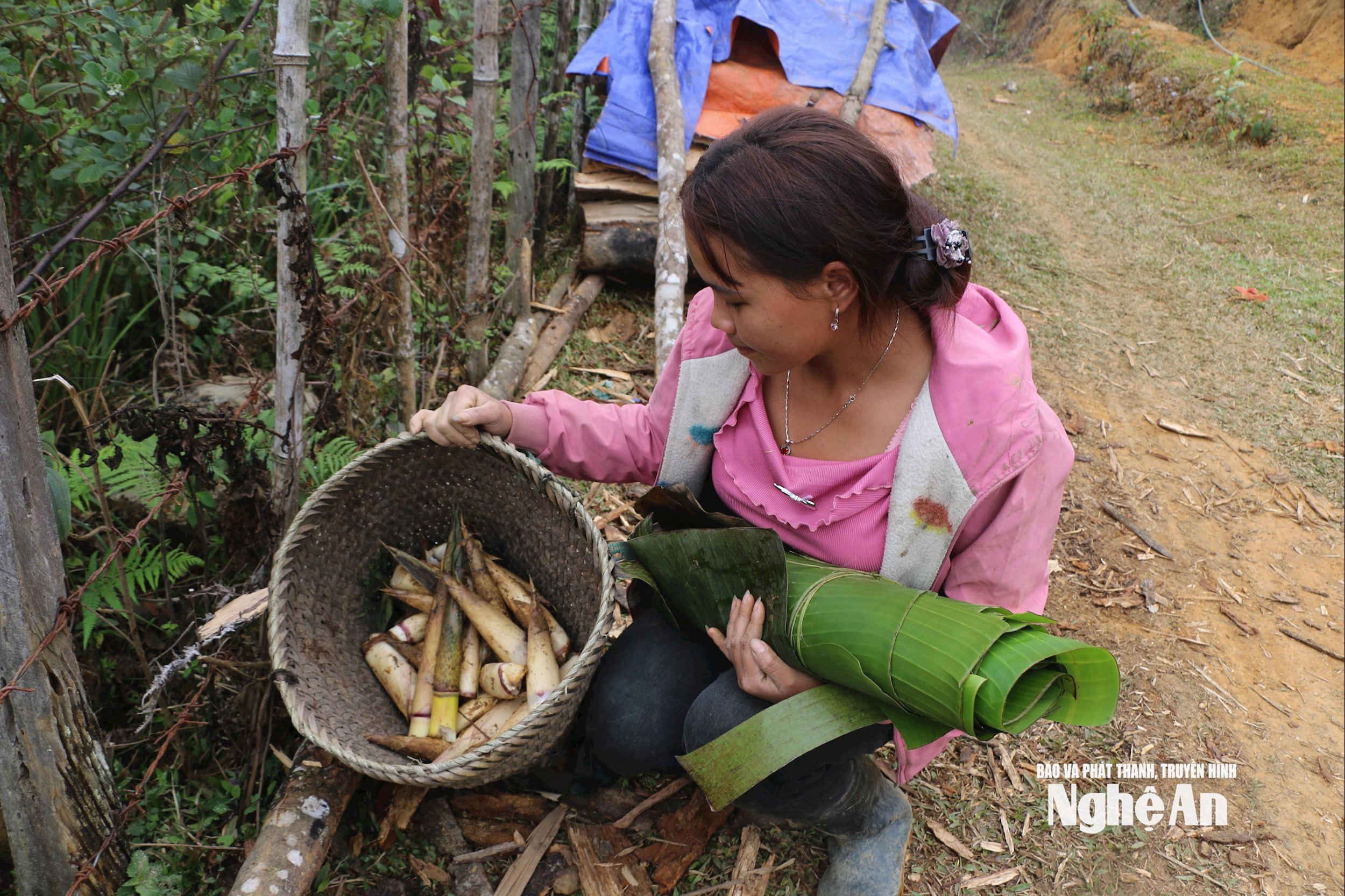
At the end of the twelfth lunar month, the men of the village would gather in the forest to pick dong leaves. With bamboo baskets slung over their backs, they followed familiar paths under the canopy of the Pù Hoạt forest, selecting thick, green, undamaged leaves to bring back for wrapping cakes. Along with the dong leaves, they also cut bamboo and rattan tubes to make strips and molds. This end-of-year trip to the forest was not only to prepare for Tet (Lunar New Year), but also an opportunity for the Hmong men to chat and share stories about their past year of earning a living.
These days, in the kitchens, women are busy steaming glutinous rice, a variety preserved for generations, with round, white, and fragrant grains. After the rice is cooked, it is poured into wooden troughs, and young men take turns pounding it with large pestles. Pounding the rice to make sticky rice cakes is hard work, requiring strength and coordinated effort. The cakes are shaped into round balls, wrapped in banana leaves, and neatly arranged by the stove. Mr. Xong Xua Ly, the village elder in Huoi Moi, slowly says: “The round sticky rice cake represents the moon and the sun. Offering sticky rice cakes is offering to heaven and earth, and our ancestors, hoping for a year of favorable weather and good harvests.” In the Mong people's New Year's feast, sticky rice cakes are always placed in the most prominent position.
Alongside the preparations of traditional New Year's treats, the festive atmosphere in Huồi Mới is also evident in every detail of the traditional clothing. Hmong women are busy completing the final embroidery stitches, adjusting every fold in their skirts and every row of buttons. These New Year's dresses, meticulously hand-embroidered and sewn months in advance, carry the excitement of a year-long wait. In a corner of the courtyard, the men are repairing their bamboo flutes, re-inserting each bamboo tube, and testing each note.
The sound of the Hmong flute resonates through the mountains and forests, sometimes gentle, sometimes lively, like a call to spring echoing in the mountain mist. For the Hmong people, the flute is not just a musical instrument, but also the voice of the soul, a way to express joy and longing, a bridge between humans and the earth and sky.
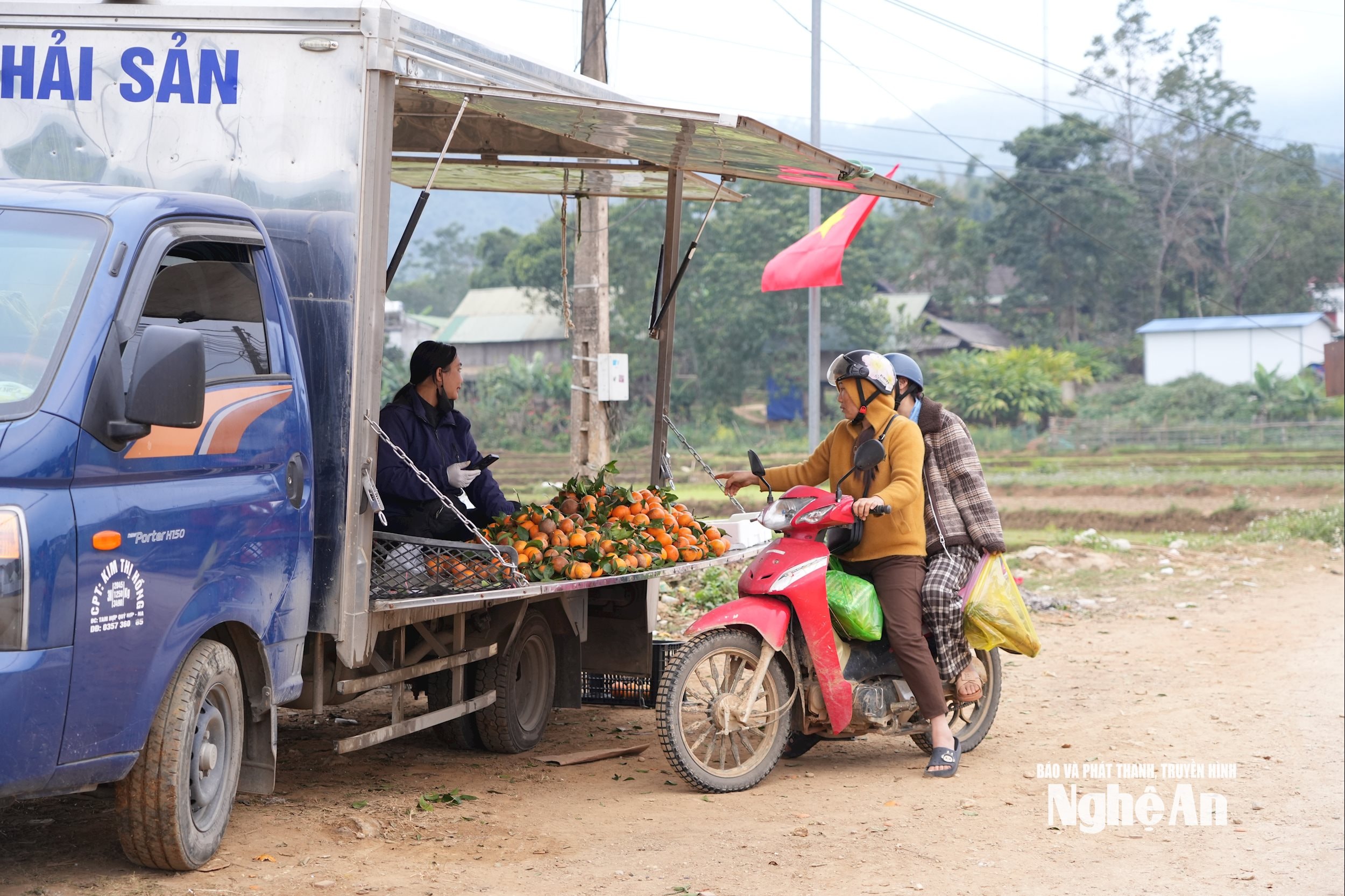
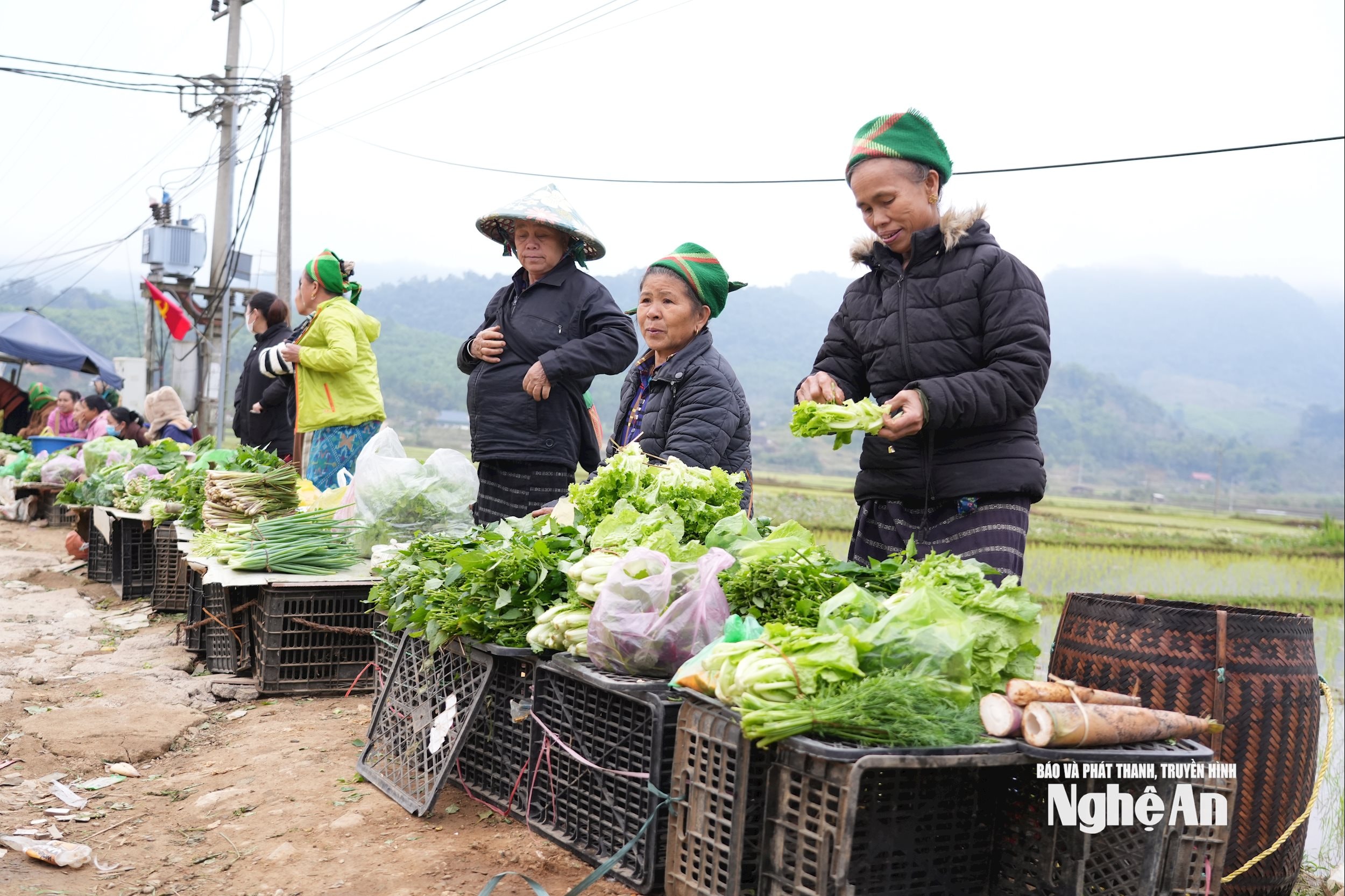
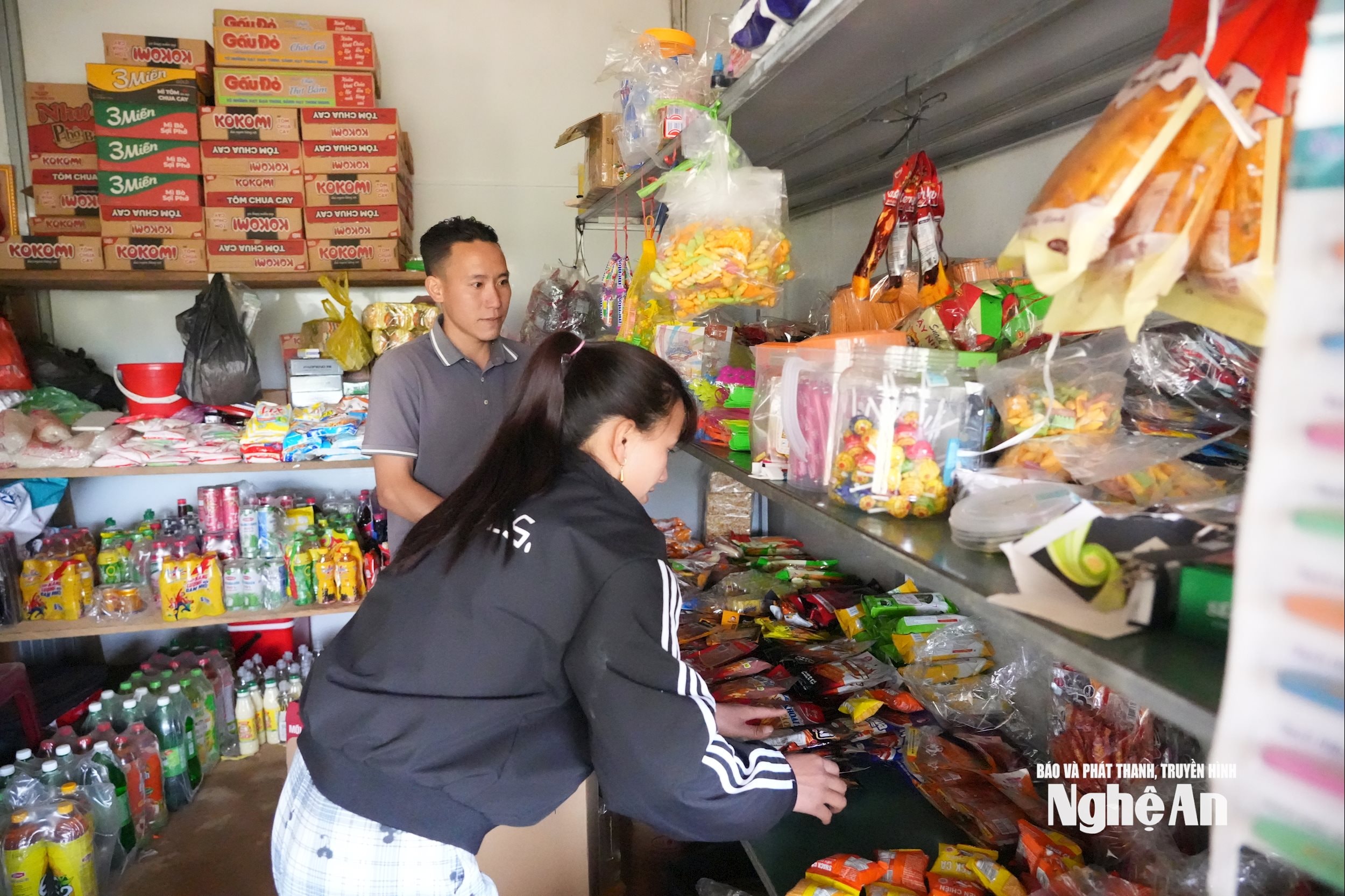
As Tet (Lunar New Year) approaches, Huoi Moi becomes increasingly lively as children who work far away return home one after another. Carts laden with sticky rice, sweets, and new clothes arrive; televisions and portable speakers are placed in the middle of the wooden houses. Modern music blends with the sounds of traditional flutes, creating a Huoi Moi that is both rustic and vibrant. Mr. Xong Ba Gia's house is filled with laughter as his two children return from Ho Chi Minh City. "They only come home once a year, bringing many gifts, sweets, and new things, so this Tet will be much more joyful and warmer," he said, his eyes shining with happiness. For him, the greatest gift is still the reunion of family during Tet.
According to custom, on Tet (Lunar New Year), the Hmong people in Huoi Moi visit each other's homes to exchange New Year greetings, drink corn wine, and eat sticky rice cakes. Children, dressed in new clothes, run and play throughout the village. The elderly sit by the fire telling old stories. Young men and women gather to play flutes, throw pao (a traditional game), and chat to get to know each other. Open spaces become venues for folk games, bonfires, and drinking rice wine.
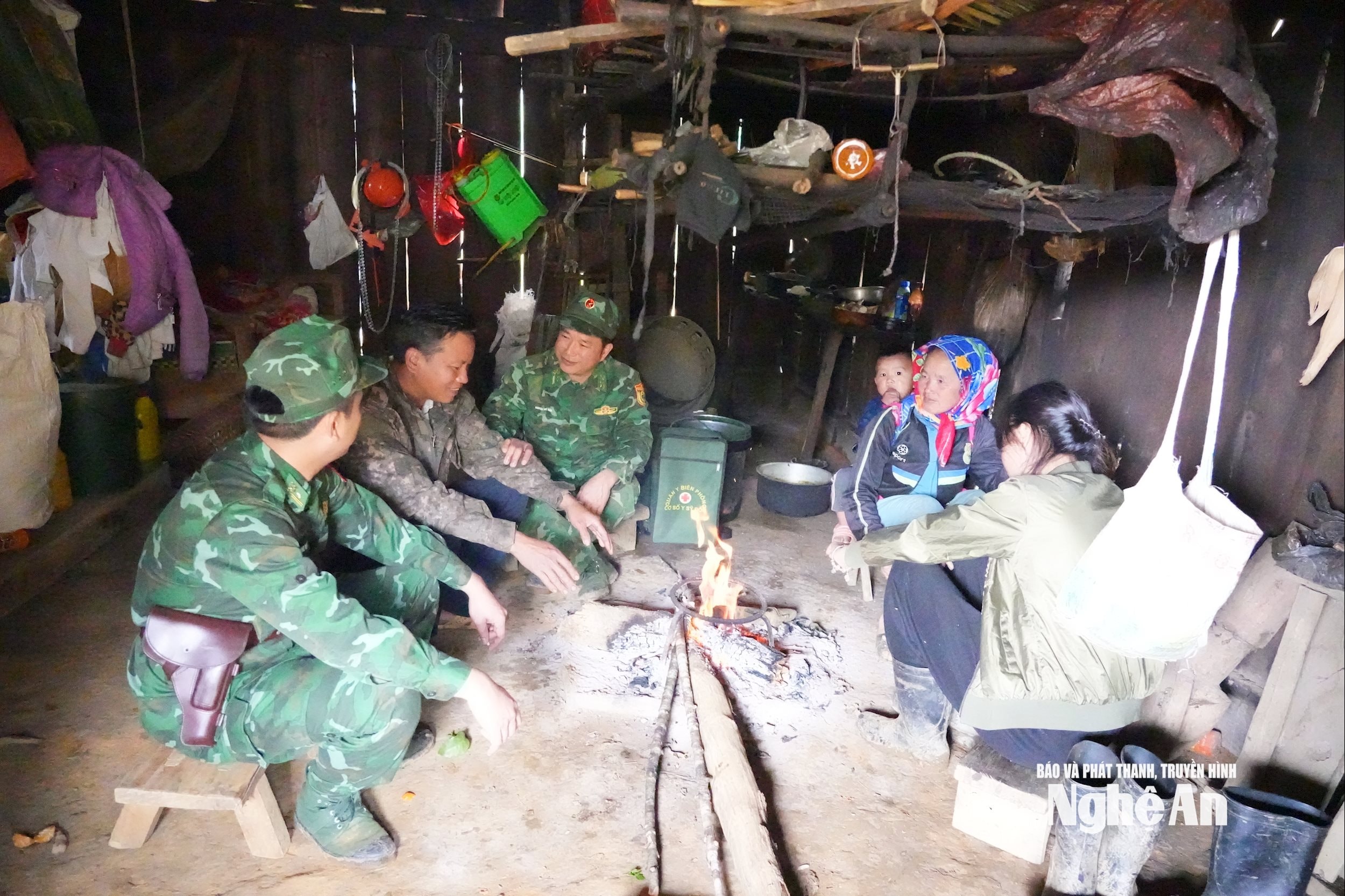
Along the road from the village to the commune center, men carry banana leaves from the forest on their backs, carts load peaches heading downstream, and children stand by the roadside laughing and talking in their new clothes.
Amidst the misty clouds of Pha Ca Tun, spring has truly arrived, in the resounding sound of the flute, in the aroma of freshly made sticky rice cakes, and in the quiet joy of the Hmong people of Huoi Moi as another prosperous Tet holiday approaches. Spring on the "rooftop" of Tay Nghe is not only a change of seasons, but also a season of hope, of changes silently sprouting in the vast forest…