

'Forest bounty' from the mountains descends to the city to welcome the Spring
Every year, as Tet (Lunar New Year) approaches and spring arrives, when peach blossoms begin to bloom in the mountain mist, the highlanders are busy harvesting "forest bounty." From banana leaves, bamboo tubes, peach blossom branches to wild flowers... these things are carried by people returning to the cities, bringing with them the scent of the forest and the spirit of Tet.
TPig's legs, human feet, walking down the street
In the final days of the twelfth lunar month, the vast forests of the Western region are beginning to show glimpses of spring. In the communes of Muong Xen, Muong Long, Tri Le, Tuong Duong, Que Phong, Thong Thu, Tien Phong, Quy Chau… the pace of life at the end of the year becomes more vibrant than usual. Highlanders venture into the forests from dawn to find familiar products – what they call by a simple but meaningful name: “forest bounty”.
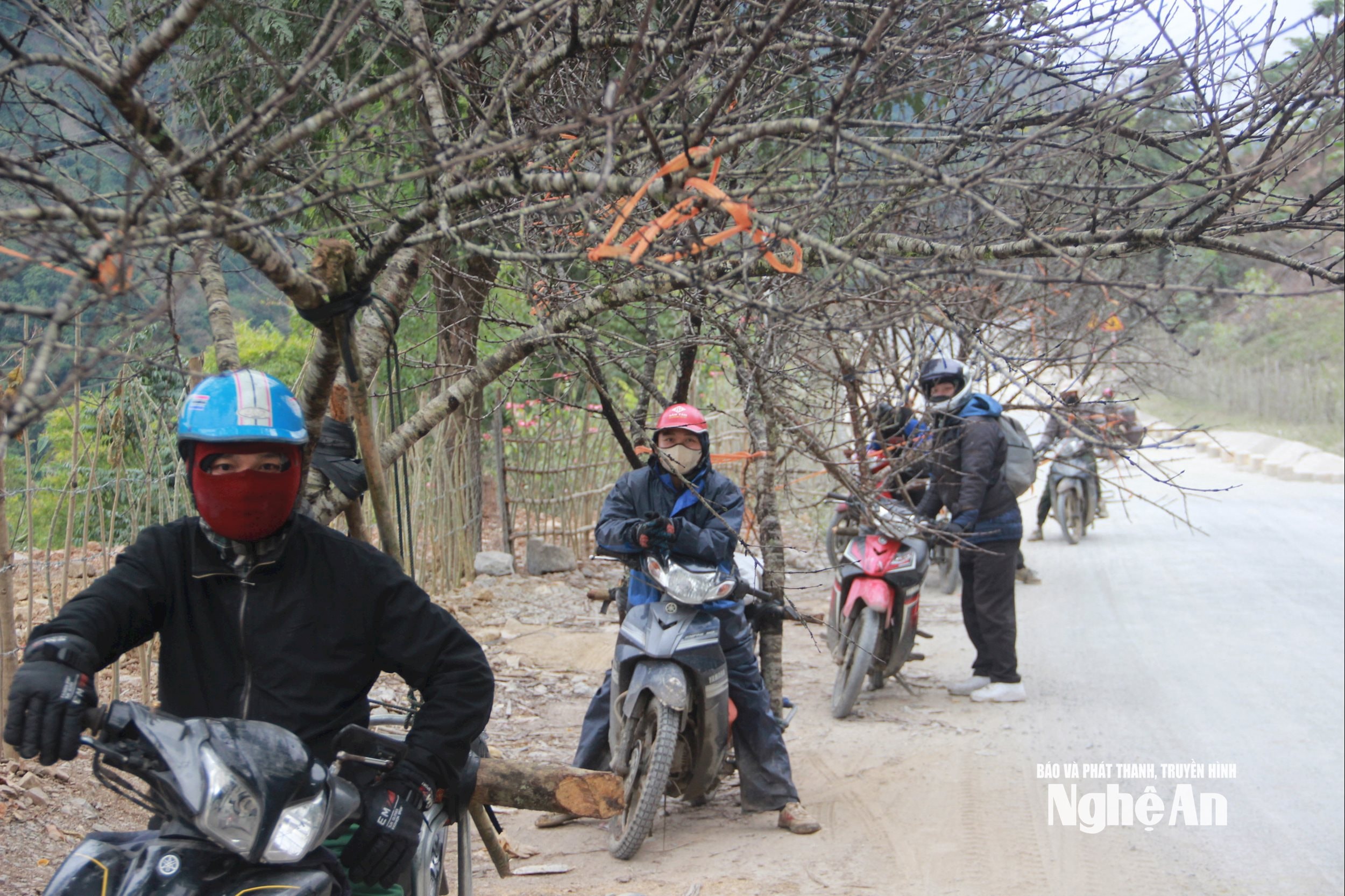
Along the roads leading to the highland communes, it's easy to spot motorbikes loaded with branches of peach blossoms, lined up heading towards the commune center. These branches, with their gnarled, moss-covered trunks – a beauty unique to the high mountains – have become sought-after commodities by people from the lowlands. The Hmong men selling peach blossoms in Muong Xen commune say that they don't just cut down any peach tree they find. Cutting peach blossoms also follows the "rules" of the forest. Only old branches with beautiful shapes and naturally mossy bark are selected. Young branches, no matter how beautiful, are left for the following year. "The forest has nourished us for so long, we must know how to protect it," one man said in a simple, rustic voice.
According to our research, peach trees were previously planted sporadically on hillside fields, mainly for shade and fruit. Only when the hobby of collecting wild peach trees and rock peach trees became popular among people in the lowlands did peach trees from the highlands become a "lucky" item during Tet (Lunar New Year). The harsh natural environment, wind, frost, and cold have created a unique beauty for the peach trees of the highlands—a wild yet vibrant beauty.
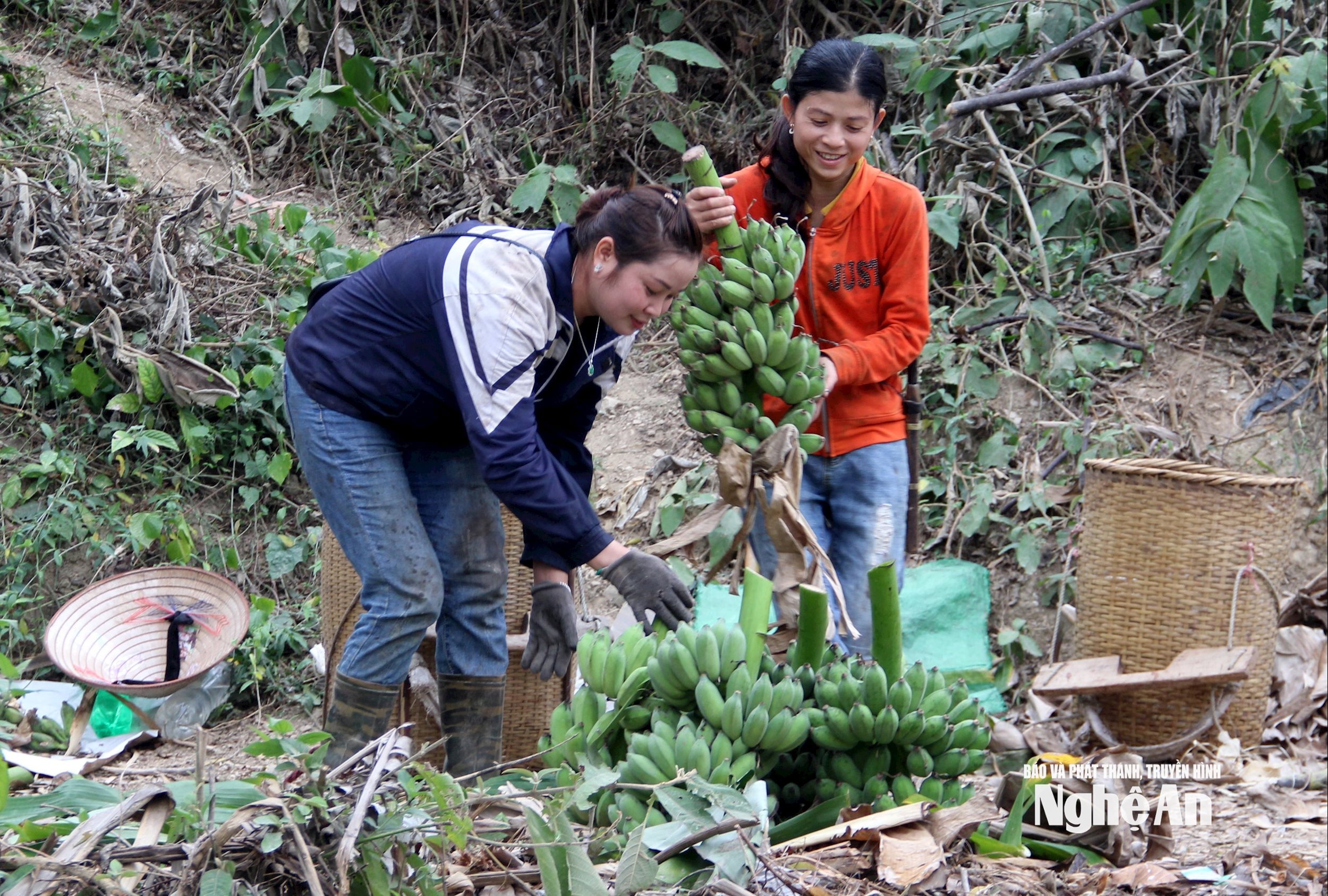
If peach blossoms symbolize spring, then banana leaves carry the spirit of Tet (Vietnamese New Year). Along National Highways 7 and 48, especially in Tien Phong, Thong Thu, Tuong Duong, Tam Quang... banana leaves become the most harvested product at the end of each year. Ms. Lo Thi Minh from Tien Phong commune said that this year, traders are buying banana leaves for 500 VND per leaf. She can only make one or two trips a day to harvest the leaves because the roads are long, requiring an hour's walk. Each trip carries more than a dozen bundles of leaves, enough to earn money for Tet preparations.
According to Mr. Lo Van Thuy, head of Pieng Cu village in Tien Phong commune, in recent years, most young people in the village have left to work elsewhere. Those remaining in the village are mainly middle-aged and elderly people who make a living year-round by working in the forest.
The forest has become a familiar source of livelihood, with seasonal produce. During bamboo shoot season, people go into the forest to harvest bamboo; during rattan season, they gather rattan and medicinal herbs to sell to traders. The "bounty of the forest" becomes even more abundant towards the end of the year. Dong leaves and bamboo tubes are harvested in large quantities to meet the demand for wrapping banh chung and banh tet (traditional Vietnamese rice cakes). People take advantage of the early morning hours to go into the forest, carrying their produce back to sell, earning several hundred thousand dong each day, enough to cover expenses and prepare for Tet (Vietnamese New Year). In addition, the months leading up to Tet are also the season for harvesting broom grass – the raw material for making brooms. Taking advantage of their free time, people go into the forest to harvest broom grass, adding to their income and making Tet in their villages more prosperous and warm.
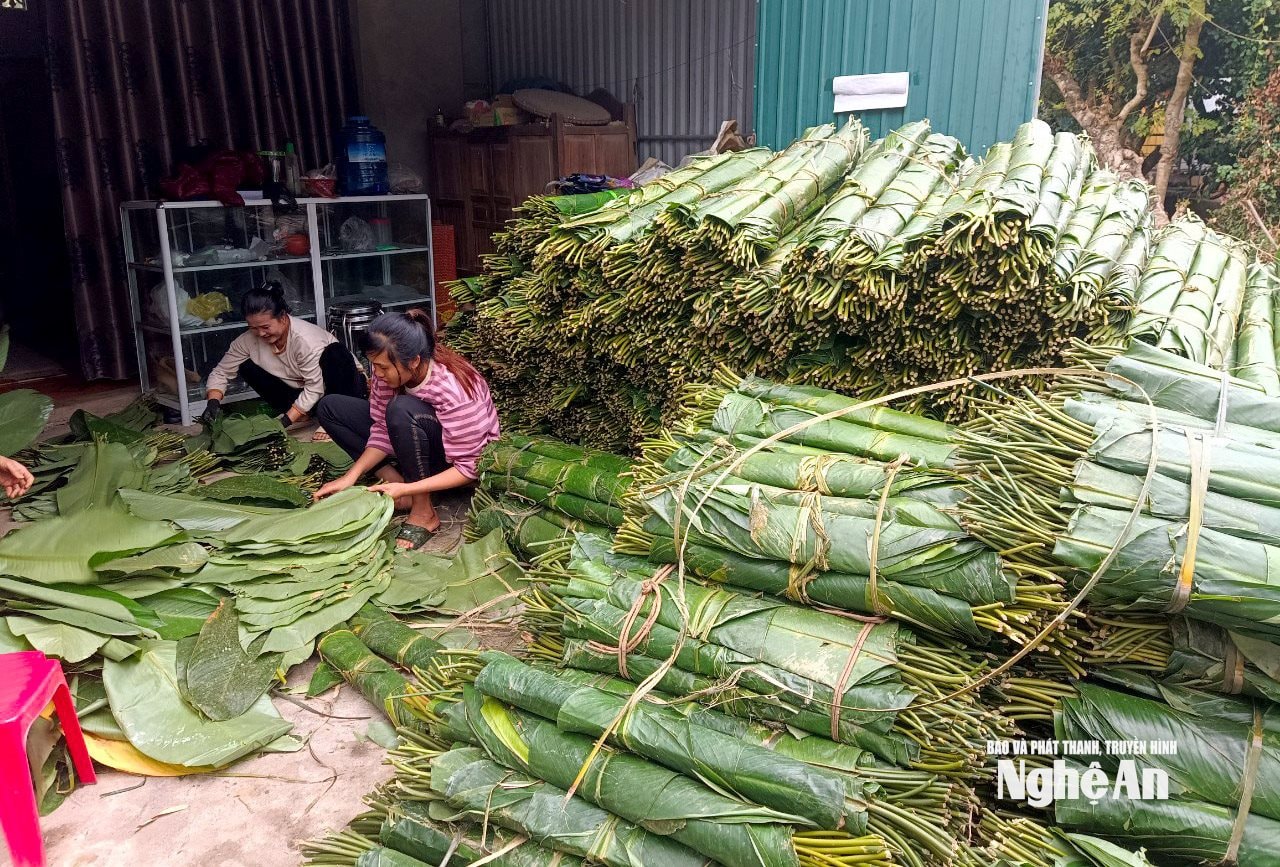
The leaves of the wild ginger plant usually grow along streams, in damp soil. The deeper into the forest you go, the larger, greener, and thicker the leaves become. According to locals, harvesting wild ginger leaves is not simple. The knife must be very sharp so that the leaf stems are cut cleanly without being crushed. The leaves must be neatly arranged and bundled carefully to prevent tearing. Leaf harvesters believe that since it is a "gift from the forest," they should not mix in bad leaves to sell to customers. Beautiful wild ginger leaves should be about 25cm wide and 50cm long, uniformly green, with a twisted stem at the tip, as a distinguishing feature of this type of leaf.
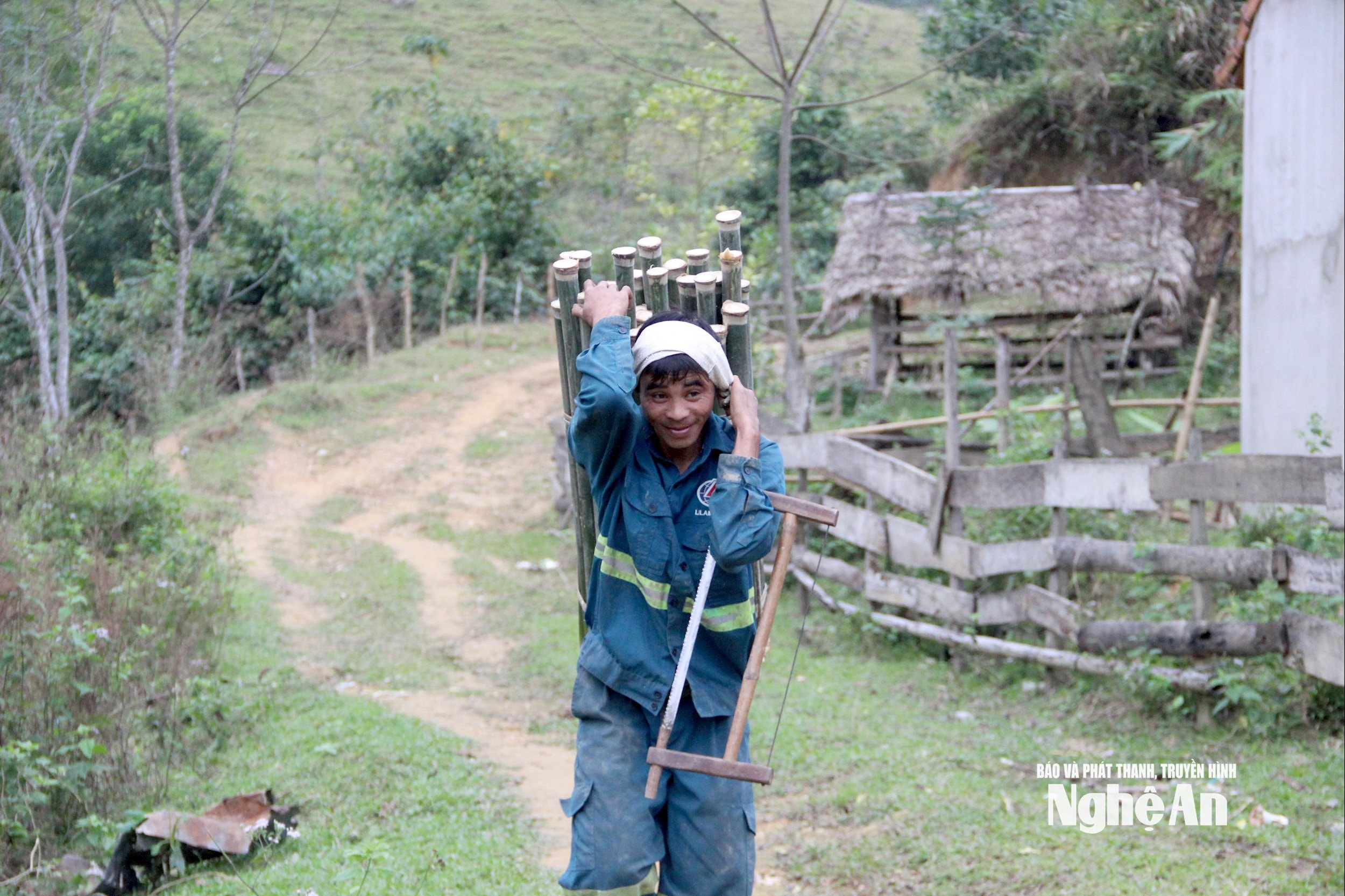
Along with banana leaves, bamboo tubes are also an indispensable product every year-end. The bamboo must be cut and sold on the same day to ensure it's fresh and easy to split into strips. Bamboo strips are used to wrap banh chung and banh tet (traditional Vietnamese rice cakes), and the thinner and more uniform they are, the higher the price.

In Chau Khe commune, Ms. Vi Thi Hoi shared that after a year of farming, the income is meager. At the end of the year, thanks to bamboo and banana leaves, her family has enough money to buy new clothes and sweets for their children. "I don't aspire to get rich, I just hope to have a comfortable Tet holiday," she said.
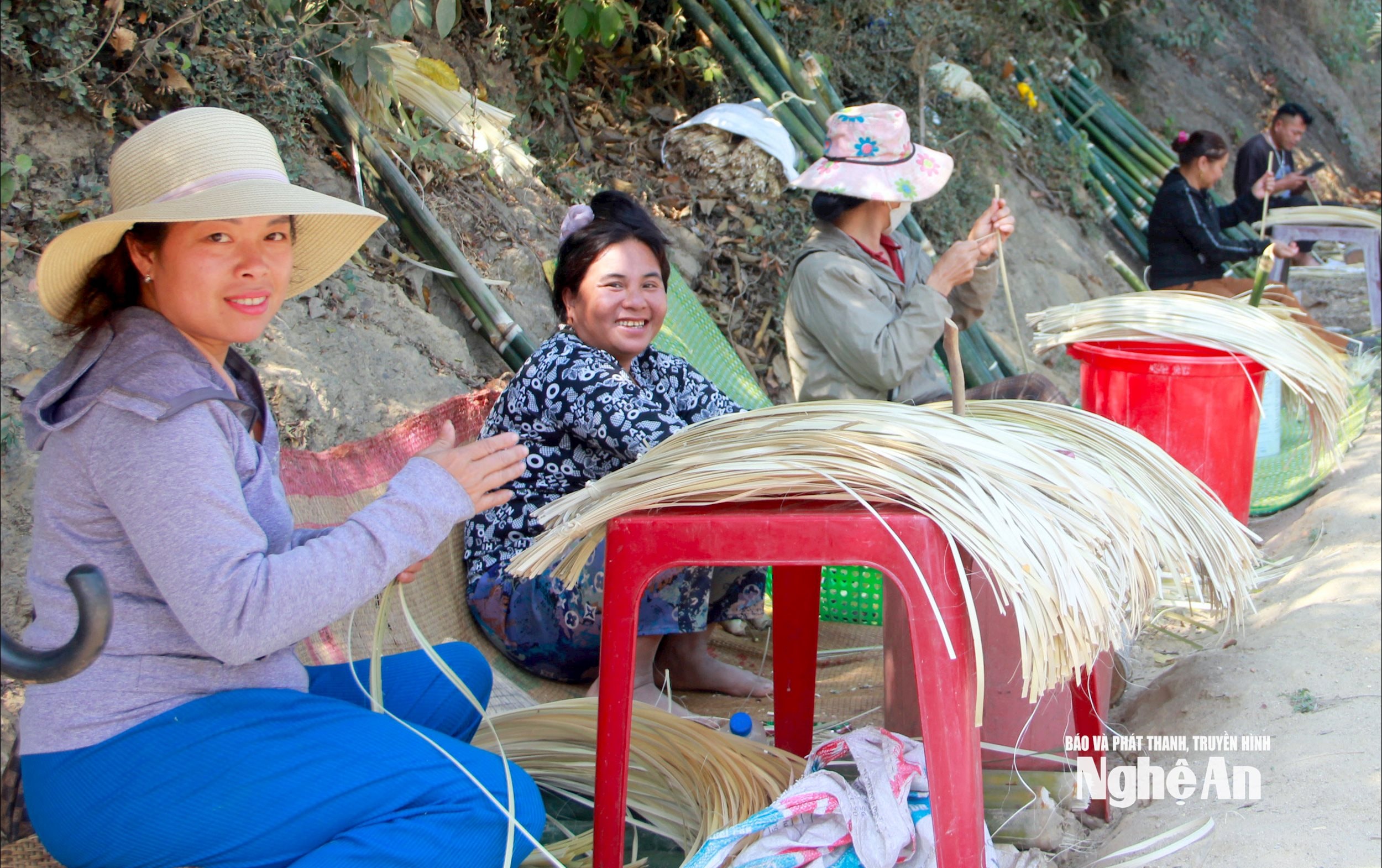
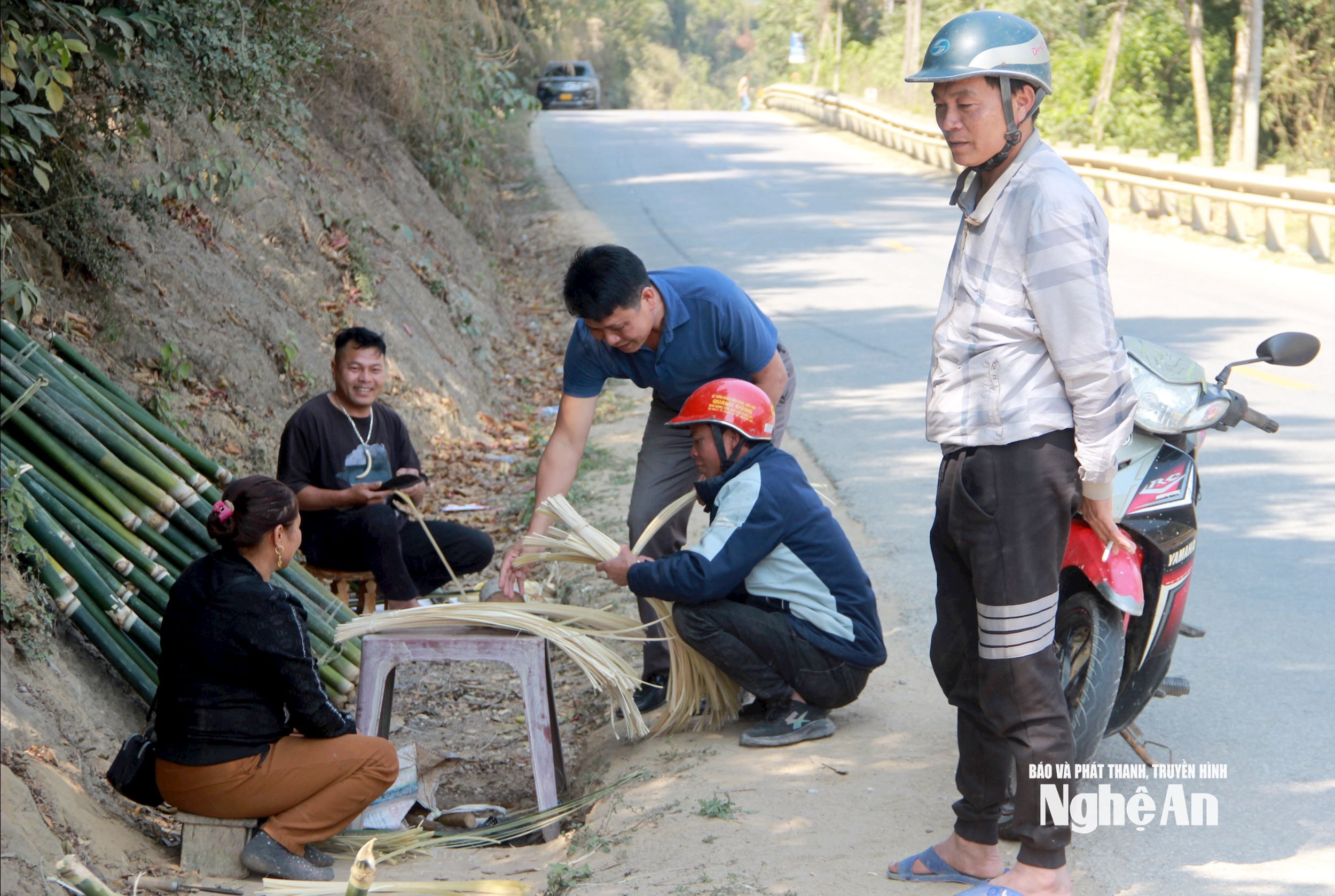
Many locals not only sell whole bamboo tubes but also split them into strips for sale. Although the work is quite meticulous, it provides a steady source of income every day.
For Ms. Luong Thi Tuyet in Thach Duong village, Tuong Duong commune, every year as Tet approaches, she takes advantage of her free time to split bamboo strips to serve customers wrapping Tet cakes. According to Ms. Tuyet, to split thin, even strips, one needs a very sharp knife and fresh bamboo stalks. The split strips are bundled into small bunches and sold for about 10,000 VND per bunch. On average, this work brings her an additional income of 200,000 to 300,000 VND per day, helping to cover family expenses during the end of the year.
Besides bamboo stalks and banana leaves, at the end of the year, along the roads in the mountainous regions, golden fields of reeds drying in the spring sun also become a familiar sight. Reed flowers are harvested during the last one to two months of the year and used to make brooms, an essential item for every family. Many traders have to borrow money to buy reeds from the locals, then dry them and transport them to the lowlands for sale.
Preserve the forests so that we can reap the rewards in the future.
"Forest bounty" brings joy, but also responsibility. Highland people understand that if exploited irresponsibly, the forest will be depleted. When gathering wild ginger leaves, one must avoid damaging the roots; when cutting bamboo, one must leave the young shoots; when digging for wild herbs, one must preserve the plants so they can continue to grow. Forests not only provide resources, but also conserve water, soil, and ensure long-term livelihoods for generations. Therefore, "forest bounty" is only truly sustainable when people appreciate and protect the forest.
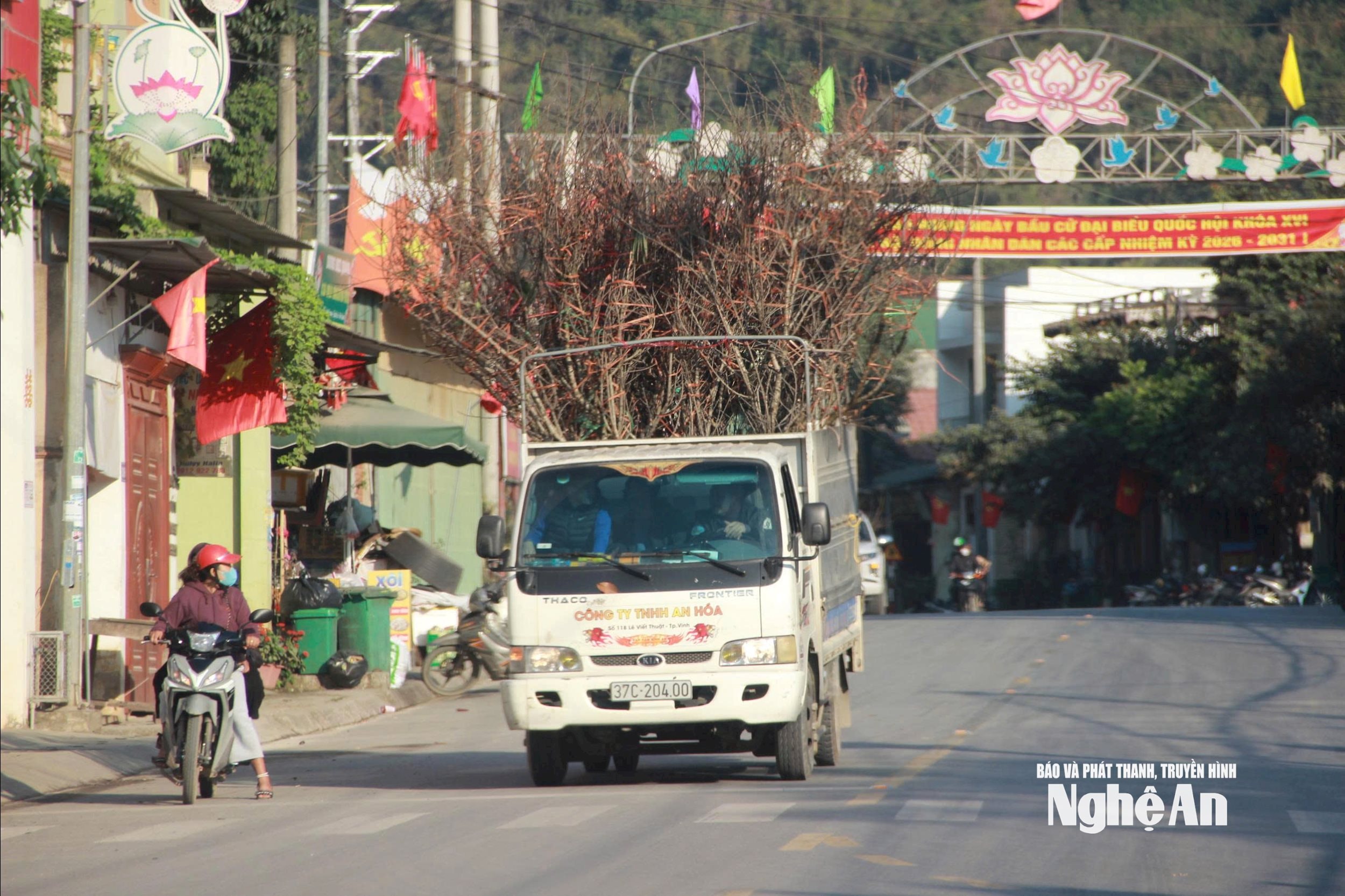
Every Lunar New Year, as trucks laden with "forest bounty" from the mountains stream into the cities, the festive atmosphere seems to become more vibrant and abundant. People in the lowlands eagerly choose moss-covered peach blossom branches, embodying the rustic beauty of the mountains, or bundles of lush green banana leaves and sturdy bamboo tubes to prepare for wrapping banh chung and banh tet (traditional Vietnamese rice cakes) to offer to their ancestors.
More than just goods for the Lunar New Year, "forest bounty" also carries the flavor of the mountains and forests, evoking traditional values and connecting the lowlands with the highlands. Amidst the hustle and bustle of urban life, personally selecting each peach blossom branch, bundle of leaves, and bamboo tube becomes a simple yet meaningful pleasure, contributing to the joy and warmth of city dwellers every time Tet (Lunar New Year) arrives.
No one keeps precise statistics on how many peach blossom branches, bundles of banana leaves, bamboo tubes, or bundles of reeds are brought from the forest to the city each year. But for the people in the mountainous regions, these are important sources of income, contributing to a warm and comfortable Tet holiday after a year of hardship. All we know is that hundreds, even thousands, of families have had a warmer and more prosperous Tet thanks to these simple products.
And on the journeys back and forth at the end of the year, along with the green banana leaves, faded peach blossoms, bamboo tubes, and thatched flowers… a whole spring season is coming to the city, simple and rustic yet full of life.