

A historic turning point: Europe forges its own security path.
"There are lines that have been crossed and there is no turning back" – the statement by European Commission President Ursula von der Leyen encapsulates the atmosphere of unease engulfing the continent. However, will the ambition for an independent defense system be strong enough to enable Europe to overcome internal divisions and confront the harsh reality of the Ukrainian battlefield?
"The European pillar" within NATO
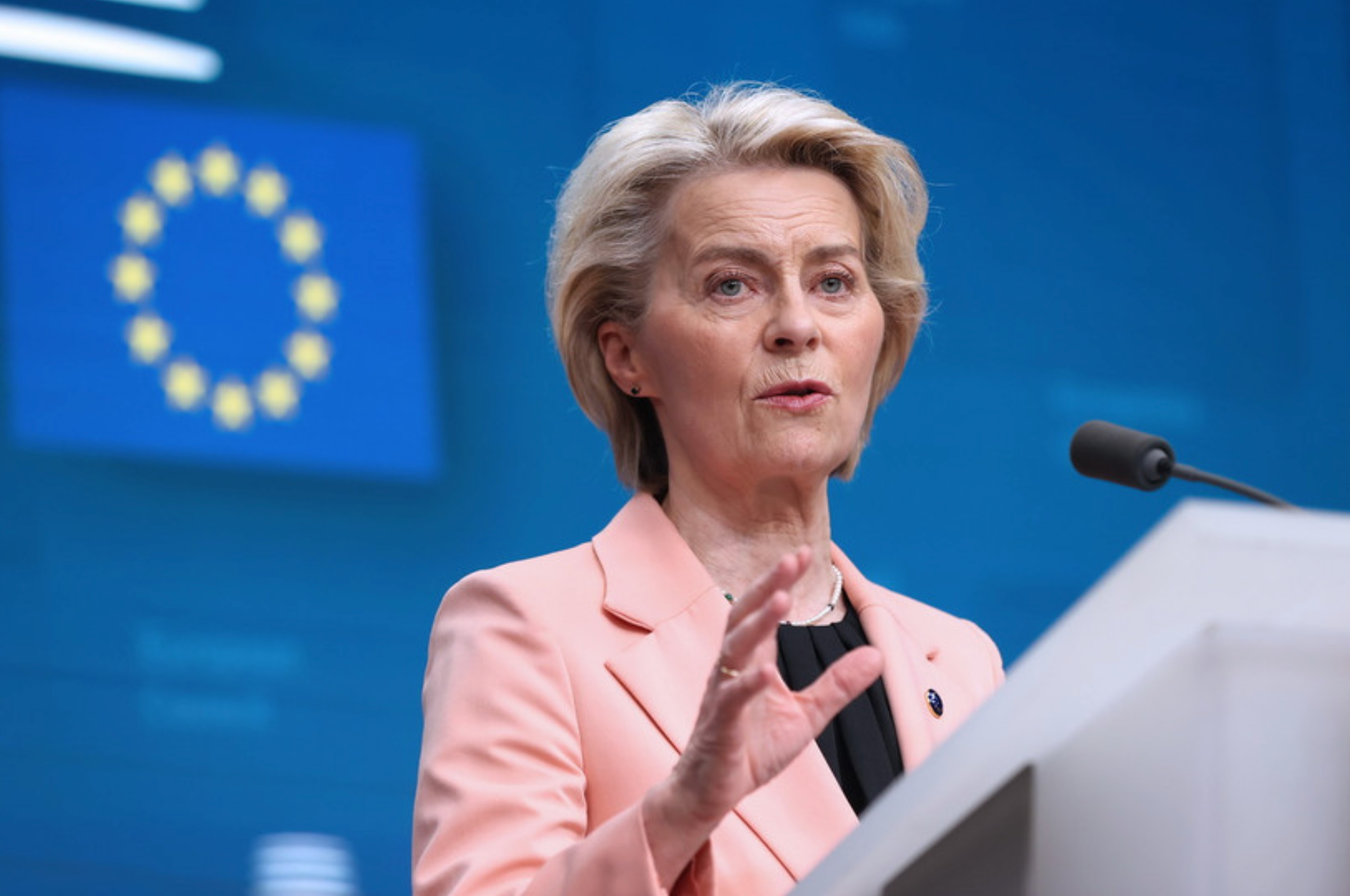
According to Reuters, following the Munich Security Conference last weekend in Germany, European Commission President Ursula von der Leyen summarized a profound sense of change among the continent's leaders with a forceful statement: "There are lines that have been crossed and there is no turning back."
Transatlantic relations had already been strained over the past year following President Donald Trump's return to the White House. However, the US president's audacious ambition to annex Greenland was the final straw, igniting doubts in Europe about Washington's commitment to protection through the NATO alliance.
In Munich, German Chancellor Friedrich Merz, French President Emmanuel Macron, and British Prime Minister Keir Starmer jointly pledged to build a"A stronger "European pillar" within NATO. A self-reliant defense system is not only a strategic goal but also a contingency plan in case Trump or a future American leader decides to abandon Europe.
"This new beginning is right under all circumstances. It's right if the U.S. continues to maintain social distancing, and it remains right as long as we cannot guarantee our own security," Prime Minister Merz said.
Another sign of Europe's extreme unease: Mr. Merz revealed he had begun discussions with President Macron about a common European nuclear deterrence mechanism. Currently, France is the only country with a completely independent nuclear arsenal, while Britain's Trident missiles still rely on technology and maintenance from the United States.
Internal barriers
The biggest question facing European leaders is whether they can translate their declarations into action, whether they dare to spend money to acquire and develop new weapons systems, fill gaps in their arsenals (such as long-range missiles), and coordinate effectively with each other.
The signals so far remain mixed. Regarding breakthrough defense budgets, due to concerns from Russia and pressure from Trump, European countries have surged military spending. In 2025, NATO members agreed to raise core defense spending from 2% to 3.5% of GDP, plus an additional 1.5% for other security investments. In terms of growth rate, European Commission President von der Leyen stated that European defense spending has increased by almost 80% compared to the period before the Ukraine war broke out.
The defense ministers of France, Germany, Italy, Poland, and Sweden have signed a letter of intent to develop the ELSA (European Long-Range Strike Approach) project, aimed at creating deep-strike missiles.
Nevertheless, many ambitious European projects remain stalled due to internal disputes. The FCAS next-generation fighter jet project (a collaboration between France, Germany, and Spain) has been on the verge of collapse for months because the parties involved could not agree on the proportion of economic benefits to be shared among the corporations.
In addition, there is a heated debate over whether EU defense projects should be exclusively for domestic companies or open to external partners. France firmly supports the "buy first, Europe first" approach, while Germany and the Netherlands want a more open approach.
Amidst these debates, Ukrainian President Volodymyr Zelensky brought everyone back to the harsh reality of the conflict: "In this war, weapons are evolving faster than the political decisions aimed at preventing them."