

India unveils the LR-AShM hypersonic missile with a range of 1,500km and a speed of Mach 10.
The LR-AShM missile, developed by DRDO, marks a strategic step for India in mastering hypersonic weapon technology and enhancing its maritime deterrence capabilities.
The LR-AShM is a long-range anti-ship hypersonic missile developed by the Defence Research and Development Organisation (DRDO) of India, marking a significant milestone in the modernization of New Delhi's strategic deterrence capabilities. The public display of this weapon at the parade commemorating the 77th anniversary of India's Republic Day demonstrates the nation's efforts to master the world's most advanced military technologies.
Technical specifications and combat capabilities of the LR-AShM
Technically, the LR-AShM fully embodies the characteristics of a next-generation offensive weapon with high maneuverability and an unpredictable flight trajectory. According to information from the Indian Ministry of Defence, this system is designed to meet the operational requirements of the naval coastal defense units, capable of effectively engaging both fixed and moving targets at sea.
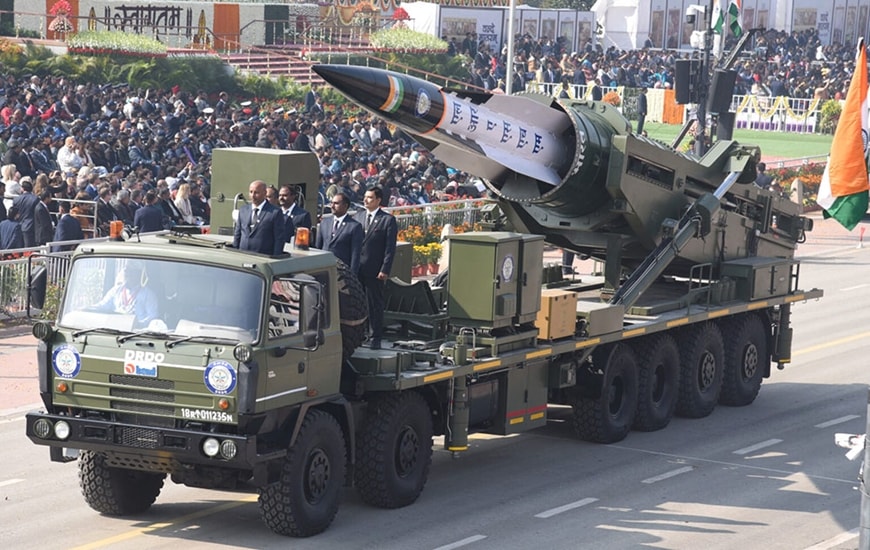
Notably, the missile boasts an exceptional range of over 1,500 km. The LR-AShM reaches a maximum speed of Mach 10 (equivalent to 10 times the speed of sound), while its average cruising speed is maintained at Mach 5. These parameters place the LR-AShM among the fastest and longest-range anti-ship weapon systems currently available, allowing it to penetrate modern air defense systems.
Strategic deterrence impact in the region
Beyond its technical aspects, the core value of the LR-AShM lies in its ability to create a deterrent advantage. With a range of 1,500 km, this system allows India to extend its "firepower sphere of influence" from land to key maritime routes. This enhances its access control and denial (A2/AD) capabilities against opposing naval forces in the Indo-Pacific region.
Furthermore, the emergence of LR-AShM forces potential adversaries to reconsider their force deployment strategies. The ability to attack from long distances beyond traditional capabilities requires adversaries to expand their defensive perimeters and disperse their formations, thereby increasing strategic costs and reducing overall operational effectiveness.
Determined to achieve self-reliance in defense technology.
The successful development of the LR-AShM also holds significant importance for India's defense self-reliance strategy. In the context of a volatile global arms supply chain, mastering hypersonic missile technology helps New Delhi reduce its dependence on external sources and enhance its position in the global defense industry value chain.
Overall, the LR-AShM is not just a technical achievement but also a strategic statement about India's role as a regional power. It provides a foundation for the country to continue developing more diverse long-range strike weapon variants in the future, in line with the military modernization trend that prioritizes quality and deterrence effectiveness.