

9 classic facts about Bodo/Glimt: The "Giant Slayer" shocks in the Champions League.
Following their miraculous run to eliminate Inter Milan and advance to the Champions League round of 16, the Bodo/Glimt phenomenon has garnered attention for its unique identity and intriguing behind-the-scenes stories.
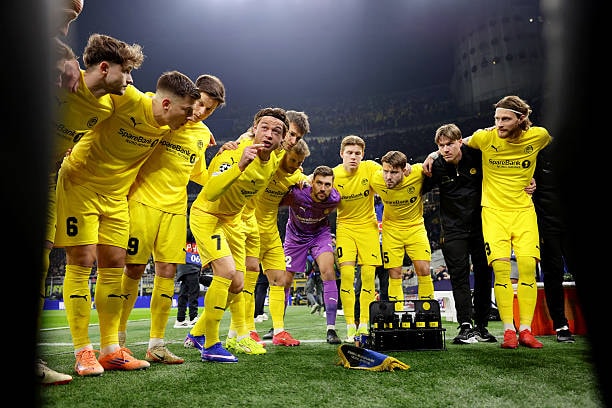
Bodo/Glimt is creating one of the biggest shocks in Champions League history this season. After defeating giants Inter Milan to secure their place in the last 16, the team from a small town above the Arctic Circle has proven that a combination of strong mentality and local identity can bridge any financial gap.
1. A one-of-a-kind toothbrush mascot.
Completely different from the rest of the football world, Bodo/Glimt's symbol is a giant yellow toothbrush. This unusual tradition began in 1974, when a fan used the toothbrush as a baton to conduct the choir in the stands. Since then, this item has become an indispensable symbol of good luck for the Norwegian team.
2. Jens Petter Hauge: The star returning from AC Milan
Bodo/Glimt's squad boasts Jens Petter Hauge, a player who impressed with 14 goals and 10 assists before moving to AC Milan. After winning the Europa League with Eintracht Frankfurt in 2022, he returned to his hometown club and continued to play a key role in the team's style of play.
3. He was once banned from competing due to extremely harsh weather conditions.
Despite dominating the northern Norwegian region since the beginning of the last century, Bodo/Glimt was once banned from the national championship due to its remote location and heavy snowfall. It wasn't until 1977 that these infrastructure and weather barriers were removed, allowing them to officially participate in the highest level of domestic competition.

4. The special meaning of the slash mark in a name.
Few people know that the name Bodo/Glimt underwent a small but symbolic change. Initially, the team used a hyphen, but to avoid confusion on betting slips and football news boards, the management decided to change it to a slash, creating a unique brand on the European football map.
5. The psychologist is a former Afghanistan veteran.
The secret to the players' ability to stay focused against top teams lies with Bjorn Mannsverk. He is a former army officer who fought in Afghanistan. With his steely psychological training methods, Mannsverk helps players cultivate intense concentration and unwavering composure in crucial moments on the pitch.
6. Bodo City is the European Capital of Culture 2024.
Not only famous for football, the city of Bodo was also honored as the European Capital of Culture in 2024. It is a vibrant city that rose from the ruins after World War II and boasts the Saltstraumen – the world's fastest tidal current.
7. NATO's strategic geopolitical position
Bodo is not only a sports center but also home to an important NATO air base. During the Cold War, this area was considered a key military stronghold with a state-of-the-art air defense system, protecting the alliance's northern gateway.
8. A team with strong local characteristics and cohesion.
In the era of globalized football, Bodo/Glimt has maintained its unique identity with a core group of local players. Their Champions League squad includes only five foreign players. The cohesion among these native players is the key to creating a resilient and hard-to-beat team.
9. The "dangerous" artificial turf of Aspmyra
The Aspmyra Stadium, with a capacity of only 8,300 seats, has always been a nightmare for visiting teams. Playing on artificial turf in harsh, snowy conditions gives Bodo/Glimt a huge advantage. Jose Mourinho's AS Roma suffered a humiliating 1-6 defeat there, a testament to the formidable strength of the team from the Arctic.