

Google Pixel 11 revealed with unusual 7-core Tensor G6 chip architecture on Geekbench.
The upcoming Pixel 11 flagship has just appeared on the Geekbench database, revealing the Tensor G6 chip with a unique 7-core CPU configuration and a maximum clock speed of 4.11GHz.
Google's next-generation flagship phone, the Pixel 11, has begun to reveal its initial specifications through the Geekbench benchmarking platform. The device appears with the codename "Google Kodiak," suggesting Google is actively testing the new Tensor G6 chip, even though the Pixel 10 series has only just been completed with the 10a version.
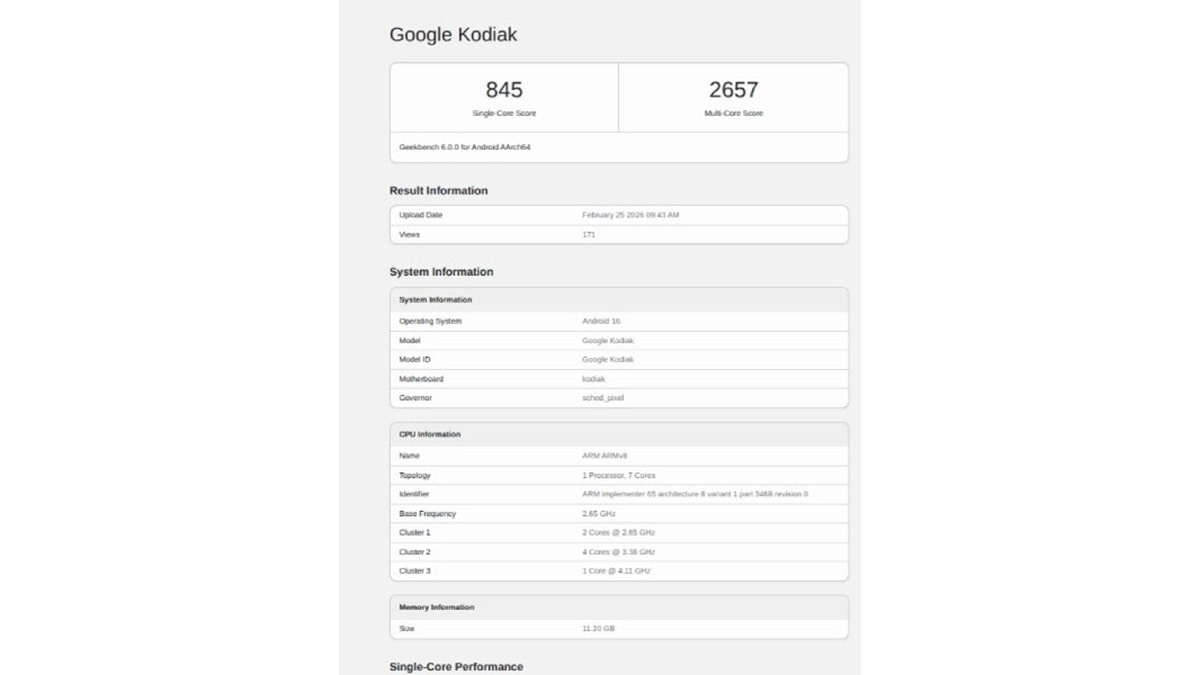
The Tensor G6 chip features a unique 7-core CPU architecture.
The most noteworthy aspect of this leak is the CPU configuration of the Tensor G6. Unlike the common 8-core architecture of the Pixel 10 Pro XL's Tensor G5, the new processor is reported to have only 7 cores. This change suggests that Google may be optimizing the number of cores to focus on single-core performance and energy efficiency.
Specifically, the Tensor G6 chip features a main Arm C1-Ultra core clocked at an impressive 4.11GHz. This is complemented by four Arm C1-Pro cores running at 3.38GHz and two power-efficient Arm C1-Pro cores operating at 2.65GHz. Compared to its predecessor, the clock speed of the Tensor G6 has been significantly increased.
| Parameter | Tensor G5 (Pixel 10 Pro XL) | Tensor G6 (11 pixels - Estimated) |
|---|---|---|
| CPU core count | 8 people | 7 people |
| Maximum clock speed | 3.78GHz (Cortex-X4) | 4.11GHz (Arm C1-Ultra) |
| GPU | PowerVR DXT-48-1536 | PowerVR C-Series CXTP-48-1536 |
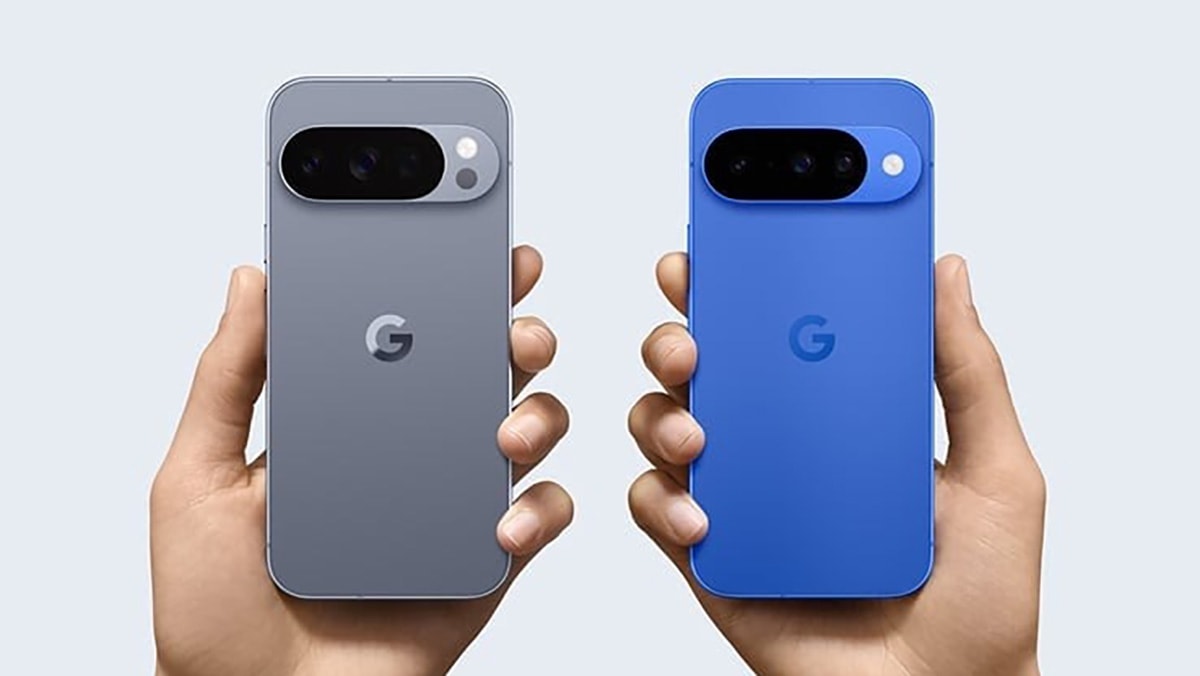
Upgrade the graphics and real-world performance of the prototype.
Besides the CPU changes, Geekbench data also reveals graphics upgrades. The Tensor G6 is expected to use the PowerVR C-Series CXTP-48-1536 GPU, an improvement over the PowerVR DXT series in the previous generation. This is expected to improve image processing capabilities and AI tasks directly on the device.
However, the device's current performance scores aren't particularly impressive, reaching only 845 single-core points and 2,657 multi-core points. According to technical experts, this is normal for an early prototype. These numbers primarily reflect hardware compatibility testing rather than the final performance of a commercial product. Google typically needs more time to optimize software and AI algorithms before official launch.
Google's decision to begin testing the Pixel 11 at this time suggests that the company is accelerating its product development cycle to better compete with rivals in the Android ecosystem. More details about security capabilities and AI features to replace Face ID are expected to emerge in the near future.