

Nghe An: Labor shortage after Tet holiday causes delays in many construction projects.
Following the Lunar New Year holiday of the Year of the Horse, many localities in Nghe An province entered the peak construction season. This is the time when numerous state-funded and residential housing projects begin, hoping for a prosperous and smooth new year. However, many contractors are facing a difficult problem: a shortage of construction workers, significantly impacting construction progress.
Many construction sites are short of builders.
Traditionally, construction projects restart after the Lunar New Year. Many contracts were signed in late 2025, awaiting implementation after the 2026 Lunar New Year. Furthermore, people often choose the beginning of the year to build houses, leading to a surge in demand for construction workers.
However, paradoxically, while demand is high, the labor supply is declining. Some construction workers went home for Tet (Lunar New Year) and haven't returned to work; others have switched to more stable occupations such as working as factory workers in industrial zones, in the service industry, or seeking employment elsewhere. As a result, many housing projects in Nghe An have to proceed slowly, or even temporarily halt, due to a shortage of workers.
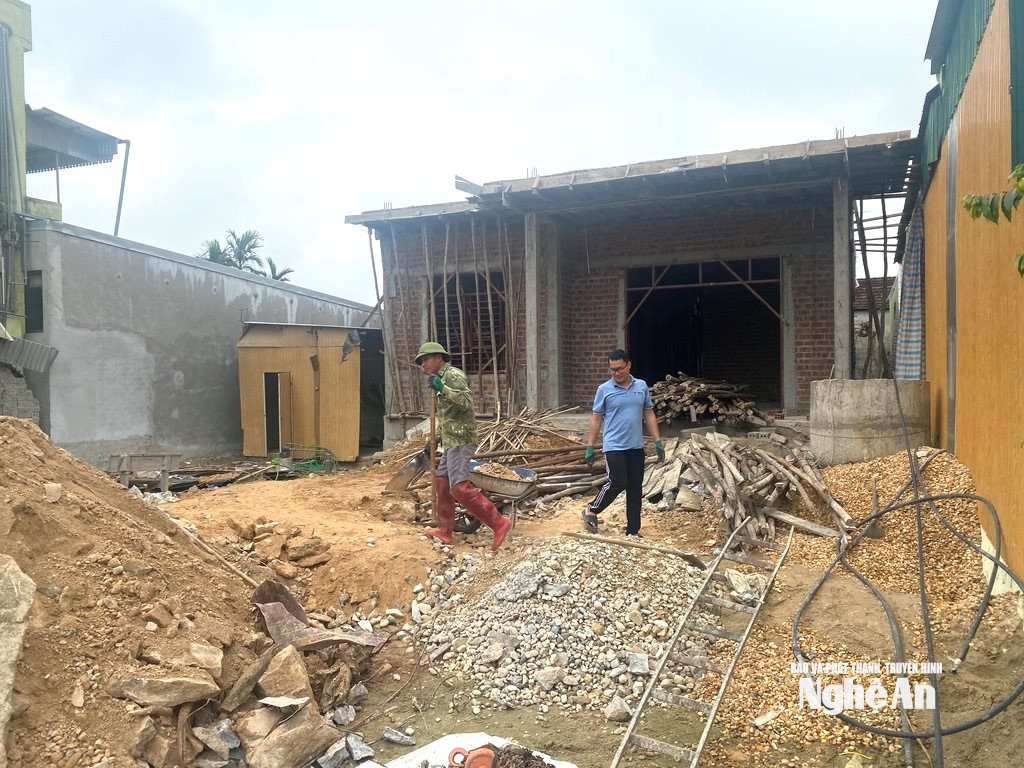
Mr. Nguyen Tho Minh in Quan Thanh commune started building his two-story house before Tet (Lunar New Year). To date, only the foundation has been laid. According to the plan, the construction team was supposed to return after the 10th day of the first lunar month to continue work. "However, at this point, we've only managed to mobilize 2-3 workers. Some have postponed work until after the 15th, and some say they won't start until after the first lunar month. The project is behind schedule, building materials are scattered everywhere, and my family has to hire someone to look after them," Mr. Minh shared.
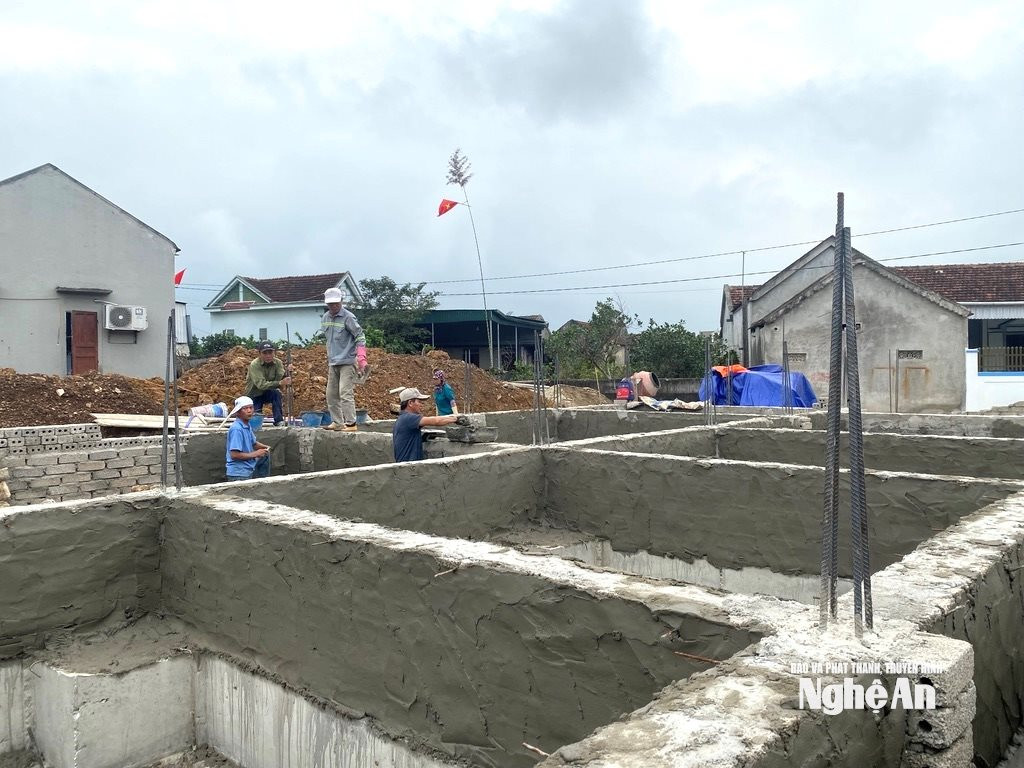
Not only are households struggling to find workers, but many contractors are also scrambling to ensure the progress of projects they've undertaken. Mr. Tran Van Minh, a construction contractor in Quan Thanh commune, said that his company is currently working on 2-3 projects simultaneously. However, after Tet, some workers quit, and others haven't fully returned.
"Due to a shortage of assistant workers, we sometimes have to bring in even the main workers to help out in order to meet deadlines. We have to rotate workers between projects, but this is only a temporary solution," Mr. Minh said.
A similar situation is occurring in many other localities in the province. A contractor in Van Kieu commune said that he is currently undertaking 4-5 small and medium-sized projects, including residential housing and some transportation infrastructure. However, the number of workers returning to work is only about 30-50% of the demand. Many people have resigned to work in other areas or have switched to new professions entirely.
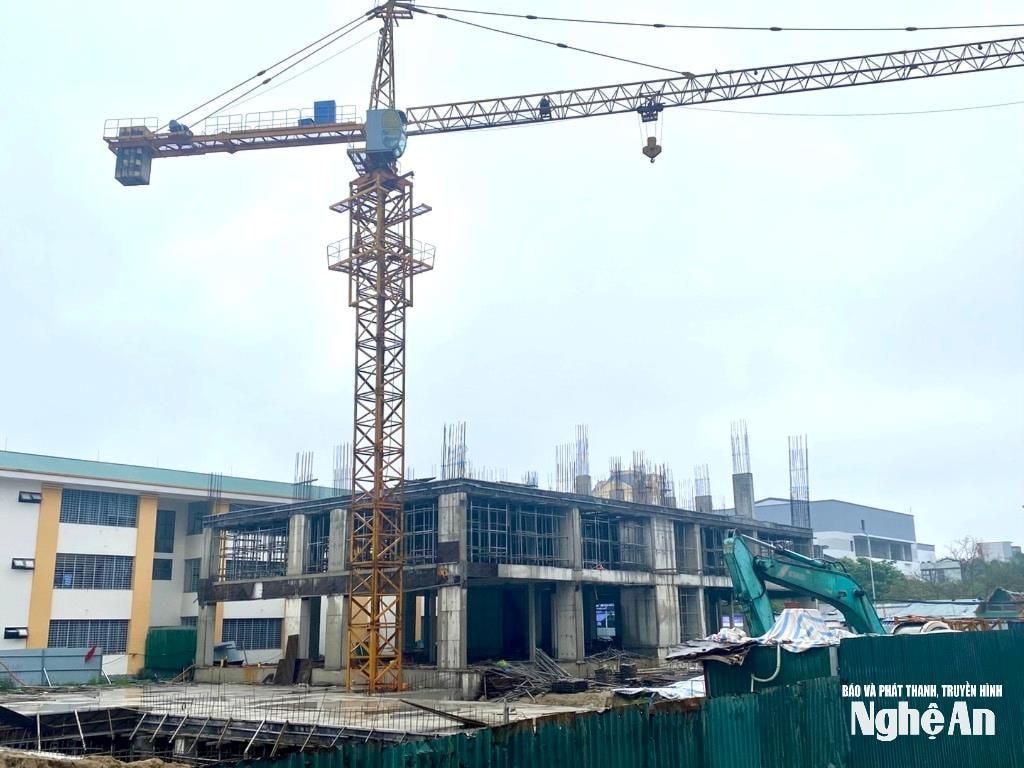
The labor shortage after Tet (Lunar New Year) is not only occurring at residential construction sites but is also evident in large-scale projects in Nghe An province. At the Quang Trung apartment complex project in Thanh Vinh ward, construction activity in the early days of the year was quite sluggish due to a lack of workers.
A representative from the construction company stated that the project involves the construction of two apartment buildings, a large volume of work requiring the regular mobilization of hundreds of laborers. However, after the Lunar New Year holiday, only over 50 workers returned to the construction site, less than half of the actual demand. "The labor shortage will certainly affect the construction progress, especially during this period when we need to accelerate the workload," the representative shared.
According to many contractors, the shortage of construction workers typically lasts from January to the end of March in the lunar calendar. This is the period when construction demand surges after the Tet holiday, while the "holiday month" mentality still influences a segment of freelance workers. The decrease in labor supply coupled with high demand drives up labor costs, increasing the investment costs of many projects.
A comprehensive solution is needed to retain construction workers.
Given the labor shortage in the construction sector, retaining and stabilizing the workforce of construction workers has become an urgent requirement, demanding comprehensive and long-term solutions. Surveys show that the income of construction workers is not too low compared to the average income of unskilled laborers; skilled workers can earn 10-12 million VND/month, while assistant workers earn 6-7 million VND/month. However, the salary is not enough to guarantee long-term commitment. The strenuous nature of the work, outdoor conditions, weather dependence, and inherent accident risks have reduced its attractiveness, especially to young workers.
In reality, the trend of job chuyển đổi (job shifting) is clearly evident. Ms. Tran Thi Phuong (from Dien Chau commune) shared that after Tet, she quit her job as a construction worker to apply for a job at a shoe factory near her home with a salary of over 9 million VND/month. “Working as a construction worker is hard; you have to work outdoors in the sun, rain, or wind. I want to find a more stable and less strenuous job,” she said.
Discussing this issue, Mr. Tran Van Thanh, Head of the Quality Management Department of the Nghe An Department of Construction, said that in recent times, Nghe An has simultaneously implemented many state-owned projects, urban areas, and public works projects, leading to a sharp increase in the demand for labor. However, the supply of construction workers is shrinking as many people move to work in industrial zones or leave the locality to seek more stable jobs. This shortage not only causes difficulties for households needing to build or repair houses but also directly affects the progress of transportation and technical infrastructure projects in the area.
To solve the problem of the construction worker shortage in the early months of the year, as well as in the long term, a coordinated effort from businesses, vocational training institutions, and state management agencies is needed. First, contractors need to improve employee benefits, gradually shifting from hiring seasonal workers to signing long-term contracts. Participation in social insurance, accident insurance, and ensuring basic rights for workers will create peace of mind and increase their commitment to the profession.
Simultaneously, vocational training needs to be prioritized in a systematic manner, with close collaboration between schools and businesses. Opening training courses on occupational safety, updating new construction techniques, and applying technology in construction not only improves skills but also contributes to improving working conditions. Promoting mechanization and using support equipment instead of strenuous manual labor is considered a fundamental solution to reduce pressure on construction workers, increase productivity, and minimize accident risks.
The shortage of construction workers after Tet (Lunar New Year) is not a new story, but in the context of a volatile labor market, for the construction industry in Nghe An to develop sustainably and meet the increasing demand for housing and infrastructure, stabilizing and improving the quality of the construction workforce is an urgent requirement. When workers are properly trained, work safely, and receive commensurate income and benefits, they will stay in the profession for the long term, thereby contributing to ensuring the progress and quality of projects, and promoting local socio-economic development.