

President Trump speaks of three 'options' for Iran's leadership.
US President Donald Trump said he has a list of "three options" for the leader of Iran, although he left open the possibility that the Iranian people themselves would make the choice.
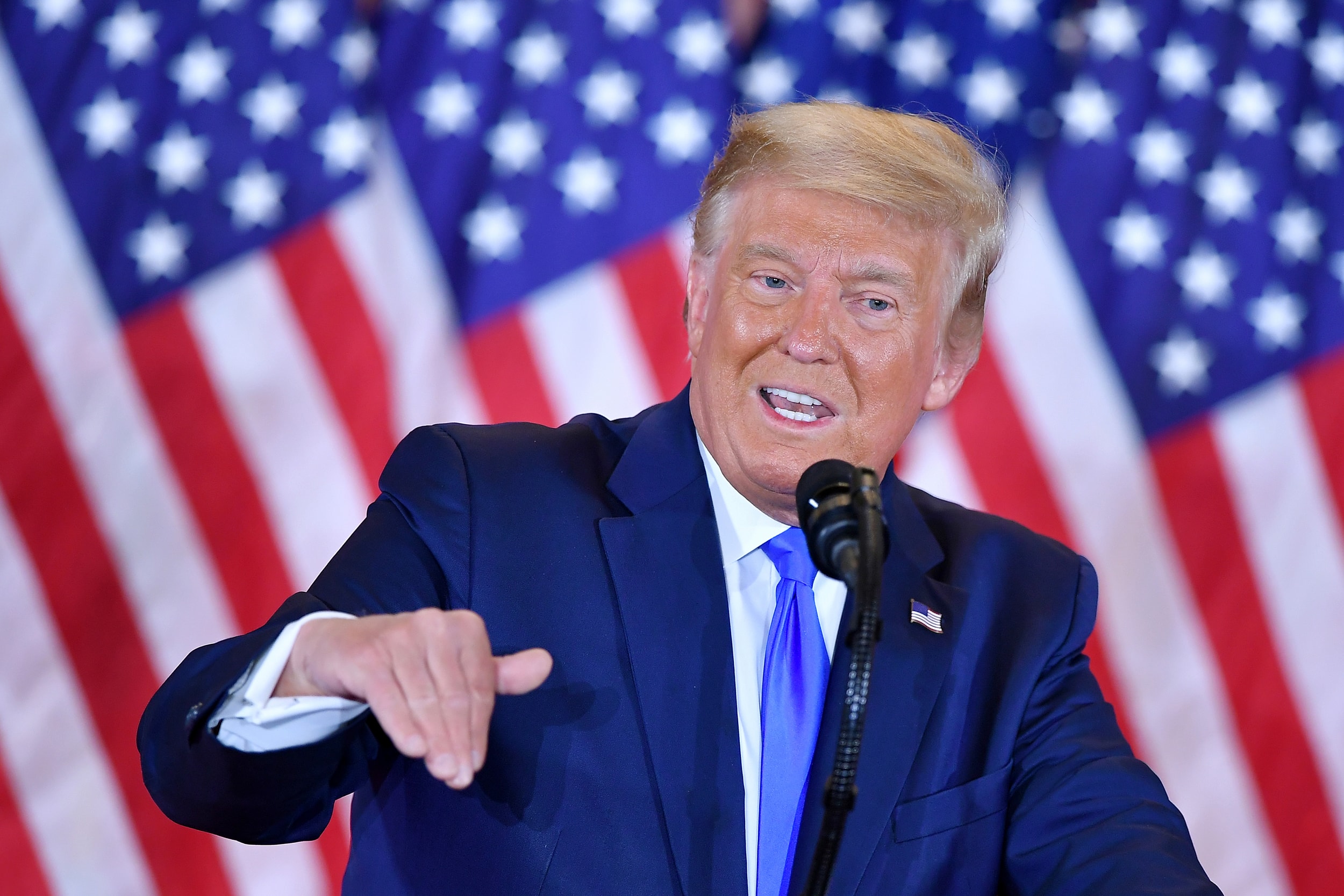
According to AFP on March 2, US President Donald Trump said on March 1 (Washington time) that he had a shortlist of three potential leaders for Iran, following his military campaign to overthrow the ruling clerics in Tehran.
Speaking to The New York Times, President Trump confirmed he is considering "three very high-quality candidates" for the top position in Iran, but declined to reveal their specific identities. "I'm not going to announce them right now. Let's just get the job done first," the White House occupant emphasized.
However, according to The Times, the US President also left open another possibility: that the Iranian people themselves would take the initiative to replace their government.
"Whether they do it or not is up to them," Trump said. "They've been talking about this for years, and now they clearly have an opportunity."
These two differing perspectives further highlight the uncertainty surrounding how the U.S. administration envisions Iran's political future following the military campaigns.
Notably, President Donald Trump directly compared U.S. actions in Venezuela to the current situation in Iran. He asserted that Venezuela was a "perfect" example of how a transfer of power could take place, amidst growing public concern about Iran's future following the death of Supreme Leader Ayatollah Ali Khamenei in U.S. and Israeli airstrikes.
"What we did in Venezuela, in my opinion, was a perfect scenario," Trump said in a six-minute phone interview with The New York Times, referring to the U.S. campaign earlier this year involving Nicolás Maduro.
Mr. Trump added: "Everyone kept their place, except for two people."
However, there is a major difference from the attack on Maduro, where the Venezuelan government apparatus remained largely intact. President Trump had previously stated that 48 Iranian leaders had been killed in the ongoing airstrikes.
On the same day, the US and its Arab allies unanimously condemned Iran for launching a wave of attacks on Gulf states where US troops are stationed, in retaliation for a previous joint US-Israeli airstrike.
In a joint statement with Bahrain, Jordan, Kuwait, Qatar, Saudi Arabia, and the United Arab Emirates, the U.S. State Department stated: "Targeting civilians and non-combatant nations is reckless and seriously destabilizes the region."