

From Resolution 80-NQ/TW to the mission of 'preserving and transmitting' the nation's memory.
Resolution 80-NQ/TW emphasizes the pivotal role of culture and sets forth the requirement to "put culture ahead to guide the way," deeply permeating politics, economics, society, environment, national defense, security, and foreign affairs.
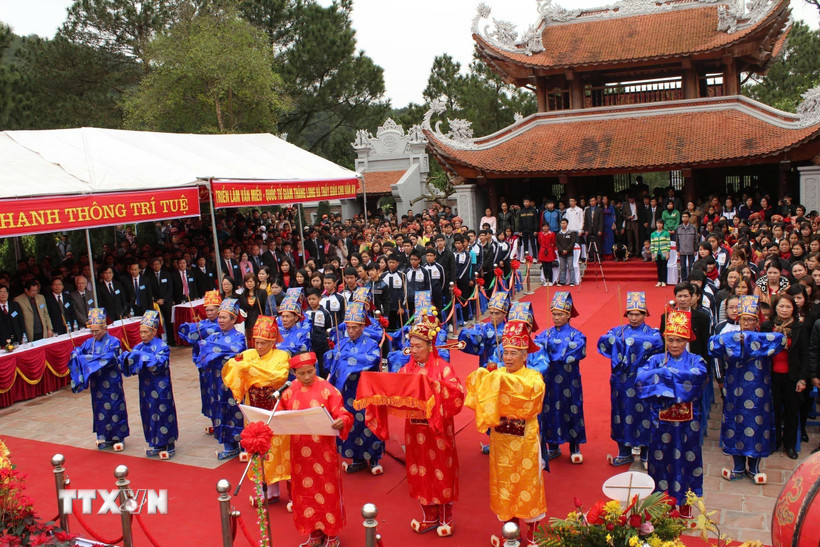
Resolution 80-NQ/TW of the Politburo on the development of Vietnamese culture identifies culture as the spiritual foundation of society, an important endogenous resource, and a regulating system for the rapid and sustainable development of the country.
In the context of digital transformation, identified by the 14th National Congress of the Communist Party of Vietnam as the main driving force of a new growth model and development method, the development of a strategy to promote the value of archival documents needs to be placed within the overall national cultural development strategy, while also being linked to the development of data infrastructure, digital services, and cultural industries based on digital content.
On the occasion of the State Archives and Records Department (Ministry of Interior) officially opening its "Space for Introducing Vietnam's World Documentary Heritage and Representative National Archival Documents" to the public, a VNA reporter had an interview with Mr. Dang Thanh Tung, Director of the Department, about the specific efforts to put Resolution 80 into practice.
Resolution 80 - a "measure" of the effectiveness of promoting the value of archival documents.
- Sir, Resolution 80-NQ/TW is considered a strategic guiding document on cultural development in the new era. How do you perceive the significance of this Resolution from the perspective of the archival sector?
Mr. Dang Thanh Tung:Resolution 80-NQ/TW not only emphasizes the pivotal role of culture but also sets forth the requirement to "lead the way with culture," deeply permeating politics, economics, society, the environment, national defense, security, and foreign affairs. These requirements lead to an important consequence: the institutions and resources that create the cultural infrastructure—including the archiving system—must shift from a supporting role to a constructive and value-disseminating role.
For a long time, promoting the value of archival documents has been understood in a relatively narrow sense: organizing the exploitation and use of archival documents for management, research, providing copies, displaying, exhibiting, and introducing archival documents. However, from the 2024 Archives Law to Resolution 80, "promoting value" has been elevated to a cultural strategy in the digital environment.
Because archival documents are part of national memory, contributing to the formation of cultural identity and value systems; they are original data with high authenticity, which can be transformed into cultural products and digital learning materials; and in the digital space, the lack of mechanisms for publishing official, original documents easily creates a "knowledge gap," providing an environment for fake information and historical distortion.
Furthermore, the demands of digital transformation place a dual task on archives – both preserving historical and cultural values (documentary heritage) and becoming a component of the data infrastructure serving modern governance. This aligns with the direction set forth by the 14th National Congress of the Communist Party of Vietnam, which emphasizes science and technology, innovation, and digital transformation as the main drivers of the new growth model.
At the same time, the Archives Law of 2024 clearly established the requirement to build a database of archival documents, connect, share, and organize the use and promotion of the value of archival documents in both current and historical archives.
Resolution 80, therefore, is not only the political and ideological foundation for the archival strategy, but also a "measure" of effectiveness: archives must make a practical contribution to cultural development, enhance the people's enjoyment of culture, strengthen the value system, develop the cultural industry, and strengthen the nation's soft power.
- So, can we understand that archival documents are no longer just administrative records or documents for management and research purposes?
Mr. Dang Thanh Tung:That's right. Within the framework of Resolution 80, archival documents must be redefined: not merely as a source of information, but as a documentary heritage, the "source" from which flows of knowledge, memory, and social beliefs originate.
Archival documents possess multiple layers of value: informational, legal, historical, and especially cultural—memory, identity, tradition, and norms. However, this "inherent power" will not develop spontaneously if documents remain merely in storage. It is only created when historical memory and knowledge are systematically disseminated, transformed into educational content, cultural products, digital learning materials, and become an integral part of the community's spiritual life.
Therefore, the mindset must shift from "having documents" to "creating cultural impact from documents."
Preserve to pass on
Một trong những yêu cầu quan trọng của Nghị quyết 80 là xây dựng con người Việt Nam phát triển toàn diện. Theo ông, tài liệu lưu trữ có thể góp phần giáo dục lịch sử, bồi dưỡng lòng yêu nước cho thế hệ trẻ như thế nào?
Mr. Dang Thanh Tung: Nếu chỉ giữ mà không trao truyền thì chưa đủ. Các nước trên thế giới đều dành một không gian trang trọng để giới thiệu di sản tư liệu của họ. Ở Việt Nam, chúng ta đã làm tốt việc xây kho để giữ. Nhưng nếu chỉ giữ mà giới trẻ - trong nước và quốc tế - không được tiếp cận thì giá trị ấy chưa được lan tỏa.
Chúng tôi xác định đối tượng được trao truyền trước hết là giới trẻ. Khi những “trang giấy còn trắng,” mình đưa lên đó những thông tin chính thống về lịch sử, về truyền thống, thì đó cũng là cách nuôi dưỡng tình yêu đất nước.
Đây không chỉ là câu chuyện văn hóa, mà còn là trách nhiệm xây dựng con người Việt Nam. Không phải chỉ làm cho một đứa trẻ lớn lên khỏe mạnh, thông minh, mà phải là một người Việt Nam biết yêu nước, biết trân quý truyền thống, biết mình được sinh ra từ một dòng giống anh dũng, không chịu cúi đầu.
ButNhưng trong bối cảnh giới trẻ có rất nhiều phương tiện giải trí, làm thế nào để thu hút các em?
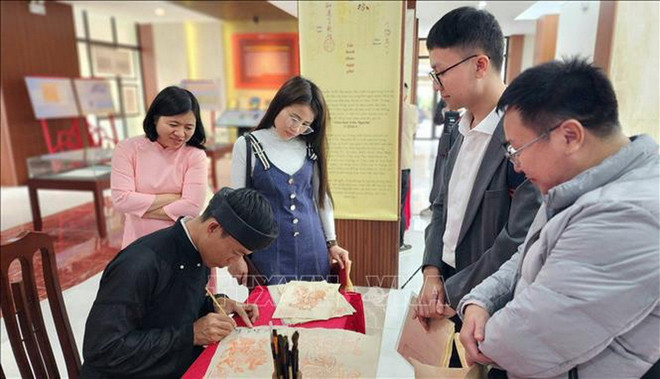
Mr. Dang Thanh Tung: Giáo dục lịch sử sẽ trở nên sinh động và thuyết phục hơn rất nhiều khi người học được tiếp cận trực tiếp với nguồn tư liệu gốc. Một văn bản hành chính, một bản đồ cổ, một bức thư tay của lãnh tụ, một sắc phong, hay một châu bản triều Nguyễn… đều là chứng nhân của lịch sử.
Khi học sinh, sinh viên được nhìn thấy những tài liệu ấy - dù là bản gốc hay bản số hóa các em sẽ cảm nhận rõ hơn tính xác thực, chiều sâu và sự liên tục của lịch sử dân tộc. Đó là điều mà sách giáo khoa khó có thể truyền tải trọn vẹn.
Chuyển đổi số là điều kiện, nhưng không phải mục tiêu cuối cùng. Không phải chỉ số hóa văn bản giấy tờ là xong. Quan trọng hơn là phải tìm ra phương thức phù hợp để giới trẻ tiếp nhận. Thứ nhất là vừa phải trực tiếp, thứ hai là cụ thể, và thứ ba là đáp ứng nhu cầu của công chúng, đặc biệt là của giới trẻ.
Chúng tôi đang đẩy mạnh xây dựng các chương trình tham quan chuyên đề, thiết kế nội dung phù hợp với từng lứa tuổi; phối hợp với giáo viên để lồng ghép tài liệu lưu trữ vào bài giảng. Từ đó, tài liệu không chỉ nằm trong kho, mà trở thành “giáo cụ trực quan” quý giá.
Currently, the Department is accelerating the digitization of rare and valuable documents, while also developing digital media products: online exhibitions, introductory videos, e-lectures, etc. These products not only serve the domestic market but also help international friends see, hear, and "touch" the roots and culture of Vietnam.
We also hope that in the coming period, with the light of Resolution 80, the archives will receive more attention from society and the State to continue to better fulfill the mission of preserving and transmitting traditional cultural values to the younger generation.
Along with the Politburo's Resolution 57-NQ/TW on digital transformation, implementing digitization, and shifting from paper to electronic documents as information carriers, and Resolution 80 on cultural development, the archival sector has been given "wings," helping to further enhance the value of archival documents.
Expanding cooperation, building a digital platform.
- How does the Department plan to expand cooperation with schools, sir?
Mr. Dang Thanh TungWe will coordinate with educational institutions and propose to the Ministry of Interior to exchange ideas with the Ministry of Education and Training to bring historical learning materials from archives into schools. This will include not only texts, but also films, clips, websites providing overviews of historical events; digital exhibitions; and e-books (mobile books) that students can read directly on their phones.
In the past, the National Archives Centers have also proactively organized many activities at schools in Lam Dong, Ho Chi Minh City, and Hanoi. But with the direction of Resolution 80, the approach will be more systematic and synchronized.
Original documents are of immense value. When students see original texts, the primary source of information, their perspective on history will be vastly different compared to simply reading a page from a book. Furthermore, the publication of authentic information from archival documents is a responsibility stipulated in the 2024 Archives Law, aiming to combat misinformation and unverified information online.
- At the event introducing the Documentary Heritage Space, many international delegates and students attended. Why does the Department focus on this group?
Mr. Dang Thanh Tung:The State Archives and Records Administration has a long tradition of international cooperation with archives agencies in Russia, France, China, the United States, Japan, South Korea, and other countries.
When international students have access to authentic information about Vietnamese history and culture, it will foster a greater affection for the country and its people. Positive memories of Vietnamese culture today will become a resource for future international cooperation. This is also a way to realize Vietnam's policy of being friends with all countries.
ButHe also mentioned building a national digital platform for documents and archives.
Mr. Dang Thanh TungAccording to the assigned tasks, the Department will coordinate with the Ministry of Public Security to build and operate a national digital platform for document management and archiving, to be implemented by 2030. The goal is to centralize archival documents, especially those generated during the operation of agencies, ensuring the principles of data management: accuracy, completeness, cleanliness, viability, consistency, and shared use.
When data is centralized, verified, and secured, it will become a legitimate source of information serving various aspects of social life in the digital age.
I would also like to add that valuable documents that remain unknown will have difficulty spreading their value. To transform information from documents into a soft power for the nation, the collaboration of media, educational institutions, and the entire society is needed.
We are doing this not only for documentation, not only for culture, but for building the Vietnamese people. If the younger generation is not equipped with traditional values, then no matter how wealthy we are, the survival of the nation cannot be guaranteed.
Resolution 80 is like lifting a curtain. Society now views the role of original information, culture, and archives differently. With this understanding, the archival sector must act immediately – not waiting for "a large house to welcome guests," but readily dedicating the best space within administrative agencies to serving cultural revitalization and transmitting Vietnam's soft power to society.