
The US showcased its advanced air force assets in an operation to attack targets in Iran.
CENTCOM has released a list of advanced weapons systems in its airstrike campaign against Iran, ranging from B-2 stealth bombers and F-35s to support from space forces and cyber warfare capabilities.
Immediately after coordinating with Israel to launch airstrikes against Iran, the U.S. Central Command (CENTCOM) released details about the key weapons systems Washington deployed. While the specific number of each system was not disclosed, reports from the Air Force and Space Forces indicated a massive deployment of next-generation bombers and fighter jets.
The power of strategic stealth aircraft
The core force in the initial attack was the B-2 Spirit strategic stealth bomber. According to air traffic data estimates, at least four B-2s conducted round-trip flights directly from the US mainland to attack Iranian missile facilities. Each carried 2,000-pound (over 900kg) precision-guided bombs, allowing them to destroy hardened targets from high altitudes while maintaining stealth against enemy radar.
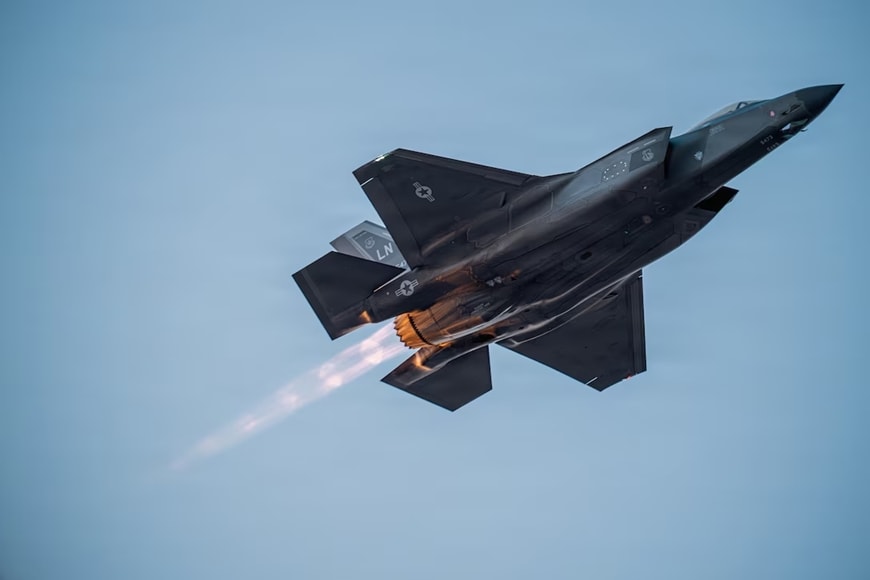
In addition, the US Air Force has deployed approximately 30 F-35 Lightning II multirole stealth fighter jets. These squadrons are deployed from the 48th Fighter Squadron at RAF Lakenheath (UK) and the 158th Fighter Squadron from Vermont (USA). Furthermore, the Marine Corps has contributed a squadron of F-35C aircraft operating from the USS Abraham Lincoln aircraft carrier in the southern region of Iran.
The appearance of F-22 fighter jets and air defense systems.
Notably, approximately 10 F-22 Raptor air superiority fighters from Langley-Eustis Air Force Base (Virginia) were deployed to Israel just before the operation. This marks the first time this aircraft type has been present in Israel for direct combat missions. Previously, the F-22 participated in the Midnight Hammer operation targeting Iran and the Absolute Resolve operation in Venezuela.
Supporting the stealth fighter force are dozens of F-15s, F-16s, and especially the "Wild Weasel" variants, which are specialized in suppressing enemy air defense systems (SEAD). A squadron of A-10 Thunderbolt II ground attack aircraft has also been deployed, although the US military has not yet released detailed information about their specific missions.
Electronic command, control, and warfare system
To ensure battlefield coverage, the U.S. military deployed six E-3 Sentry early warning aircraft along with their distinctive rotating radar systems. The U.S. Navy also added E-2D Hawkeye aircraft from aircraft carriers. The support network also included:
- E-11 BACN airborne communications relay aircraft.
- P-8A Poseidon long-range patrol and anti-submarine aircraft.
- The new generation KC-46 Pegasus aerial refueling aircraft.
- Unmanned aerial vehicles (UAVs) are used for reconnaissance and attack.
On land and at sea, the U.S. maintains a powerful firepower of M-142 HIMARS multiple rocket launchers, Tomahawk cruise missiles launched from destroyers, and Patriot and THAAD defense systems to intercept any ballistic missile counterattacks from Iran.
The role of space warfare and its operating costs.
General Dan Caine, Chairman of the Joint Chiefs of Staff, emphasized that the effectiveness of the operation was crucially contributed to by the Space Command (SPACECOM) and the Cyber Command (CYBERCOM). These units employed non-military measures to disrupt Iran's sensor and satellite networks, while also providing guidance and precise targeting for the attacking forces.
From an economic standpoint, estimates from Anadolu show that Washington spent approximately $779 million in the first 24 hours of the operation alone. Preparations, equipment transfers, and maintaining the carrier strike group cost hundreds of millions of dollars more each day, demonstrating the high cost of a large-scale military operation in the Middle East.
Thanh Vinh