
Huong's return
Like the last peach blossoms to bloom in the bitter cold of the Arctic winter, Hương's choice was brimming with hope and faith. Hương's choice was against the majority, undoubtedly difficult, and must have caused many sleepless nights, but Hương had made her decision.

Do Bich Thuy/Present: Hong Toai• March 8, 2026
*****
About a year ago, I had an appointment with a rather special person. I say special because, during a trip to Ha Giang, I had visited the now-famous Lo Lo Chai village at the foot of the Lung Cu flagpole, but she was in Hanoi, finishing her graduation thesis. This girl, born in 2002, is from the Lo Lo ethnic group and has a beautiful name: Diu Thi Huong. Huong and her family own a café that's almost a must-see for tourists visiting Lo Lo Chai. The café is actually the house where she, her younger brother, and her parents live. They run the café on the porch and in the yard, under the shade of peach trees that always bloom in the spring. It's a beautiful, clean, friendly, and welcoming café where visitors can enter and admire their traditional living space. Since Huong was away, I asked for her phone number and arranged to meet her in Hanoi. So I took a trip from Hanoi to Lo Lo Chai, then back to Hanoi to meet Huong. Huong was petite and pretty, with particularly intelligent eyes, and her voice still carried a hint of the highlands that only those of us who live there could recognize.
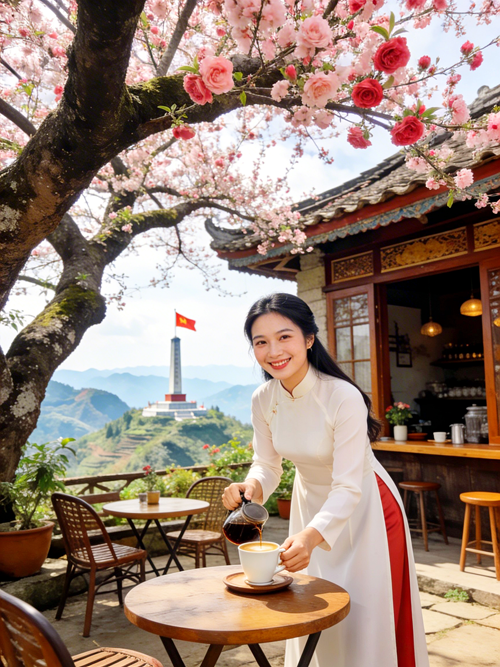
Huong was the first girl from Lo Lo Chai to go to university. She studied a very difficult subject – Chemistry – at the Hanoi University of Technology. Before graduating, Huong received a job offer from a foreign company, allowing her to work while studying. Her future looked very bright. But Huong decided to return to Lo Lo Chai. She didn't stay in Hanoi to work, nor did she pursue a master's degree; her Hanoi University of Technology degree was temporarily put away in a drawer.
Huong wanted to return to focus on the coffee shop – the result of an investment by an elderly Japanese man. He loved Lo Lo Chai so much that he invested his own money to help Huong's family open the shop, with all the strict criteria he set. Huong was away studying, and her parents weren't used to sitting in one place, so sometimes the shop was open but there were no customers; her parents preferred working in the fields. Huong regretted the money, effort, and affection of a Japanese man who wasn't related to her, so she decided to return.
Huong told me that the children in Lo Lo Chai now hardly speak the Lo Lo language anymore, the women have abandoned traditional crafts, and few know how to embroider, sew, or sing folk songs... Huong aspires to expand her cafe, organize workshops for children and young women, and strive day by day, little by little, to preserve what her ancestors are gradually losing. Huong sees all the difficulties ahead and in the long term, even the most delicate ones like falling in love or getting married. Her peers have all gotten married, and Huong says she doesn't even know if she'll ever meet someone suitable to love.
But Huong still came back.

I originally intended to use Huong's story as the basis for an entire film script; it's full of inspiration for life, love, and pride for my homeland. I want not only Huong, but many other young women, born and raised in poor rural areas, to receive an education, gain knowledge and resilience, and be willing to choose more difficult, longer, and more winding paths in order to reach greater goals, not just for themselves.
I also met another person, the first doctor of the Lo Lo ethnic group - Dr. Lo Giang Pao. It turned out that Dr. Lo Giang Pao was an old friend of Huong's grandmother. The Lo Lo community in our country is not large, mainly living in the rocky plateau region of what is now Tuyen Quang, so it's not surprising that they knew each other.
Mr. Lo Giang Pao shared many wonderful stories about the Lo Lo ethnic group, a people with incredibly unique traditional cultural values. And clearly, like many other ethnic groups, these values are fading away—they are visible, tangible, and palpable. Mr. Pao told me that people like Huong are rare, even very few. But with someone like Huong, the Lo Lo community in particular, and the ethnic minority communities in Vietnam in general, can have complete faith and hope in a generation of young, educated women who are ambitious and eager to contribute to the development of their homeland and country.
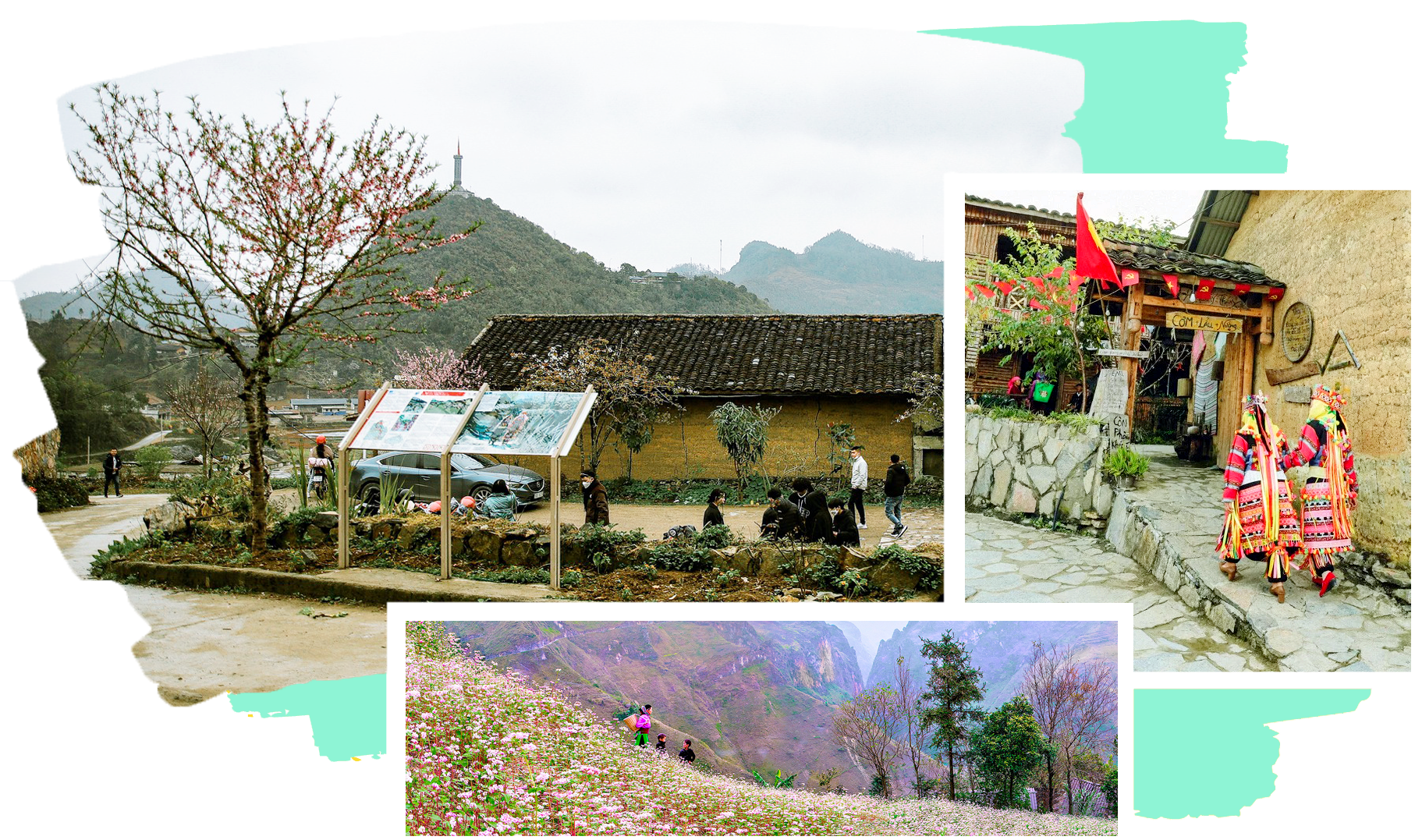
Our Vietnam is not lacking in talented, courageous, and dedicated women who have made immense contributions to the history of nation-building and defense throughout its long history. From the Trung Sisters and Trieu Sisters to the generations of brilliant women in the wars of national defense, to the intellectuals present in many difficult fields requiring exceptional intellect, even fields seemingly only for men, women have participated. But what I have thought about most throughout my life as a journalist and writer is the women in remote, mountainous regions, the women of ethnic minorities, who, from generation to generation, diligently and tirelessly dedicate their minds and strength to their families and clans. It's not that they don't want to break free, but it's simply too difficult. Prejudice is something invisible yet incredibly heavy.
Encountering a girl like Dìu Thị Hương was, for me, like seeing the last peach blossoms finally bloom in the bitter cold of the Arctic winter, full of hope and faith. Hương's choice was against the majority, undoubtedly difficult, undoubtedly caused many sleepless nights, but Hương made her choice.
I hope to one day see Huong succeed with the beautiful plans she intends to implement in her hometown. Looking further afield, Huong left her hometown for four years to attend university, and perhaps that was the time she most deeply appreciated her love for that beautiful village nestled in the mountains. I hope and believe that, in the future, not only Huong but also many other young women will be ready to face challenges to beautify their homeland.
Do Bich Thuy