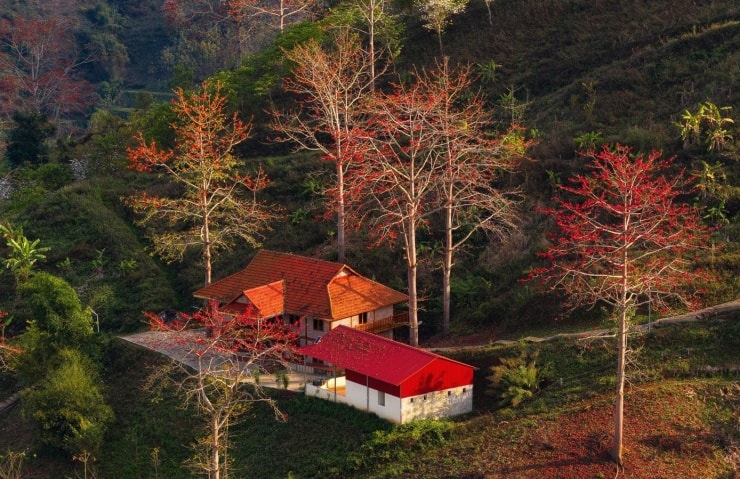
Son La: Admire the fiery red blossoms of the kapok tree amidst the vast forests of Northwest Vietnam.
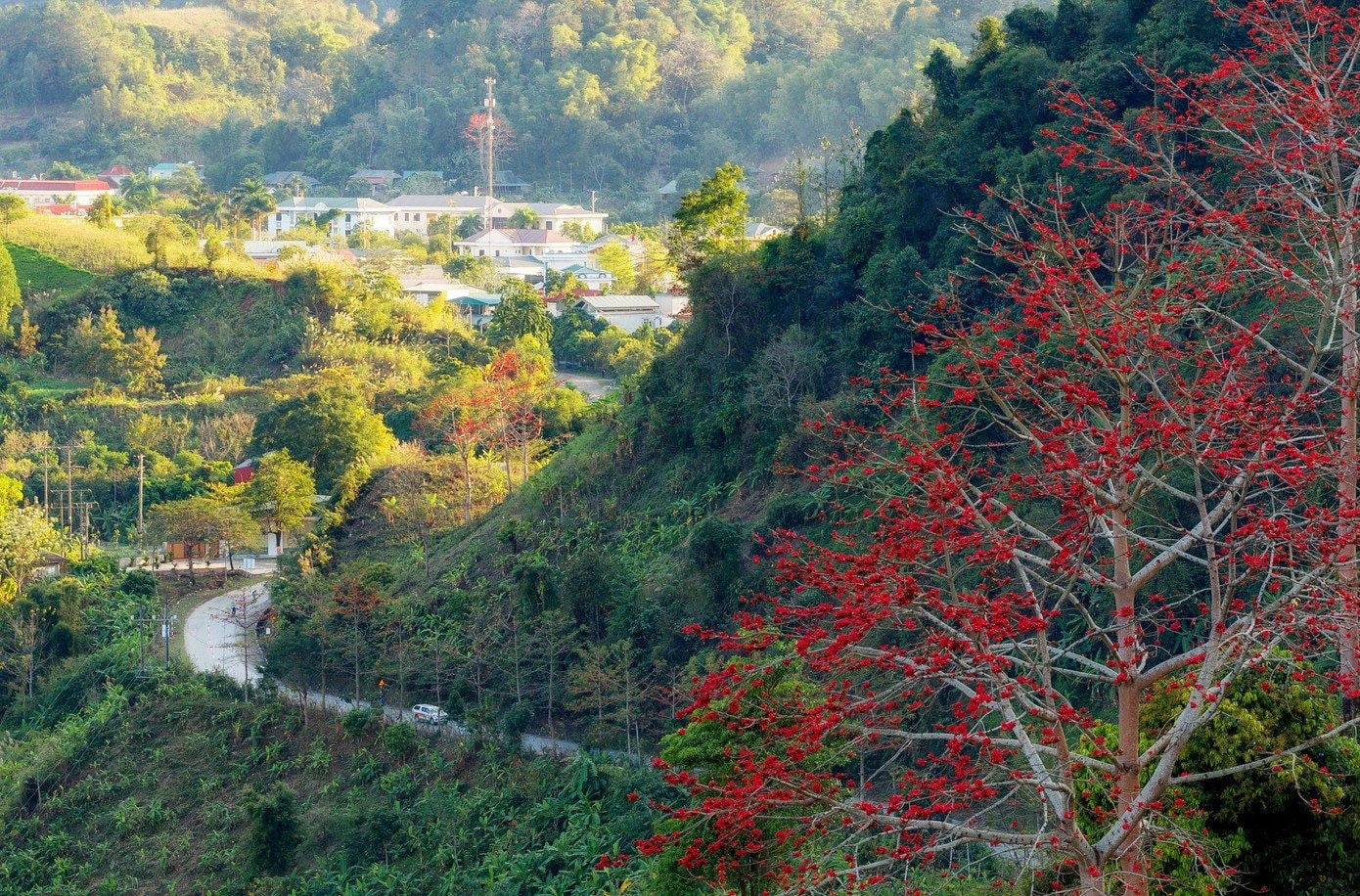
Every March, Son La province is adorned with the vibrant red of ancient kapok trees, creating an inspiring journey of cultural and natural discovery in the heart of Northwest Vietnam.
As March begins and the cold weather recedes into the mountains, the kapok flowers return to Son La like a regular promise from nature. After just one night of dry mountain winds, visitors can admire clusters of bright red flowers against the deep blue sky, awakening the rhythm of life in the remote villages.
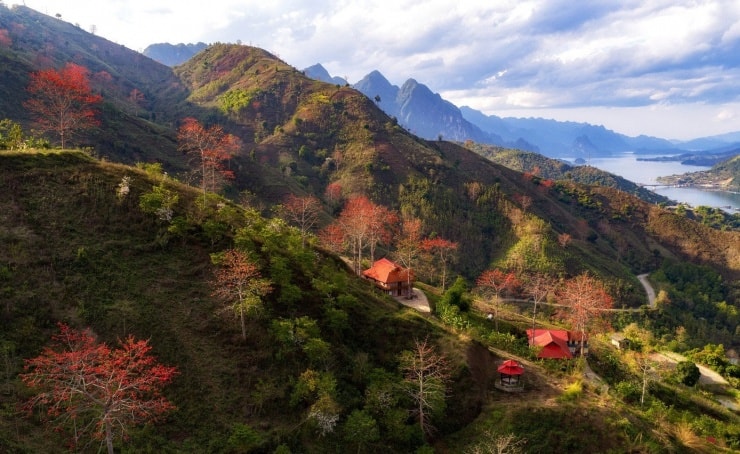
The proud beauty of mountain forest flowers
The kapok tree (also known as the Bombax ceiba) is found throughout the mountains and forests of Son La, reaching high from stream banks and riverbanks to the edge of villages. Its gnarled trunk and slender branches, though rough, possess a resilient vitality, symbolizing the strong character of the highlanders. The vibrant blossoms are not only a visual highlight but also evoke memories of old villages.
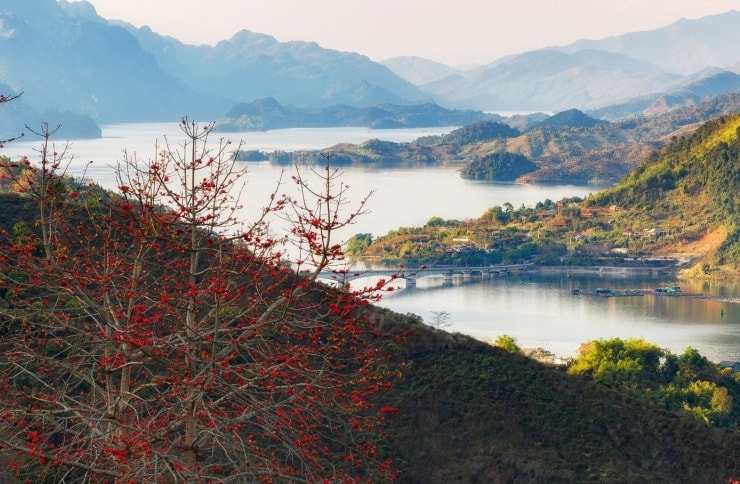
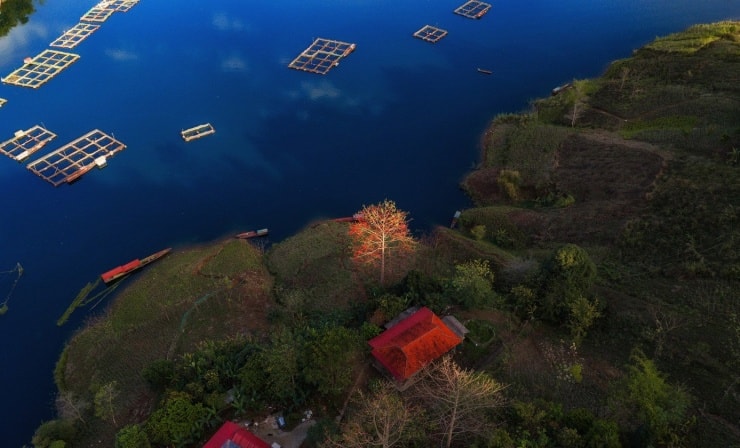
In the riverside area of Da River in Quynh Nhai district, the kapok flower season becomes more captivating than ever. The vibrant red blossoms, like blazing flames, burst forth amidst the vast expanse of sky and water, creating a spectacular scene that enchants any traveler who visits.
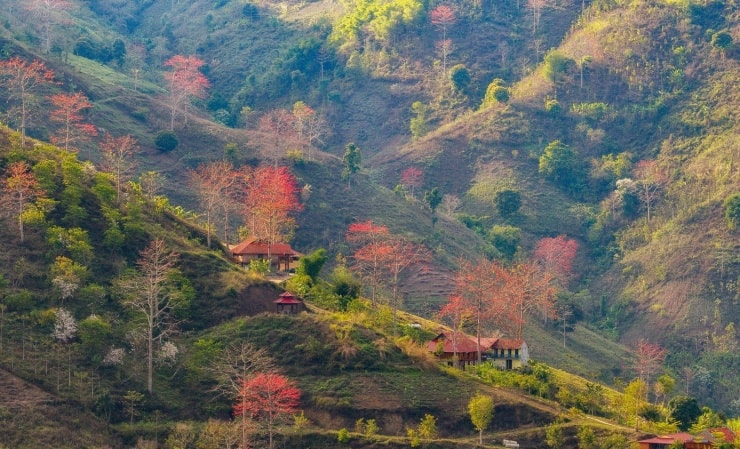
There are kapok trees standing alone amidst lush green cornfields, and there are others that are hundreds of years old, silently standing there as historical witnesses, observing the ups and downs and changes of the villages in Northwest Vietnam through many generations.
Signs of the harvest and festivals
For the ethnic minorities in Son La, the blooming of the kapok tree is not simply for admiring. It is an important signal indicating the start of a new farming season and also announces the upcoming vibrant New Year festivals. The red color of the flowers seems to energize the people before they embark on days of hard work.
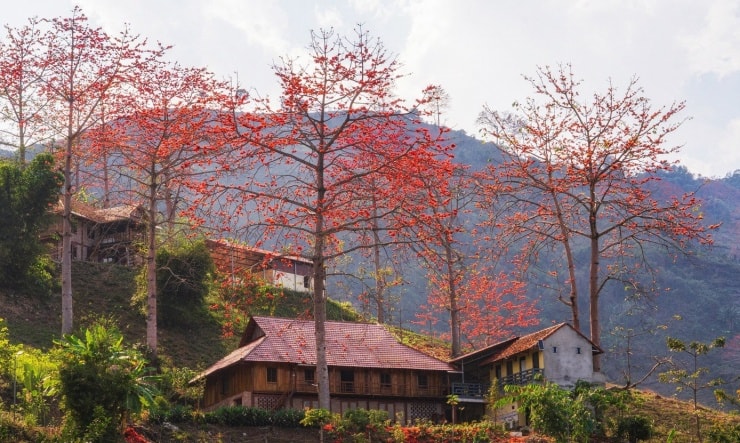
In particular, kapok flowers only bloom when all the leaves on the branches have fallen. On the bare branches, the thick, five-petaled, deep red flowers with prominent yellow stamens create a powerful and decisive beauty. When the flowers fall, they form a red velvet carpet covering the ground, bringing a rare romantic beauty amidst the vast forest.
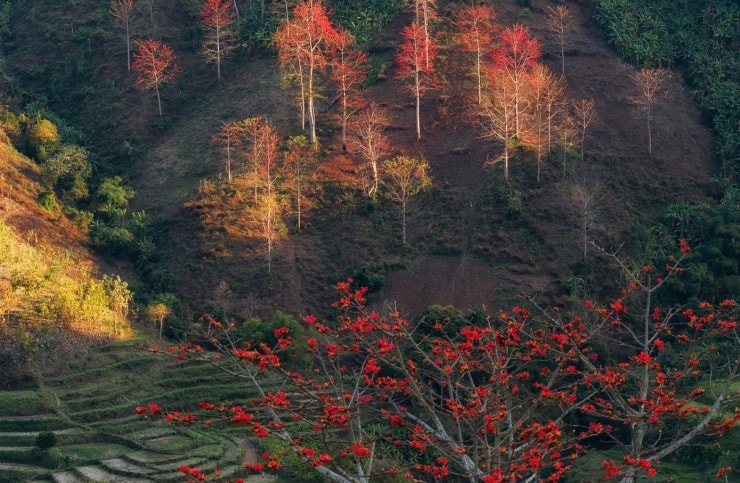
A new highlight on the Northwest tourism map.
In recent years, along with plum blossoms, peach blossoms, and camellias, the kapok flower season has gradually become a tourist "specialty" of Son La. Many young people frequently come here to take photos and share the vibrant scenes on social media, contributing to promoting the pristine beauty of this land to international friends.
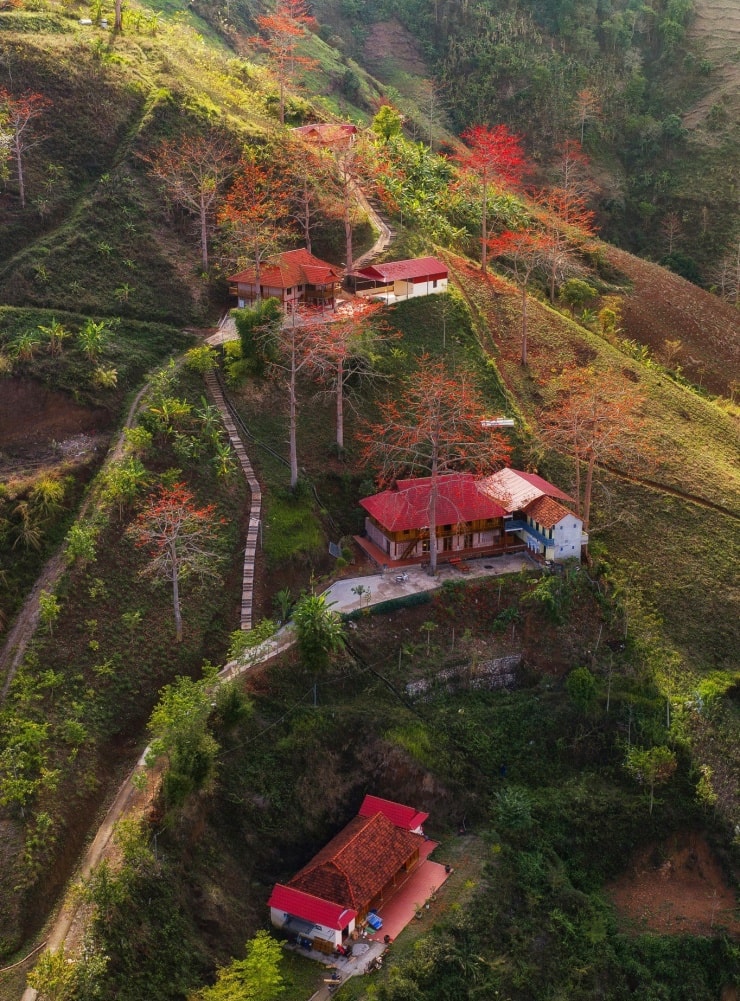
Local authorities and residents have also begun to exploit the economic value of this natural beauty. Many homestays have taken advantage of their location near the ancient kapok trees to create experiential spaces, combining storytelling about local culture and introducing highland cuisine to tourists.
Preserving and promoting the value of the kapok flower is not only about preserving the landscape but also about preserving the irreplaceable cultural memories and colors of Son La. This is the right direction in developing green and sustainable tourism, recognizing natural values as a precious asset of the Northwest highlands.