

The history of the development and disarmament of Africa's only nuclear arsenal.
South Africa once possessed six nuclear weapons before voluntarily dismantling them in the 1990s. The Pelindaba Treaty currently maintains a denuclearized state in the region.
Africa is the only continent in the world where a nation successfully developed nuclear weapons but then voluntarily destroyed its entire arsenal. This process was not only a historic turning point for South Africa but also reshaped the region's security trajectory for decades to come.
South Africa's nuclear program and disarmament process
Between 1970 and 1980, the apartheid South African government successfully developed six types of aircraft-launched nuclear weapons. The strategic objective at the time was to counter revolutionary movements in Mozambique and Angola, which received support from the Cuban and Soviet militaries during the Cold War.
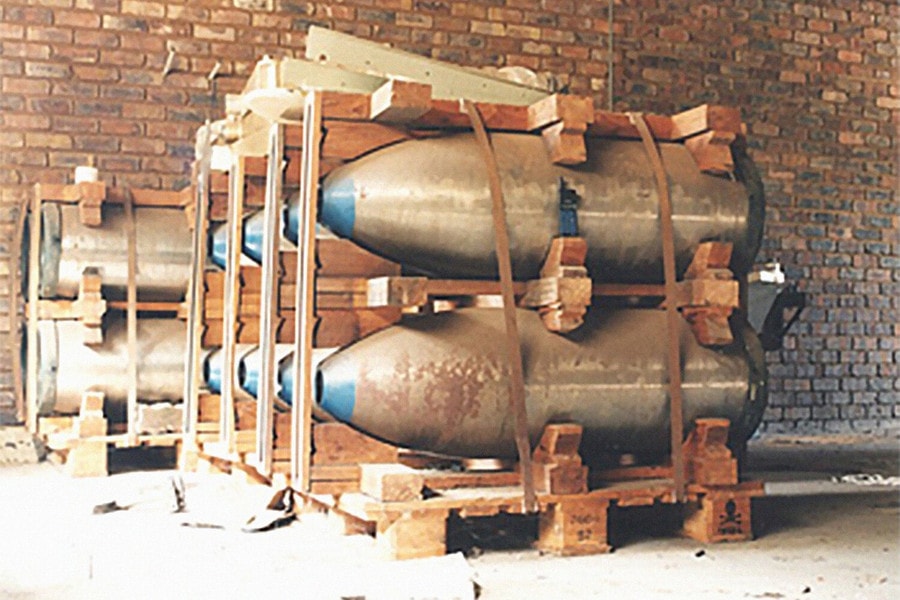
However, by the late 1980s, pressure from international sanctions and the high cost of maintenance forced the government to change course. In particular, concerns about the transfer of power to the African National Congress (ANC) prompted President Frederik Willem de Klerk to decide to dismantle the nuclear arsenal in 1989-1990, just before the release of Nelson Mandela.
Pelindaba Treaty: Nuclear-Weapon-Free Zone
The Pan-African ideal of a continent free of weapons of mass destruction has been realized through the African Nuclear Weapon-Free Zone Treaty, also known as the Pelindaba Treaty. This treaty, adopted on June 2, 1995, marks the commitment of South Africa and its neighbors to the complete elimination of nuclear weapons from military life.
Although signed early on, the Pelindaba Treaty did not officially come into effect until July 15, 2009. This document supplements the United Nations Nuclear Non-Proliferation Treaty (NPT), affirming the right to use nuclear energy for peaceful purposes but absolutely prohibiting the manufacture, testing, or possession of nuclear explosive devices within the territories of member states.
The challenge of double standards in the global nuclear order.
Despite Africa's firm stance on denuclearization, its security calculations remain affected by ambiguities in the international system. Military analysts point out that NATO's nuclear arms sharing agreement allows for the storage of over 100 US nuclear weapons in non-nuclear states such as Germany, Italy, and Türkiye, raising questions about the fairness of the NPT.
Furthermore, countries like India, Pakistan, and Israel remain outside the NPT's purview or maintain ambiguity regarding their nuclear deterrence capabilities. This places Africa in a dilemma: on one hand, it faces moral leadership in disarmament, and on the other, concerns about its ability to protect its sovereignty against external military intervention.
Overall, Africa's decision to abandon nuclear weapons is a testament to its efforts towards building lasting peace. However, against the backdrop of escalating global geopolitical tensions, maintaining a denuclearized status while ensuring national security remains a challenging strategic dilemma for the continent.