

China develops drone from bamboo composite: Reaches 100 km/h and saves 20% on costs.
The new fixed-wing drone model uses bamboo-based composite materials, reducing weight and production costs by 20%, opening up a sustainable path for the unmanned aviation industry.
A new breakthrough in aerospace technology using natural materials.
Chinese scientists have just announced a breakthrough in unmanned aerial vehicle technology by successfully creating a fixed-wing drone from bamboo-based composite materials. The project is the result of a collaboration between the Bamboo and Cloud International Center, the Ningbo Institute of Innovation Research at Peking University, and Long Bamboo Technology Group, aiming to create a lightweight, efficient, and environmentally friendly flying solution.
| Specifications | Detailed value |
|---|---|
| Wingspan | 2.5 m |
| Weight | Approximately 7 kg |
| Maximum flight speed | Over 100 km/h |
| Operating hours | Over 1 hour |
| Operating technology | Vertical take-off and landing (VTOL) |
The prototype drone demonstrated impressive performance during a successful flight in Tianjin in February. Its vertical take-off and landing capabilities allow it to operate flexibly in a variety of terrains, from rugged mountainous areas to cramped urban spaces.
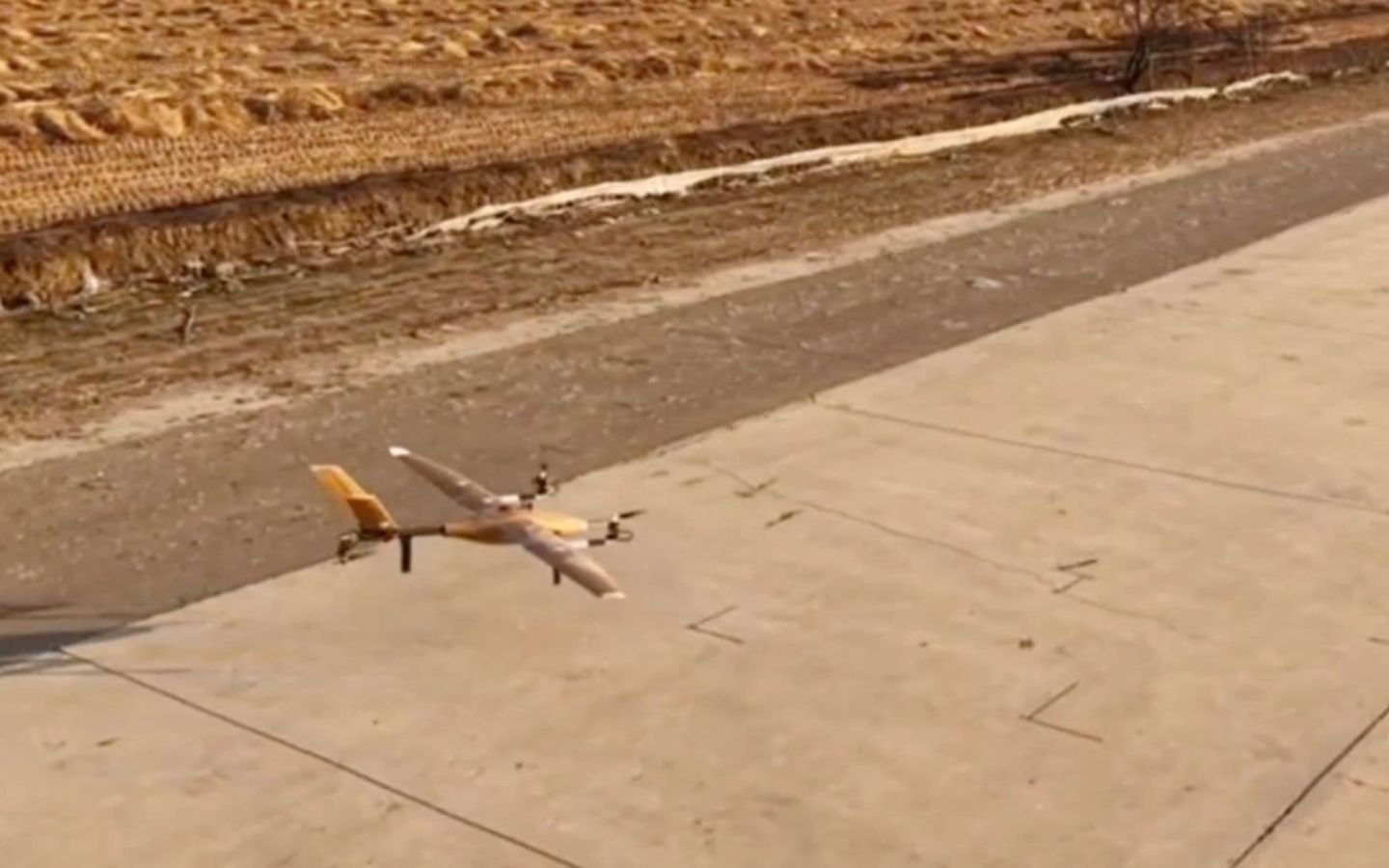
The outstanding advantages of bamboo-based composite materials.
The most significant aspect of the project is that over 25% of the drone's structure is made from bamboo-based composite materials. According to the research team, this solution offers superior performance compared to traditional materials such as carbon fiber. Specifically, the bamboo drone is 20% lighter than comparable devices made from carbon fiber – a material that requires significant energy to produce and is difficult to decompose.
Besides its lightweight advantage, using bamboo also saves over 20% in production costs. This helps address the major cost challenge in the drone manufacturing industry today. Bamboo is an abundant, renewable resource that is biodegradable, minimizing negative environmental impacts throughout the product's lifecycle.
Aviation testing procedures and safety standards
The device development process required meticulous technical refinement. Qin Daochun, Director of the Bamboo and Cloud International Center, stated that the bamboo-based composite material had to meet stringent mechanical performance requirements. The research team conducted over 100 tests based on aviation safety standards to evaluate the material's strength, toughness, and shapeability.
Overcoming molding and environmental adaptation challenges, aircraft components made from bamboo ensure the necessary rigidity while maintaining good vibration damping capabilities. These are crucial technical characteristics that help drones maintain stability when flying at high speeds.
Vision in the low-level economy
Mr. Lian Jianchang, chairman of Long Bamboo Technology Group, affirmed that exploiting the properties of bamboo opens up new avenues for drone technology in the low-income economy. This device is expected to have widespread applications in fields such as forest fire prevention, plant protection, ecological monitoring, geographical surveying, and last-mile delivery services.
Notably, the potential of bamboo-based composite materials extends beyond drones. Experts believe this material could be applied to structural components of small satellites and lightweight spacecraft hulls. With its durability and eco-friendliness, bamboo is gradually becoming an attractive alternative material for many high-tech industries, contributing to global sustainable development goals.