

C-RAM: An ultra-short-range defense system protecting U.S. military bases.
C-RAM is a modern anti-aircraft artillery system designed to intercept rockets, artillery shells, and UAVs, serving as the last line of defense for the US military.
C-RAM (Counter Rocket, Artillery, and Mortar) is a short-range defense system deployed by the U.S. military to protect soldiers and critical infrastructure from asymmetric attacks. Often described as a "fire-wielding saw" when fired, this system creates a last line of defense, intercepting airborne threats at key outposts.
Origins and development process from navy to land forces.
The concept of the C-RAM system began to be developed by the US military around 2004, stemming from an urgent need on the battlefield in Iraq. In the early stages of the war, US and coalition bases in Baghdad, particularly the Green Zone, were constantly subjected to surprise rocket, artillery, and mortar fire. The mobility of the enemy made traditional counter-fire ineffective, necessitating a system capable of directly intercepting airborne targets.
To solve this problem, American military engineers improved the Phalanx Close-In Weapon System (CIWS) – a standard defense system on US Navy warships since the 1970s, manufactured by Raytheon Corporation.
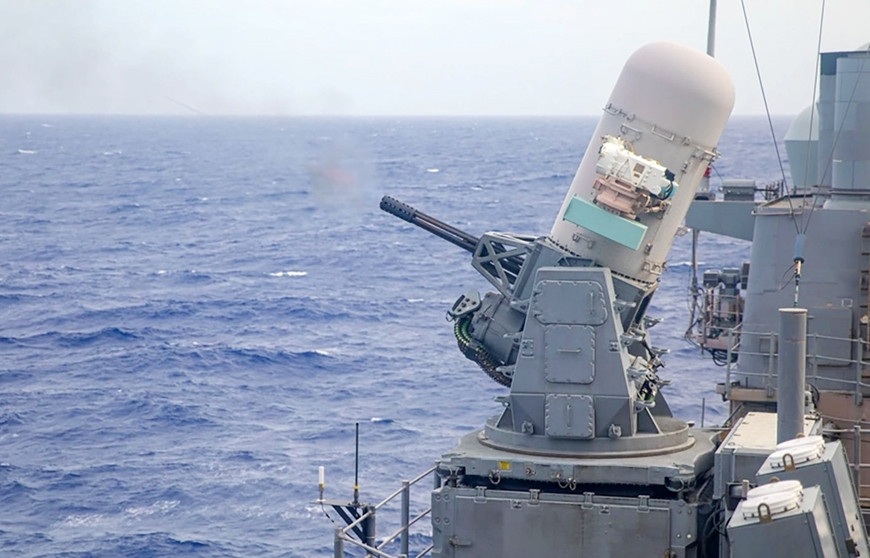
Raytheon Corporation refined this system by mounting it on a wheeled trailer for increased mobility, connecting it to a land-based early warning radar system, and naming it Centurion C-RAM. Since its initial deployment in 2005, C-RAM has become standard equipment at most key U.S. military bases in the Middle East.
Technical specifications and firepower of the fire chainsaw
The core strength of the C-RAM lies in its 6-barrel M61A1 Vulcan 20mm Gatling gun. When activated, the system can maintain a firing rate of up to 4,500 rounds per minute, creating a dense barrage of fire to destroy targets.
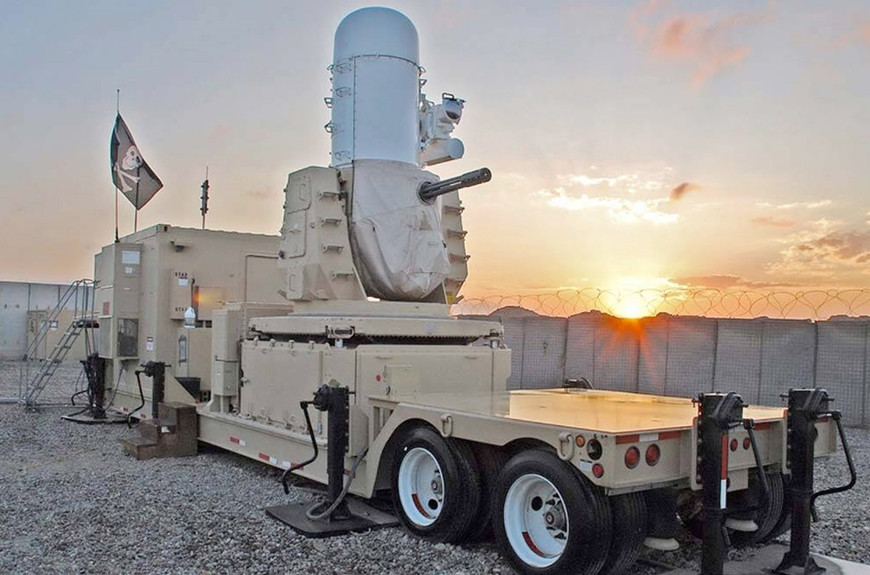
A unique feature of the C-RAM's design is the use of MP-940 self-destructing tracer rounds. If a round is fired and misses its target after a certain distance, it will automatically detonate in mid-air. This mechanism eliminates the risk of the round falling to the ground and causing civilian casualties or collateral damage to soldiers below the protected area.
| Specifications | Detail |
|---|---|
| Type of artillery | M61A1 Vulcan 6-barreled rotary cannon |
| caliber | 20mm |
| Rate of fire | 4,500 rounds/minute |
| Radar system | Ku-band and photoelectric infrared (FLIR) sensors |
| Target detection range | 3.6km |
| Horizontal rotation speed | 115 degrees/second |
To detect small, high-speed flying targets such as mortar rounds or UAVs, C-RAM integrates an advanced Ku-band radar system and electro-optical infrared (FLIR) sensors. The radar searches for, detects, and tracks the object's trajectory at a distance of 3.6 km. The ballistic computer then predicts the point of impact; if the target is determined to fall within the protected area, the system automatically locks onto and fires. C-RAM is capable of rotating up to 300 degrees to cover the area surrounding the base.
Warning mechanism and practical effectiveness
C-RAM features a distinctive audible warning system. As soon as the radar detects a threat, the system sounds an alarm accompanied by an automated message: “Incoming, incoming, incoming.” This provides a crucial few seconds for soldiers to find cover before an attack occurs or before artillery fire begins.
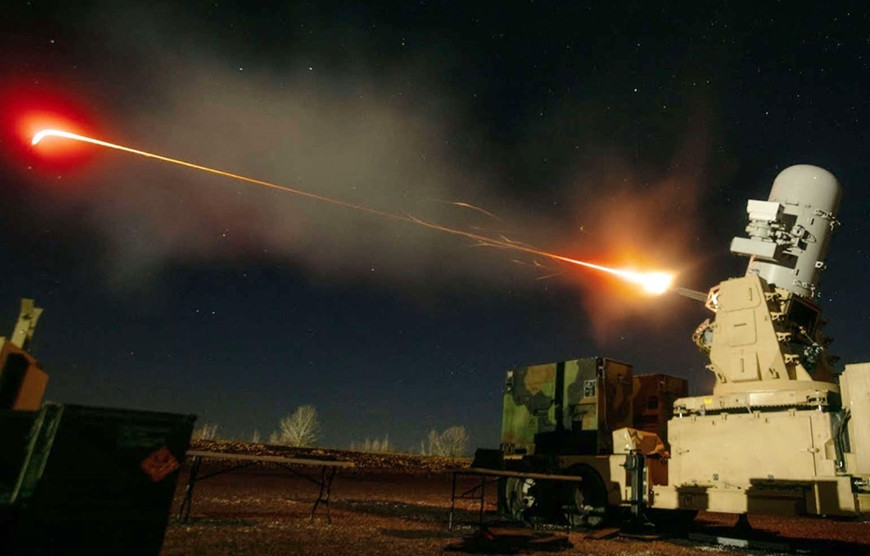
In fact, C-RAM has proven effective in numerous battlefields such as Iraq, Afghanistan, and Syria. In Iraq in 2006, the system was recorded as shooting down approximately 70-80% of artillery shells targeting the Green Zone. Most recently, on March 9th, the C-RAM system in Erbil (Iraq) shot down two UAVs heading towards Harir Air Base.
However, the system still has certain limitations. In several attacks in 2020 on the Green Zone and the US Embassy, C-RAM failed to successfully intercept all missiles. Analysts suggest the system could be overwhelmed if the enemy employs a "swarm" tactic – launching a large number of projectiles simultaneously to deplete its ammunition supply. Furthermore, the system's effective range remains a subject of debate, with figures ranging from 500m to 2,000m depending on combat conditions.