

Soybean prices plummeted 5.7%, while WTI crude oil fell sharply to $93.5 per barrel.
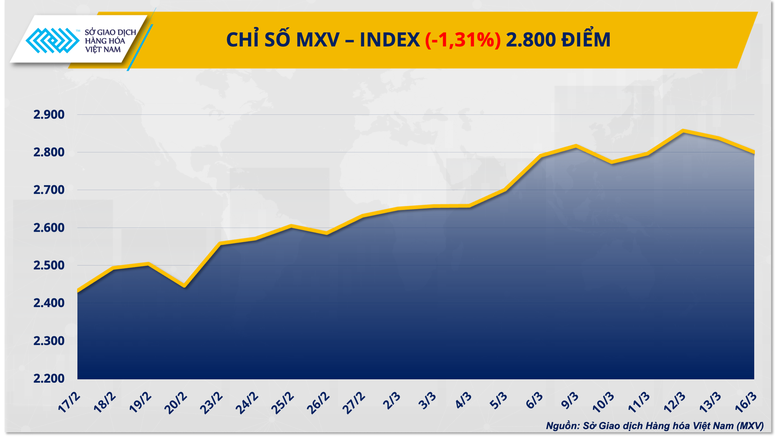
The MXV-Index fell 1.3% on March 16 as a wave of sell-offs spread across agricultural and energy markets due to geopolitical pressures and signals of supply-side intervention.
The commodities market experienced a volatile trading session on March 16th. Widespread selling pressure affected both key commodity groups, agricultural products and energy, causing the MXV-Index to lose 1.3%, falling to 2,800 points.
Agricultural market: Soybeans record a sharp decline.
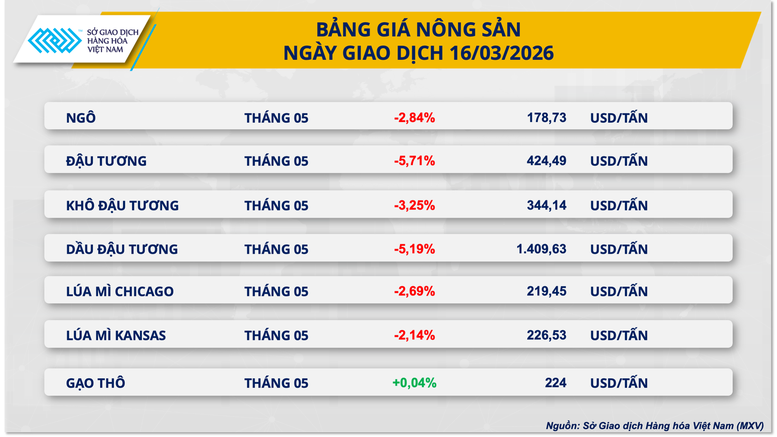
In yesterday's trading session, the agricultural market witnessed overwhelming selling pressure, with 6 out of 7 commodities experiencing price declines. Notably, soybeans became the focus of the sell-off, recording one of the sharpest drops in months.
Specifically, the price of May soybean futures on the CBOT exchange plummeted 5.71%, closing at $424.49 per ton. According to analysis from the Vietnam Commodity Exchange (MXV), this sharp decline is an inevitable consequence of the combination of geopolitical risks and liquidation pressure from speculative capital after a period of rapid market growth.
The sell-off was centered on negative signals in US-China trade relations. Although US Treasury Secretary Scott Bessent attempted to ease tensions, President Donald Trump's statement about potentially postponing the summit if China did not cooperate in the Strait of Hormuz reversed market sentiment. This development raised concerns about the potential disruption of agricultural shipments, particularly soybeans, given China's large import market.
Besides geopolitical factors, downward price pressure was further amplified by liquidation of positions by investment funds. Previously, speculators held a record net long position of 411,606 contracts on soybeans. When prices broke through technical support levels, automatic sell orders were triggered repeatedly, creating a massive capital outflow. Meanwhile, global supply is leaning towards surplus as production in South America continues to increase sharply.
Energy market: Oil prices cool down after a period of rapid increases.
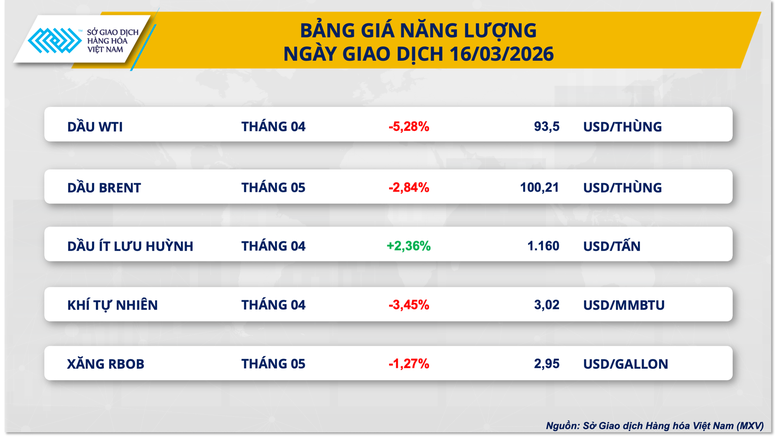
Contrary to the earlier upward trend, world oil prices showed clear signs of cooling down after three consecutive days of gains. At the close of trading, WTI crude fell sharply by nearly 5.3% to $93.5 per barrel, while Brent crude dropped 2.84% to $100.2 per barrel.
According to MXV, selling pressure increased as Iran began signaling a relaxation of controls on shipping in the Strait of Hormuz – a vital waterway carrying 20% of the world's oil supply. Following talks between Indian Prime Minister Narendra Modi and Iranian President Masoud Pezeshkian, Tehran granted permission for two Indian-flagged liquefied petroleum gas (LPG) carriers to pass through the area.
Robert Yawger, an expert at Mizuho Securities USA, believes that the successful delivery of the two LPG tankers could pave the way for other countries to seek similar agreements with Iran. Additionally, the Managing Director of the International Energy Agency (IEA), Fatih Birol, stated that member countries are prepared to release an additional 200 million barrels of oil from their Strategic Petroleum Reserves (SPRs) if necessary to stabilize the market.
In the US, domestic production continues its upward trend, and the gradual reopening of crude oil flows from Venezuela has added to the supply for refineries in the Gulf of Mexico region. Profit-taking pressure ahead of the April WTI futures contract expiration on March 20th also contributed to the sharp drop in oil prices during the last trading session.