

Iran retaliates with a barrage of missiles, and the US launches heavy bombing raids in the Persian Gulf.
Tensions in the Middle East escalated to a new level of ferocity on March 18th when Iran launched a barrage of missiles at Israel and military bases in the Gulf in retaliation for the assassination of high-ranking officials. Conversely, the US began using heavy armor-piercing bombs, while Israel continued its airstrikes on the Lebanese capital.
Funeral in Tehran and vow of retaliation
According to AFP, on the morning of March 18, Tehran, Iran, held a solemn funeral for Ali Larijani, Secretary of the Supreme National Security Council, and Gholamreza Soleimani, Commander of the Basij paramilitary forces. These two high-ranking officials were killed in Israeli airstrikes. Larijani was considered the most powerful figure in the Islamic Republic to die since Israel and the US launched their military campaign in late February.
Just before the funeral, Iran's Islamic Revolutionary Guard Corps (IRGC) warned that the sacrifice of the leaders would be "a source of national strength and awakening," and would ignite further waves of attacks. Iranian military commander Amir Hatami affirmed that Tehran's response to the assassination of Larijani would be "extremely decisive."
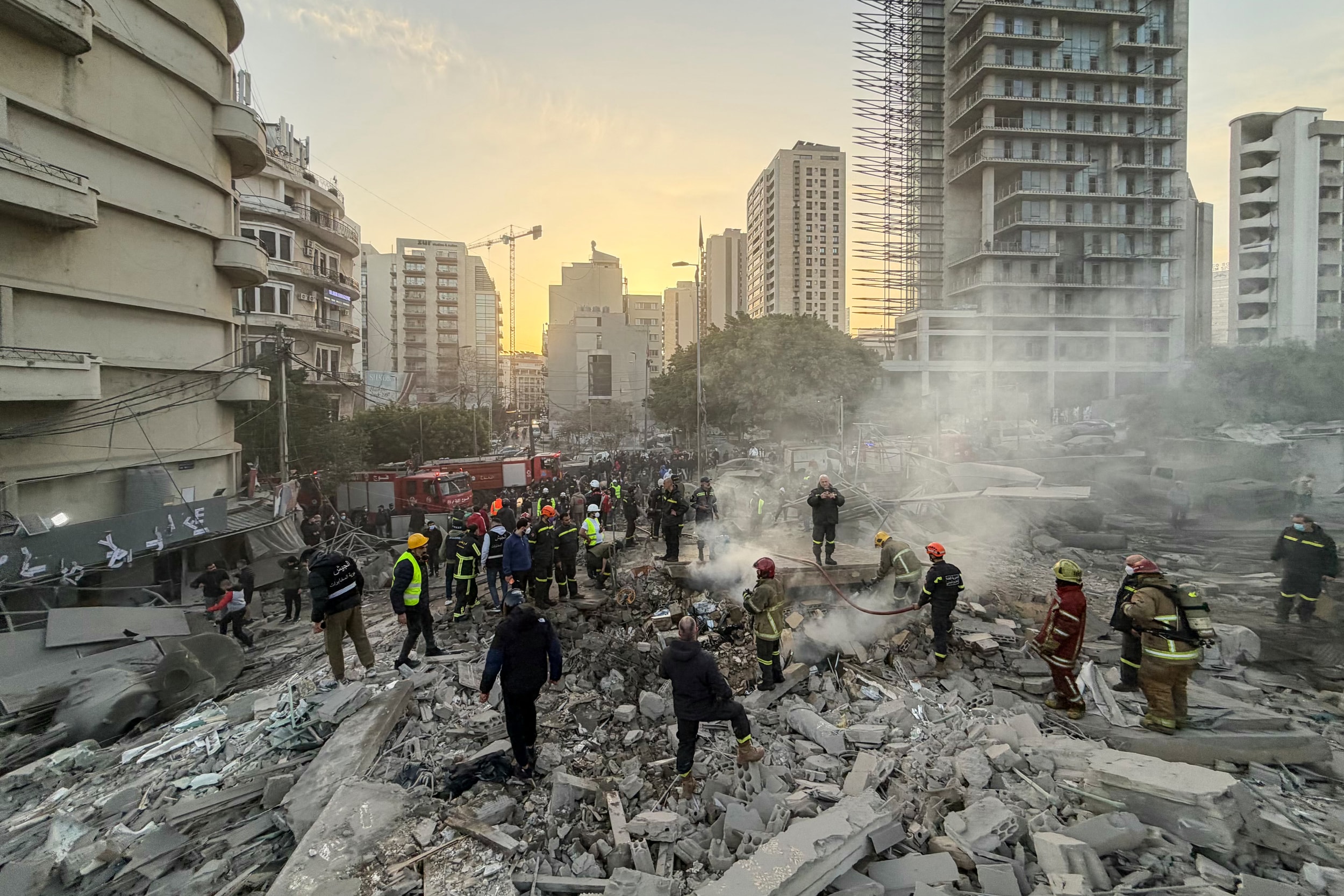
Iran's warning was immediately realized on the ground with a series of large-scale attacks.
In Israel, medical personnel confirmed that two people died after a series of Iranian missiles severely damaged a building near a commercial center in Tel Aviv.
In Lebanon, the Israeli army launched airstrikes in southern Lebanon and bombed the center of Beirut without warning in the early hours of March 18, killing at least six people.
Meanwhile, Gulf nations have been constantly intercepting missiles and drones targeting U.S. and allied targets. Australian Prime Minister Anthony Albanese confirmed that an Iranian flying object had crashed near his country's military base in the United Arab Emirates (UAE). The Saudi Arabian Ministry of Defence also announced the successful interception of a ballistic missile near Prince Sultan Royal Air Force Base – home to U.S. military forces.
The US used heavy bombs, and the global economy felt the impact.
The consequences extend beyond casualties. Iran's continued blockade of the Strait of Hormuz is creating immense pressure on supply chains. Iranian Foreign Minister Abbas Araghchi issued a stern warning on March 18th that the impacts on the global economy "are only just beginning and will strike everyone."
To counter efforts to blockade the route through which one-fifth of the world's crude oil is transported, the U.S. Central Command (CENTCOM) confirmed it had to use the heaviest weapons in its arsenal. Specifically, the U.S. military dropped multiple 5,000-pound (approximately 2,250 kg) bombs to destroy fortified Iranian missile launch sites along the coast.
However, internal rifts within the Western alliance continue to be exposed. Responding to the reluctance of partners to deploy warships to protect the Strait of Hormuz, US President Donald Trump took to social media on March 18th to make a scathing statement that the US military "doesn't need anyone's help."
Despite condemnation from the international community, Israeli Prime Minister Benjamin Netanyahu continues to call for an end to Iran's current political system. Notably, Israeli Army spokesman Brigadier General Effie Defrin publicly threatened to continue hunting down and "neutralizing" Iran's new Supreme Leader, Mojtaba Khamenei, who succeeded his father after his death at the end of February.