

The 'bottleneck' in the Strait of Hormuz has eased, causing oil prices to plummet.
On the afternoon of March 25th, the global energy market showed clear signs of cooling down after shipping lanes through the Gulf region began to recover. However, behind this positive economic development, the Middle East remains shrouded in conflicting diplomatic statements and escalating tensions on the ground.
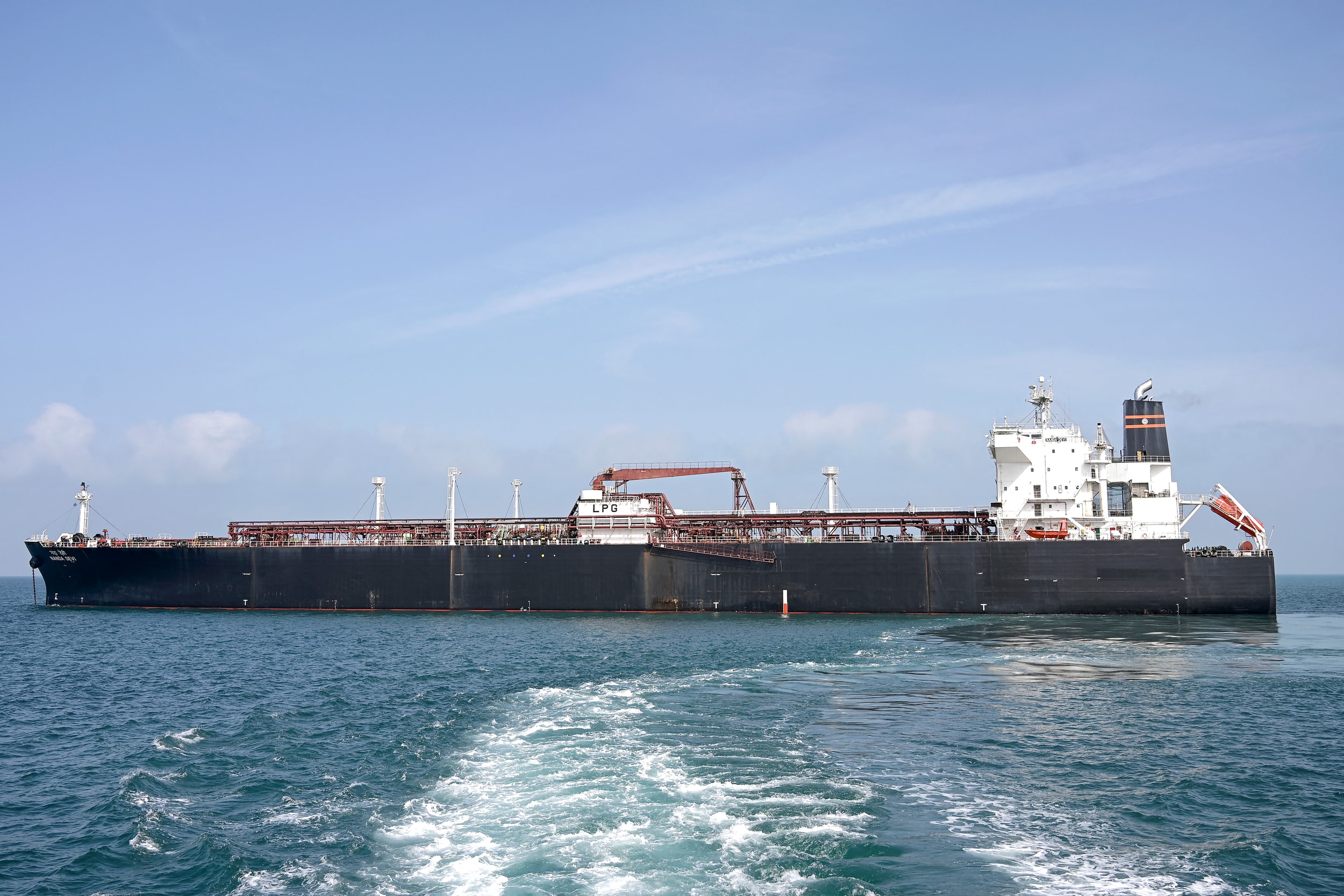
Through the International Maritime Organization (IMO), Iran officially issued a statement assuring the safety of "non-hostile vessels" transiting the Strait of Hormuz. Following this announcement, the Chinese shipping giant Cosco Group declared it would immediately resume accepting bookings for containerized cargo to the UAE, Saudi Arabia, Bahrain, Qatar, Kuwait, and Iraq.
The easing of the Hormuz "bottleneck" immediately impacted the energy market. The global benchmark Brent crude oil price plummeted 6.3%, falling to $97.90 per barrel. Similarly, US WTI crude oil also dropped 5.2%, trading at $87.52 per barrel. To ensure energy security in the event of a prolonged conflict, the Director of the International Energy Agency (IEA), Fatih Birol, affirmed that the organization is "ready to conduct" additional oil reserve releases if necessary, in response to a previous request from Japanese Prime Minister Sanae Takaichi.
In contrast to the positive developments in the markets, the diplomatic landscape presented conflicting messages. US President Donald Trump expressed optimism about an ongoing negotiation agreement "right now," while asserting that Tehran's leadership had given the US an "invaluable gift" regarding the opening of the Strait of Hormuz.
However, Iran's ambassador to Pakistan, Reza Amiri Moghadam, officially rejected these claims. Moghadam asserted that, to date, there have been absolutely no direct or indirect negotiations between the two countries.
Amidst uncertain diplomatic efforts, the UN High Commissioner for Human Rights has sounded the alarm about the "great danger" posed by attacks near nuclear facilities in both Israel and Iran, stressing that this risk could lead to a catastrophic disaster. The International Atomic Energy Agency (IAEA) also confirmed that a flying object struck the grounds of Iran's Bushehr nuclear power plant on March 24th, fortunately causing no damage.
On the ground, the cycle of military retaliation shows no sign of stopping. The Israeli military announced it had carried out airstrikes on two facilities used to develop and produce long-range naval cruise missiles in Tehran. Conversely, Israel's air defenses were also activated to intercept missiles from Iran, with multiple explosions recorded on the night of March 24 in Jerusalem and the city of Jericho in the occupied West Bank.
Not stopping at Israeli territory, Iran's Islamic Revolutionary Guard Corps (IRGC) claimed to have launched missiles and drones targeting military bases housing US forces in Kuwait, Jordan, and Bahrain. At Kuwait International Airport, the country's civil aviation authority confirmed that a drone struck a fuel tank, causing a fire, but there were no casualties.
Other neighboring countries such as Lebanon and Iraq continue to suffer the severe consequences of the conflict.