

The US is quadrupling production of PrSM missiles with a range of 500km for the HIMARS system.
The Pentagon signed a framework agreement with Lockheed Martin to significantly increase production of the PrSM missile to replace ATACMS, with plans to extend its range to 800km.
The Pentagon has officially signed a framework agreement with defense giant Lockheed Martin to quadruple production of the PrSM (Precision Strike Missile) long-range tactical ballistic missile. This is a strategic move to modernize the arsenal of the HIMARS high mobility multiple rocket launcher system, gradually replacing the aging ATACMS missile.
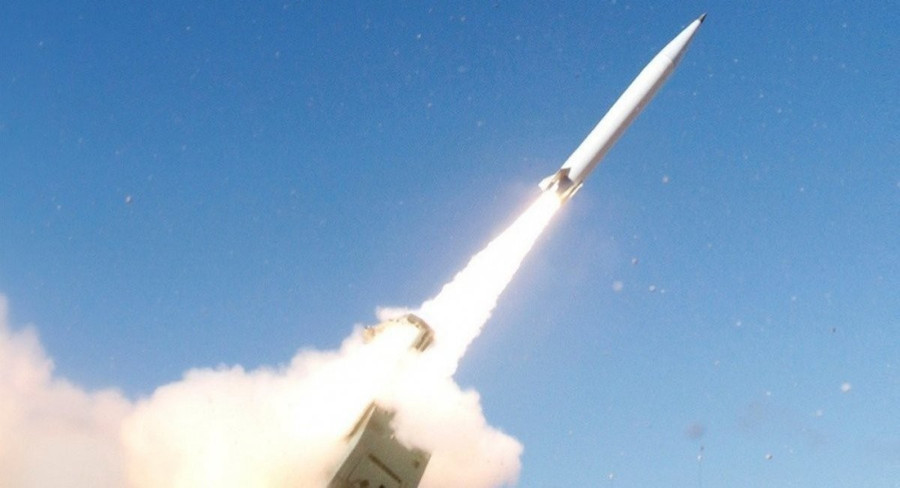
A billion-dollar deal and a commitment from the White House.
This new agreement is a continuation of the $4.94 billion order signed in April 2025. Under the terms, the agreement allows for extended negotiations on a new contract with a maximum term of seven years, subject to necessary congressional approval for multi-year procurement contracts.
A Lockheed Martin representative emphasized that this agreement reaffirms the corporation's commitment to the White House's direction in increasing missile and munition production capacity. To achieve the goal of quadrupling production, Lockheed Martin will adopt next-generation manufacturing technologies to optimize processes. However, the announcement also noted that this scaling-up will take many years, and actual results are not expected to be achieved until after 2030.
Technical advantages of PrSM over ATACMS
The PrSM missile is designed to outperform its predecessor, the ATACMS, in several key technical aspects, from range to firepower density. Below is a table comparing the technical specifications of the two systems:
| Specifications | PrSM (Increment 1) missile | ATACMS missile |
|---|---|---|
| Maximum range | 500 km | 300 km |
| Warhead weight | 91 kg | 300 kg |
| Number of missiles/containers | 2 missiles | 1 missile |
| Accuracy | Very high (New technology) | Standard |
Although the PrSM missile has a significantly lighter warhead weight (91kg compared to 300kg of the ATACMS), the manufacturers claim that its target destruction capability is not diminished. The reduction in explosive weight is compensated by extremely high accuracy and the ability to deploy two missiles simultaneously on each launcher instead of just one as before, doubling the firepower density in each engagement.
Upgrade roadmap and combat realities
Currently, the PrSM Increment 1 version has a range of 500km. However, the US military is actively implementing improvement programs to enhance its combat capabilities. The Increment 2 version has recently begun flight testing, focusing on the ability to attack moving targets at sea and on land.
Most notably, the Increment 4 version is under development with the goal of achieving a range of up to 800km. This would allow the US military to control larger areas without having to move launchers closer to the front lines.
In terms of combat capability, the PrSM missile has undergone testing in realistic conflict environments. According to military sources, the US has deployed this missile in several attacks against targets linked to Iran, indicating that the weapon is ready to support not only the replacement of older systems but also to directly participate in modern warfare scenarios.
Expanding comprehensive weapons production capabilities.
The increase in PrSM production is part of the overall plan by the US defense industry to bolster global ammunition stockpiles. Not only Lockheed Martin, but other major corporations such as Raytheon are also ramping up mass production of their flagship missile lines.
Specifically, Lockheed Martin signed agreements to increase production of PAC-3 MSE air defense missiles to 2,000 per year, while also ramping up production of the THAAD system. Meanwhile, Raytheon reached agreements for annual production of more than 1,000 Tomahawk cruise missiles, 1,900 AIM-120 air-to-air missiles, and 500 SM-6 interceptor missiles.
These efforts reflect a shift in U.S. military thinking, focusing on maintaining long-range firepower superiority and high combat readiness in the face of new geopolitical challenges.