

Why does Iran hold the advantage in the Strait of Hormuz?
Asymmetrical warfare tactics and natural geographical features are considered two factors that give Iran an advantage in the Strait of Hormuz.
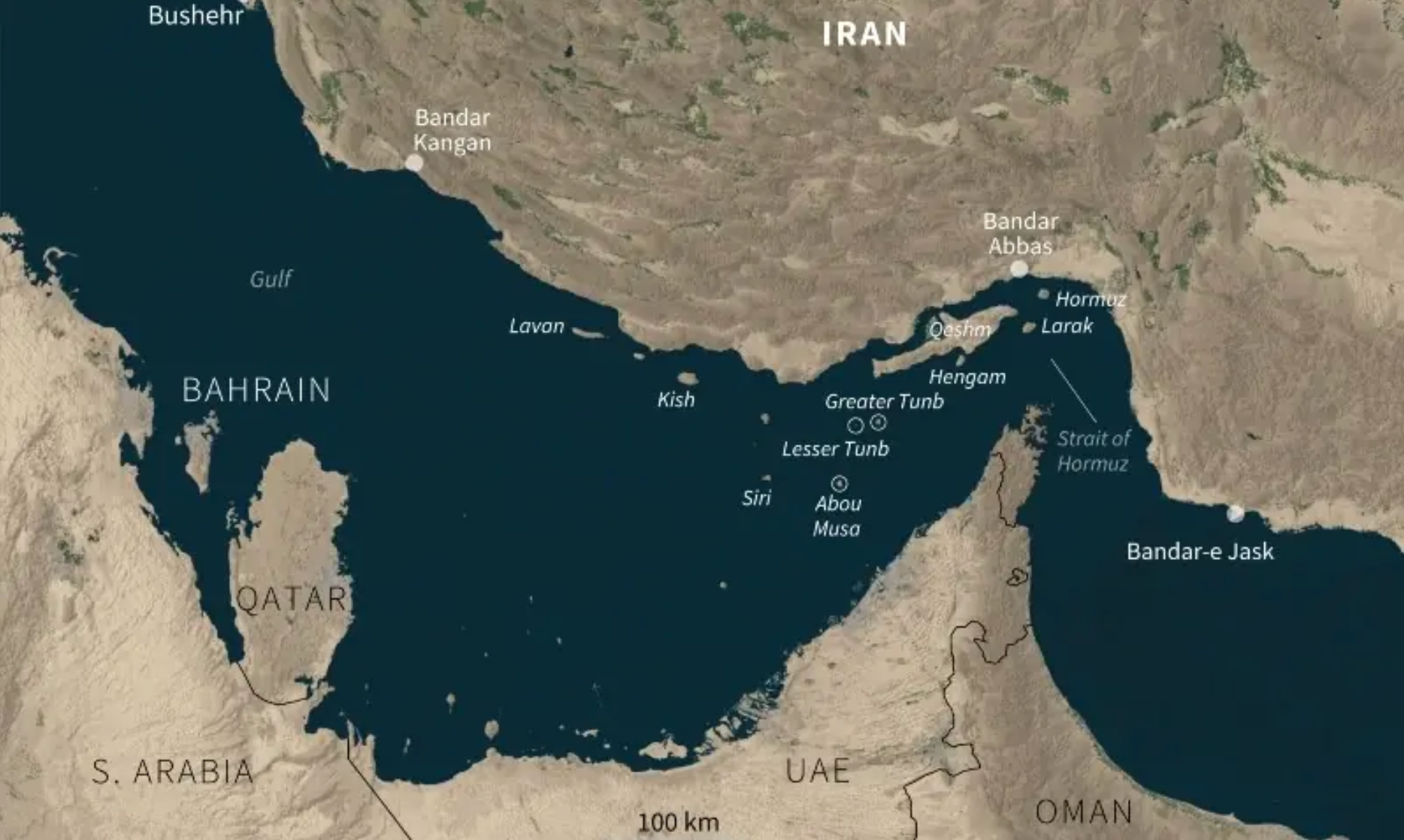
According to CNN, the Strait of Hormuz has been in a state of de facto closure for nearly four weeks, plunging the global oil market into turmoil with no clear signs of abating.
This waterway is a vital route for transporting approximately 20% of the world's oil and natural gas, along with essential fertilizers for global agriculture.
CNN suggests that Iran still holds the upper hand in many aspects at Hormuz. This advantage stems partly from asymmetric warfare tactics, including inexpensive drones and naval mines, and partly from its natural geographical features. These two factors combined make it extremely difficult for the US and its allies to protect ships or secure the strait through purely military means.
According to the maritime analysis company Vortexa, the Strait of Hormuz is only about 38 km wide at its narrowest point. Notably, most vessels have to navigate through two main shipping lanes, which are even more constricted than that.
"It's called a choke point for a very good reason. There are choke points in the world, but Hormuz is a unique challenge because there are virtually no alternative routes," said Nick Childs, senior expert on Naval Forces and Maritime Security at the International Institute for Strategic Studies (IISS).
The biggest challenge for transport ships and any escort operation is the extremely limited maneuvering space.
Kevin Rowlands, an expert at the Royal United Services Institute (RUSI), analyzed: "In the open ocean, there's always the option of changing course; but at a choke point or in a narrow sea, that option is impossible. This means Iran doesn't necessarily need to go to the trouble of searching for a target. They can just sit back and wait."
He added that this terrain inadvertently creates a "kill zone," where the warning time before an attack is measured in seconds.
Furthermore, Iran possesses a coastline nearly 1,700 km long, from which it can fire anti-ship missiles. These missile systems are highly mobile, making them extremely difficult to detect and destroy. The length of its coastline along the Persian Gulf also allows Iran to launch attacks from very far away, beyond the confines of the strait itself.
"In the north, within Iranian territory, the terrain is far from flat. It's a system of hills, valleys, populated areas, and offshore islands. All of these factors make detecting approaching threats more complex, while also making it easier for Iran to conceal its mobile weapons systems," said Rowlands, former Director of the Royal Navy's Centre for Strategic Studies.