

Iron ore prices fell for the second consecutive week, reaching $105.4 per ton.
Pressure from record inventories in China and news that Vietnam is imposing anti-dumping duties on hot-rolled steel have caused global iron ore prices to weaken across the board.
At the close of trading last week on April 6, 2026, iron ore prices on international exchanges continued their downward trend. This marked the second consecutive week of price declines for this commodity, due to the impact of oversupply in China, the world's largest consumer.
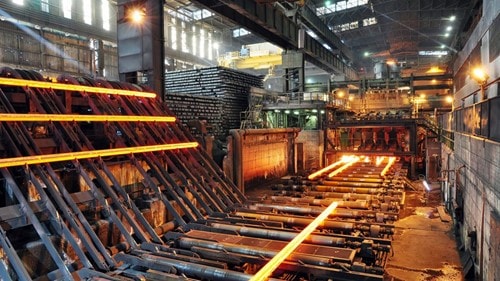
Iron ore price movements on exchanges
Specifically, the May iron ore futures contract on the Singapore Exchange fell 0.92%, to $105.4 per ton. Overall for the week, the price of this commodity in Singapore lost 1.7% of its value.
In the Chinese domestic market, the most actively traded iron ore contract on the Dalian Commodity Exchange also closed the day's trading session down 0.5%, at 799.5 CNY/tonne. Overall for the week, iron ore prices there fell 1.5%.
Inventories in China are nearing record levels.
The main reason for the decline in iron ore prices is believed to be the high inventory levels at ports. According to data from consulting firm Mysteel, iron ore inventories at 47 major Chinese ports increased by 0.5% compared to the previous week, reaching 177.5 million tons as of April 2nd.
This figure is now very close to the record high of 179.47 million tons recorded in mid-March. Analysts believe that market sentiment is under significant pressure as spot supply shows signs of increasing, especially as negotiations for the 2026 supply contract between the Chinese state-owned enterprise and BHP Group are making new progress.
Impact of Vietnam's tax policies
Another notable factor putting pressure on the market is Vietnam's imposition of provisional anti-dumping duties on certain hot-rolled coil (HRC) steel products imported from China. According to the Ministry of Industry and Trade, these duties amount to 27.83% and will officially take effect from April 17th.
In addition, indirect costs such as transportation and fuel are also fluctuating due to tensions in the Middle East. According to Kpler, this is having significant repercussions on the global steelmaking raw material supply chain.
Signs of a recovery in steel production demand.
Despite the price drop, the market still saw some positive signs that helped limit the deeper decline. Several steel mills in China have begun resuming operations after scheduled maintenance. Average daily output of hot pig iron – a key indicator reflecting iron ore demand – increased by 2.7% compared to the previous week, reaching 2.37 million tons. This is the highest level since October 2025.
| Item (Exchange) | Weekly change (%) | Current price |
|---|---|---|
| Iron ore (Singapore) | -1.7% | 105.4 USD/ton |
| Iron ore (Dalian) | -1.5% | 799.5 CNY/ton |
| Coke | -1.2% | But |
| Coke | -0.86% | But |
On the Shanghai Futures Exchange, finished steel products showed mixed performance. While rebar fell 0.23% and hot-rolled coil declined 0.24%, wire rod surged 2.18% and stainless steel rose 0.78%.