

Trash surrounds the mangrove forest along the Lam River.
For a long time, the mangrove forests along the Lam River, from Hung Hoa down to Cua Hoi, have been known as an attractive ecotourism destination. However, these forests are now being overwhelmed and destroyed by countless plastic waste.
Plastic waste disaster
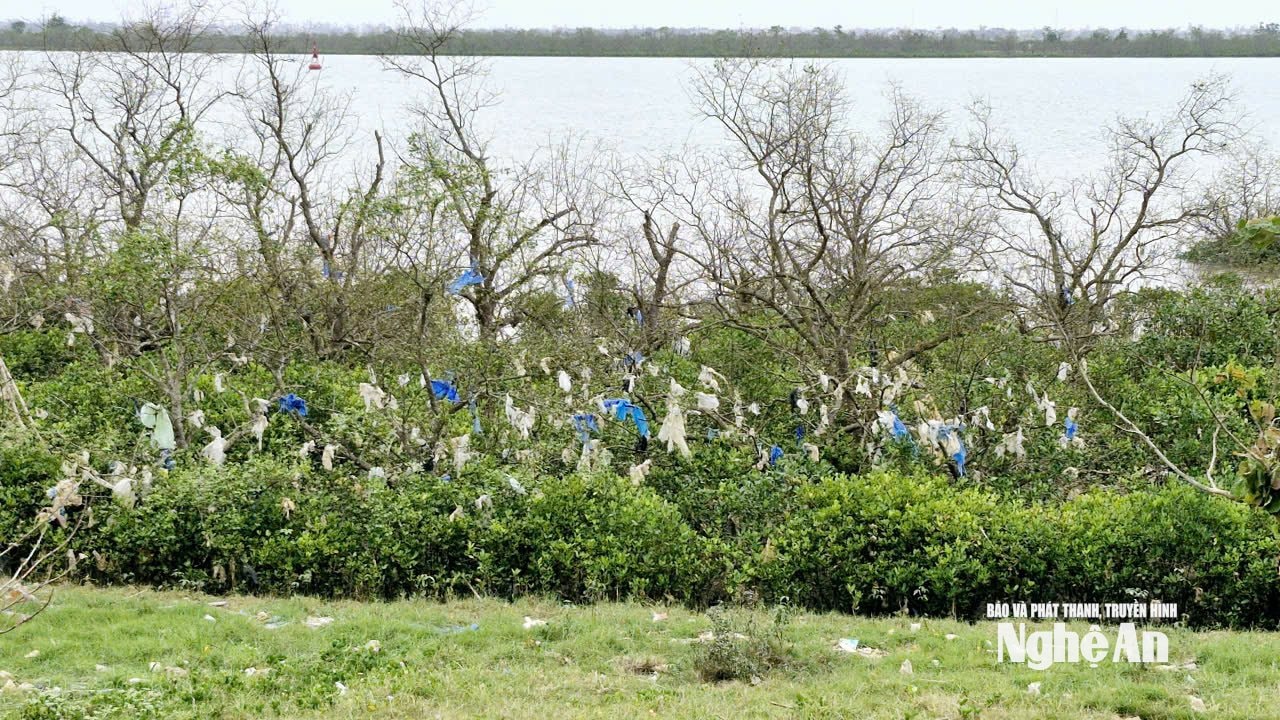
Previously, traveling along the Lam River from the old Vinh city down to the coastal town of Cua Lo, one would encounter long stretches of lush green mangrove forests, feeling immersed in nature and breathing in the fresh air provided by the mangrove ecosystem. However, nowadays, although the mangrove forests remain, the green color is absent, and countless plastic waste clings to the trunks and branches of each mangrove tree.
.jpg)
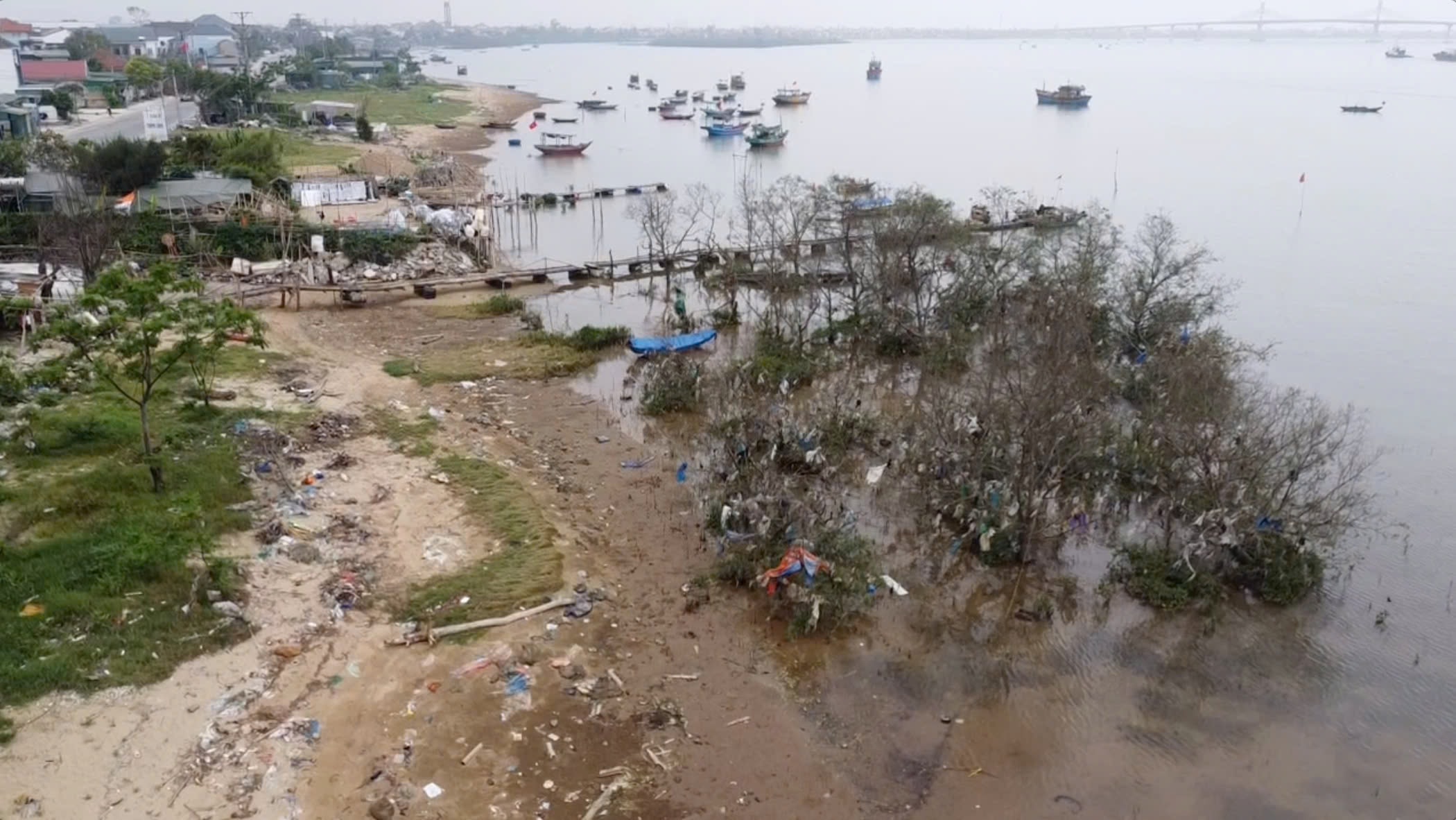
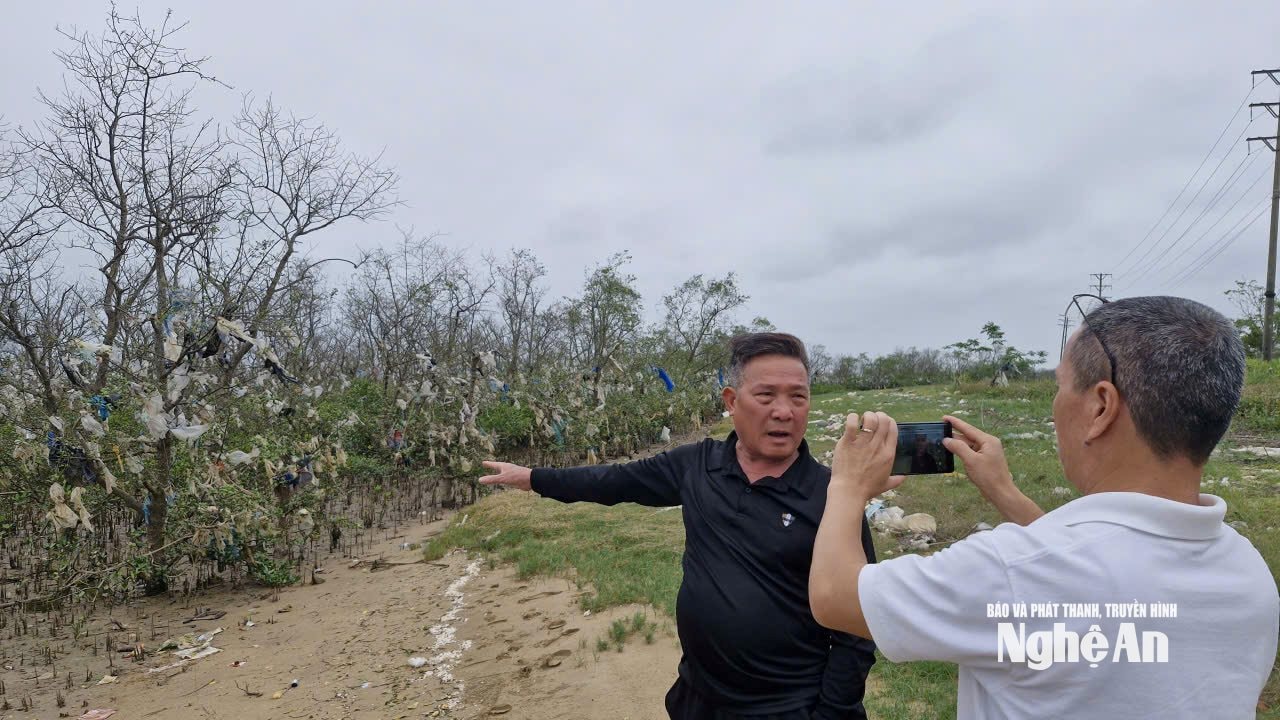
We witnessed this unsightly scene in the mangrove forests on the first day of April 2026. Starting from the foot of Cua Hoi Bridge to Hai Nam - Nghi Hai area, we encountered sparse mangrove forests with a considerable amount of plastic waste visible on their trunks and branches. Intrigued, we made our way down the Lam River, following the bamboo "piers" of the fishermen in Hai Nam area to observe the mangrove trees more closely from the river. From there, it was easy to see the trees bending under the weight of layers of plastic bags clinging tightly to their trunks and branches.
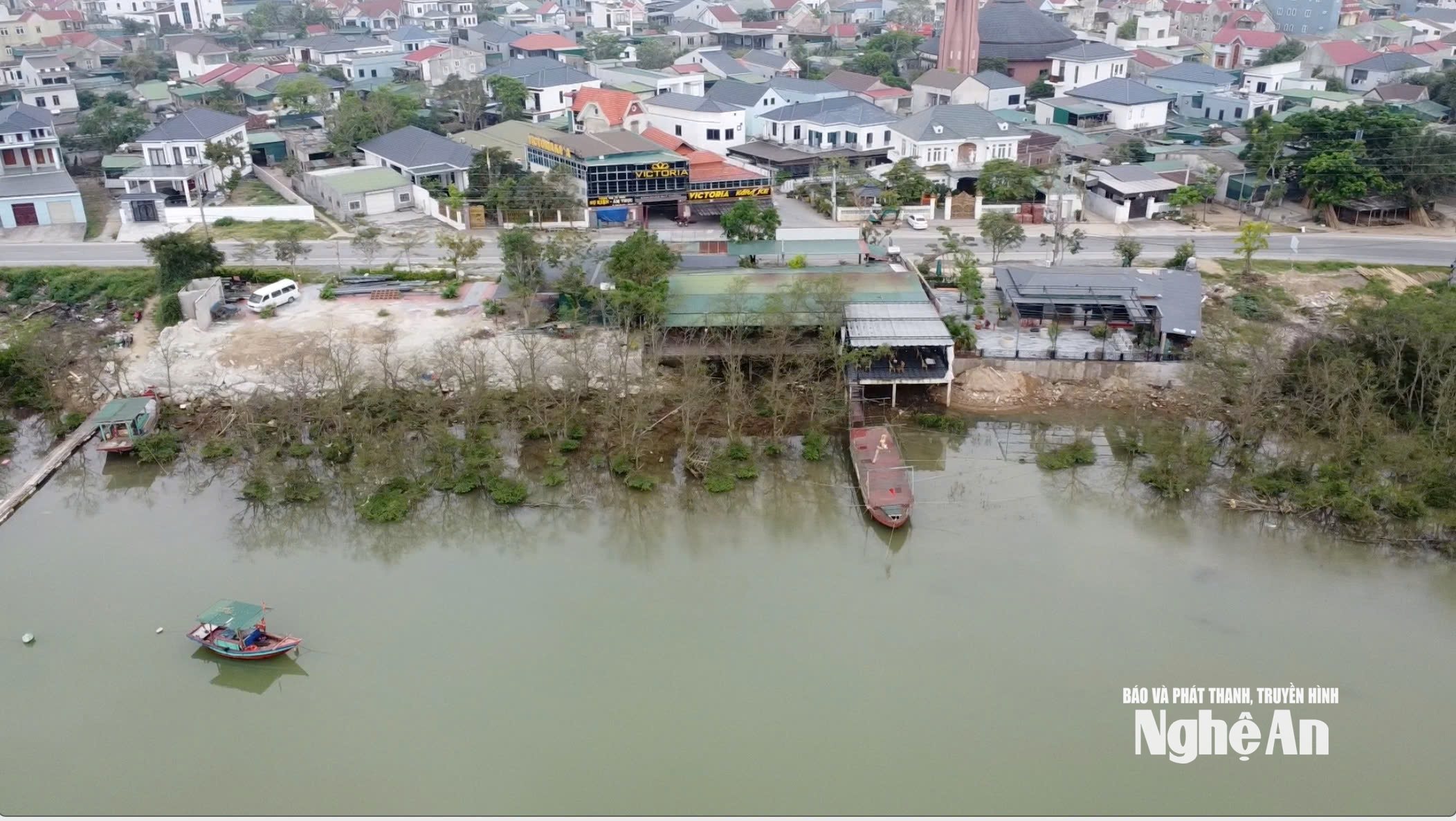
When asked about the situation, fishermen in Hainan Province said that this problem has existed for a long time, but it became particularly severe after the 2025 rainy season. “During storms, water from upstream carries all kinds of waste. Plastic waste, in particular, floats on the river surface until the water recedes, clinging to the trunks and branches of mangrove trees until now…” – one fisherman explained.
The banks of the Lam River in this section are also heavily littered with trash. One wonders, where does all this trash come from? According to an elderly fisherman, the sources of the trash are numerous. Trash from upstream is carried downstream by floodwaters and washes ashore, then comes from nearby residential areas, and from fishing boats. He said: “Every day, people throw trash into the river in this area. Even from fishing boats. Environmental awareness is poor. The law strictly prohibits the improper disposal of waste, but many people still lack awareness. A few serious penalties would make them stop…”
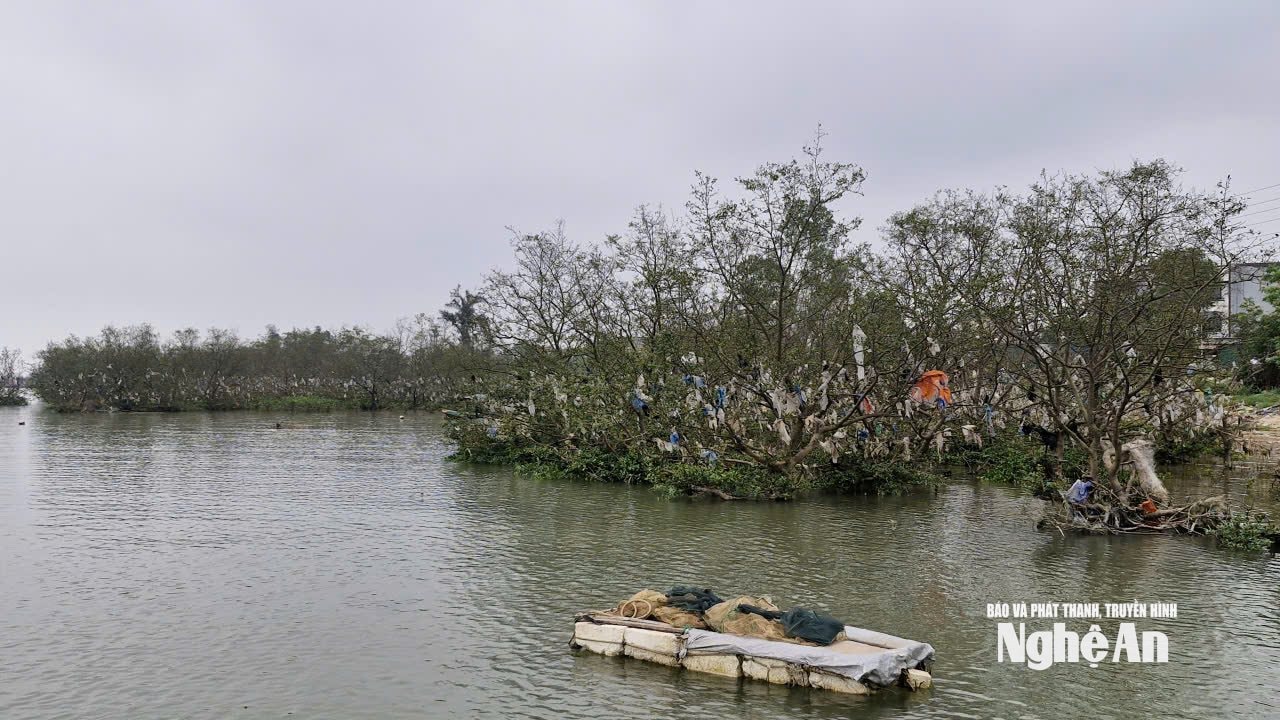
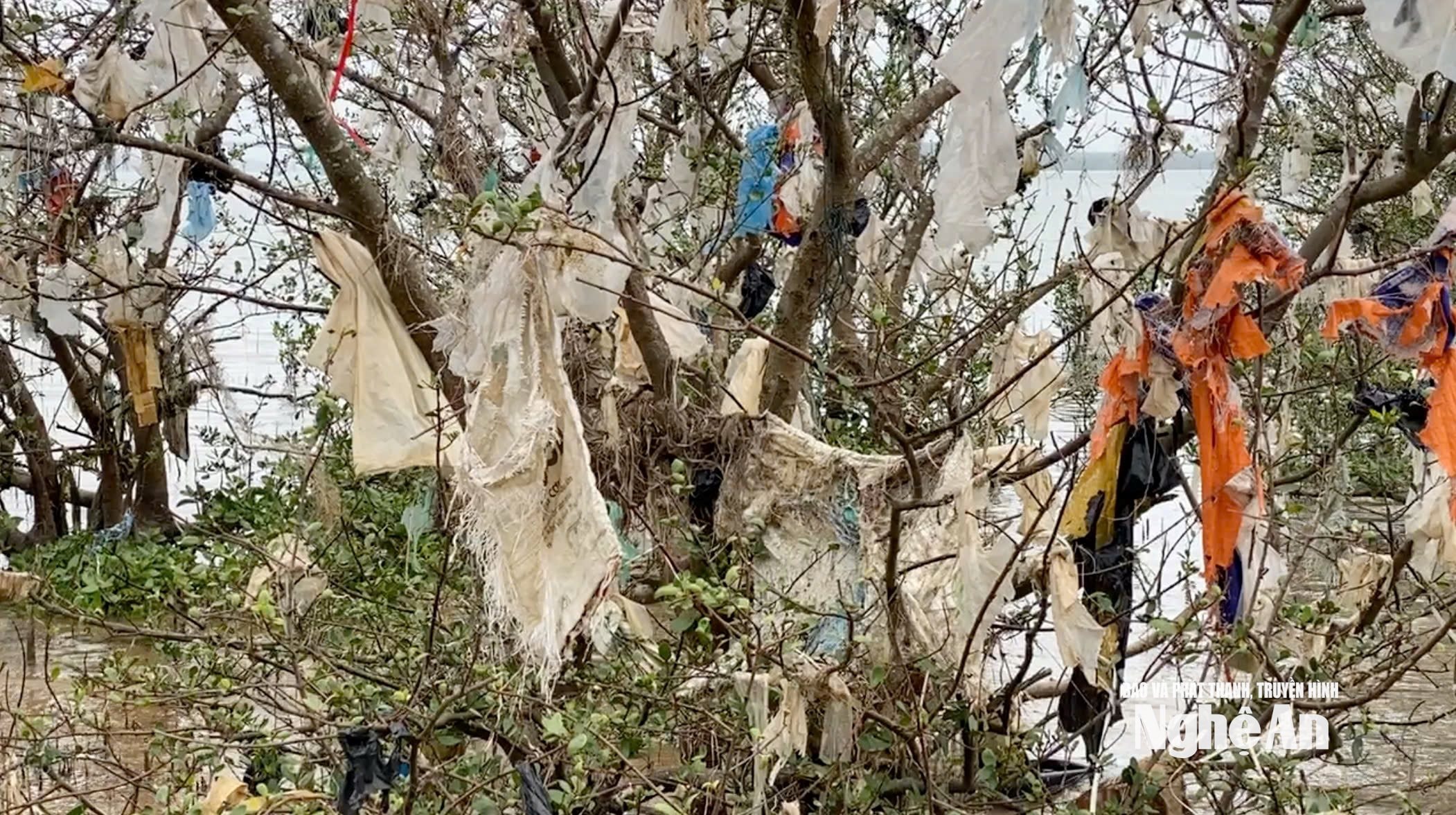
Further north, through the Xuan Loc and Canh Xuan wards of Vinh Loc commune, the mangrove forests are even more dilapidated than the section through Hai Nam ward, Cua Lo commune. Looking down from the Lam River embankment, you can see plastic bags, old fabrics, and broken packaging clinging densely to each mangrove tree. Closer to the mangrove forests, the amount of trash on each tree is so much that it completely covers the trunk and branches. These mangrove forests are, in the truest sense, forests of trash.
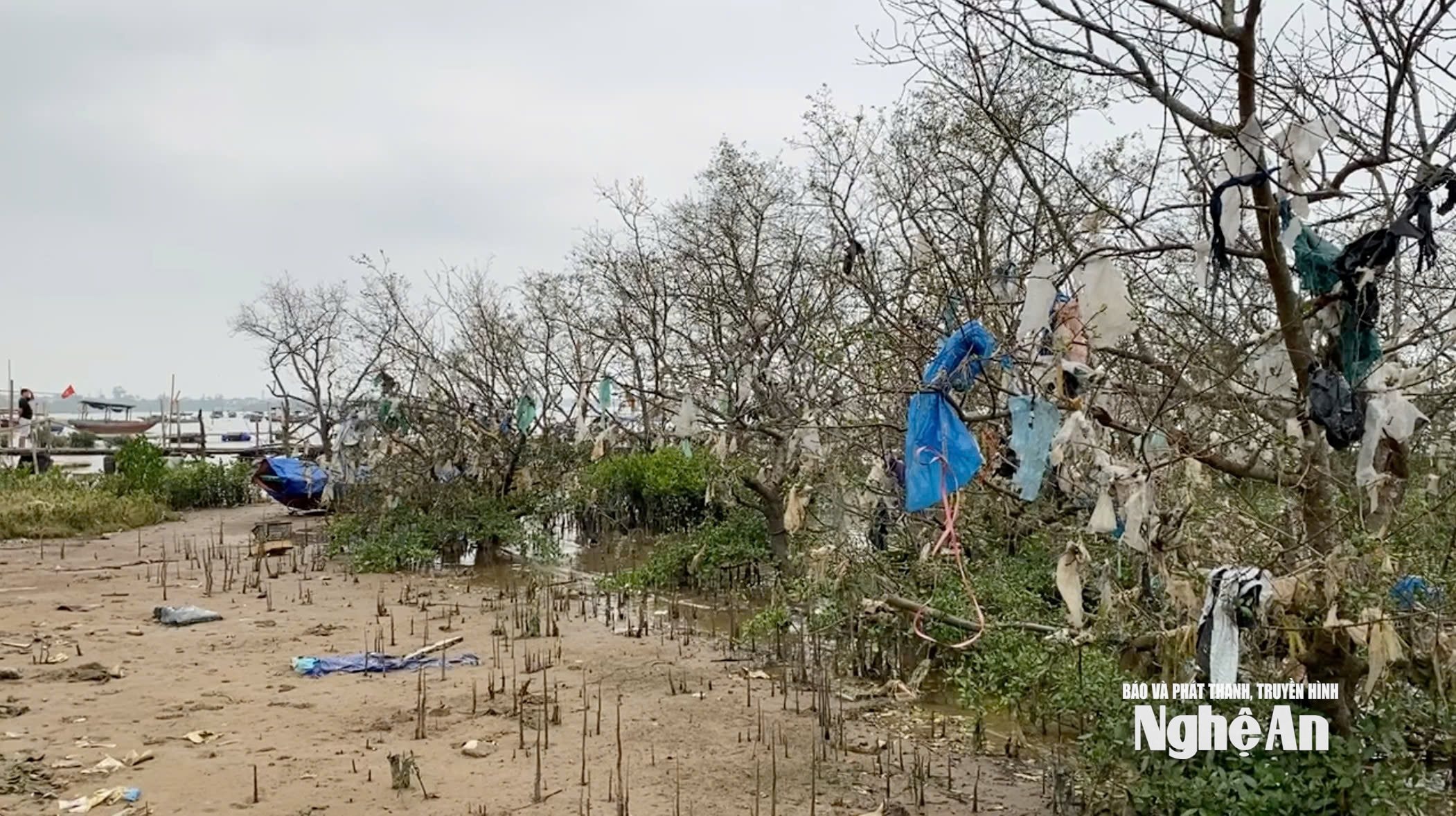
Fishermen who anchor their boats here say that this section of the river is a garbage dump. Especially during the rainy season, garbage from upstream and other places accumulates here, then spills into the mangrove forests. When the water recedes, solid garbage washes ashore or floats on the river surface, while soft garbage such as plastic, packaging, torn clothes, etc., cling to and cover the mangrove trees. These types of garbage are very difficult to decompose, so they accumulate more and more with each rainy season.
Mr. Hoang Trong Vinh (residing in Canh Xuan hamlet, Vinh Loc ward), a fisherman whose boat is moored at the "floating bridge" near the mangrove forest, said that the river water is polluted due to accumulated waste. To avoid wading through the river, he built a bamboo bridge himself five years ago to access his boat. During the 2025 storm season, the flood destroyed the bamboo bridge, so he had to buy plastic containers and formwork to build a temporary "floating bridge" as a replacement.
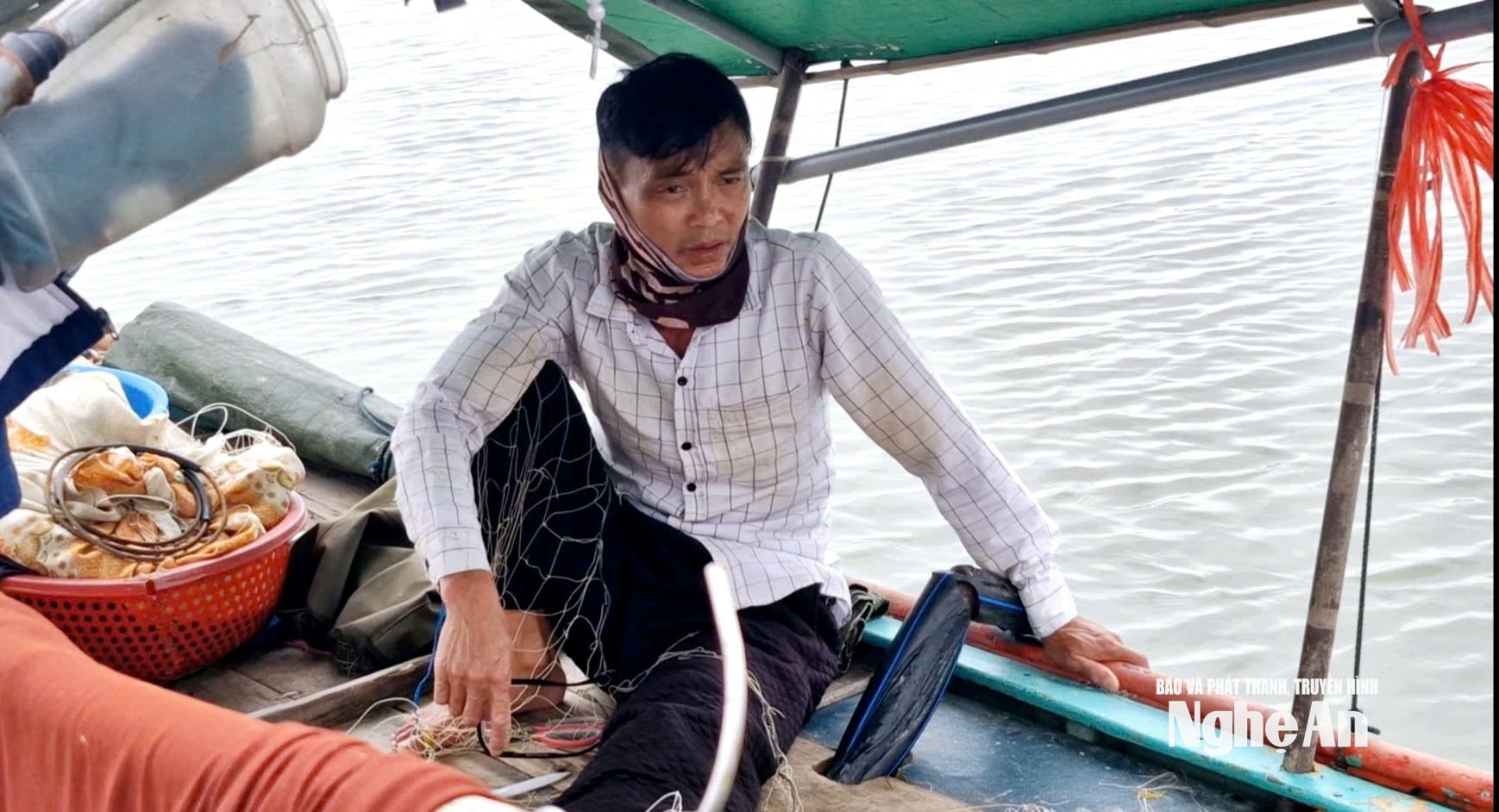
“There’s a lot of trash, the water near the shore is polluted, and in the hot season it smells terribly. Someone in the area has already died from infection after wading in the river. That’s why I had to build a bridge for safe use…” – said Vinh.
Leaving the Xuan Loc and Canh Xuan areas and heading north towards the old Hung Hoa region, the Lam River flows through this area without bends, like a straight road. Even so, a considerable amount of plastic waste can still be seen in the vast mangrove forests along the riverbanks.
Mobilizing forces to clean up waste: Why not?
Upon investigation, after the implementation of the two-tiered administrative system, most of the mangrove forests along the Lam River are now located within Vinh Loc Ward. The Vinh Loc Ward People's Committee reported that following the storms of 2025, the amount of waste in the ward and along the Lam River was particularly high. Notably, a large quantity of plastic waste remained in the mangrove forests. Before the 2026 Lunar New Year, the Vinh Loc Ward People's Committee coordinated with an environmental company to clean up waste along the Lam River. However, the plastic waste in the mangrove forests has yet to be addressed.
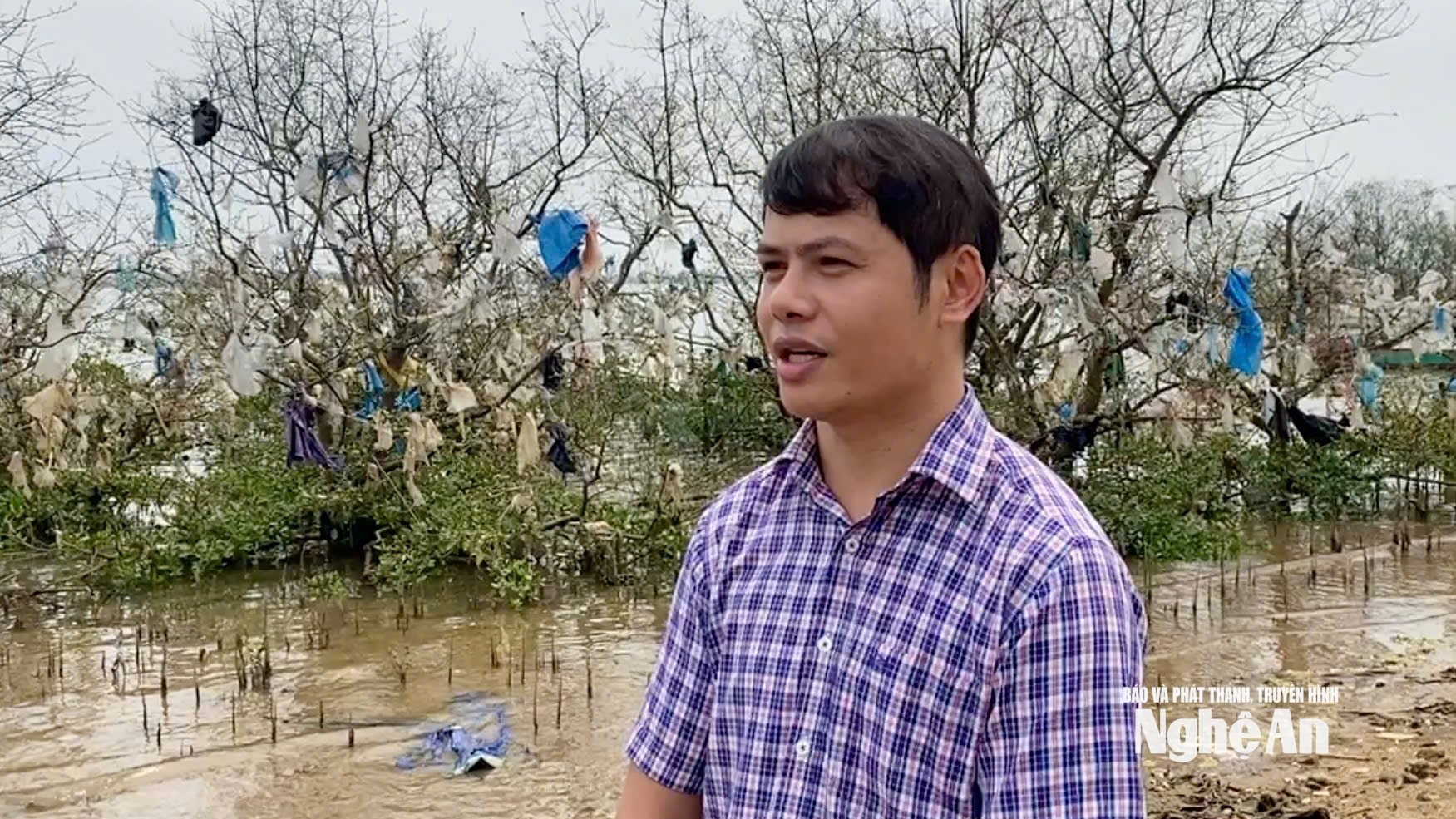
During a survey of the waste hotspots in Xuan Loc and Canh Xuan wards, Mr. Doan Trung Hau, an environmental specialist from Vinh Loc ward, observed that the amount of waste in the mangrove forests is enormous. According to Mr. Hau, the waste not only spoils the landscape and pollutes the environment but also hinders the growth of the mangrove trees and affects the mangrove ecosystem. Cleaning up the waste clinging to the trees can only be done manually. With such a large amount of waste, a significant number of personnel would be needed.
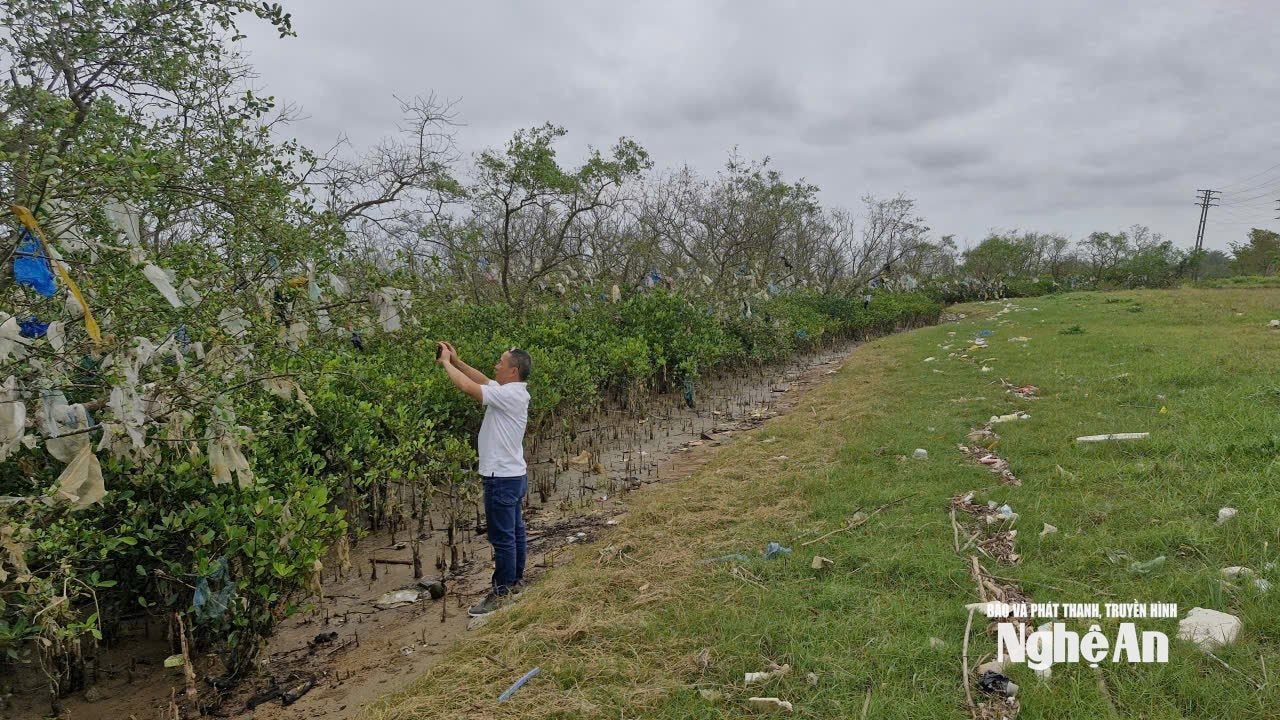
Mr. Doan Trung Hau stated: “To clean up such a large volume of waste, besides the involvement of the ward, it will require the coordination of relevant units, especially the unit directly managing the mangrove forests along the Lam River. Therefore, we will propose that the leadership work with the Ward's Fatherland Front Committee to organize an environmental cleanup campaign, mobilizing various organizations to mobilize forces to clean up. At the same time, we will work with relevant units to ensure they take responsibility and work together to address this issue to maintain the urban landscape of Vinh Loc ward and the Lam River.”
Connecting with the Nghi Loc Protective Forest Management Board, the unit directly managing the mangrove forests along the Lam River, Mr. Nguyen Cong Son – Director, stated: Currently, the Board manages 47.13 hectares of forest in the former Nghi Xuan, Phuc Tho, and Nghi Thai communes, and has not yet been assigned the Hung Hoa area. The problem of waste, especially plastic, clinging to the mangrove forest has existed for many years and has increased sharply after each rainy season, particularly in 2025. Despite mobilizing forces to address the issue, the large and continuous accumulation of waste has not been completely resolved.
Information was conveyed to the Director of the Nghi Loc Protective Forest Management Board regarding the opinion of environmental officers from Vinh Loc ward, requesting an early study of a coordination plan. Mr. Nguyen Cong Son acknowledged that with the involvement of Vinh Loc ward, environmental remediation in the mangrove forests would be highly feasible. Mr. Nguyen Cong Son stated: “We will connect with the People's Committee of Vinh Loc ward to develop a coordinated plan to collect and process waste in the mangrove forests to restore the landscape and environment, and help this mangrove forest area develop.”
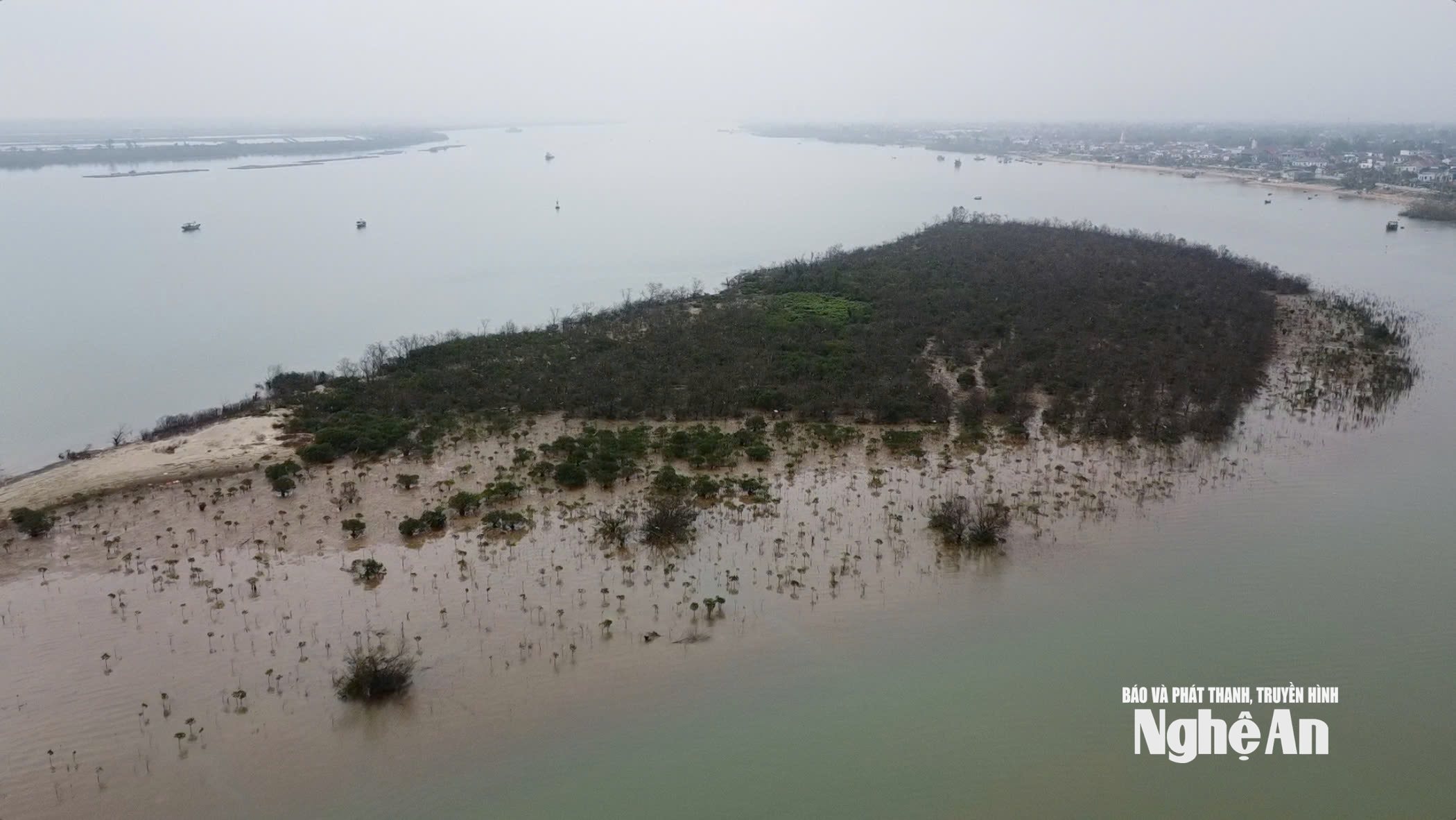
In general, mangrove forests play a crucial role in protecting coastlines and riverbanks, regulating the climate, limiting erosion, expanding land area through alluvial deposition, protecting dikes, and providing a habitat for many types of seafood, waterbirds, migratory birds, and other animals. The mangrove forests along the Lam River also possess similar values. At the same time, they are a truly fascinating ecotourism destination. To exploit this potential, the People's Committee of Vinh City (formerly) previously developed a plan for managing, protecting, and expanding the area of mangrove forests in conjunction with the ecotourism planning of the lower Lam River region, from Dung Quyet Mountain Forest Park to the embankment surrounding these mangrove forests.
These points are mentioned to highlight the immense value of the mangrove forests along the Lam River. The widespread plastic waste encroaching upon and destroying these forests is truly alarming. Hopefully, the Vinh Loc and Cua Lo wards, the Nghi Loc Protective Forest Management Board, and other relevant agencies will take action soon.