
Establishing unique and superior institutions to enable breakthrough development for the Capital City.
On the afternoon of April 8th, continuing the program of the First Session, under the chairmanship of National Assembly Chairman Tran Thanh Man and the direction of National Assembly Vice Chairwoman Nguyen Thi Thanh, the National Assembly heard the presentation of the Submission and the Verification Report of the draft Law on the Capital City (amended).
Strong decentralization and delegation of power to Hanoi City.
Presenting the draft Law, Minister of Justice Hoang Thanh Tung stated that the draft Law on the Capital City (amended) consists of 9 Chapters and 36 Articles, regulating the organization of government, civil service regime, and the promulgation of legal documents on planning, construction, and order and safety of the Capital City; socio-cultural development; scientific and technological development, innovation and digital transformation; resources for the development of the Capital City; regional linkages and development; supervision, inspection, and accountability.
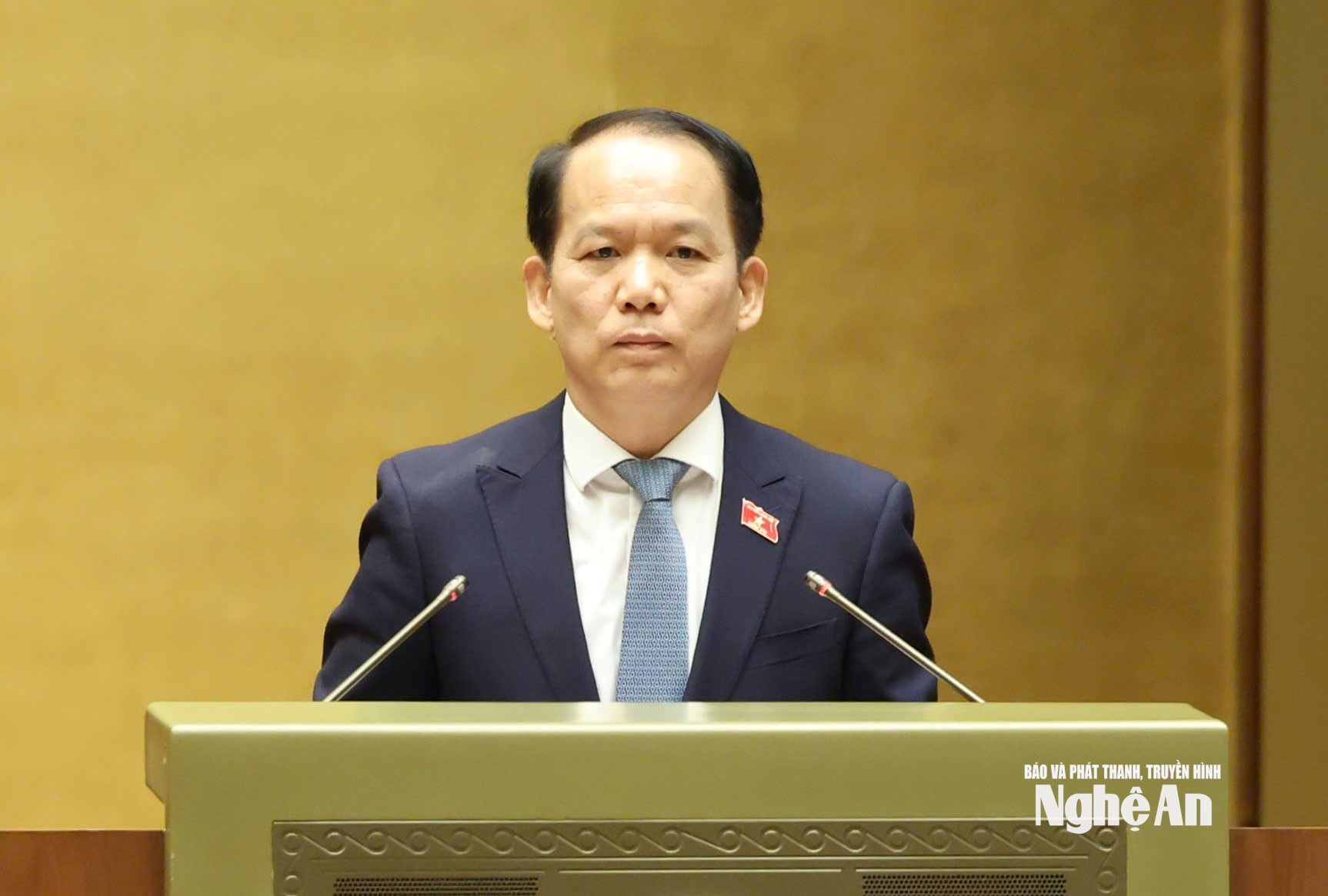
The draft Law on the Capital City (amended) focuses on decentralizing power to the City, creating maximum space for creativity and accountability of the Capital City government; while also strengthening requirements for power control, inspection, supervision, and accountability.
Specifically, it includes provisions on the principle of decentralization for the Hanoi government, aiming to institutionalize the policy of strong decentralization and delegation of power to Hanoi. It also adds regulations on the authority of the Hanoi government to draft and issue legal normative documents. Furthermore, it includes provisions on piloting mechanisms and policies to establish a legal framework for testing new management and development models and solutions.
The regulations on outstanding citizens of the Capital City are supplemented, and the City People's Council is given the authority to regulate the conditions and procedures for awarding and revoking this title. Regulations on land reclamation for projects requiring immediate implementation, as directed by the Politburo, the Central Party Secretariat, the Government Party Committee, and the Hanoi City Party Committee, are also added. Regulations on the development of free economic zones, free trade zones, and new economic models are also included.
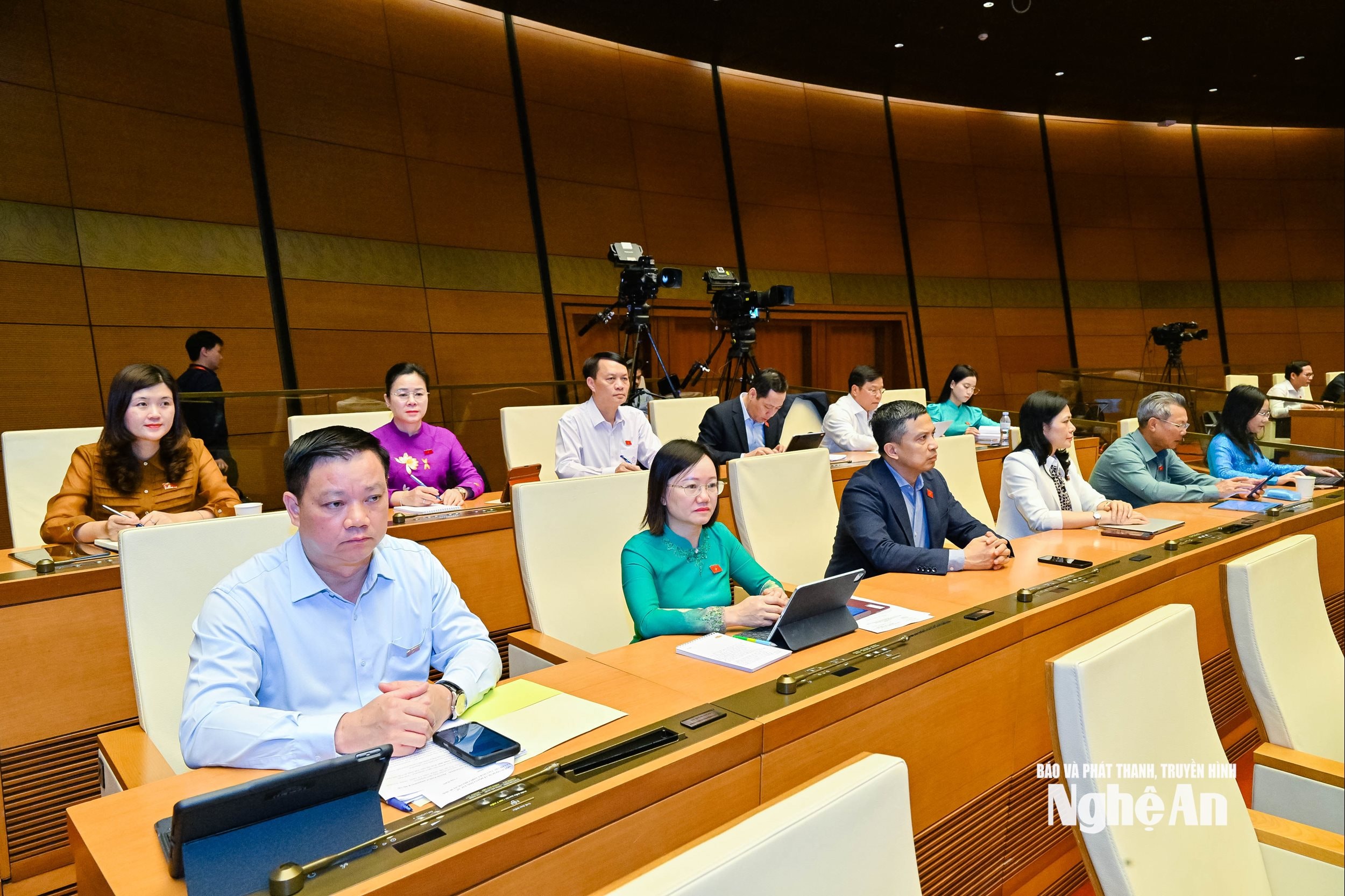
Notably, the draft Law adds provisions on mechanisms for handling violations, excluding and exempting legal liability for violations when implementing the Law on the Capital City (amended).
At the same time, establish a mechanism to exclude and exempt from legal liability the heads, officials, and individuals involved in the drafting, promulgation, and implementation of the Law and related documents, in cases where there is no self-interest, and all procedures have been fully complied with during the performance of their duties, but damage still occurs.
"The draft law is being developed with the aim of promoting decentralization of power to the city government, without specifying detailed procedures. Therefore, the provisions in the draft law do not directly regulate administrative procedures," Minister Hoang Thanh Tung affirmed.
Clarify the conditions and mechanisms for implementing the policies.
Agreeing with the necessity of a comprehensive revision of the 2024 Law on the Capital City, the Chairman of the Committee on Law and Justice, Phan Chí Hiếu, stated that the revision aims to build a special, superior, and stable institution capable of effectively addressing the issues of the Capital City, thereby creating a competitive advantage and promoting Hanoi's rapid and sustainable development in the new period.
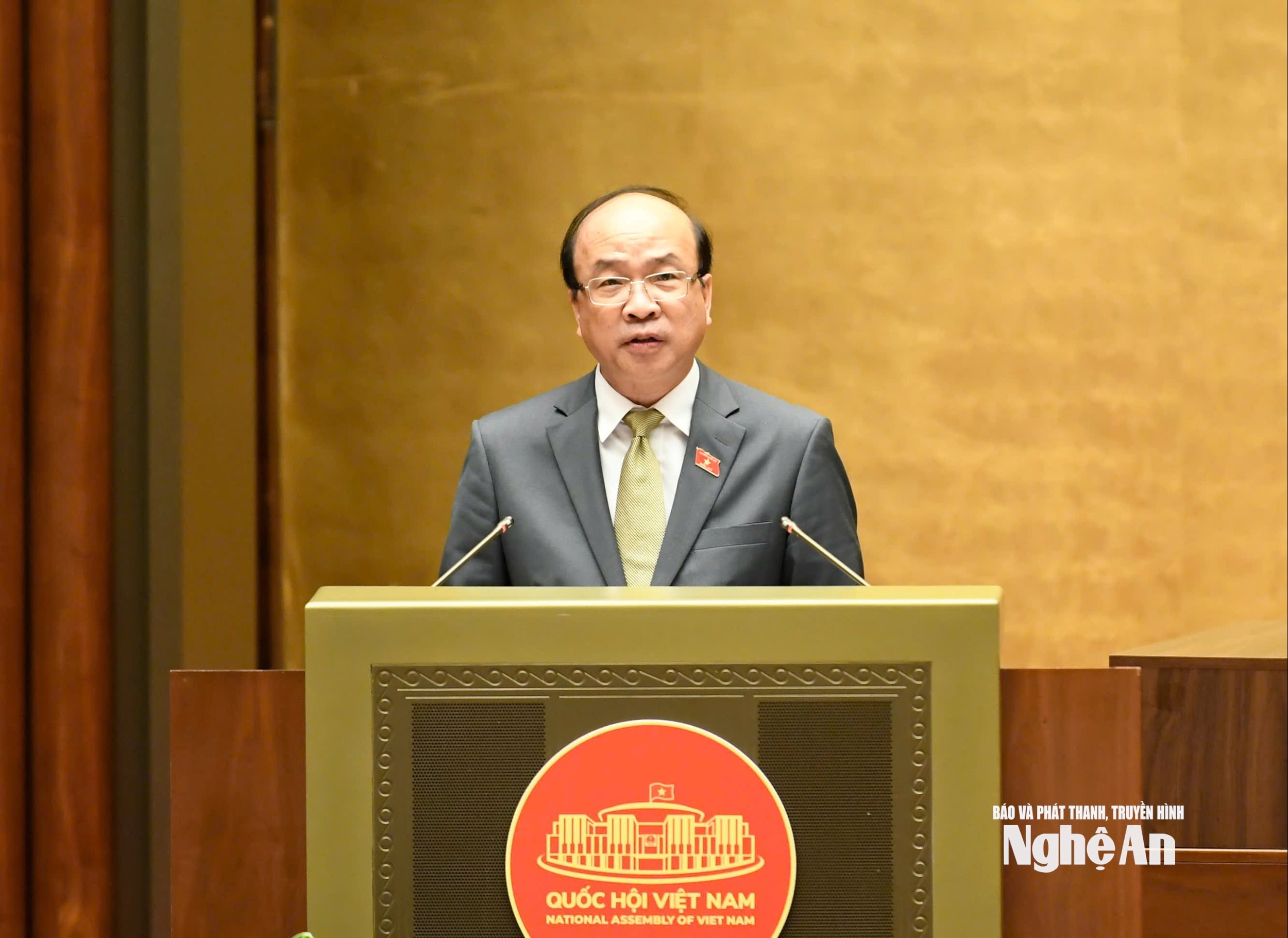
To ensure the effectiveness of specific mechanisms and policies, the Chairman of the Committee on Legal Affairs and Justice proposed further research and refinement of the draft Law's contents, and suggested continuing to review and clearly define the authority between the entities (People's Council, People's Committee, and Chairman of the People's Committee of the City) in issuing legal normative documents.
The design should strictly define the sequence, procedures, and issuance requirements for documents whose content differs from regulations in documents issued by higher-level state agencies, ensuring transparency, openness, and a mechanism for receiving and responding to feedback and evaluating effectiveness after issuance.
At the same time, it is necessary to add some principles that need to be ensured when issuing pilot resolutions, such as consulting with central agencies, having a mechanism for adjusting, extending or terminating the pilot program, and studying the application of a "self-termination" mechanism after a certain period if it is not assessed as effective.

The Committee on Law and Justice also proposed clarifying the objectives, scope, conditions, and implementation mechanisms of urban development policies, especially those related to spatial planning, transportation infrastructure, logistics, environment, and addressing bottlenecks; and policies in the fields of education, health, science, technology, and innovation, ensuring both distinctiveness and superiority while maintaining feasibility, stability, and long-term viability, particularly for policies that directly impact the rights and interests of citizens.
At the same time, it is necessary to clarify the conditions, limits, and control mechanisms for financial, investment, and resource policies to ensure flexibility without duplication and to minimize risks. Mechanisms should be added to ensure that localities participating in the linkage and development of the Capital Region benefit from appropriate policies, guaranteeing effective implementation.
Subsequently, the National Assembly held group discussions on the draft Law on the Capital City (amended), the draft Law amending and supplementing a number of articles of the Law on Emulation and Commendation, and the draft Law on Beliefs and Religions (amended).
Pham Bang