

National Assembly representatives from Nghe An province discuss two draft laws on civil registration and notarization.
During the plenary session on the morning of April 11th, National Assembly delegates from Nghe An province unanimously agreed that amending current laws is necessary, but proposed that the content of civil registration regarding marital status information should not be included; and that regulations on the scope of transactions requiring notarization should be clearer, with higher rights and obligations for notaries.
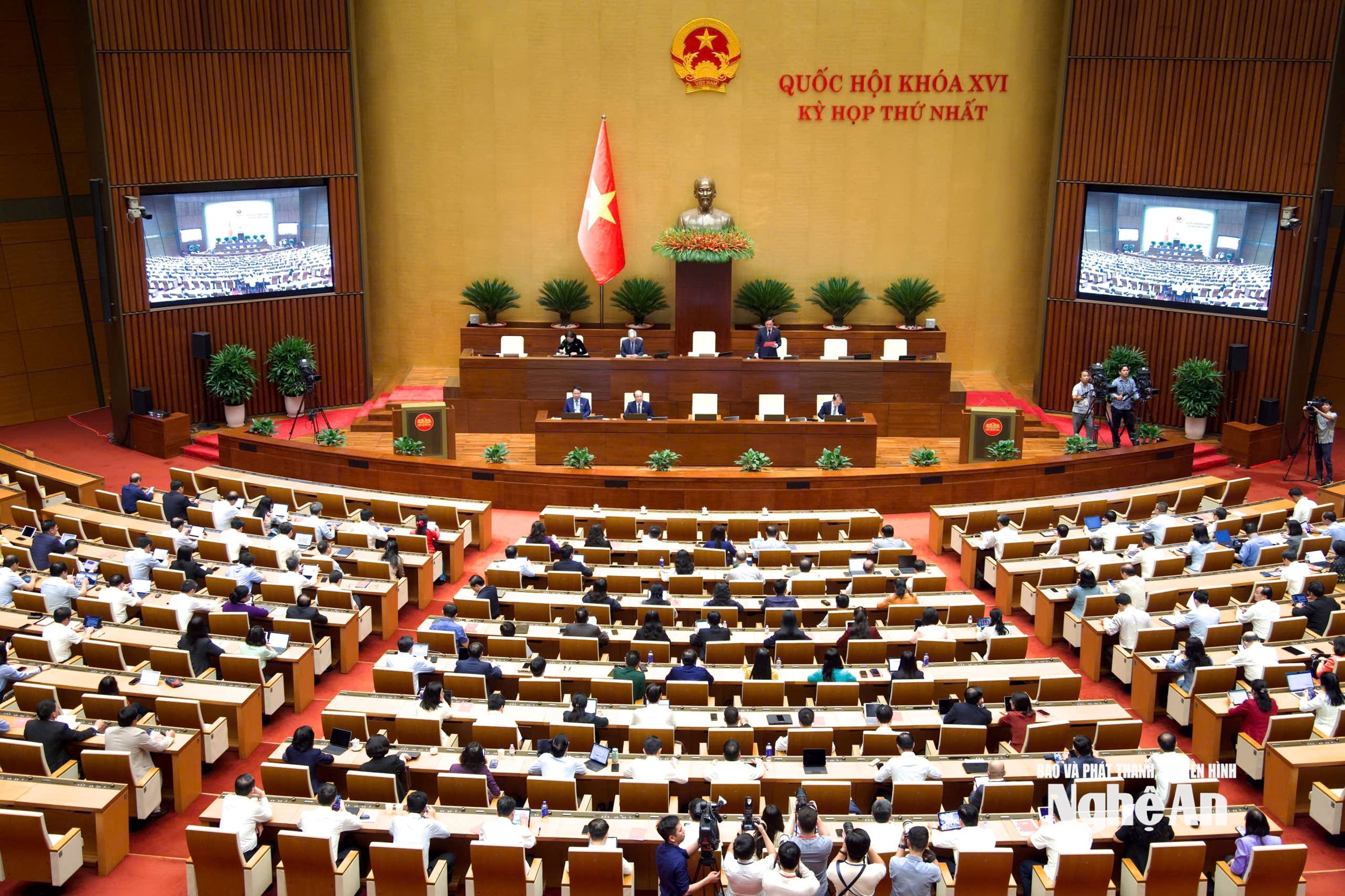
On the morning of April 11th, continuing the program of the first session, the 16th National Assembly discussed in the plenary hall the following draft laws: the Law on Civil Registration (amended); the Law amending and supplementing a number of articles of the Law on Notarization; and the Law amending and supplementing a number of articles of the Law on Legal Aid.
There are no regulations regarding the content of civil registration records concerning marital status information.
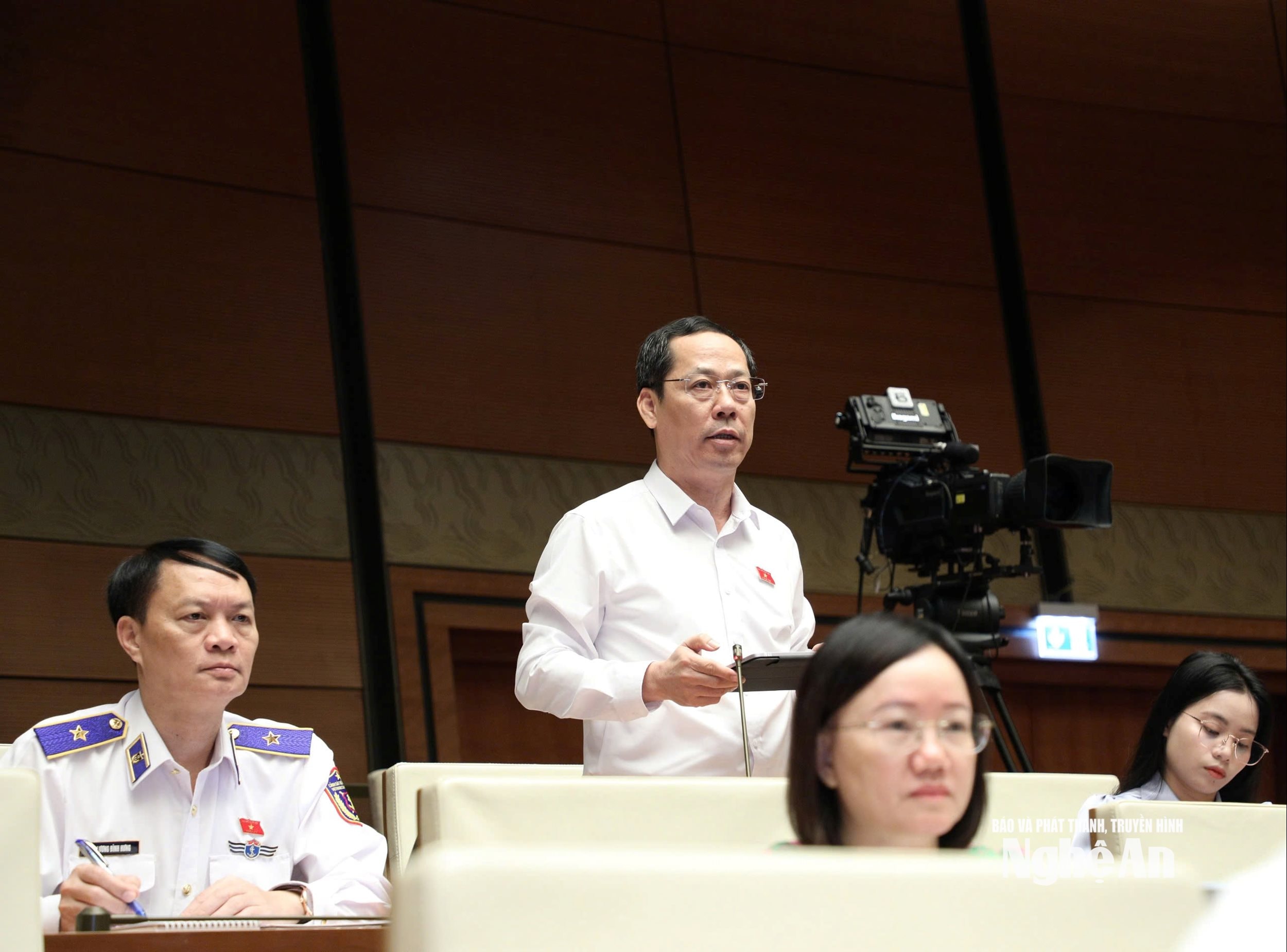
During the discussion on the draft Law on Civil Status (amended), National Assembly delegate Tran Nhat Minh from Nghe An province proposed that the provision regarding marital status information in Point e, Clause 1, Article 3 of the draft law should not be included in the civil status registration.
Delegates argued that individuals' marital status has been recorded and integrated into the civil registry database, for unified use nationwide. This was also an opinion raised in the verification reports of the National Assembly's Law Committee and Judicial Committee, and the drafting agency has provided quite thorough explanations.
.jpg)
In response to the drafting agency's explanation, delegate Tran Nhat Minh argued that, according to the drafting agency's explanation, the essence of confirming marital status is that the civil registration agency confirms an individual's marital status in order to issue a confirmation document upon request.
According to Government Decree 123 dated November 15, 2015, detailing some provisions and measures for implementing the Law on Civil Status, the certificate of marital status is only valid for 6 months from the date of issuance and is only for the purpose stated in the certificate. Therefore, legally, it does not have long-term validity, nor does it accompany an individual throughout their life like other civil status documents.
Meanwhile, information on marital status such as marriage, divorce, or annulment of marriage can be accessed in the civil registry database system as stipulated in Article 8 of the draft law on the principles of civil registration, access and sharing of civil registry data.
Furthermore, the drafting agency argues that, in cases of de facto marriage, the civil registration agency must conduct checks and verifications to confirm that the person requesting confirmation of marital status falls under the category of de facto marriage as stipulated by the law on marriage and family; in such cases, there is no information in the database to issue a confirmation document.
According to Representative Tran Nhat Minh, this explanation is not consistent with the provisions of the 2014 Law on Marriage and Family regarding marriage. Because, according to Clause 1, Article 3 of the Law on Marriage and Family on the definition of terms: Marriage is the relationship between husband and wife after marriage. According to this provision, the case where a man and woman live together and consider each other husband and wife is not considered marriage.
Based on that reality, delegate Tran Nhat Minh argued that confirming marital status for the purpose of applying it to cases of cohabitation as husband and wife is also inconsistent with the provisions of the Law on Marriage and Family.

Based on the above analysis, the delegates proposed maintaining their opinion that the drafting agency should research and consider not including information on marital status in civil registration to ensure the consistency of the law. At the same time, they suggested reducing administrative procedures in civil registration, creating favorable conditions for citizens in civil transactions and registration, and reducing the workload for officials at the grassroots level.
Regarding death registration, delegate Tran Nhat Minh argued that the draft regulation adding a type of document proving the death event in Point b, Clause 4, Article 20 is unclear and vague, failing to specify the legal validity of this document, specifically which competent authority issues it.
Furthermore, if this regulation exists, would it be appropriate for cases where a person dies at home due to illness, old age, etc., without requiring or having confirmation from an authorized agency? This could cause difficulties and inconvenience for facilities and citizens when registering deaths.

Representative Tran Nhat Minh suggested that the drafting agency should consider amending this regulation in a more flexible way by adding the phrase "if any" at the end of the article to apply to cases of death at medical facilities or death due to accidents, external factors, etc., and that the medical or forensic agency would confirm this.
Adding regulations on the rights of notaries
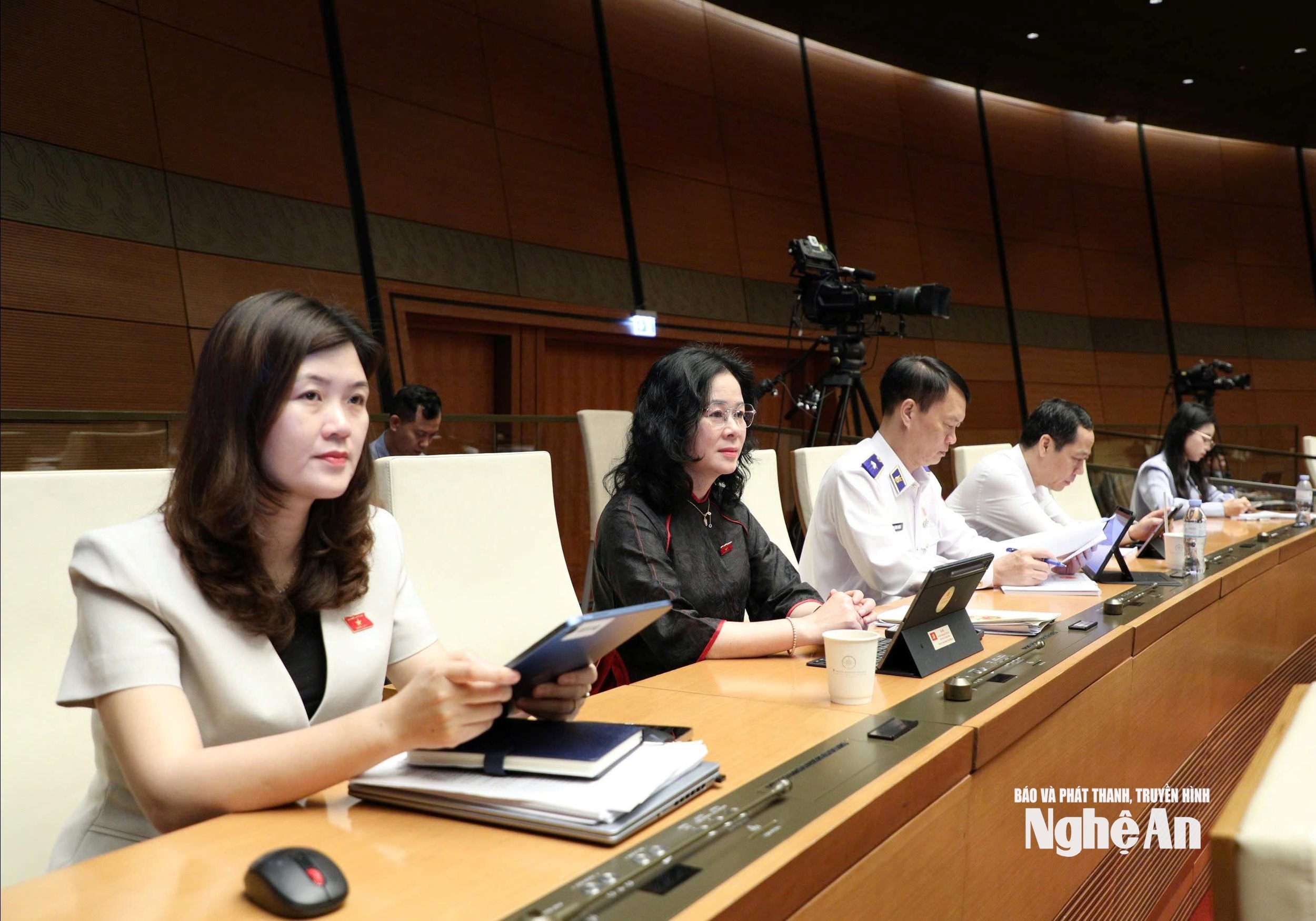
Speaking during the discussion on the draft Law amending and supplementing a number of articles of the Notary Law, delegate Hoang Thi Thu Trang - from the National Assembly delegation of Nghe An province - expressed strong agreement with the viewpoints in drafting the law.

The scope of this revision is also consistent with the legislative approach. Accordingly, the focus should only be on resolving practical difficulties and obstacles, and on addressing truly necessary issues, since the 2024 Notary Law will only take effect on July 1, 2025.
Based on the practical experience of state management of notarization at the local level, delegate Hoang Thi Thu Trang reported and proposed four points to the National Assembly to address the difficulties and obstacles currently encountered.
Representative Hoang Thi Thu Trang argued that there needs to be a unified understanding between notarization and authentication. These are two activities that differ in their legal nature.
Notarization is a public service that verifies the authenticity and legality of transactions, ensuring the voluntary will and legal capacity of the participating parties; it also controls the content and prevents legal violations, as well as ensuring the legal security of transactions.

Meanwhile, authentication is primarily an activity carried out by state administrative agencies to verify whether a copy is true to the original, whether a signature is indeed the signature of the person involved, and to confirm the time, place, and parties involved in the transaction; it does not consider or take responsibility for the content or legality of the document or the transactions.
Although both notarized and certified documents have evidentiary value, they do not need to be proven (as stipulated in Article 72 of the Civil Procedure Code). However, ultimately, notarized documents will have stronger evidentiary value in both form and content; they provide deeper protection, especially for complex transactions.
Based on that understanding, delegate Hoang Thi Thu Trang suggested that regulations on the scope of transactions requiring notarization should be clearer, the rights and obligations of notaries should be higher, and regulations on strengthening supervision of the implementation of the transfer of notarization authority from commune-level People's Committees to notarization organizations should be retained, with the perspective of prioritizing the interests of citizens and businesses, as in Resolution 66 of the Politburo.
At the same time, delegates proposed that the Government review and amend Decree 23/2015 on authentication, as well as related documents, in order to narrow the scope of authentication and increase the socialization of authentication activities. More solutions are needed to limit the abuse of authentication requests for copies, simplify administrative procedures, and reduce compliance costs for citizens and businesses.
Regarding the rights of notaries public, they are authorized by the State to perform public services, certifying the authenticity, legality, and ethical compliance of transactions. They bear unlimited liability with their entire assets and are subject to administrative, disciplinary, and even criminal responsibility for any errors or damages caused by their fault.
However, according to Representative Trang, Article 18 of the 2024 Notarial Law stipulates that the rights of notaries are not strong enough to practice their profession, especially in verifying the legality of transactions. This leads to one of three situations: Notaries still notarize but potentially commit violations and fraudulent disputes; Notaries refuse to notarize due to fear of making mistakes; Notaries require the notary to perform many additional procedures and provide many more cumbersome and costly documents. In any situation, the main victims are the people and businesses.
To address this situation, National Assembly Deputy Hoang Thi Thu Trang suggested that regulations should be added granting notaries public rights commensurate with their roles and responsibilities.
For example, it includes the right to request information from individuals and organizations, rather than simply making a request; the right to access population and land databases (possibly for a fee); and the right to exemption from liability for fraudulent transactions where the notary has fulfilled all responsibilities and acted in accordance with the law without intent.