

FDI businesses are desperate for unskilled labor: What are the bottlenecks?
The shortage of unskilled labor in FDI enterprises in Nghe An is becoming a noteworthy paradox: recruitment demand is soaring, while the labor supply is abundant. The gap between supply and demand is not just about numbers, but also about quality, income expectations, working conditions, and even "mismatches" in training and labor market connections.
We need a lot of people, but we can't recruit enough.
At the labor supply and demand conference held on April 6th, many FDI enterprises frankly admitted that they have only met about 30% of their planned workforce needs. This is not only an immediate difficulty but is also directly affecting production progress, the ability to fulfill orders, and long-term development strategies. A representative from Luxshare ICT stated that the company needs tens of thousands of workers in 2026 alone. Therefore, the company's greatest desire is to receive close cooperation from departments, agencies, and localities, especially vocational training institutions, which possess a large pool of young workers who can participate in suitable production stages during their studies.
.jpg)
Luxshare ICT is not alone; numerous businesses in the area, particularly in the electronics, textile, and footwear sectors, are facing a similar situation. Despite participating in many job fairs and connecting with labor supply agencies both within and outside the province, recruiting a sufficient number of unskilled workers remains a challenging problem.
A representative from Samsung stated that the company needs to recruit approximately 1,000 additional workers in the second quarter of 2026, but has yet to do so, despite working with numerous suppliers. This labor shortage is not just a localized issue but is widespread among many FDI businesses in the area.
According to statistics from the Department of Internal Affairs, businesses in Nghe An's economic zones and industrial parks need to recruit approximately 90,000 workers this year. Of these, the electronics and components sector accounts for about 60%, textiles, leather, and footwear about 30%, and the remainder are in sectors such as wood processing and supporting industries. Notably, unskilled labor accounts for 65-70% of the total demand.
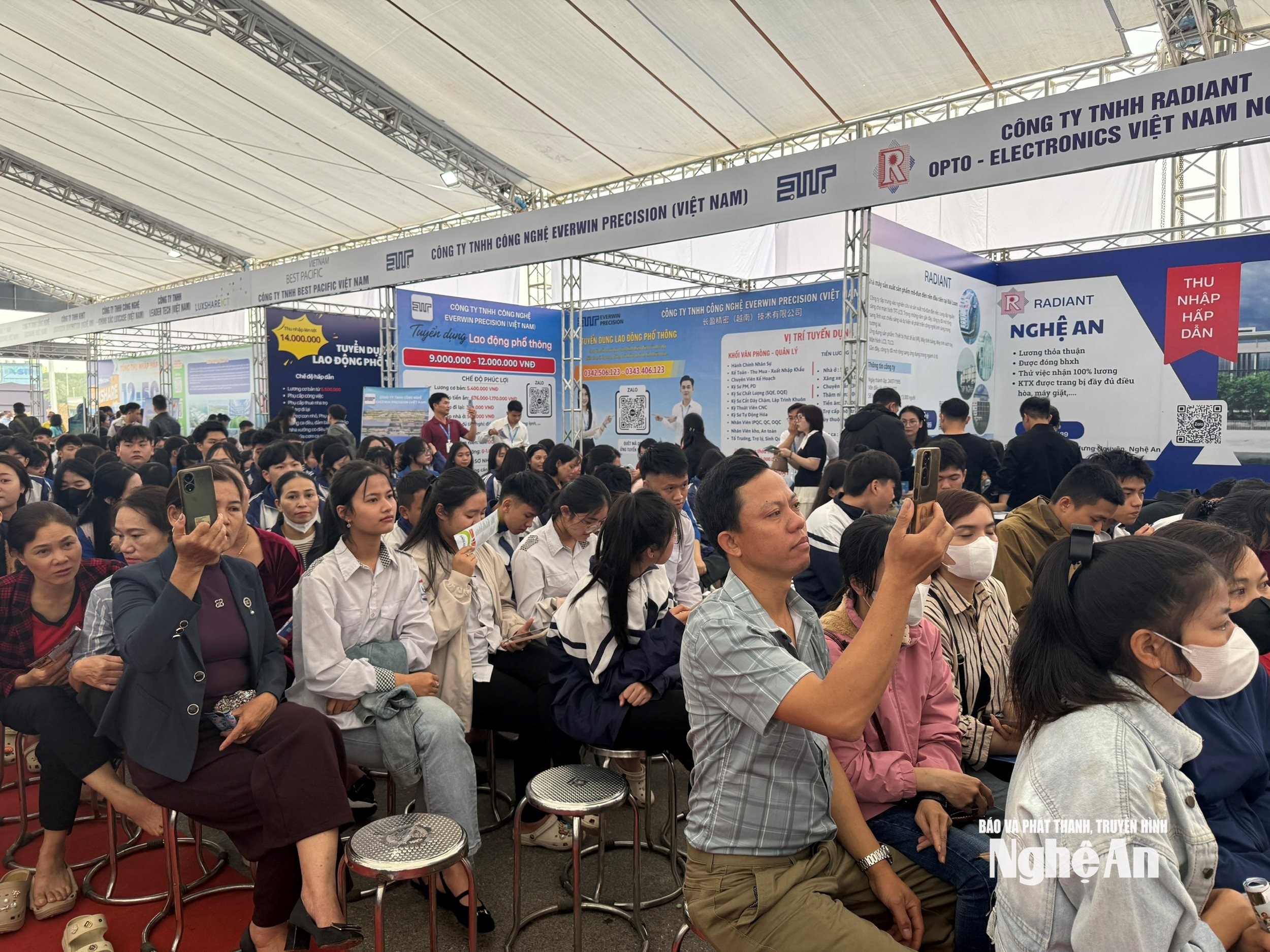
Explaining the reasons for this paradox, Mr. Vi Ngoc Quynh - Deputy Director of the Department of Internal Affairs - said that the rapid pace of investment attraction, especially in economic zones and industrial parks, has led to a sudden surge in labor demand. However, the current supply has not met the requirements of businesses. The problem lies not only in the quantity but also in the quality of labor. A segment of unskilled laborers does not adequately meet the requirements in terms of skills, industrial work style, labor discipline, and the ability to adapt to modern production lines. Foreign languages, especially English, Chinese, and Korean, are also a major barrier in some positions.
Furthermore, workers' attitudes towards employment are also changing. Many prefer working in other provinces or participating in overseas labor programs due to higher incomes and clearer, more stable work environments. Others opt for freelance work with flexible hours instead of being tied to a factory.
Job hopping, early resignations, and instability, especially among young workers, are also factors that make it difficult for businesses to maintain their workforce. Many workers are not yet ready for shift work, overtime, night shifts, or strict adherence to company discipline.
All these factors mean that while labor supply and demand may "meet on paper," they haven't yet "intersected" in reality.
Why is it difficult to attract workers?
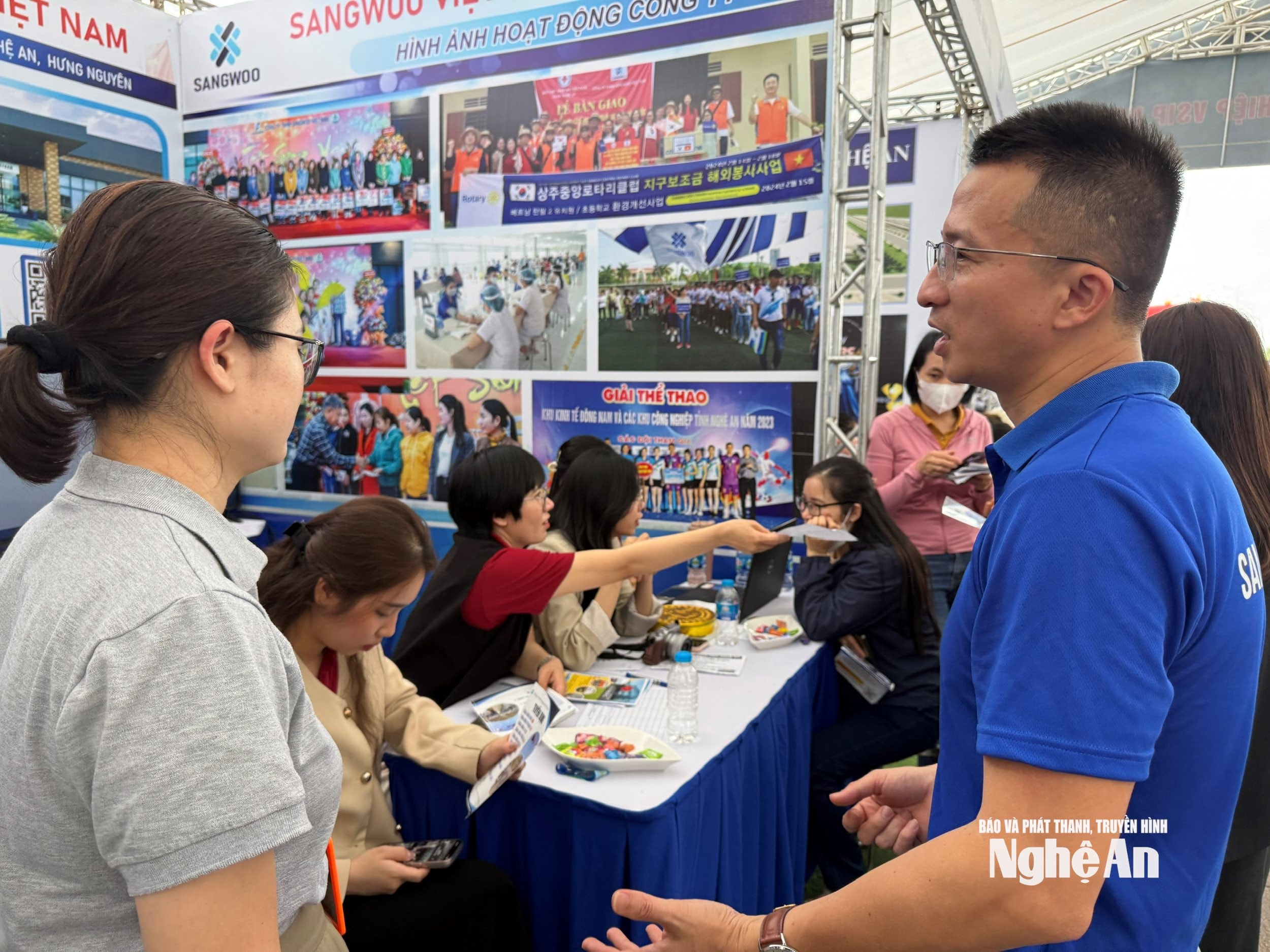
Observations at the job fair held in the VSIP Industrial Park revealed that it was not uncommon to see job seekers inquiring about employment opportunities. However, the majority of them appeared hesitant, even uncertain, when approaching recruitment information.
One of the biggest reasons is the income level. Currently, many FDI businesses offer a basic salary of around 4.5 million VND/month, along with allowances such as 200,000 VND for seniority, 300,000 VND for meal allowances, and 500,000 VND for other bonuses. Total income ranges from approximately 5-5.5 million VND/month. For workers living near industrial zones, this income level may be acceptable. However, for those living far away, 20-40km from their workplace, the cost of commuting and living expenses makes the income less attractive.
Mr. Phan Bá Chí (from Hưng Nguyên commune), who worked for 7 years as a forklift driver in Japan, said: “If the salary were around 8-9 million VND/month, I would be willing to apply. But currently, businesses are only offering just over 5 million VND, so it's not attractive enough.” Furthermore, many workers compare the current salary to job opportunities outside their province. In industrial centers like Bắc Ninh and Bắc Giang, the common salary is 12-13 million VND/month. Even after paying for rent, food, and transportation, the actual income is still higher.
Mr. Le Van Van, Director of Nhan Duc Phat Labor Supply Company, analyzed: When working away from home, workers reduce social expenses such as weddings, funerals, and community contributions. This indirectly helps them accumulate more savings, even though the cost of living is high.
Furthermore, the issue of salary transparency also makes workers hesitant. Many businesses advertise salaries of 9-15 million VND/month, but in reality, workers find it difficult to achieve this level due to the complex calculation of salaries and bonuses, and deductions for penalties such as tardiness and absences.
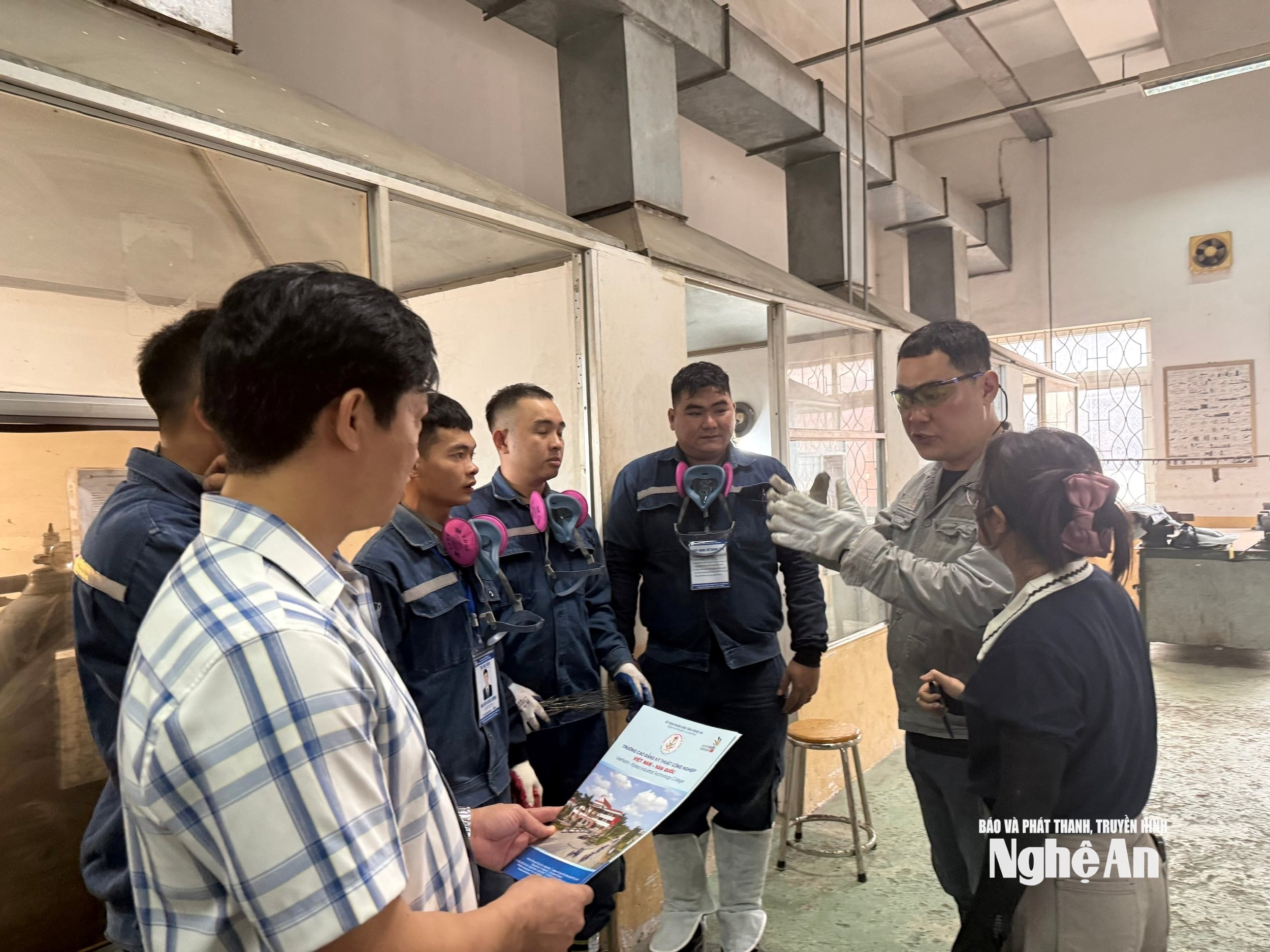
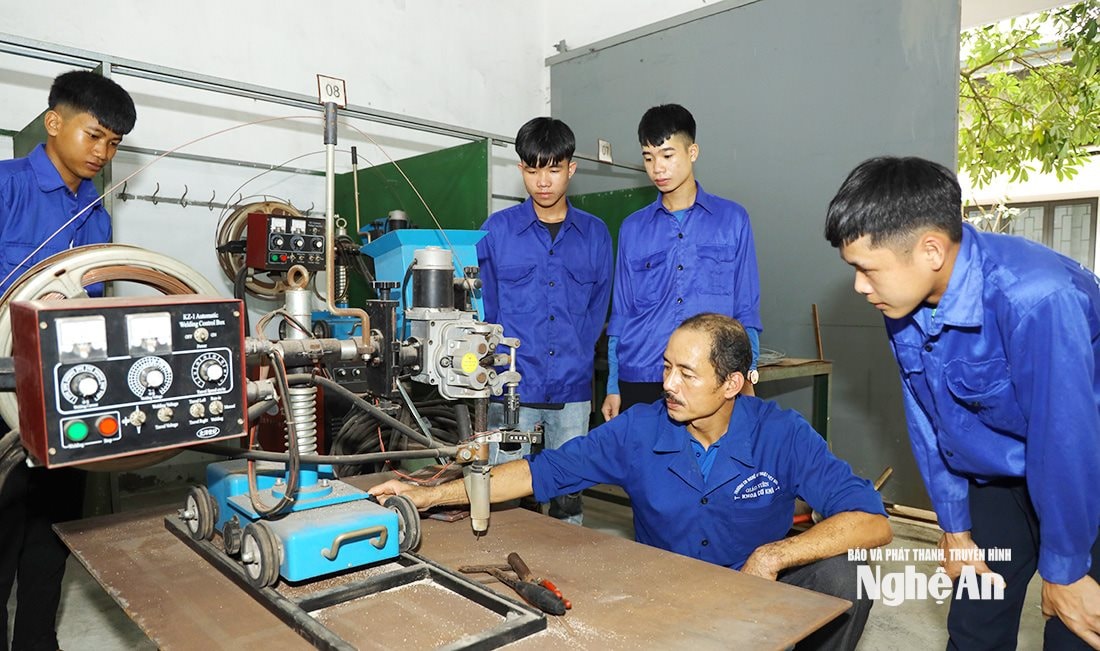
Another bottleneck lies in the lack of synchronization between training and business needs. Cooperation agreements between FDI enterprises and vocational training institutions have not been as effective as expected. A representative from Luxshare ICT stated that the company has collaborated with many vocational schools for training, but when it needs to mobilize seasonal labor, the students are often in the theoretical or intensive practical training phase and unable to participate in production. This "mismatch" prevents the training-production model from being effective, especially in a context where businesses need flexible labor according to order cycles.
We need a comprehensive and substantive solution.
Given this situation, many believe that, in order to attract and retain employees, businesses first need to adjust their compensation policies to be more competitive and transparent. Salaries must be sufficient to live on, or even allow for savings, in order to retain employees in the long term.
Furthermore, improving the working environment is also a key factor. Ensuring workplace safety, providing housing, transportation, meal allowances, etc., will help employees feel secure and committed to their jobs. However, currently, although some large enterprises have invested in dormitories, they are still insufficient to meet the needs of the workforce living far from home.
From the workers' perspective, they need to be better equipped with skills, a professional work ethic, and a sense of discipline. Short-term training programs and on-the-job training can help improve capabilities and foster loyalty to the company. Labor supply services are also becoming a trend, giving businesses more flexibility in recruitment. Instead of handling the entire process themselves, businesses can collaborate with intermediary agencies to quickly access suitable human resources.
According to Mr. Tran Van Sao, Director of Vietjob Group Joint Stock Company, labor trends are also shifting positively. While previously many workers from Nghe An chose to work in Bac Ninh and Bac Giang, recently there have been cases of people returning to work in their hometown, showing the potential for retaining workers if businesses have appropriate policies.
From the reality, it is clear that the problem of unskilled labor in FDI enterprises in Nghe An is not simply a shortage of personnel, but a lack of compatibility. When supply and demand do not meet, a new, more synchronized approach is needed from businesses, management agencies, and the training system. Only when these "bottlenecks" are resolved will the labor market truly function effectively, meeting the requirements of rapid and sustainable development of the locality.