

When 12th-grade students "avoid" science subjects.
In this year's high school graduation exam, subjects in the natural sciences were not chosen by many candidates, leading to many shortcomings and negative consequences in the future...
Imbalance in graduation exam registration
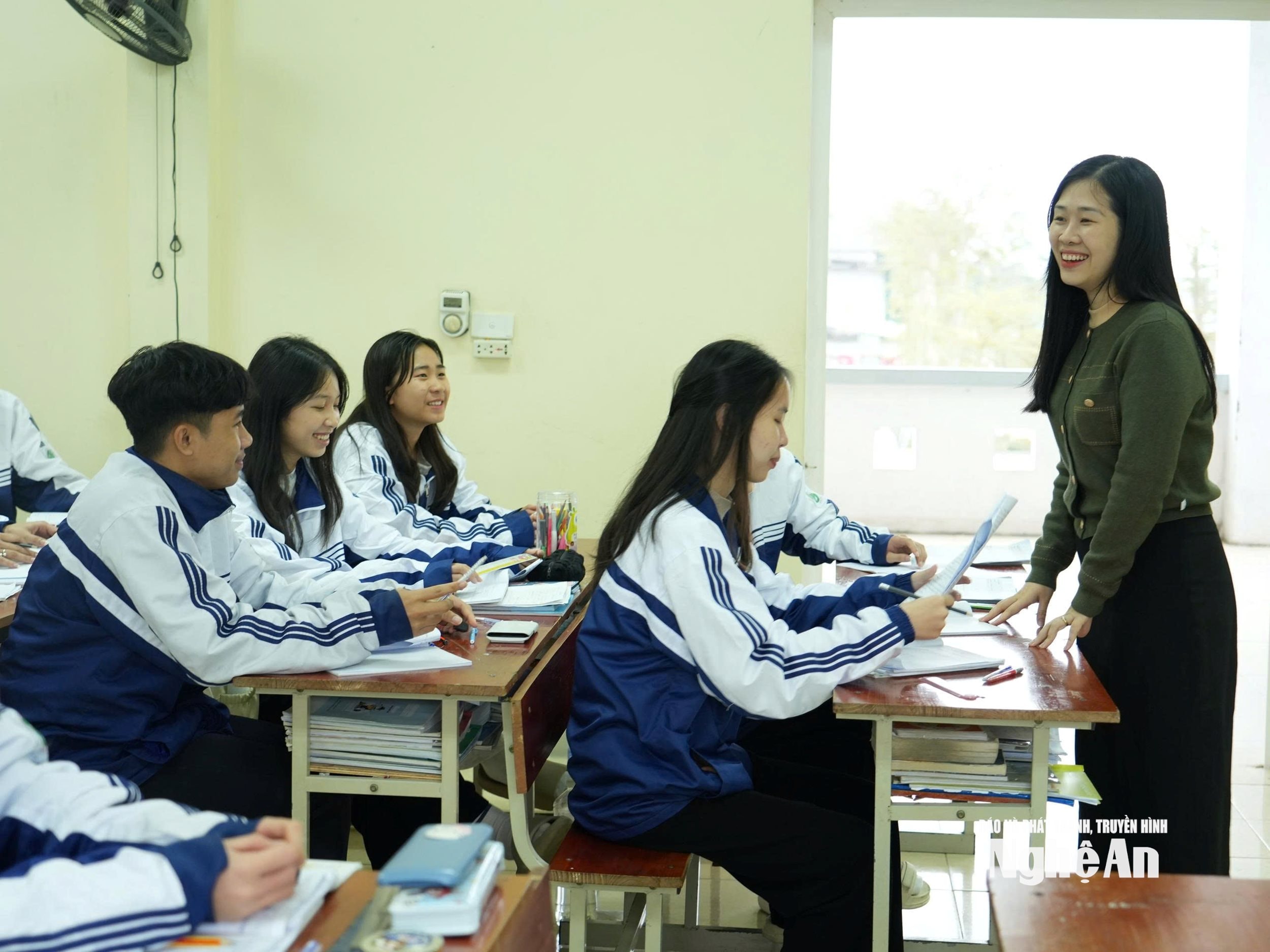
For several months now, in addition to her morning classes at school, Ms. Nguyen Thi Trang, an English teacher at Tuong Duong High School, has been dedicating an extra afternoon each week to exam preparation for her students.12th grade studentsIn addition, she also dedicated an evening to tutoring students who planned to use English for university entrance exams.
Last year, only 5 students at our school registered for the English elective course, and this year that number has doubled to 13. Although the number is very small compared to the total number of students in the school, I still try my best to support them so they can succeed in their graduation exams and get into their dream schools...
Ms. Nguyen Thi Trang - English teacher at Tuong Duong High School
According to Ms. Trang, although only 13 out of 355 12th-grade students registered for English this year, Tuong Duong High School only set a modest goal of ensuring quality with an average score of 5.8 points, an increase of 0.4 points compared to previous years.
During the accelerated learning period, in addition to continuing to reinforce grammar, she required students to practice new vocabulary and solve and correct exam questions. After the first mock exam, with an average score of 5.6 points, she was still not satisfied because the students' abilities were uneven and their vocabulary was still limited.
.jpg)
As one of the few students who chose the D group (Literature - Mathematics - English) for university entrance exams, Nguyen Thi Mo, a student in class 12A1 at Tuong Duong High School, said: “I plan to apply to a teacher training college, but my mock English exam score was only 6.5 points, and I'm not satisfied with the result. Therefore, from now until the high school graduation exam, I will intensify my practice with exam questions and install an English vocabulary learning program on my phone to add new words.”
In the 2025-2026 school year, Tuong Duong High School will have 10 classes of 12th-grade students with 355 students. Besides English, an elective subject with very few students taking the exam, many other science subjects are in a similar situation. Specifically, while History had 228 registered students, Geography had 188, and Economics and Law had 206, Biology only had 42, Physics 11, Chemistry 10, and Informatics 5.
According to Mr. Le Ngoc Hung, the school principal, the low number of students registering for English may be due to the fact that over 80% of the school's students are from ethnic minority groups, making it difficult for them to learn additional foreign languages. Meanwhile, students are also not enthusiastic about science subjects because they are difficult and not easy to get high scores in.
Each year, only about 20% of our students apply for university admission. The rest only take the exam to get a passing grade, so they tend to choose subjects that are easy to learn, easy to memorize, and won't result in failing grades, such as social science subjects. Those who register for science subjects are usually those who intend to go to university and have above-average academic performance.
According to Le Ngoc Hung - Principal of Tuong Duong High School
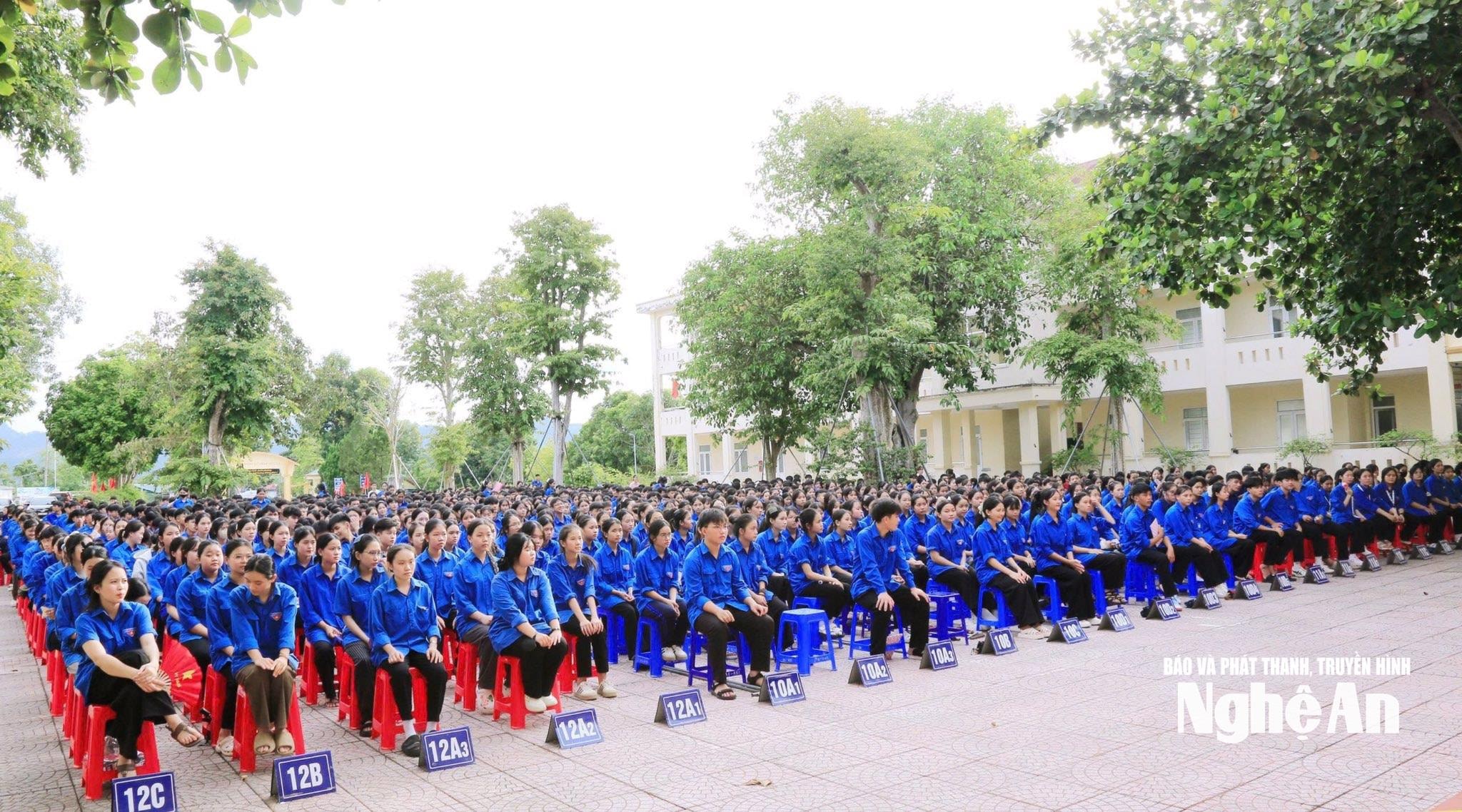
Not only in mountainous areas, but also at Ethnic Boarding High School No. 2 - a top-performing school in Nghe An province - there is a disparity in the number of candidates registering for the natural and social science subjects. Specifically, out of 263 12th-grade students, 213 registered for History, 102 for Geography, 105 for Physics, 94 for Chemistry, 43 for English, 38 for Biology, and 8 for Informatics.
Previously, our school had quite a few students choosing social science subjects for university entrance exams. However, nowadays, fewer and fewer universities accept subject combinations like Literature - History - Geography, so students have had to adjust their choices to increase their chances of admission. This is a positive sign, showing that students' awareness of choosing subject combinations for exams is gradually changing towards a more practical direction, aligned with the admission needs of universities and the demands of the labor market.
The increase in the number of students registering for science subjects, although not significant, partly reflects their proactive adjustment in their future career orientation.
Ms. Truong Thi Thanh Thuy - Vice Principal of Ethnic Boarding High School No. 2
Students are indifferent to science subjects.
This school year, Le Viet Thuat High School has 845 12th-grade students who will take the high school graduation exam. According to the school's summary, besides the two compulsory subjects, Literature and Mathematics, the most popular elective subject is English with 555 students. This is followed by Physics with 333 students, History with 248 students, Economics and Law with 242 students, Chemistry with 149 students, Geography with 78 students, Biology with 39 students, and Informatics with 5 students.
Regarding this, Ms. Thai Thanh Thuy, the school's Vice Principal, stated: "Most students at our school take the high school graduation exam with the goal of applying to university. Therefore, they register for elective subjects within combinations that can be used for admission to many universities, such as combination D1 (Literature - Mathematics - English) or A1 (Mathematics - Physics - English), so the number of students taking Physics and English exams is high. For the remaining subjects, students mainly take the exam to get a passing grade, so they tend to choose easier subjects like History and Geography. Students who choose Chemistry, Biology, or Informatics are usually those applying to engineering fields, and this number accounts for less than 20%."
.jpg)
Due to the significant disparity between subjects, exam preparation, class placement, and teacher allocation in schools face many difficulties. For example, at Le Viet Thuat High School, even though the school organized career counseling and guidance for students from the beginning of 10th grade, the number of students choosing elective subjects in the science stream remained low.
To ensure teachers have enough teaching hours, many science teachers have to take on additional subjects such as local education, experiential learning, and career guidance.
Choosing "safety" but lacking safety
Regarding the increasing trend of students choosing social science subjects, Mr. Le Van Quyen, Principal of Thanh Chuong 3 High School, believes this is a real trend in recent years and stems from various reasons. Among them, many students believe that social science subjects are "easier to approach," less stressful than natural science subjects, and better suited to their academic abilities.
Another worrying issue, according to Mr. Quyen, is that because the 2018 General Education Program allows students to register for 4 elective subjects from among subjects such as Physics, Chemistry, Biology, Geography, History, Economics and Law, Informatics, and Technology, when registering, students tend to choose "safe" subjects that are easy to get high scores in, and many have not considered their future career orientation.
At Thanh Chuong 3 High School, currently, out of 10 12th-grade classes, only 4 are oriented towards natural sciences, while the remaining 6 are oriented towards social sciences and foreign languages. Therefore, in reality, students still choose social science subjects for their graduation exams. Based on this reality, teacher Le Van Quyen believes that if this trend continues for a long time, it could lead to an imbalance in the structure of human resources and result in a shortage of labor in technical, scientific, and economic fields.
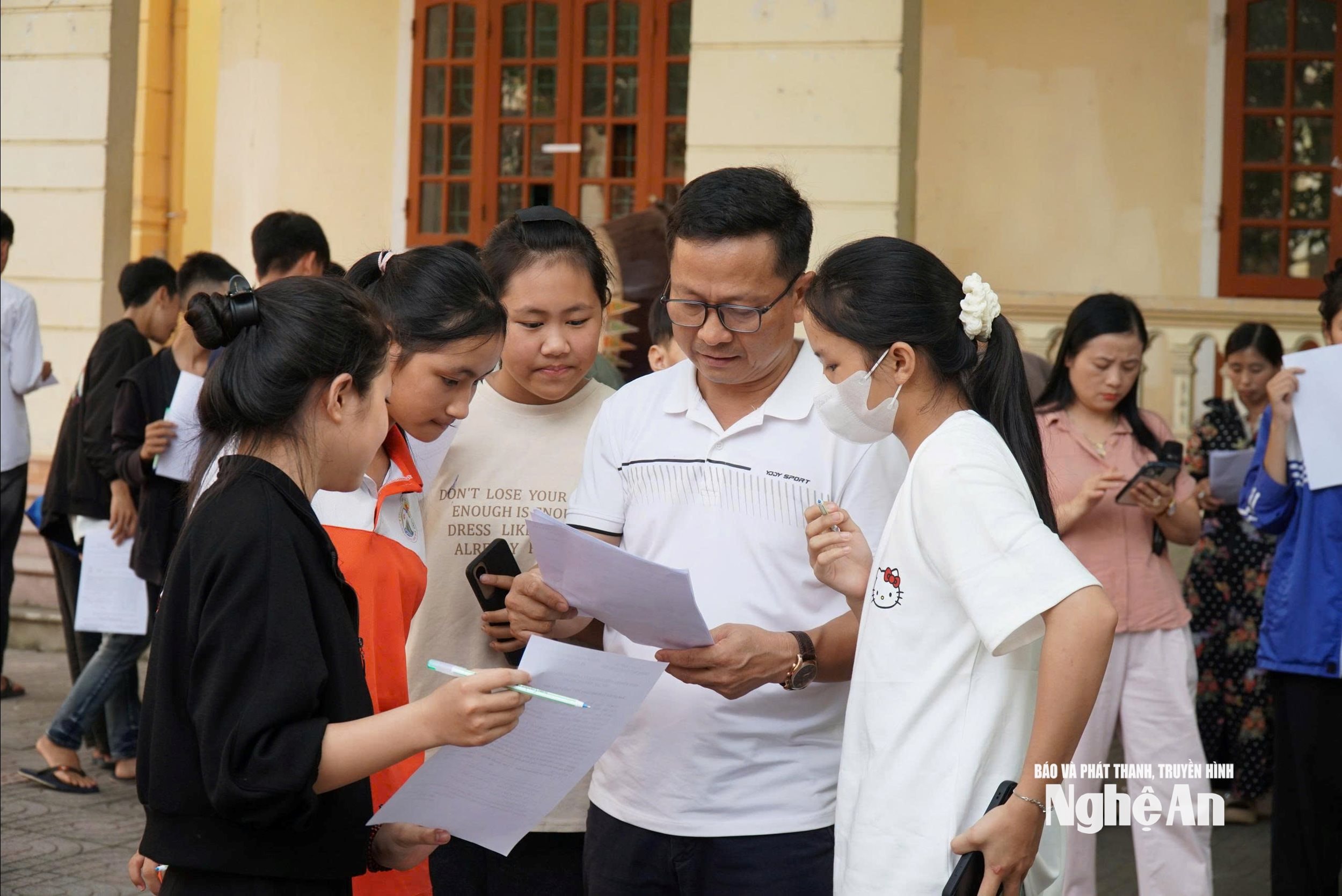
To mitigate the problem of "early and distant" career choices, schools need to focus on career counseling and guidance, helping students better understand the requirements of each profession and future job opportunities. In addition, improving the quality of teaching and learning in natural science subjects is also a key factor. Teachers need to innovate their methods, increase practical work and experiments, and connect knowledge with real-world applications to create interest among students.
When students see the appeal and practical application of different subjects, their choices will become more proactive and appropriate, rather than simply following fleeting trends.
Mr. Le Van Quyen - Principal of Thanh Chuong 3 High School