

A couple in their 30s brought the Queen Ginseng plant back to their homeland to green the fields.
Amidst the scorching summer heat, when outdoor temperatures sometimes reach 40 degrees Celsius, in Tan Minh hamlet, Binh Minh commune, a plant is thriving, spreading its lush green foliage over an area of more than 1 hectare. This is Queen Ginseng – the result of a bold investment by a young couple in their 30s, driven by the aspiration to introduce a new crop to green their homeland.
Bold move to "bring ginseng to rice-growing villages"
The owners of those rows of neatly arranged ginseng plants with their vibrant green leaves are a young couple, Tran Duy Long (born in 1988) and Le Thi Que (born in 1989). They both worked in the telecommunications market. Their travels and interactions with customers opened up a new perspective and insight into consumer trends, particularly the growing demand for clean, traceable herbal products.
The idea of bringing ginseng back to cultivate in my homeland gradually took shape, fueled by a desire to find a more sustainable path. But ideas are one thing, putting them into practice is a challenging journey.
.jpg)
"When we started, many people said we were taking a risk. Ginseng is a new crop, it requires a large investment, has high risks, and no one had done it here before, so we didn't know whether we would succeed or fail," Long recalled.
Ignoring their skepticism, the couple decided to rent nearly 1 hectare of land to experiment with growing Queen Ginseng – a medicinal herb with high economic value, a short growth cycle, and diverse potential uses.
In the early days, the sight of the young couple and a few local laborers busily working under the scorching sun—some installing irrigation systems, others carrying water, and still others tending to each ginseng plant—became familiar to the locals. There was no easy path; their success began with the sweat they poured onto the barren land.
According to Mr. Long, the special feature of Queen Ginseng is its short harvesting time, only 10-12 months. Not only that, almost the entire plant can be utilized: Leaves can be used to make tea bags; flowers, stems, and roots can be processed into extracts, food, and cosmetics; fresh leaves can be used as a vegetable; and the roots can be used to cook soup, stew chicken, and other dishes.
.jpg)
In parallel, the couple also utilized an additional 1 hectare of land belonging to the wife's family in Dong Bau 2 hamlet, Ma Thanh commune, Yen Thanh district (formerly), now part of Binh Minh commune, to cultivate Southern ginseng (also known as Tien Vua ginseng) - a highly valuable plant that requires a long time, from 5-7 years, before the tubers can be harvested.
This combination is not accidental. It's a "short-term gain for long-term benefit" strategy: Queen Ginseng provides quick cash flow, while Southern Ginseng is a long-term investment for the future. From the second year, Southern Ginseng plants can be harvested for their flowers, which are then dried to make tea. Combining short-term crops (Queen Ginseng) and long-term crops (Southern Ginseng) is a smart strategy that minimizes risk and ensures a steady income stream during the initial phase – the most challenging period for any agricultural project.
PressureusekFarming techniques 4.0 in the fields
What sets Long's model completely apart from traditional farming methods is the intervention of technology and strict control processes.
The surveillance camera system installed throughout the garden serves not only for security but also allows the partner company to directly monitor the care process. Every step, from fertilizing and watering to pest control, must adhere to technical guidelines to ensure the medicinal properties of the product.
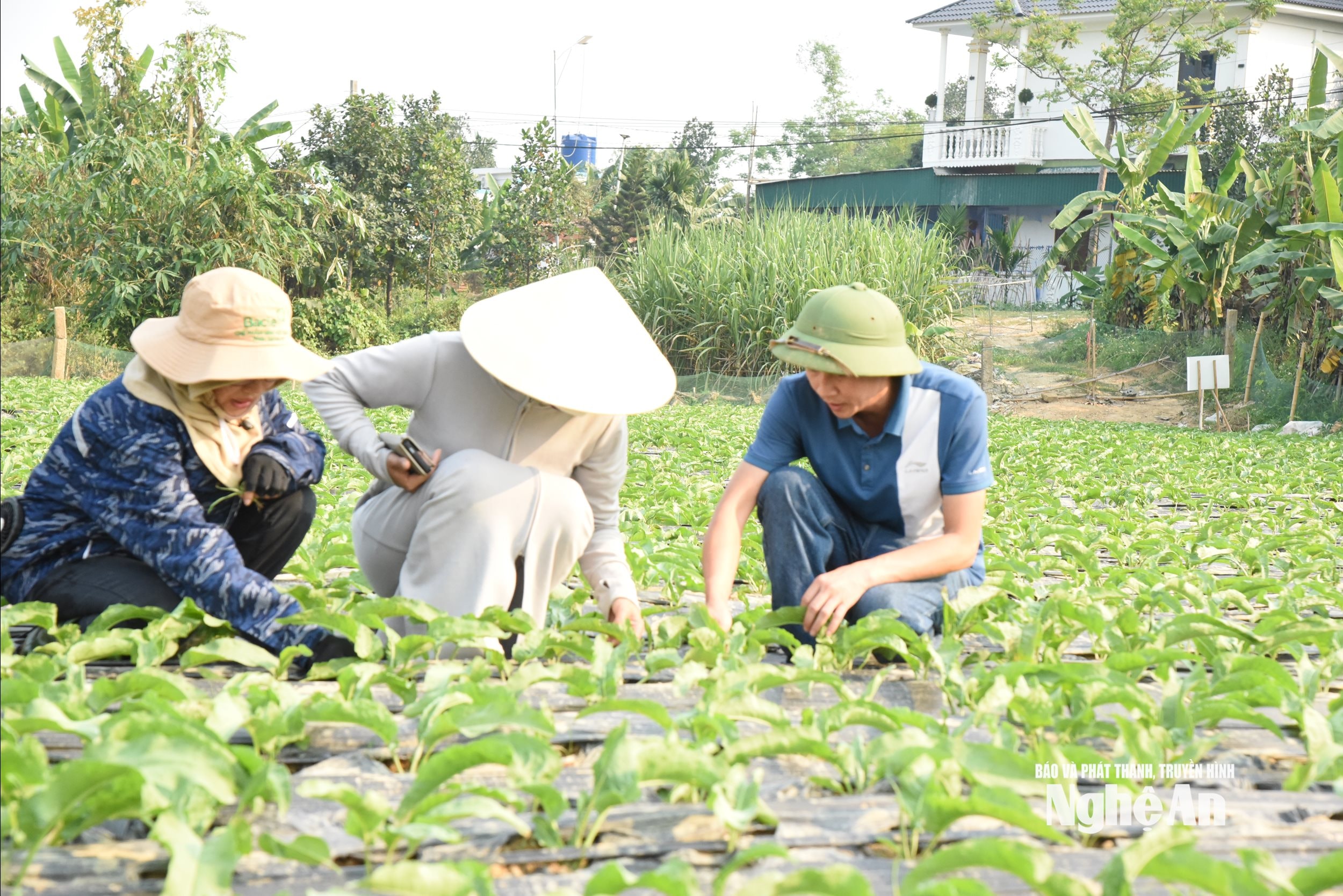
Ms. Le Thi Que, Mr. Long's wife, who is trained in Food Technology, is directly in charge of technical aspects and food safety. She shared that ginseng plants are very "sensitive," especially in the first two months, requiring regular watering twice a day.
Fertilization is also carried out regularly every 5-7 days to ensure the highest yield. Most importantly, the fertilizer must be completely organic, rigorously tested before being soaked and fermented to create a liquid that is then mixed into the drip irrigation system and delivered to each plant's roots.
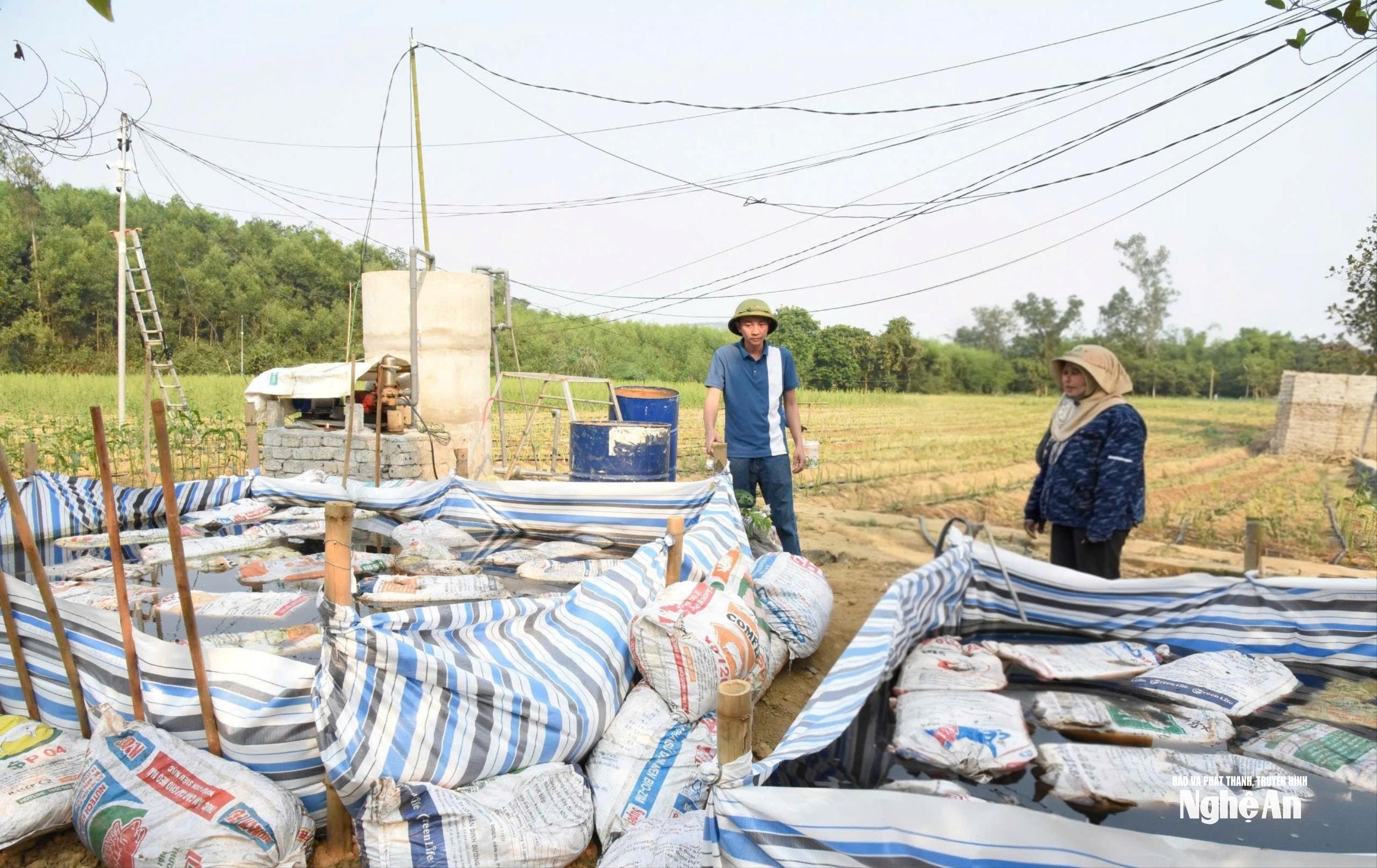
The automatic irrigation system was designed and installed by Mr. Long, who has a background in mechanical engineering, to optimize labor. In one corner of the garden, Mr. Tran Duy Long set up two tanks for dispensing organic fertilizer solution using tarpaulins. Pointing to the overflowing bags, the young owner explained that these were bags of organic fertilizer that had been processed by a partner company. These fertilizer bags are then soaked in water to extract nutrients, which are then delivered to the plants through the drip irrigation system.
.jpg)
Areas of the garden that are far from being watered by pipes will be irrigated manually. The flexible combination of technology and human labor ensures that the entire area is cared for evenly.
Ensure output, haiming towards becoming a brand of indigenous medicinal herbs.
One of the biggest concerns in agriculture is the lack of a stable market for the produce. But with Mr. Long's model, this problem has been solved from the start. His family signed a contract with a company specializing in ginseng in Da Nang. According to the contract: the company provides seedlings; guides cultivation techniques; and guarantees the purchase of all the produce. Not stopping at selling raw materials, the processed products are returned to Mr. Long and his wife, who act as a central distribution warehouse. This is a closed-loop model that increases product value and minimizes market risks.
.jpg)
Initial results have been quite positive. In the very first harvest, Mr. Long and Ms. Que's family farm supplied approximately 3 tons of raw materials. Currently, many products have been launched on the market, such as: Root extract; Tea bags; Leaf extract… Deep processing and production linkages in agriculture not only enhance economic value but also open up a sustainable path for medicinal plants in the locality.
.jpg)
Not only has Mr. Long and his wife's model enriched their family, but it has also created a new lease of life for Tan Minh hamlet. Currently, the ginseng farm provides stable and regular employment for 6-7 local workers. During peak harvesting seasons, the number of workers can reach 15-20 people, with an income of approximately 200,000-250,000 VND per person per day. This is a significant income for light work, suitable for rural laborers in the area.
.jpg)
Mr. Tran Van Giang, Chairman of the People's Committee of Binh Minh commune, highly appreciated the dynamism and boldness of the young couple and hoped that this would become one of the livelihood models that would bring a breath of fresh air to agricultural production in the locality.
Not content with just a household-scale operation, Mr. Long established the Binh Minh Agricultural and Medicinal Herbs Cooperative with 7 members. The goal is to standardize production processes; expand cultivation areas; and build a brand for local medicinal herbs.
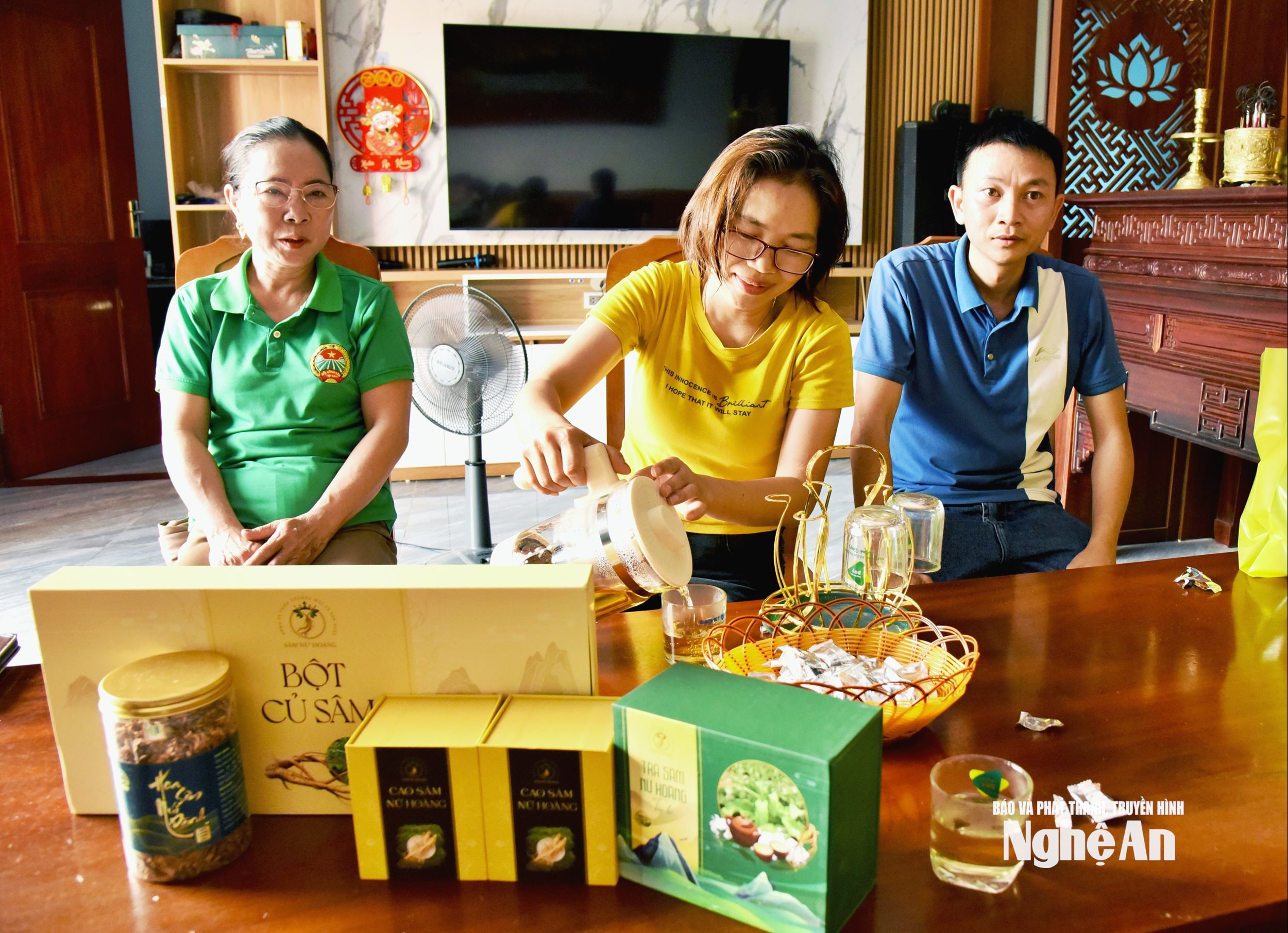
In an area traditionally known for rice cultivation, the appearance of lush green ginseng gardens by the young couple is not only a change in crop cultivation but also a symbol of new thinking.
The story of Mr. Long and Ms. Que proves that, with knowledge, technology, and a daring spirit, young people can absolutely create positive changes for agriculture in their hometown. The dream of bringing the "luxury" crop to green the land of Binh Minh commune is gradually becoming a reality for this young couple, opening up a new direction for agriculture, creating more jobs, and increasing income for the people.
.jpg)