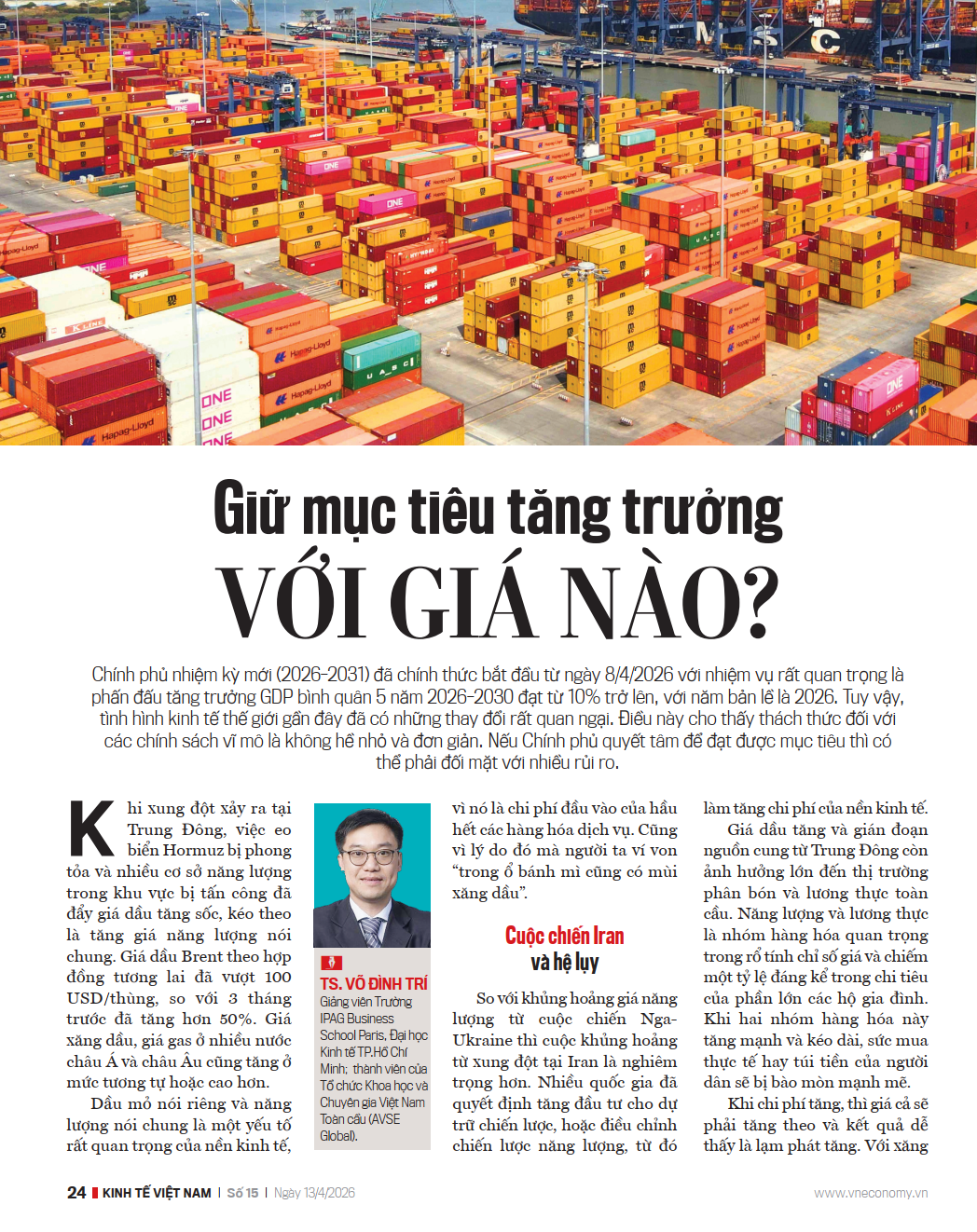
Targeting 10% GDP growth and the challenge of oil prices exceeding $100.
The Vietnamese government aims for an average GDP growth of 10% during the 2026-2030 period, amidst global oil prices exceeding $100 per barrel, putting significant pressure on inflation and macroeconomic stability.
The government for the 2026-2031 term aims for an average GDP growth rate of 10% or higher over the next five years, with 2026 being a pivotal year. However, fluctuations in the global energy market and conflicts in the Middle East are creating significant challenges for macroeconomic policy management.
Pressure from the global energy price shock.
The conflict in Iran and the blockade of the Strait of Hormuz have pushed Brent crude futures prices above $100 per barrel, a more than 50% increase compared to three months earlier. This surge has led to sharp increases in gasoline and gas prices in Asia and Europe, directly impacting the input costs of most goods and services.
According to a report by the Organization for Economic Cooperation and Development (OECD), in a scenario of prolonged high energy prices, inflation in the G20 group could increase by an additional 0.7 percentage points compared to the baseline forecast (4% in 2026). In the US, the Federal Reserve (Fed) has also expressed concerns about the possibility of achieving its 2% inflation target, and a majority of its members are supporting a tighter monetary policy by raising interest rates.
Regional and Vietnam growth forecasts
The World Bank (WB) predicts that growth in the East Asia and Pacific region will slow from 5% in 2025 to 4.2% in 2026 due to its heavy reliance on imported energy. For Vietnam, growth in the first quarter of 2026 is projected at 7.83%, but to achieve the 10% target for the whole year, the remaining quarters need to maintain double-digit growth rates.
International organizations are now offering more cautious forecasts for Vietnam in 2026:
- IMF:5.6%
- World Bank (WB):6.3%
- Bloomberg Survey:7.2%
The trade-off between growth and macroeconomic stability
To achieve ambitious growth targets, the government tends to focus on spending, public investment, and requires the State Bank to implement loose monetary policy. However, experts warn of lessons learned from 2011, when excessive credit easing led to inflation reaching 18-20% at times and a rise in systemic bad debt.
In the context of global market uncertainties ranging from private debt risks to AI technology bubbles, prioritizing macroeconomic stability and inflation control is seen as a necessary approach to ensure more sustainable long-term development.