

Nghe An: Fields dry up, corn withers due to drought.
The prolonged heatwave in Nghe An is causing significant difficulties for agricultural production. Rivers and streams are drying up, rice crops are lacking water during the flowering stage, and large areas of corn are scorched and wilting... This is the most severe early-season drought in many years.
Rice plants are flowering and "thirsty" for water; farmers fear crop failure.
In recent days, the weather has been extremely hot, with outdoor temperatures reaching 39-40 degrees Celsius at times. In Than Linh commune, many rice fields have shown signs of cracking and hardening of the soil. Ms. Tran Thi Lam, from Hamlet 3, Than Linh commune, shared her concerns: “My family cultivates 3 sao (approximately 0.3 hectares) of rice, which is currently in the flowering stage, but the river water has dried up, and there is no water to pump into the fields. If it doesn't rain in the next few days, we will lose the crop. Looking at the rice fields breaks my heart.”
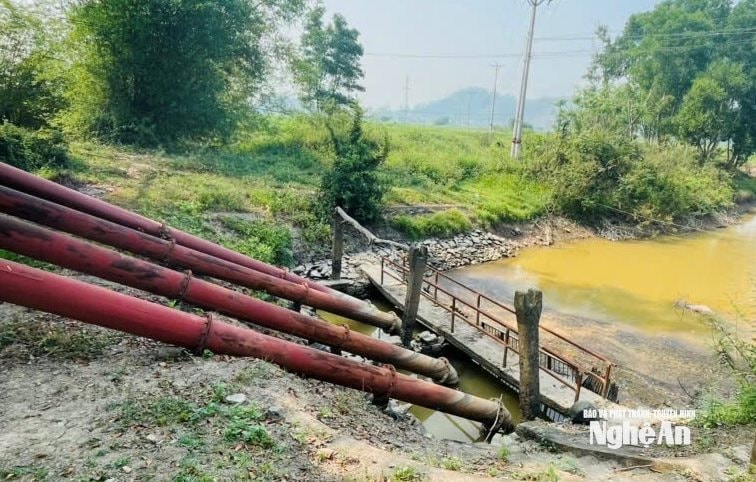
According to reports, the main irrigation water source for Than Linh commune depends on the Cam River and the O O dam system. However, due to the prolonged drought, the river water level has dropped, with many sections completely dry, rendering the pumping stations inoperable.
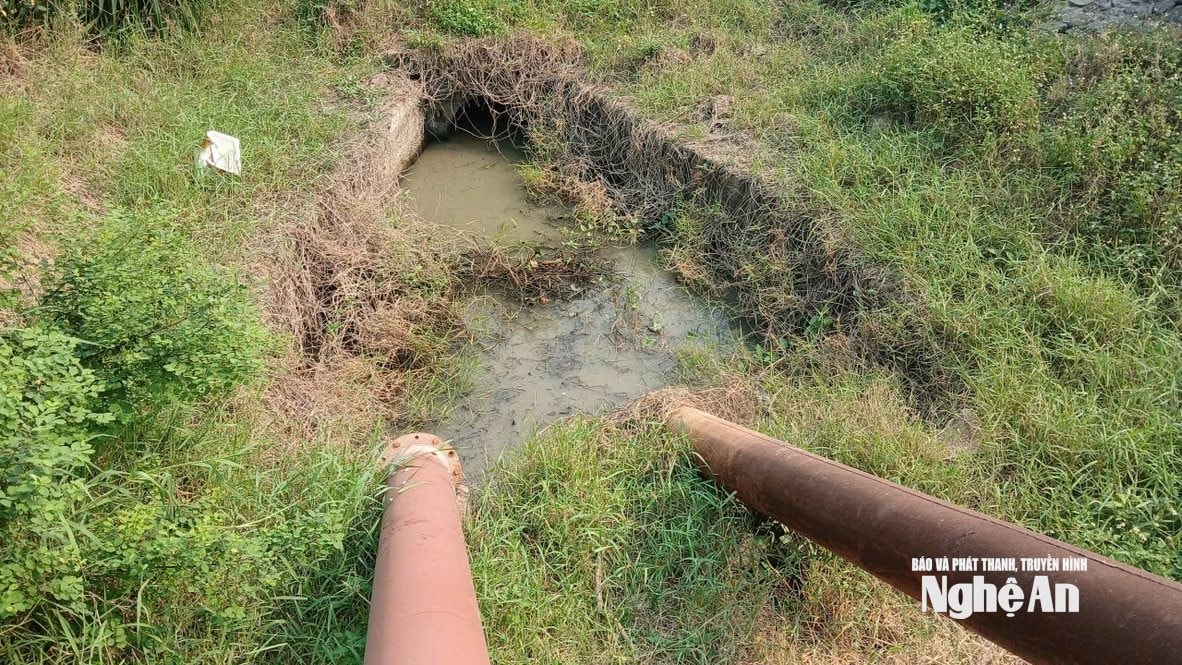
Ms. Nguyen Thi Sen, a specialist in the Economic Department of Than Linh commune, said: “The entire commune has planted 983 hectares of rice, which is currently entering the heading and flowering stage, the time when the rice plants need the most water. However, the water source from the Cam River has dried up, causing 3 out of 9 pumping stations to cease operation. The remaining stations are also only operating intermittently.”
Specifically, the Xam Bua pumping station, which supplies water to 141 hectares of rice fields in Nghi Hung 2, 4, 5, and 6 hamlets, is currently unable to operate. Similarly, the Dao Phuong Thai river pumping station, which serves 75 hectares of rice fields in Nghi Phuong 6, 7, and 8 hamlets, is also facing a severe water shortage. The total area of rice fields affected by drought in the commune has reached over 216 hectares.
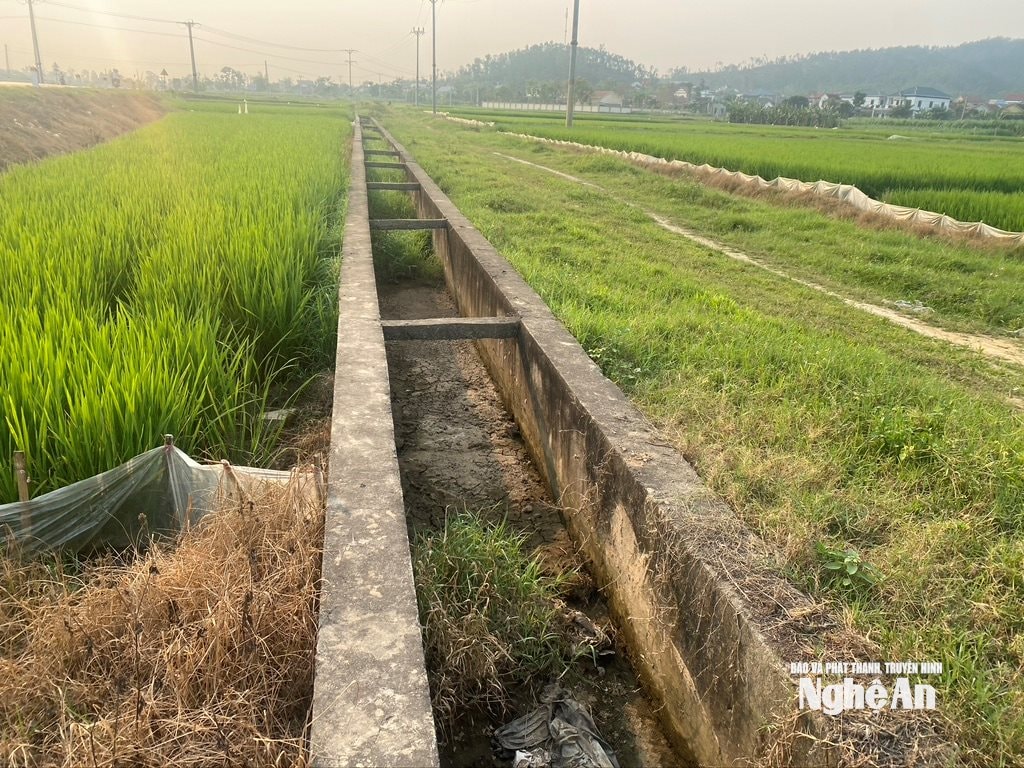
The drought is not limited to Than Linh commune; it is also widespread in Phuc Loc commune. Many rice fields are cracked and dry, and irrigation canals are completely submerged.
Mr. Nguyen Phu Dong, Head of the Economic Department of Phuc Loc Commune, said: “The entire commune has more than 1,000 hectares of rice fields, but about 120 hectares have been affected by drought because 4 pumping stations have had to stop operating. We have mobilized hundreds of laborers to dredge canals and install additional suction pipes for pumping, but this is only a temporary solution because the water source has almost completely dried up.”
.jpeg)
According to Mr. Dong, all current solutions are only temporary measures, because surface water sources from rivers and streams have almost completely dried up. Many pumping stations, despite having ready machinery, are "powerless" due to the lack of water to operate. "This is the most severe early-season drought we've ever seen. The most heartbreaking thing is that the rice is in the flowering stage – a crucial period for yield – and if there is a water shortage now, damage is inevitable," Mr. Dong lamented.
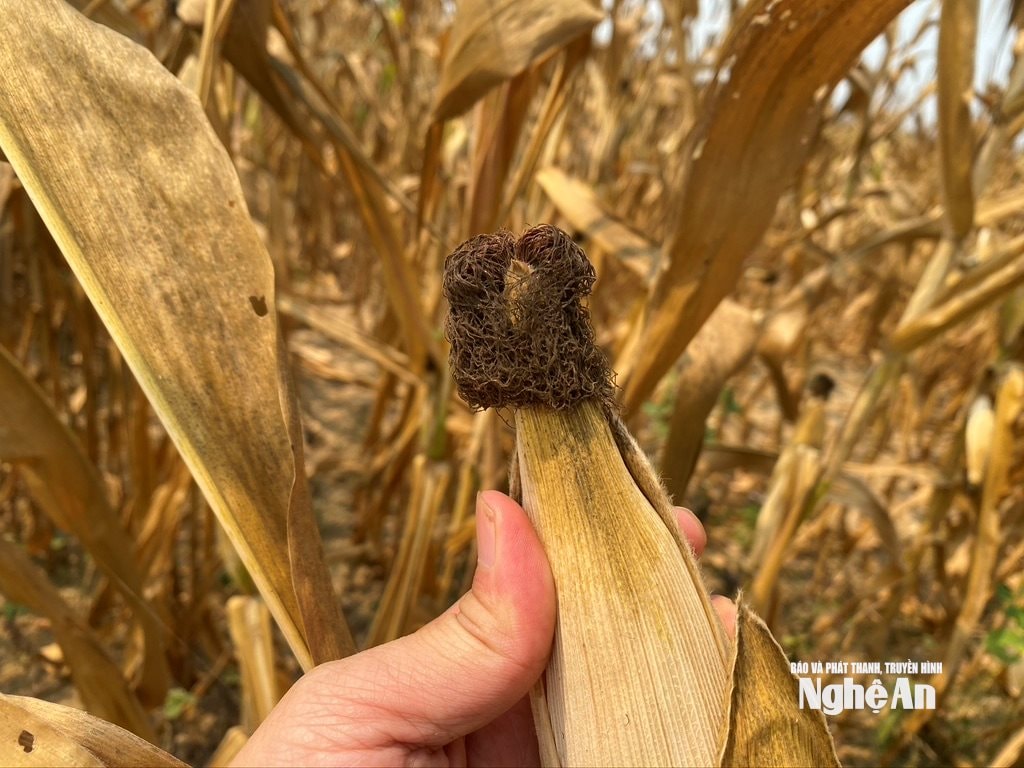
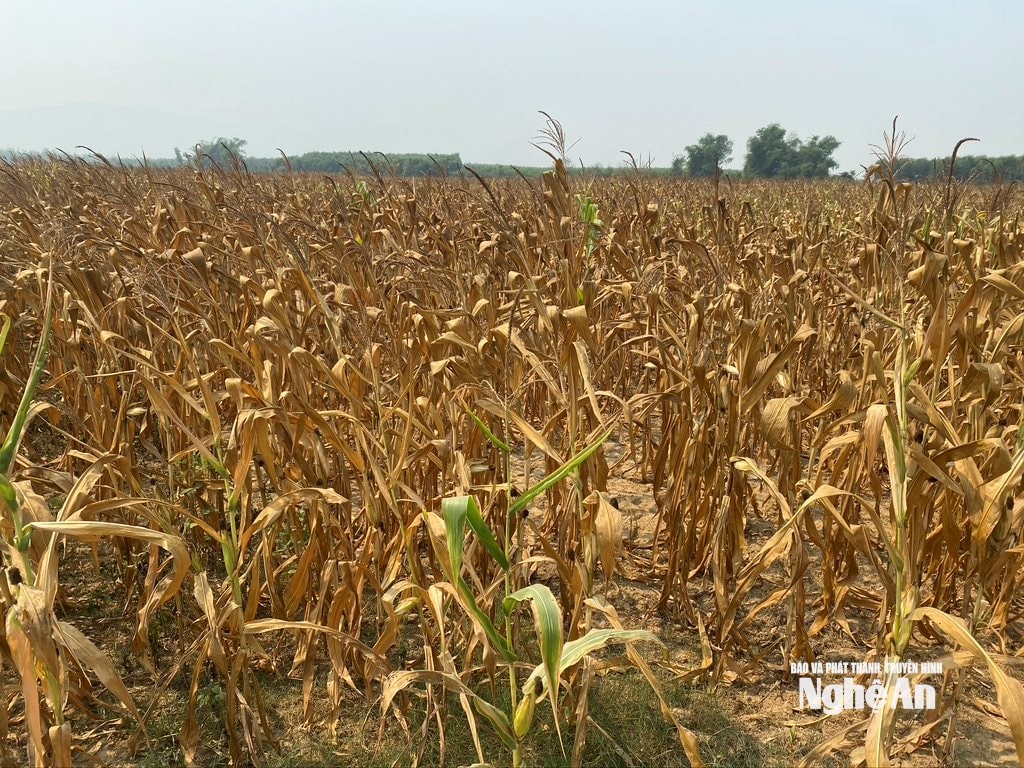
Meanwhile, the situation is even more dire in the areas along the Con River. In Nghia Dong commune, vast fields of yellowed corn stretch as far as the eye can see, with many plants having died standing. Mrs. Nguyen Thi Lan, from Hamlet 1, sadly said: “My family’s 5 sao (approximately 0.5 hectares) of corn near the alluvial plain, which was in the milky stage, was hit by drought, and the plants have all turned black. Now, even if it rains, it won’t save them.”
According to Ms. Dang Thi Van, Head of the Economic Department of Nghia Dong commune: 100% of the commune's winter-spring corn crop area has been affected, with many areas unable to recover, and the expected yield is only about 50%.
According to some local leaders, if there is no rain in the coming days, the damage will increase. Farmers, who are completely dependent on nature, are facing a very risky harvest.
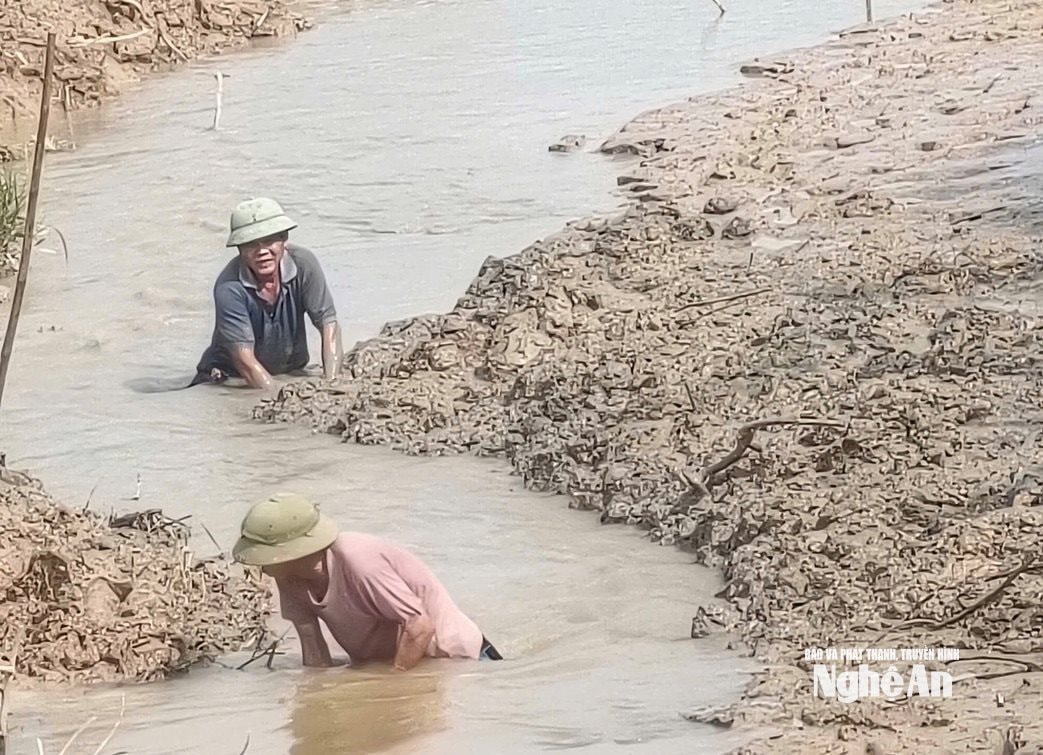
Flexible solutions for urgent drought relief efforts.
In light of the emergency situation, Mr. Tran Xuan Hoc, Deputy Director of the Department of Agriculture and Environment, stated: The entire province has over 95,356 hectares of spring rice, but many areas are experiencing water shortages, directly threatening the yield and final production of the crop.
The Department has directed relevant units, especially Nam Irrigation Company Limited, to implement immediate solutions such as rotating water pumping and connecting the entire pumping system to maximize the use of existing water resources. At the same time, it is stepping up public awareness campaigns to encourage people to share the difficulties and improve their awareness of water conservation in production.
In key areas, irrigation systems are required to operate at maximum capacity while ensuring scientific efficiency, prioritizing water for the rice flowering stage. Besides salvaging the spring crop, the agricultural sector is also proactively planning to store water in reservoirs for the upcoming summer-autumn crop – a period predicted to be even more severe due to drought. In the worst-case scenario, intensive irrigation and the installation of temporary pumping stations in drought-stricken areas will be activated immediately.
In particular, solutions utilizing "recirculating" water from streams and dead-end rivers are prioritized to reduce the burden on main reservoirs. Water regulation processes are closely monitored, combined with reinforcing riverbanks and maintaining canals to eliminate water loss. In downstream areas, controlling saltwater intrusion is also a top priority to protect crops.
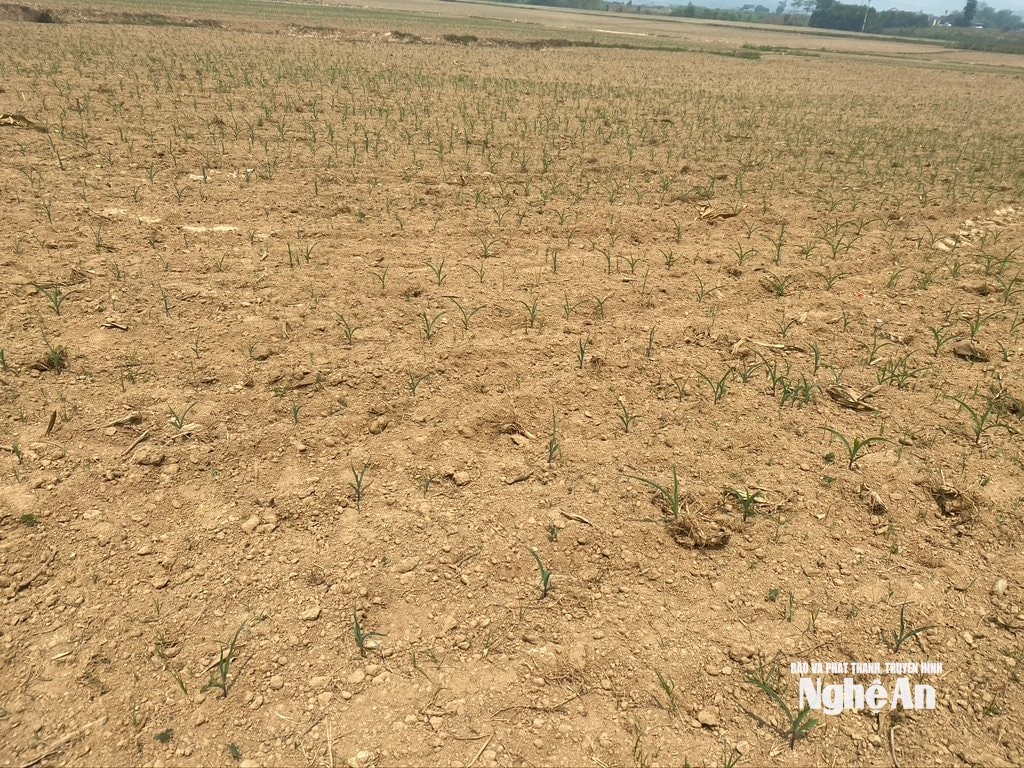
Amidst the scorching sun, the dry, cracked fields stretching across the agricultural regions not only reflect the harshness of nature but also bring about the constant worry of thousands of farming households. While many rice fields are in the crucial stage of yield, people still wait day after day for the drought-relief rains to save their crops.