
'Healing' in the western region of Nghe An province.
Recently, among trekking and hiking enthusiasts, western Nghe An province has gradually been known as a memorable "healing land." Amidst the lush green forests, the sound of cascading waterfalls, and crystal-clear water, nature quietly soothes the soul and brings feelings of purity and peace.
The road leading up to Pu Mat National Park has a fascinating stopover point, a place many nature lovers always want to visit and explore. That is Khe Kem Waterfall, also known as Kem Waterfall.
From a height of over 500 meters, the water cascades down in three white tiers, foaming between the sheer cliffs. Seen from afar, the waterfall resembles a giant white silk ribbon draped across the mountainside. Therefore, the Thai people still call the waterfall "Bo Bo," meaning white silk ribbon.
.jpg)
At the foot of the waterfall, cool mist spreads, dispelling the stifling heat of the summer day. Moss-covered rocks, lush green forests, and the gentle sound of flowing water blend together, creating an atmosphere that is both pristine and strangely unspoiled.
Many tourists come here to immerse themselves in the cool water at the foot of the waterfall, letting the water wash away the heat and fatigue from their souls.
.jpg)
Continuing along the winding roads, Bon Waterfall (Giai Xuan commune) reveals another facet of the green landscape. Previously little known, this waterfall has gradually become a new destination for adventurous travelers in recent years.
Not overly powerful, the waterfall possesses a gentle beauty with a stream of water about 150m high divided into many small tiers, crystal clear like a mirror.
.jpg)
At Bon Waterfall, the atmosphere is more lively on weekends when many young people and locals come here for picnics. The water flow isn't too strong, enough for people to immerse themselves, wash their faces, or simply sit by the rocks, letting the cool water gradually permeate their senses.
.jpg)
.jpg)
Along the roads connecting various destinations, Tay Nghe also boasts vast, verdant rice paddies. These lush green rice fields cover the valleys and gentle slopes, adding to the verdant beauty of the highlands.
From mid-May, the western region of Nghe An province will welcome the rice harvest season, becoming a destination for many tourists seeking to capture the golden moments amidst the vast forests.
.jpg)
This area also offers many unique destinations such as Cau Cau tea island, located in the former Thanh An and Thanh Thinh communes of Thanh Chuong district, now Hoa Quan commune, which has long been considered the "Ha Long Bay of Nghe An", or a boat trip on the Giang River to explore the Pha Lai Eco-tourism Area.
Further afield, the Bản Vẽ hydroelectric reservoir, located in the four communes of Yên Na, Hữu Khuông, Nhôn Mai, and Lượng Minh, opens up a vast space with expansive water amidst undulating mountain ranges.
.jpg)
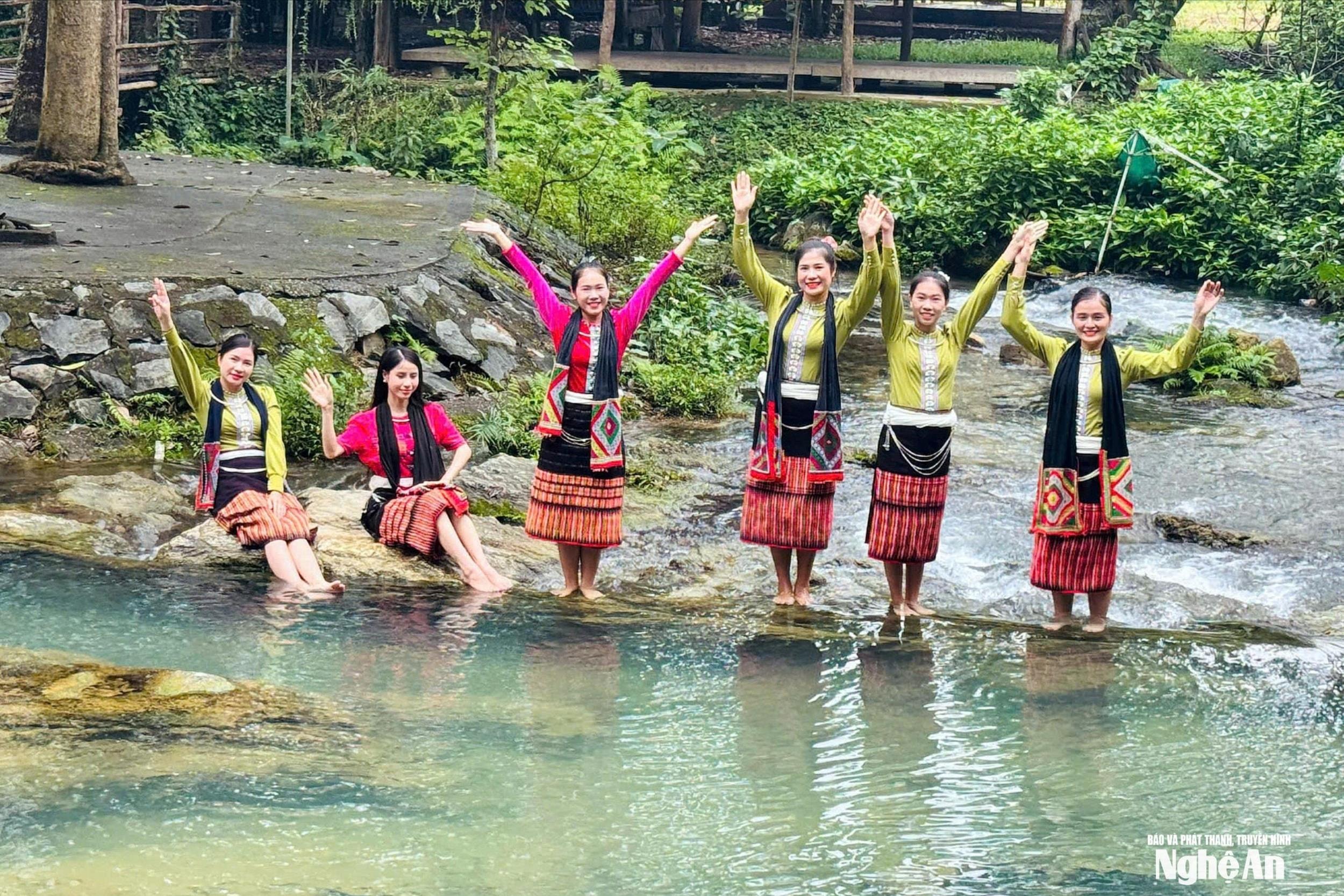
Another fascinating highlight on the healing journey in Western Nghe An is the community villages. Such as Khe Ran village, Nua village (Con Cuong commune), Xieng village (Mon Son commune)...
Here, visitors can slow down and experience life in traditional stilt houses, enjoy simple meals, and immerse themselves in the daily stories and activities of the local people.
.jpg)
In recent years, to serve tourists, many villages in Western Nghe An have formed folk song and dance clubs; cooking groups and community tourism groups… contributing to providing the most authentic and intimate experiences.
.jpg)
.jpg)
Sometimes, just a trip like this, a journey through the mountains, is enough to make visitors fall even more in love with Nghe An province and appreciate the simple things in life even more...
Thanh Quynh - Rang Dong