

The struggle of mountain workers to find suitable jobs.
In many mountainous communes in western Nghe An province, the workforce of working age remains abundant, and the demand for jobs is very high. However, paradoxically, while opportunities aren't lacking, workers find it difficult to find suitable options that match their circumstances. Well-paying jobs are often located hundreds of kilometers away, forcing them to leave their hometowns, live in rented accommodations, and be far from their families and children. Conversely, local jobs are mostly seasonal and offer low incomes.
When workers are caught between two choices
For many years, laborers from western Nghe An province have left their villages to seek work elsewhere. They leave when they are young and healthy, carrying the hope of earning some capital so their children can get an education and their families can have an easier life. However, many return empty-handed after years of hard work.
The primary reason is a lack of information and career guidance. Many workers choose jobs based on peer pressure, following the crowd, or hearing vague recommendations, then accept unsuitable jobs with low incomes, high living costs, and little savings.
Conversely, many people are reluctant to travel far and choose to stay in their hometowns for seasonal work: working in the forest, harvesting acacia trees, doing odd jobs, loading and unloading goods, farming, etc. These jobs are precarious, offer low income, are seasonal, and physically demanding. Therefore, mountainous laborers are caught between two choices: traveling further offers better pay but sacrifices their family's livelihood; staying nearby means extremely hard and unstable work.

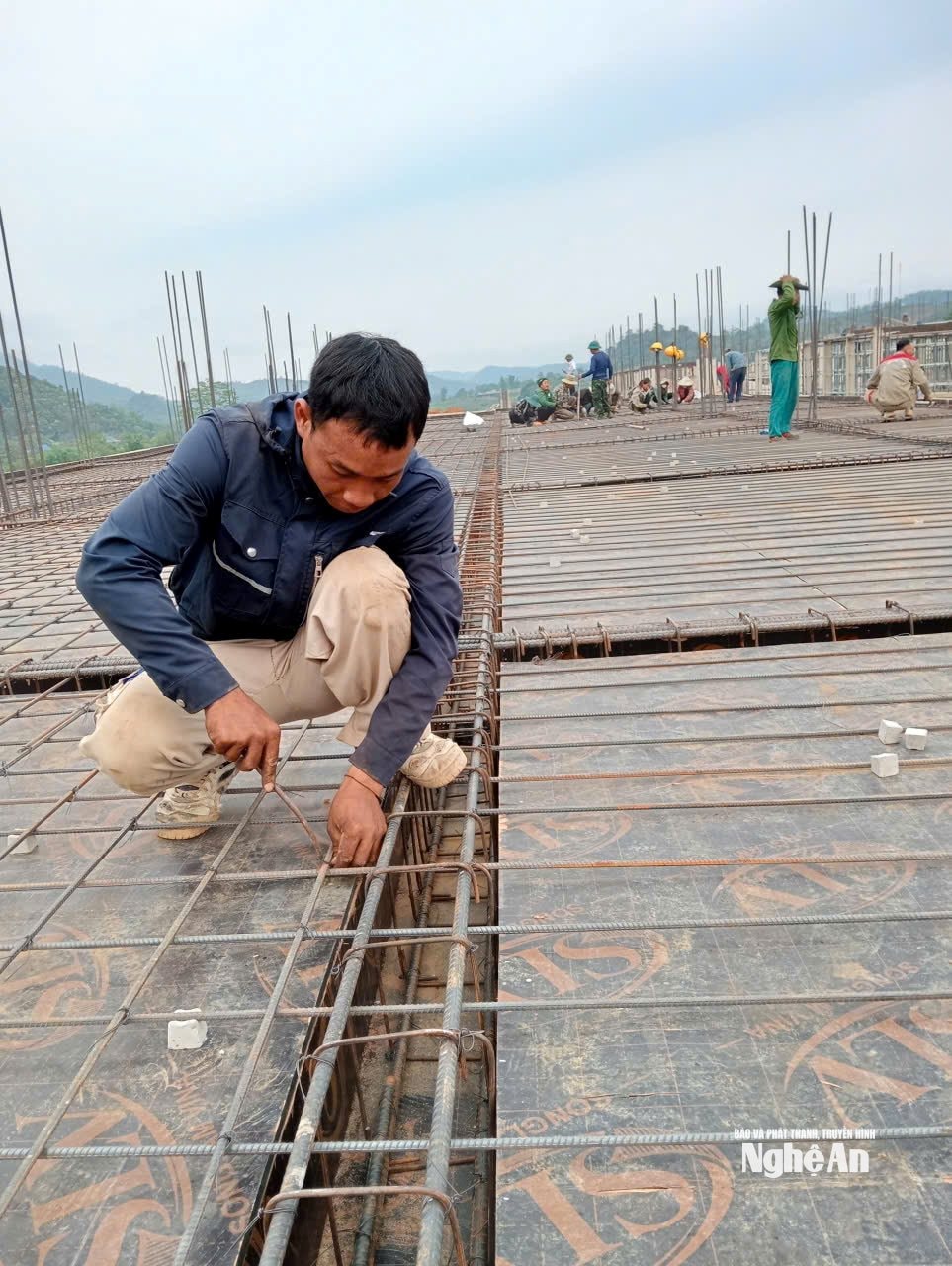
The story of Mr. Mong Van Loc from Tam Hop village, Tri Le commune, is a case in point. At 35 years old, with three young children and a wife without a stable job, Mr. Loc has earned his living for many years by making formwork for housing constructions or harvesting acacia trees for hire. “It’s always the same, rain or shine. I just hope to find a job that pays around 7 million VND per month, something more stable. I can endure it now while I’m young, but in a few years, when my health declines, it will be very difficult,” Mr. Loc said.
According to Mr. Loc, most of the young people in the village have gone to work far away, leaving mostly elderly people at home. Those who remain, like him, want to find lighter, more stable jobs. However, going abroad for work involves high entry costs and requires foreign language skills. If they work in industrial zones far from home, the couple can only return home a few times a year, and the children are left in the care of their grandparents. After much consideration, his family remains in the village, continuing to struggle with seasonal work.
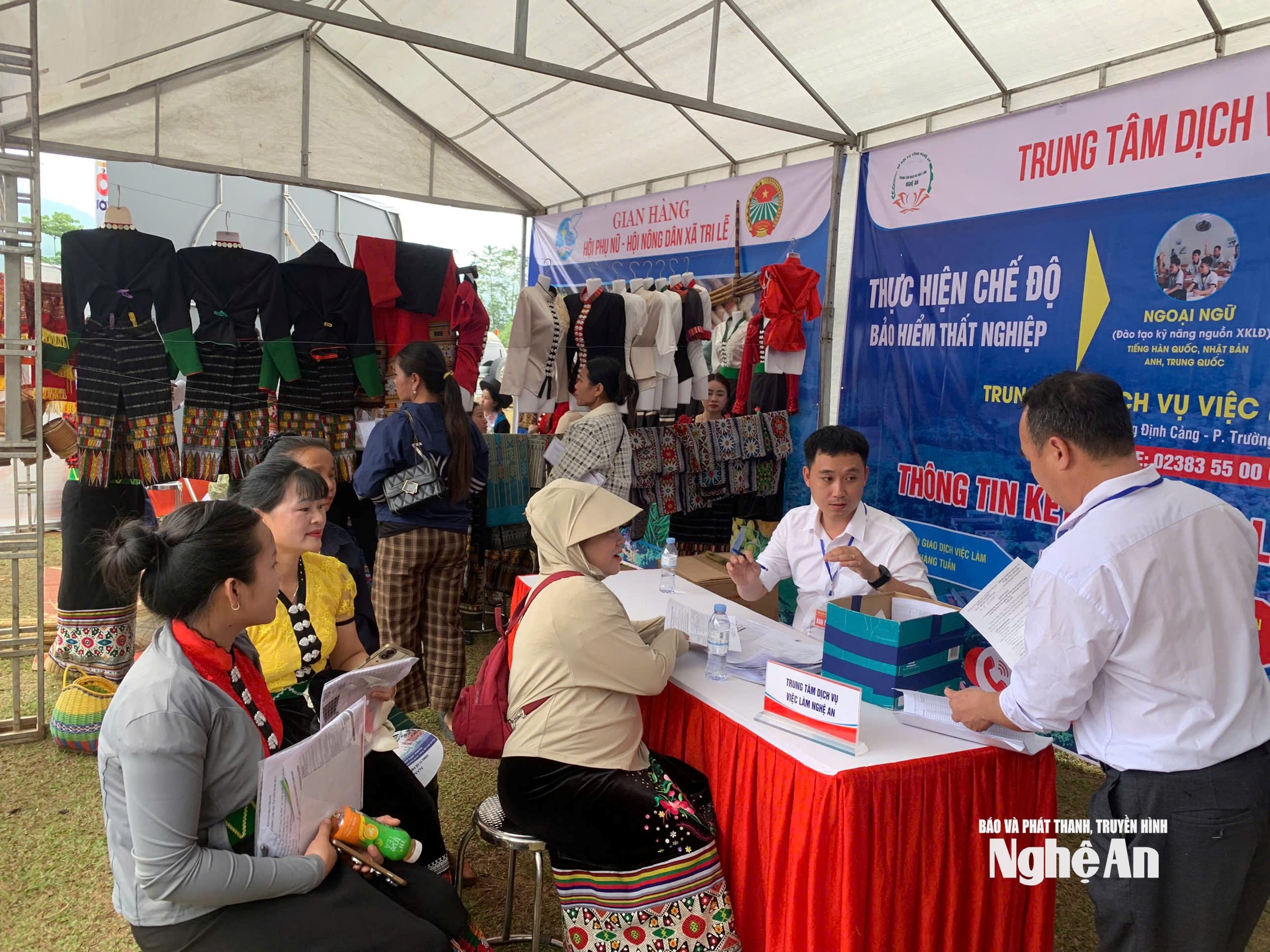
Even young apprentices share the same concerns. Ngan Trung Hieu, born in 2008, is studying Electrical and Electronics Engineering at a vocational school in western Nghe An province. He attended the job fair in Tri Le commune to learn about the labor market.
Hieu said that finding a job in Nghe An is not difficult, but finding a job in the field after training is not easy. His class has more than 20 students who came to explore opportunities. Everyone wants to work in the province, but the salary must be enough to save money. The reality is that working in the province still means they have to travel far from home, rent accommodation, and incur many additional expenses.
To create suitable jobs
On April 18th, the Nghe An Department of Internal Affairs, in coordination with 12 businesses from within and outside the province, organized a job fair in Tri Le commune, offering approximately 15,000 job openings for workers in western Nghe An. The job categories were quite diverse, including electronics, garment manufacturing, footwear, livestock farming, coal mining, and mineral extraction.
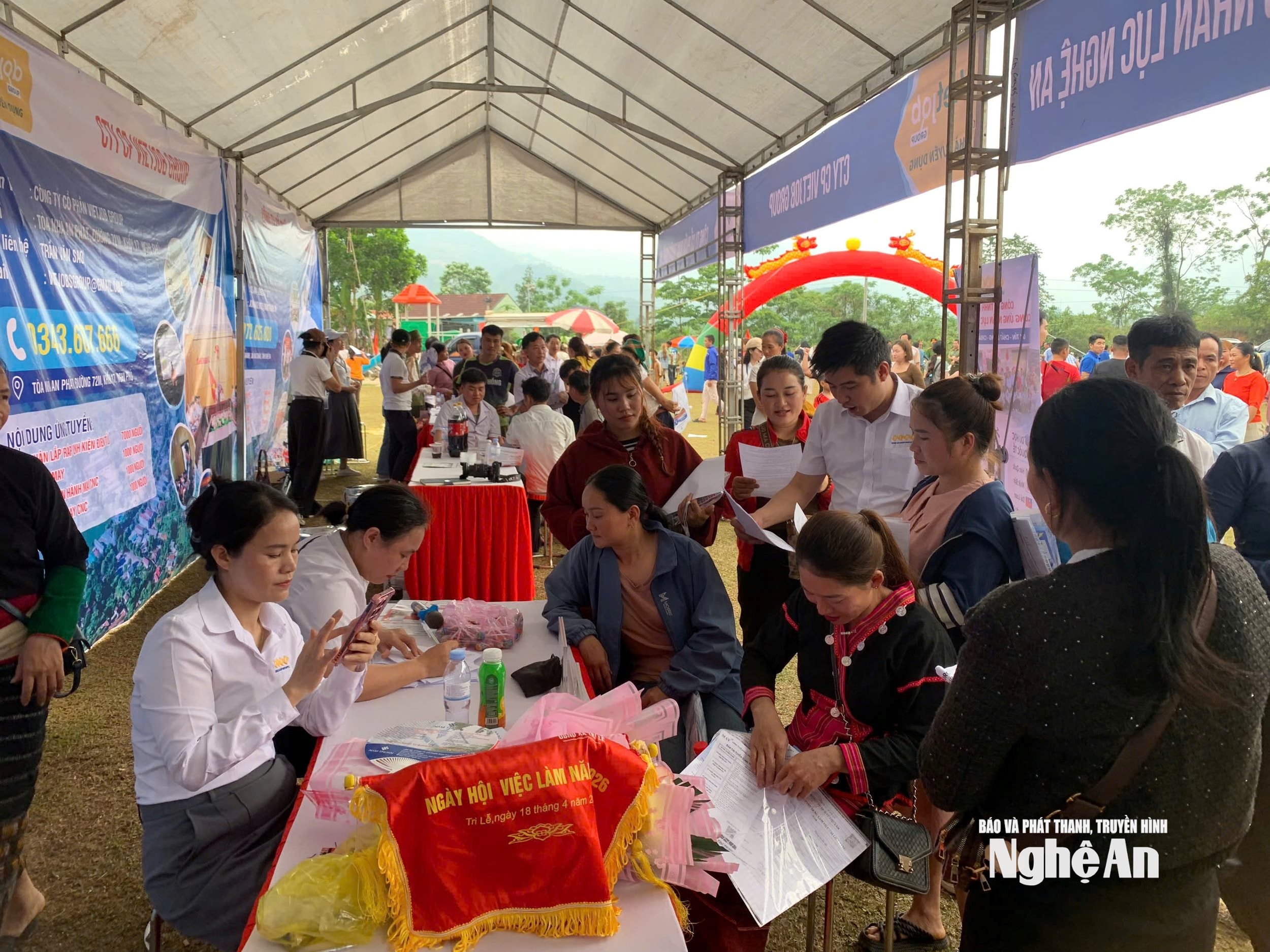
Mr. Vi Ngoc Quynh, Deputy Director of the Department of Internal Affairs, stated: Tri Le is a border area facing many difficulties, far from the central hub, with the majority of its population being ethnic minorities, and limited access to labor market information. Bringing job fairs to the grassroots level aims to help people directly access official and transparent recruitment information. However, information is only the first step. The core issue is that many current job openings are not truly "suitable" for mountainous workers. Businesses need skilled workers with industrial work habits and the ability to adapt to modern production lines. Meanwhile, most highland workers are accustomed to agricultural production, have little formal training, and lack the habit of working shifts, punctually, or under high intensity.
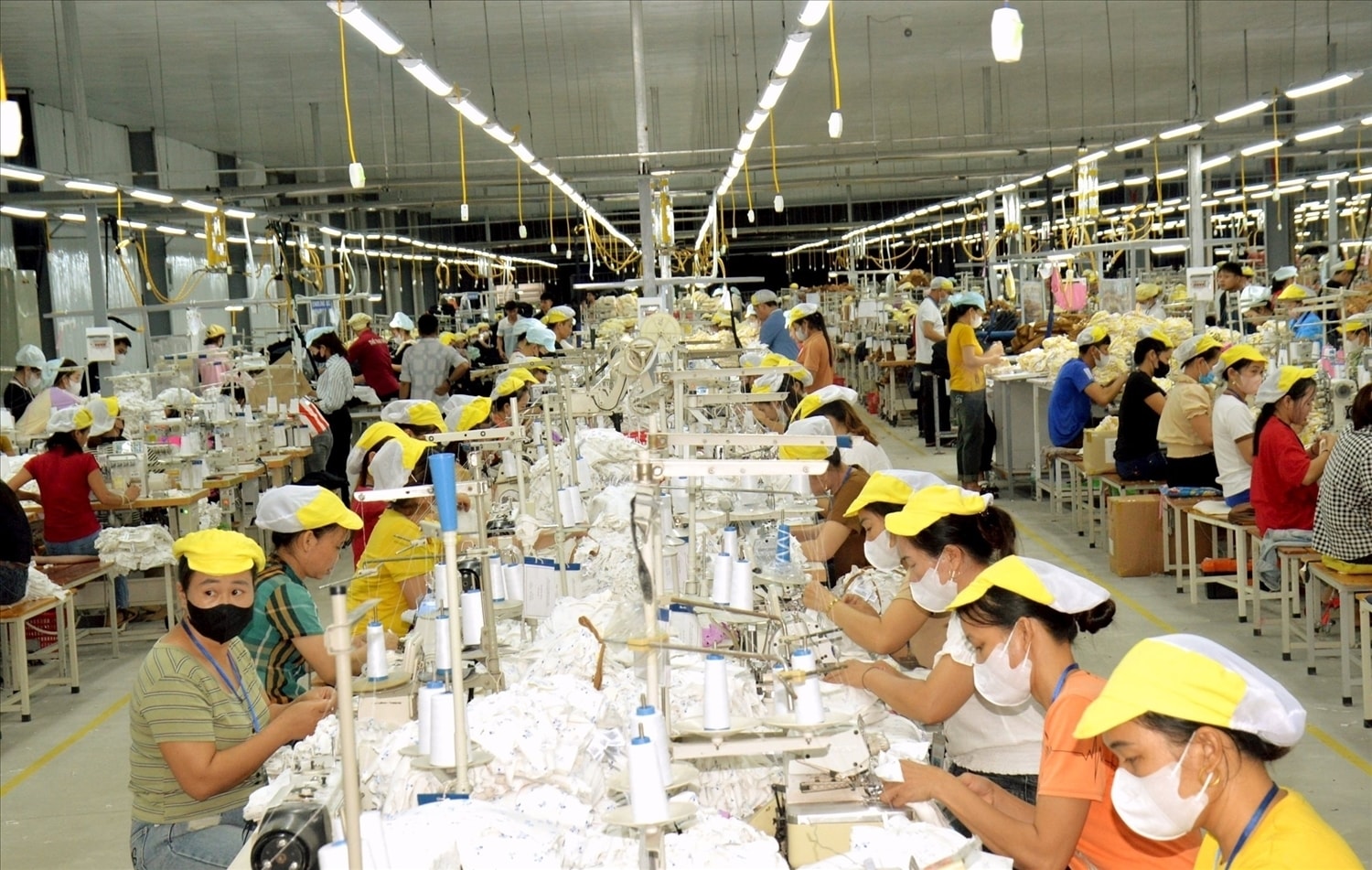
According to Mr. Tran Huu Thuong, Deputy Director of the Provincial Employment Service Center: The quality of vocational training for workers in mountainous areas is currently not very good, especially in non-agricultural occupations such as welding, motorcycle repair, electrical work, and garment making. The workforce in mountainous areas, including those working far from home, is still quite abundant but does not fully meet the requirements of businesses in terms of skills, work discipline, ability to work with modern production lines, and even has limitations in foreign languages such as English, Chinese, and Korean.
Another reality is the imbalance between labor supply and demand. Recruitment demand is currently concentrated in the electronics, high-tech, textile, and footwear industries, while a segment of the workforce in mountainous areas still prefers overseas employment, working in other provinces, or freelance work.
One question that arises is: if the province already has industrial zones and businesses recruiting, why do workers continue to leave their hometowns? The answer lies in income and living conditions.
"Salaries in Nghe An are generally still lower than the average in many key economic regions. Meanwhile, the cost of living is rising rapidly, and housing for workers, transportation, and labor support services are not yet truly convenient."
Mr. Vi Ngoc Quynh - Deputy Director of the Department of Internal Affairs
Conversely, businesses in the North, such as Hai Phong, Bac Ninh, and Phu Tho, or in the South, such as Ho Chi Minh City and Dong Nai, often offer more attractive salaries, clearer benefits, and a more stable work environment. After many years of staying in Nghe An, many workers have achieved a better standard of living, making it difficult for them to return and start over. In particular, overseas employment is becoming an increasingly attractive option. The cost of working abroad has become more transparent and is gradually decreasing, while income can be 5-8 times higher than working in local businesses. This creates a strong attraction for young workers.
Mr. Lo Van Diep, Chairman of the Tri Le Commune People's Committee, said: The locality is strengthening counseling and job placement services to help people access legitimate opportunities and earn a stable income. The commune also encourages the development of suitable economic models such as garden-pond-livestock farming, afforestation, and the development of medicinal plants under the forest canopy...
This is the right approach, because in mountainous areas, it's not enough to simply send laborers down to the lowlands to work as factory workers; it's also necessary to create livelihoods locally. However, in the long term, a more comprehensive strategy is needed to ensure suitable employment for laborers in mountainous regions.
First and foremost, the quality of vocational training must be improved. Vocational training cannot stop at issuing certificates; it must be closely aligned with the needs of businesses, providing thorough training so that graduates can immediately find employment. In addition, career counseling should begin early, starting from schools and villages. Young people need to know what profession suits them, what the market demands, what the income potential is, and what the career path should be.
"Businesses wanting to attract workers from mountainous areas must compete on wages and benefits. If income is too low, workers will continue to leave their hometowns. In addition, investment in worker housing, transportation, childcare, and basic healthcare services is needed to reduce the burden on workers."
Mr. Tran Huu Thuong - Deputy Director of the Provincial Employment Service Center