

Nghe An: Over 3,000 hectares of spring rice flattened after storm; farmers urgently harvest early.
The storm with hailstorms that occurred on the night of May 3rd caused severe damage to agricultural production in Nghe An province, resulting in thousands of hectares of spring rice, which was in the ripening stage, being flattened. In response, local authorities are urgently implementing various measures to mitigate the consequences, including harvesting even areas of rice that are not yet fully ripe.
Harvesting even green rice due to fear of storms and strong winds.
Observations in Giai Lac commune on the afternoon of May 4th showed that in many fields, rice plants were knocked down by strong winds, lying flat on the ground, and many areas were submerged in water. Ms. Tran Thi Minh, residing in Lang Thanh hamlet, shared: Her family cultivates 3 sao (approximately 0.3 hectares) of rice, but after last night's storm, more than 90% of the area was completely flattened. According to her, this year's rice crop was expected to be bountiful, with an estimated yield of about 3.7 quintals per sao. However, with the current state of flattened plants, the yield could decrease by over 30%, or even lower if not harvested in time.
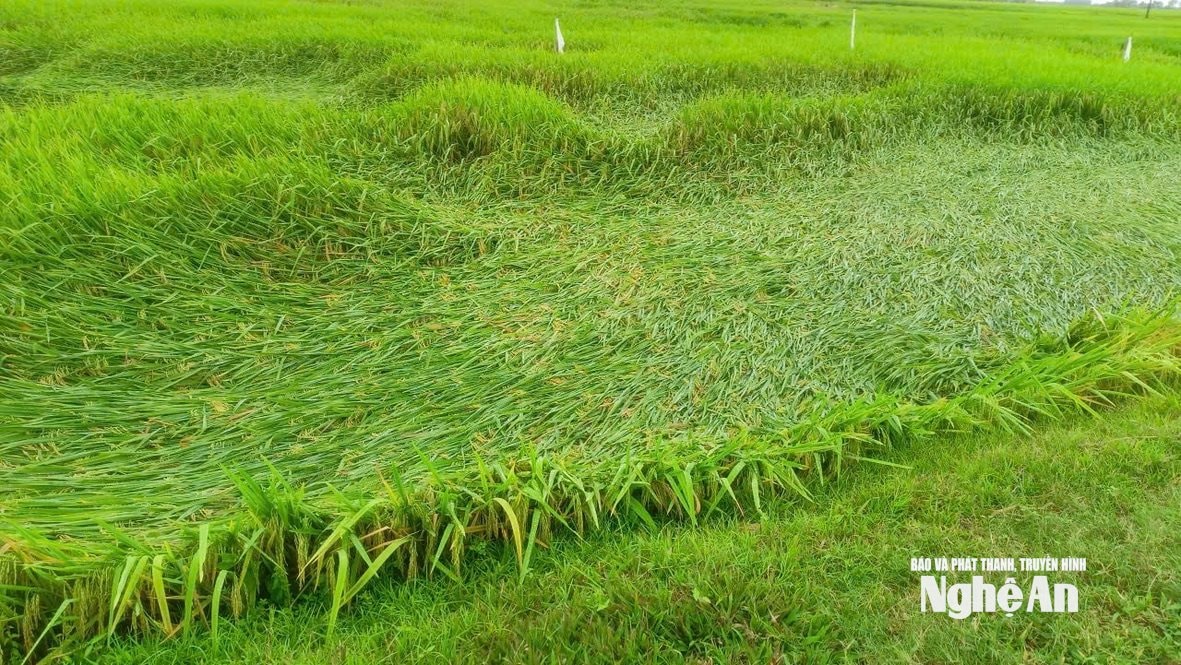
Mr. Nguyen Ho Son, Vice Chairman of the People's Committee of Giai Lac commune, said that the entire commune currently has more than 1,079 hectares of spring rice, of which over 300 hectares were flattened after the storm on the night of May 3rd. Local authorities are urgently conducting a detailed assessment of the damage and mobilizing local forces to assist people in erecting the rice plants, clearing irrigation canals, and draining water to minimize prolonged flooding. In addition, the commune is also directing farmers to take advantage of favorable weather to harvest the severely affected areas early.
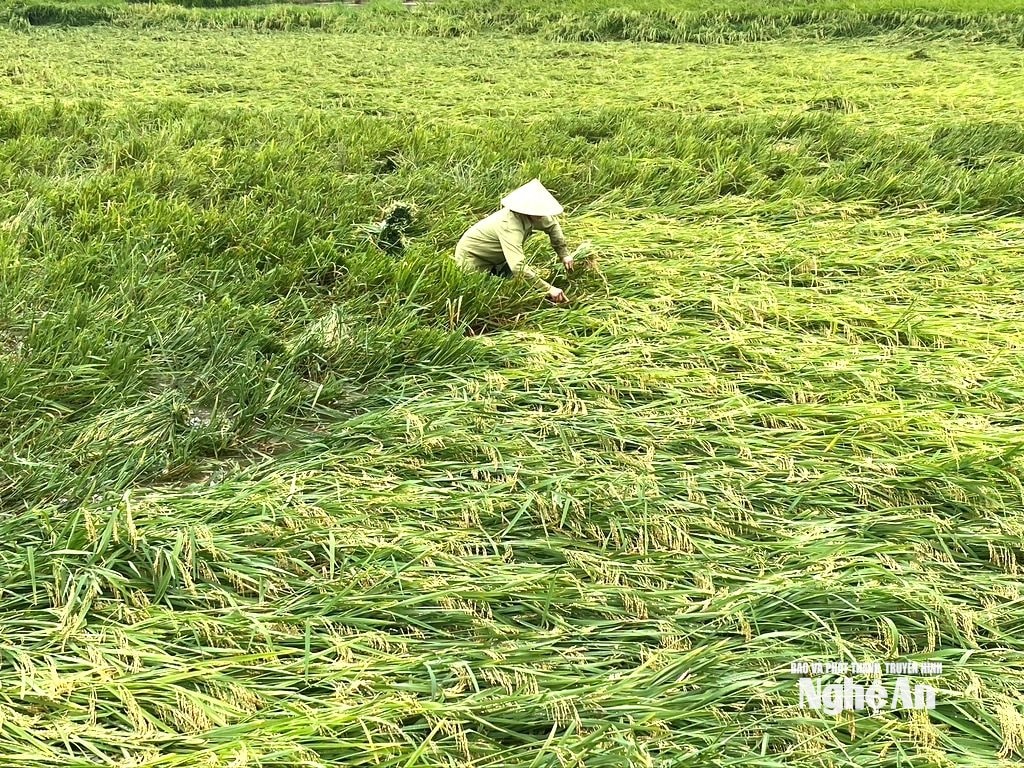
In Quang Chau commune, the damage was also widespread. On the morning of May 4th, many rice fields there showed signs of flattened rice plants, submerged in water. Ms. Le Thi Hong, from Hamlet 2, said that her family had 3 sao (approximately 0.3 hectares) of rice, and more than 90% of it had been flattened after the storm. What's more, the rice wasn't fully ripe, only about 85%, and the flooded fields made harvesting machines impossible to operate. We were forced to harvest by hand, then carry the rice to the shore to thresh it. Manual harvesting is very hard work, time-consuming, and costly.
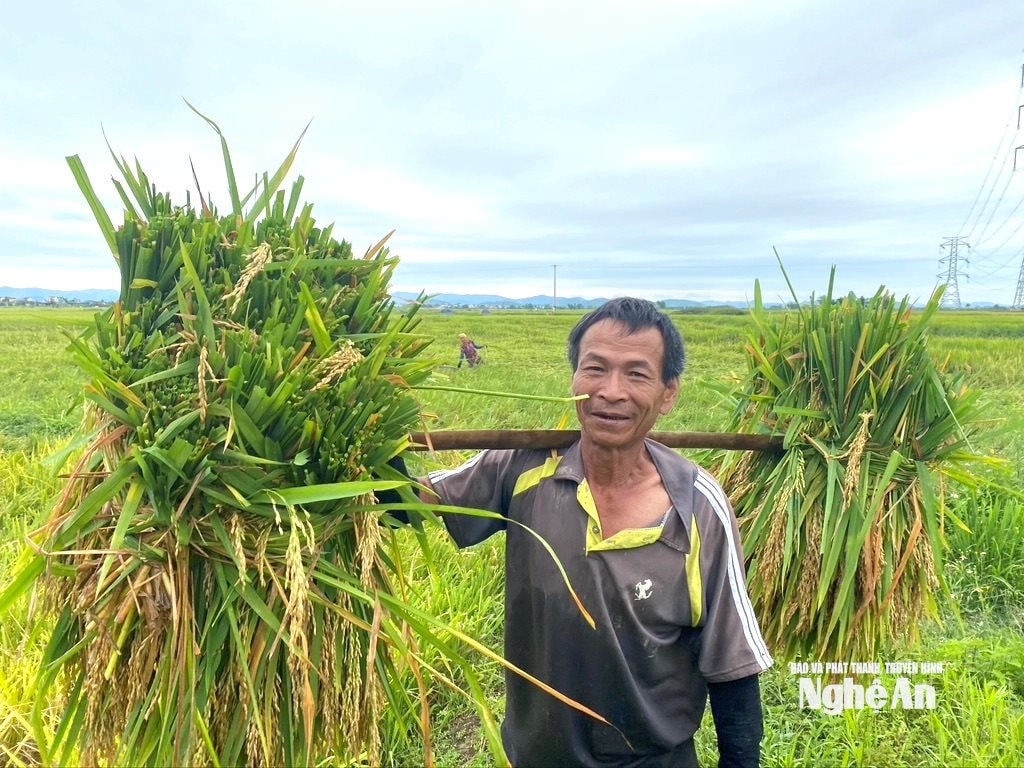
According to Ms. Dinh Thi Trang, Head of the Economic Department of the People's Committee of Quang Chau commune, the entire commune currently has 1,424 hectares of spring rice, of which more than 80 hectares were flattened due to the storm on the night of May 3rd. The local authorities are focusing on compiling damage statistics and directing villages to mobilize forces to help people prop up the rice, drain water, and speed up the harvesting process. In addition to Giai Lac and Quang Chau communes, many other communes in the province also recorded large areas of flattened rice, such as Nghia Dong, Dai Dong, Quynh Luu, Minh Chau, etc.
Actively implement solutions to minimize damage.
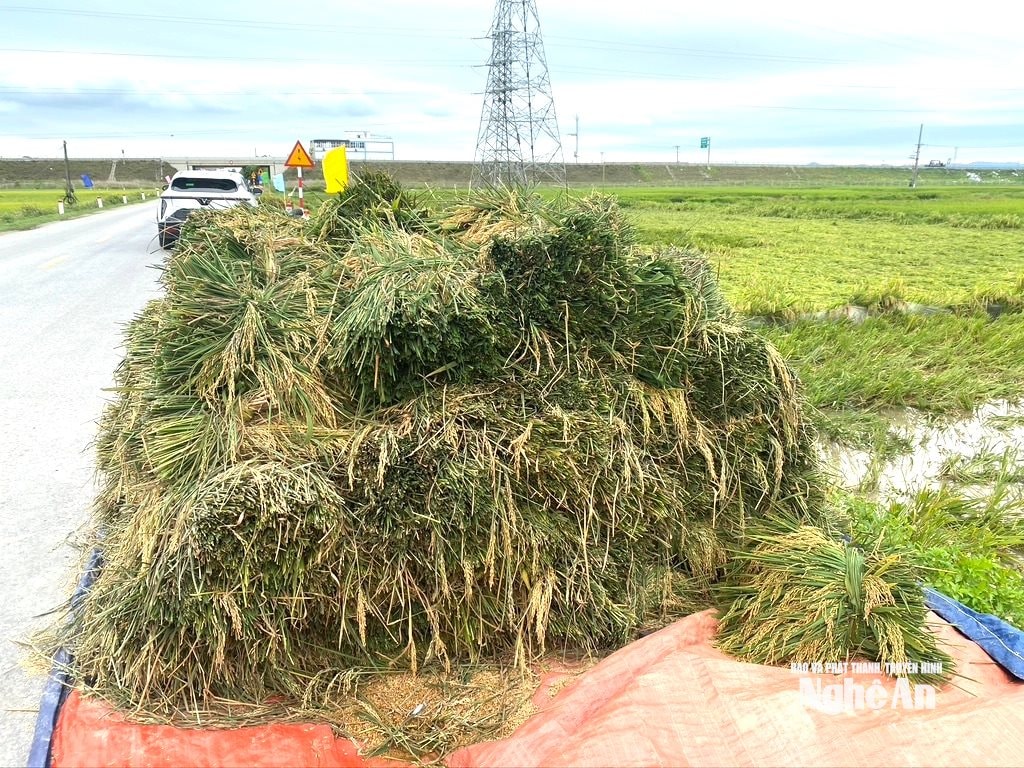
According to Ms. Vo Thi Nhung, Deputy Director of the Nghe An Department of Agriculture and Environment, the total area of rice fields damaged by the storm on the night of May 3rd was 3,255 hectares. This is a very large loss, especially considering that many rice fields were entering the harvesting period, directly affecting the yield and income of farmers.
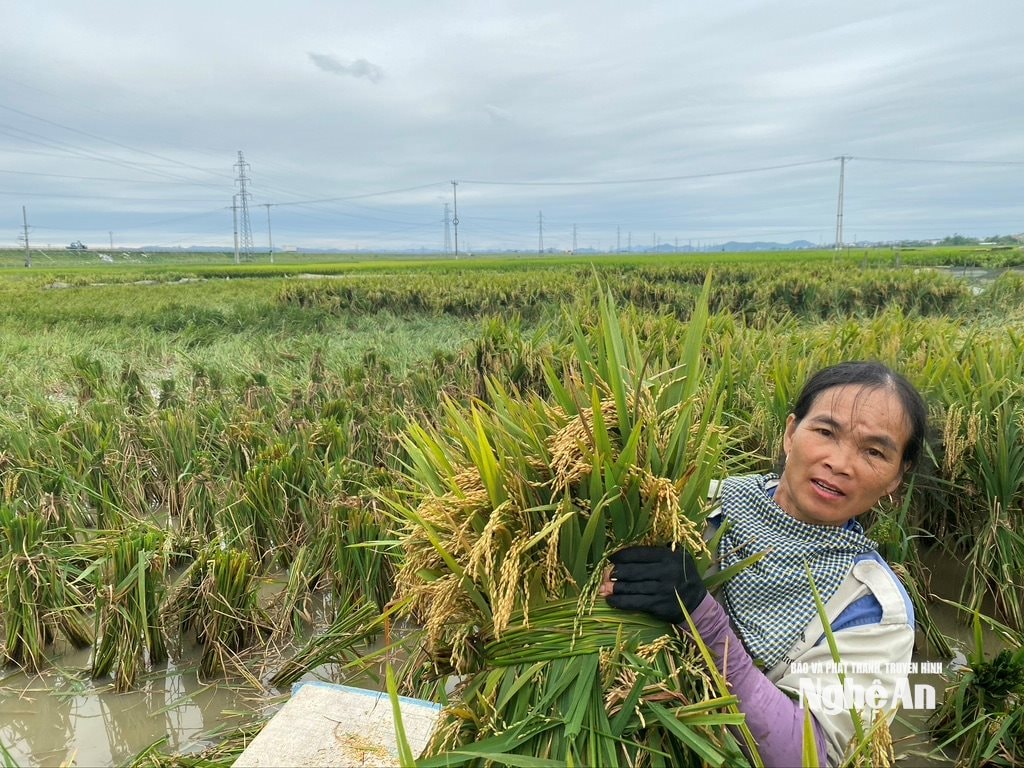
In response to this situation, the provincial agricultural sector has requested localities to urgently implement comprehensive remedial measures. The focus is on quickly clearing canals and ditches to drain water and minimize flooding in the fields. For areas where rice plants are still green but have been flattened, they need to be propped up and tied to limit further damage. At the same time, taking advantage of the dry weather, machinery should be arranged appropriately to harvest quickly and efficiently.
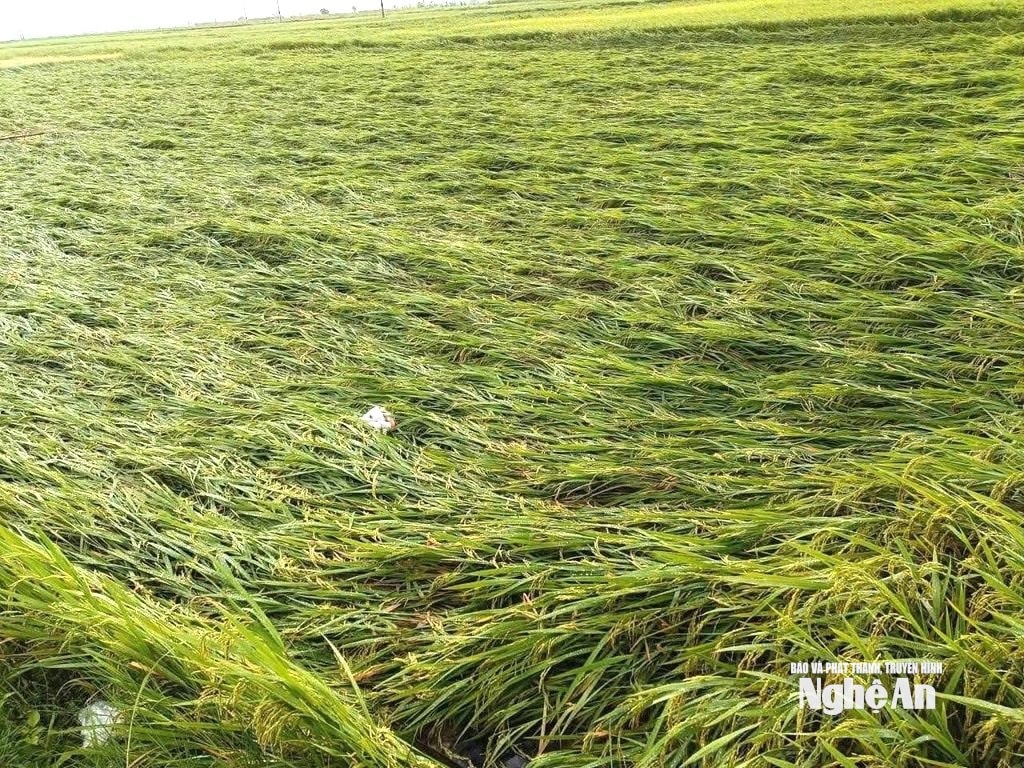
In addition, localities are advised to strengthen connections with cooperatives and rice drying facilities to support farmers in post-harvest preservation and processing. Harvesting should be carried out according to the principle of "harvesting as soon as the rice ripens," prioritizing low-lying areas and areas where the rice has been severely lodged to minimize yield losses.
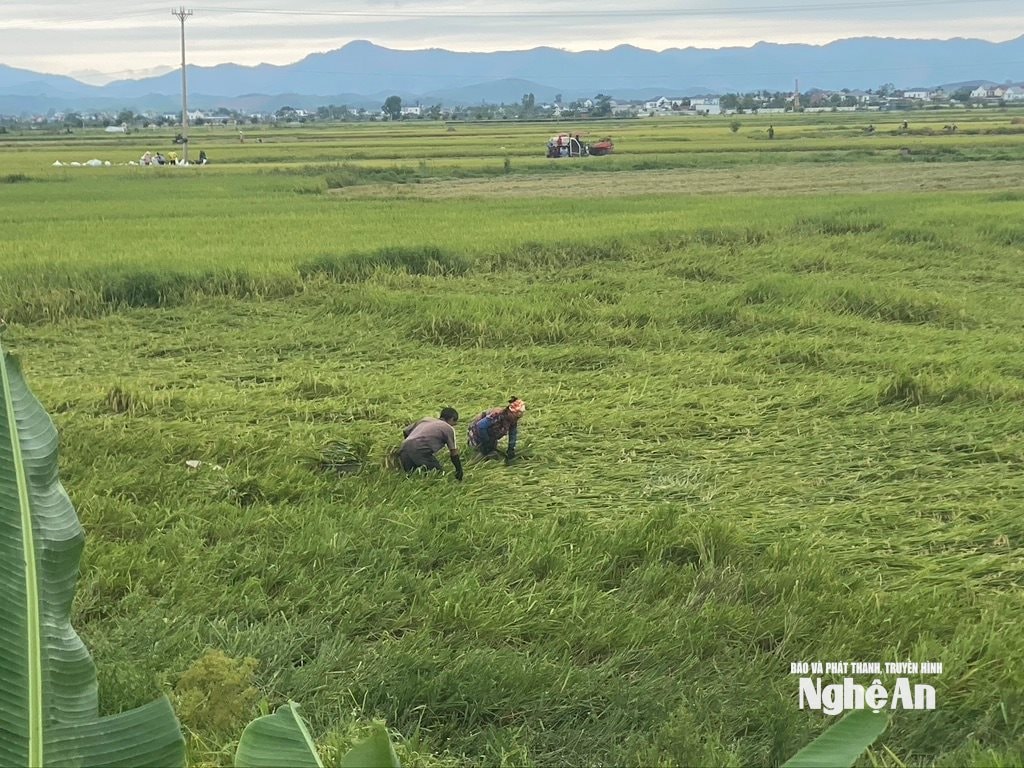
The unusual storm not only caused economic damage but also left many difficulties for farmers in Nghe An. However, with the timely intervention of the authorities and the proactive efforts of the people, it is hoped that the damage will be minimized, contributing to the stability of production and livelihoods.