

The sound of drums has gradually faded in the craft village over the past half-century.
Once renowned throughout the region with thousands of drums produced annually, the drum-making village in Vinh Phu ward (Nghe An province) now has only four households maintaining production. Orders are dwindling, the workshops are quiet, and the traditional craft faces the risk of disappearing.
One morning in early May, in his small workshop in Xuan Duc neighborhood, Mr. Nguyen Van Duc sat quietly beside his unfinished drum. Light filtered through the old corrugated iron roof, clearly illuminating the chisel marks and planing on the jackfruit wood. Gone were the bustling activity of people coming and going, the lively sounds of chiseling and carving; the family drum workshop was now just him, with its sparse, intermittent sounds.
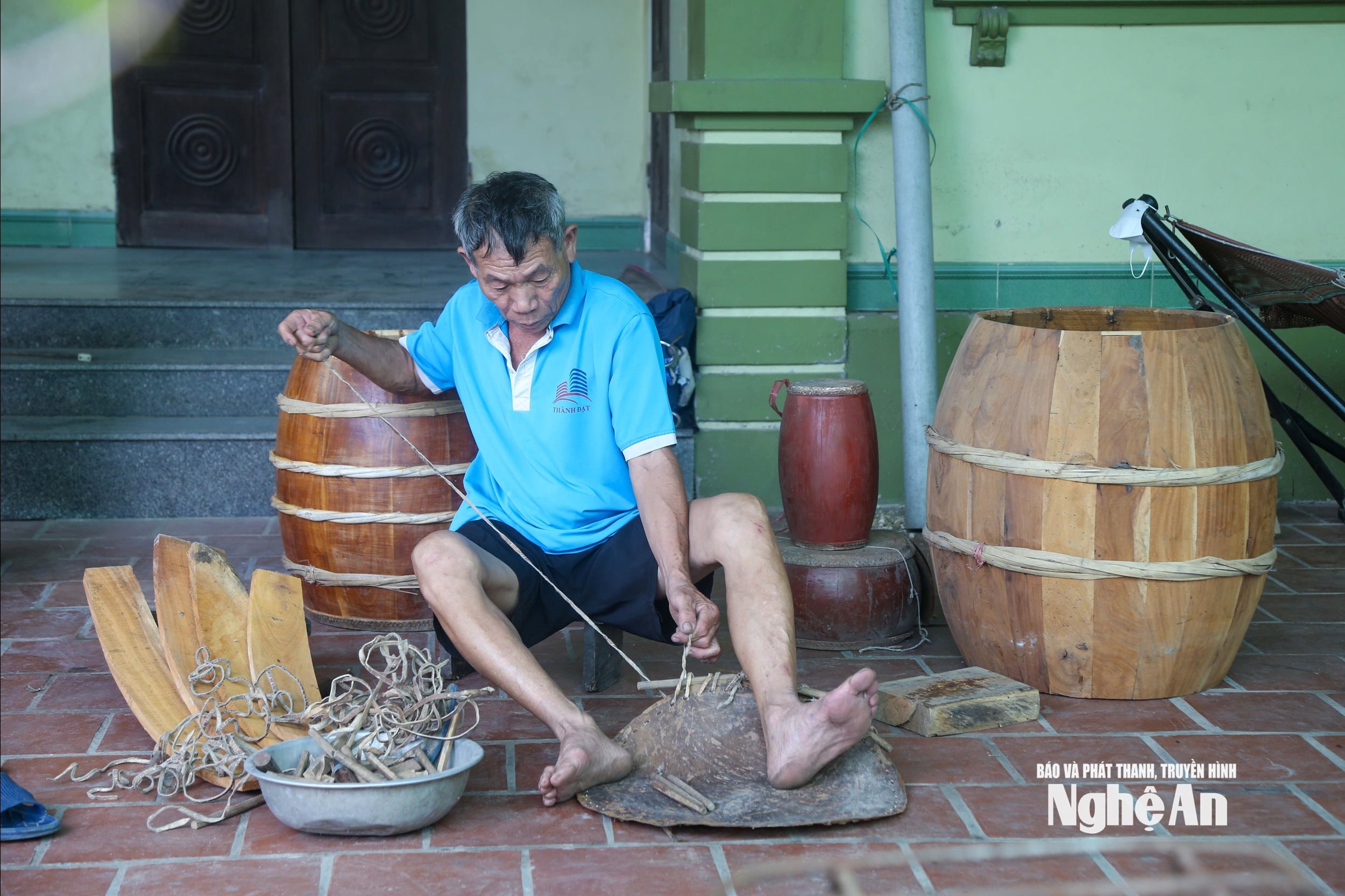
Having dedicated over half a century to the craft, Mr. Duc is one of the few remaining drum makers in the village. His memories of the golden age remain vivid, when the entire Xuan Dong and Xuan Duc area was ablaze with activity year-round, every household making drums, and orders never ceasing. "Back then, customers came directly to our house to place orders; we couldn't make them fast enough to sell," he recalls, his hands still steadily smoothing the drum skin.
Previously, the Xuân Đức and Xuân Đồng areas alone had more than 10 households engaged in this craft, each employing 3-4 workers who produced entirely by hand, capable of manufacturing over 10 drums per month. Now, Xuân Đức only has 3 households left, and Xuân Đồng only 1, mostly elderly people. The drum frames are stacked in the corners of the workshops, covered in a thin layer of dust over time.
Orders became increasingly scarce. Occasionally, regular customers would come to order drums for their families, temples, or a few for schools. Most of the time, Mr. Duc repaired old drums to make a living.
Not only Mr. Duc's family, but many households in the village are also struggling to make a living. Mr. Nguyen Van Binh, still diligently working with his small drum, said: "In the past, drums were sold everywhere, from Nghe An to Ha Tinh, we couldn't keep up with demand. Now, there are fewer customers, and it's not as bustling as before," he shared.
The market for handcrafted drums is shrinking, while mass-produced drums with lower prices and diverse designs are constantly dominating, causing handcrafted drums to gradually lose their competitive edge. As a result, many workshops have had to downsize or even temporarily cease production.
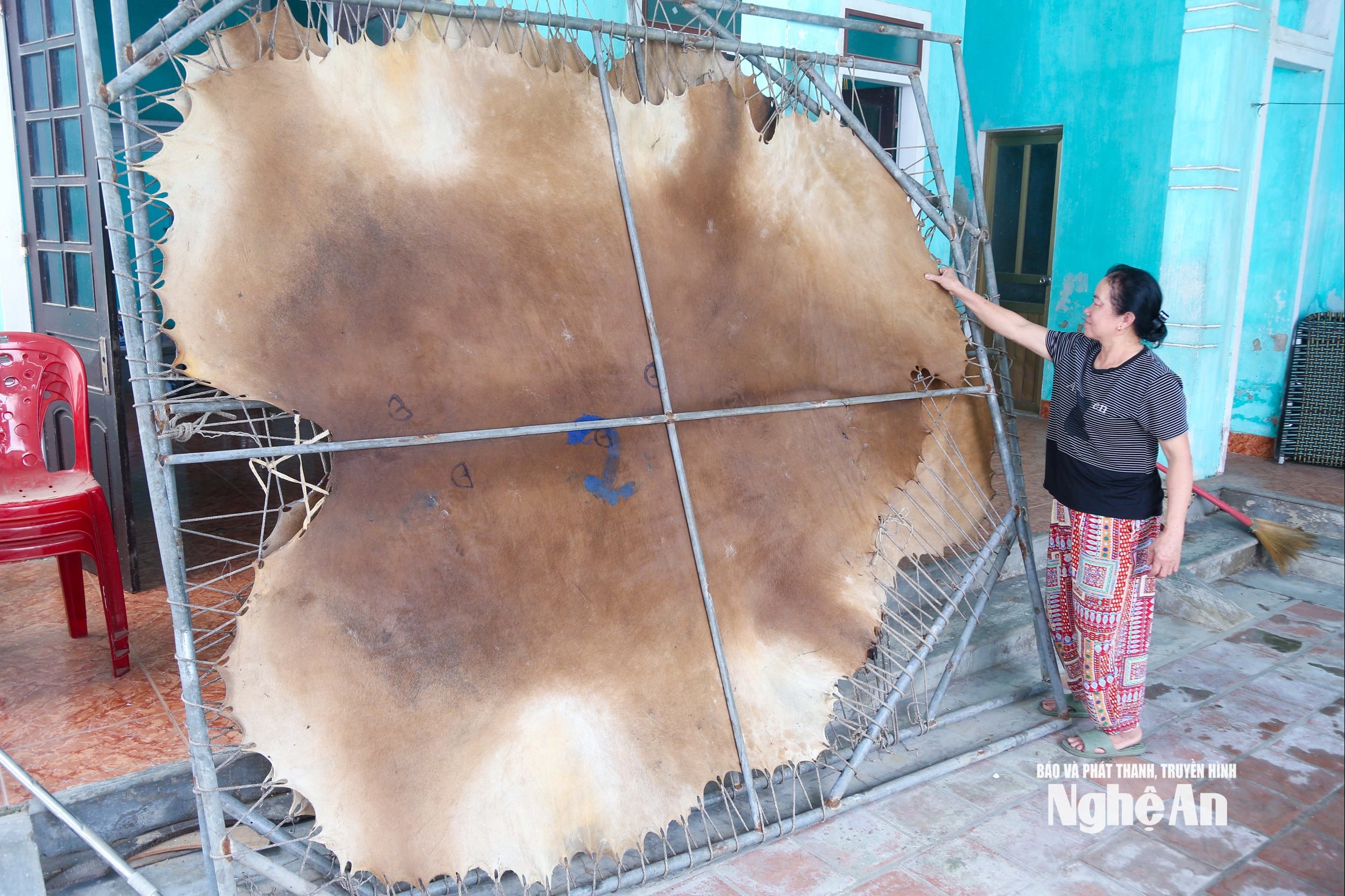
The difficulties stem not only from the output but also from the raw materials. Jackfruit wood, the main type of wood used for drum bodies, is becoming increasingly scarce, requiring sourcing from many places, sometimes with months of waiting. Cowhide, the key element determining the drum's sound, is also no longer as readily available as before. Sometimes, orders have been accepted but deadlines have to be missed due to a lack of materials.
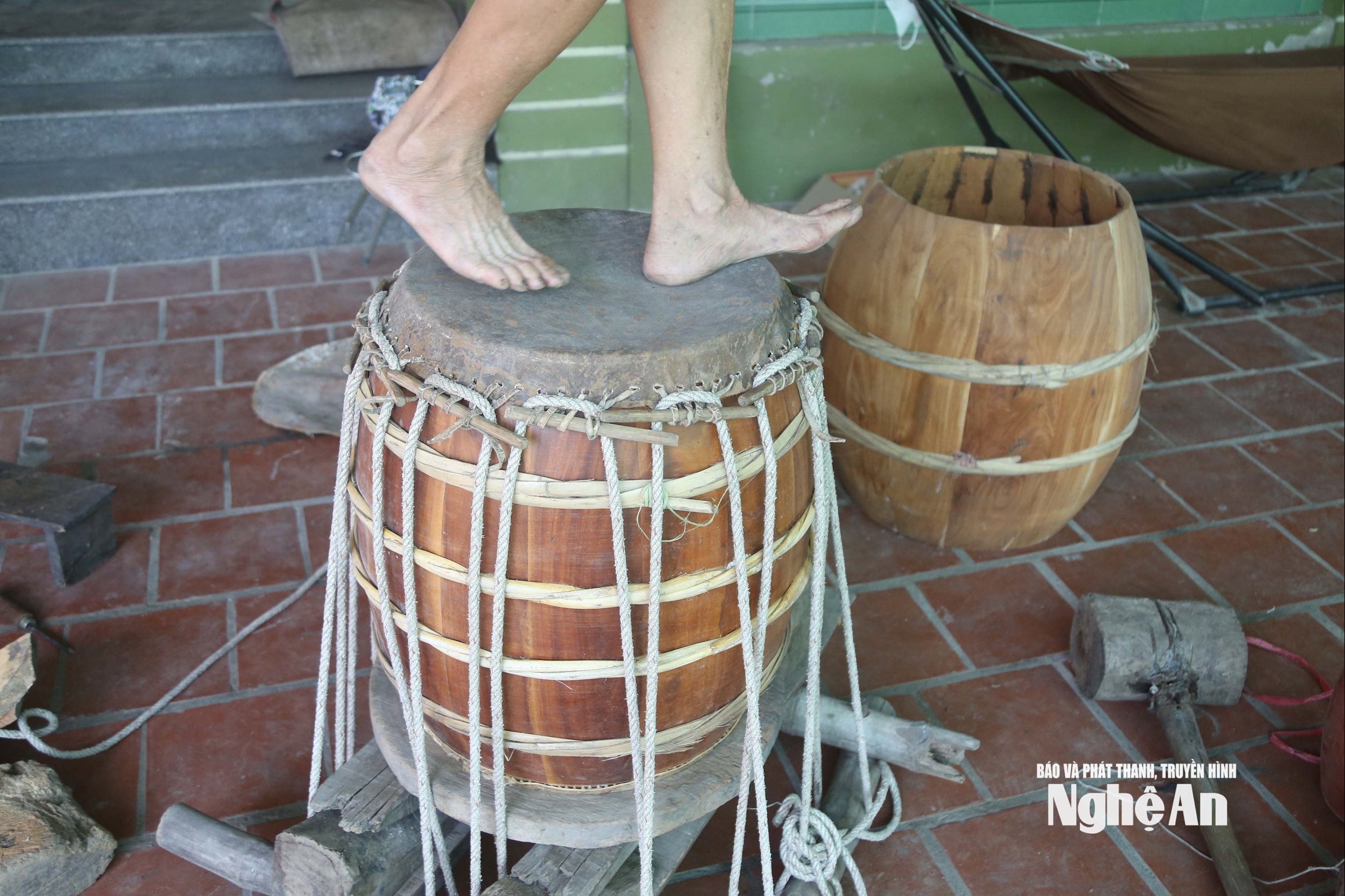
Despite the use of machinery to shorten drum-making time, production in the craft village has shrunk due to a sharp decrease in the number of households and workers. Previously, each household had 3-4 artisans working continuously, but now many workshops only have 1-2 people. While they can work faster, orders are unstable, mainly concentrated during festivals and the Mid-Autumn Festival. For most of the time, the artisans earn a living by repairing and re-upholstering drums, causing the pace of work to become increasingly infrequent.
These mounting obstacles further highlight a worrying reality: a breakdown in the next generation of workers. Many families that have been involved in the craft for generations now lack successors, as the younger generation gradually abandons the traditional profession to seek other paths. Drum making requires patience and meticulousness, while the income is unstable, making it even more difficult to retain young workers.
Discussing the current state of the craft village, Mr. Hoang Nang Hiep, Vice Chairman of the Vinh Phu Ward People's Committee, said: The scale of households engaged in the craft is currently very small, and there is no longer a young workforce, so maintaining and competing is very difficult. The local authorities are also concerned, but have not yet found a specific direction to revive the craft village.
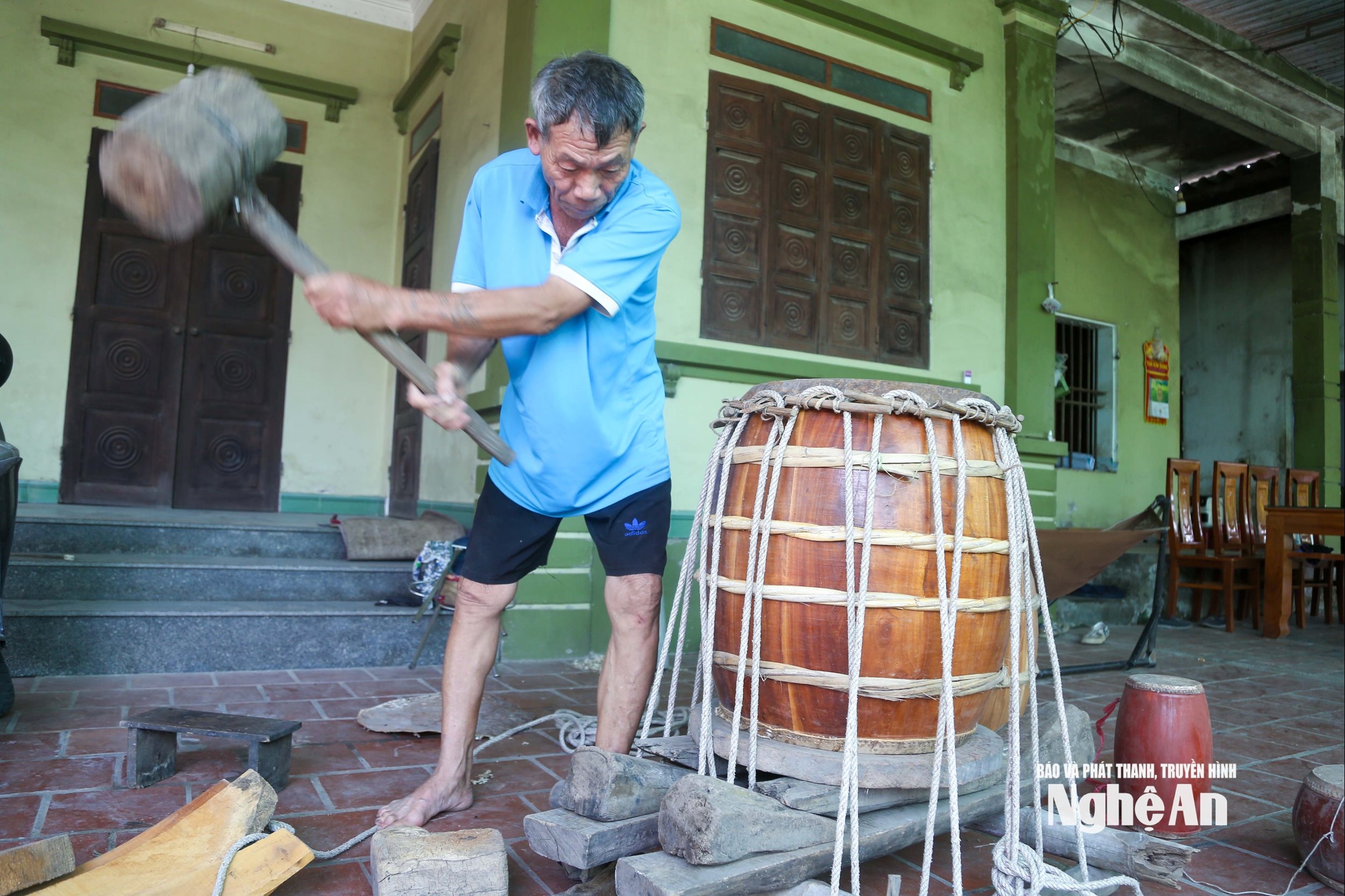
In the quiet space of the workshop, Mr. Duc gently tapped the drum with his drumstick. The sound that emerged was deep and resonant, lingering and spreading softly through the empty space. It was no longer the boisterous, rapid rhythm of its heyday, but it still retained the simple, enduring spirit of the traditional craft.
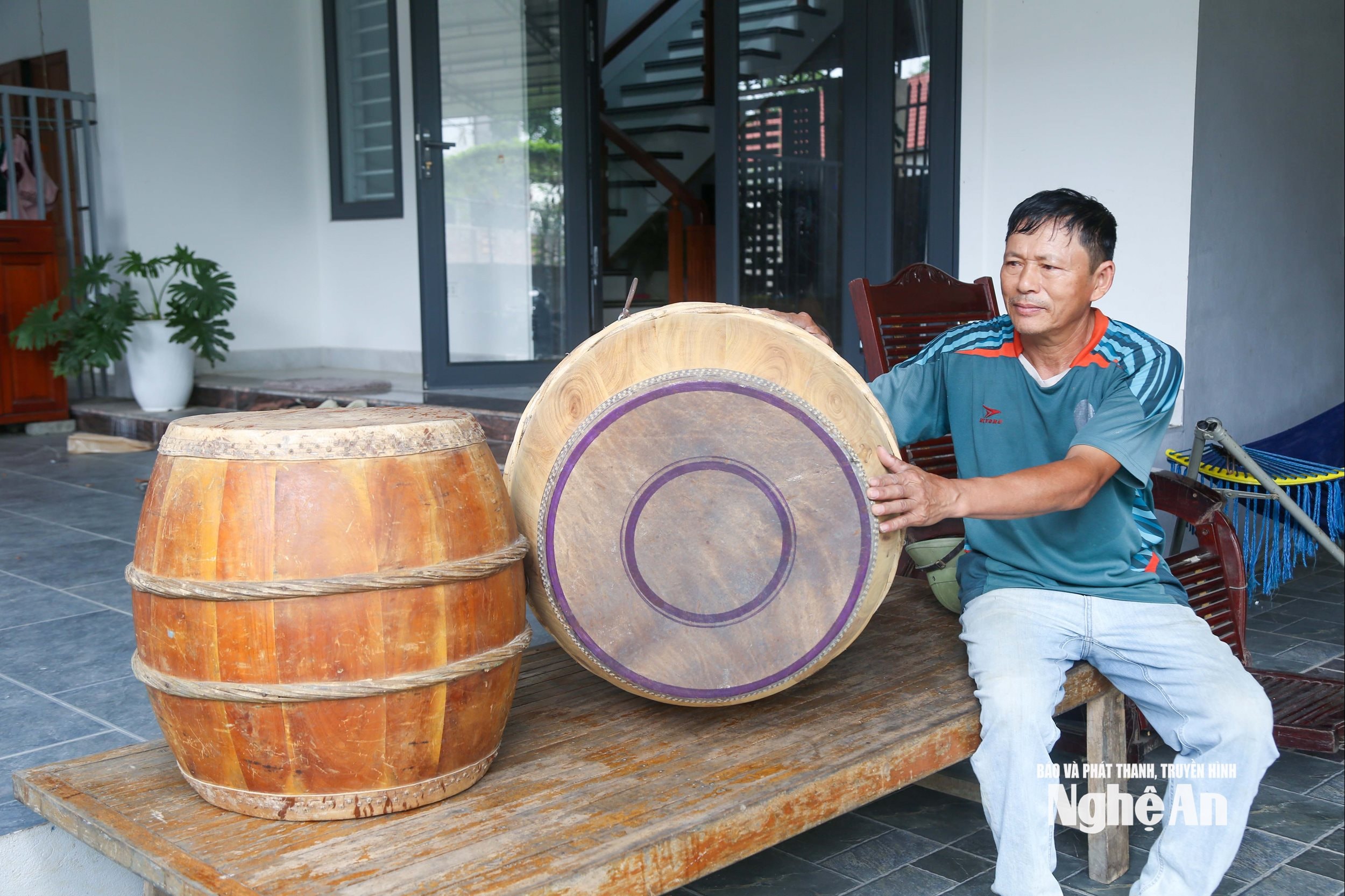
The drum-making village in Vinh Phu is no longer bustling today. But as long as craftsmen like Mr. Duc and Mr. Binh continue to work diligently with each piece of wood and leather, the rhythm of the old drums will not completely fade away...