

Collective bargaining agreements: Closer to rights, less formalism.
Collective labor agreements are considered a concrete measure of the extent to which workers' rights are protected. In Nghe An province in recent times, many agreements have shown a significant improvement in quality, not only complying with regulations but also gradually adding more beneficial and practical clauses for workers.
Going beyond the established framework, prioritizing vested interests.
In 2025, Dong Hieu commune had 14 grassroots trade unions in the business sector with a total of 1,712 members. Recognizing the negotiation and signing of collective labor agreements as a key task, the commune's trade union proactively coordinated and provided close guidance to the units to implement the process systematically and comprehensively. As a result, all 14 businesses successfully signed collective labor agreements, ensuring both quantity and gradually improving quality. Specifically, 7.14% of the agreements were rated A and 14.2% were rated B or higher, with many clauses more favorable to workers.
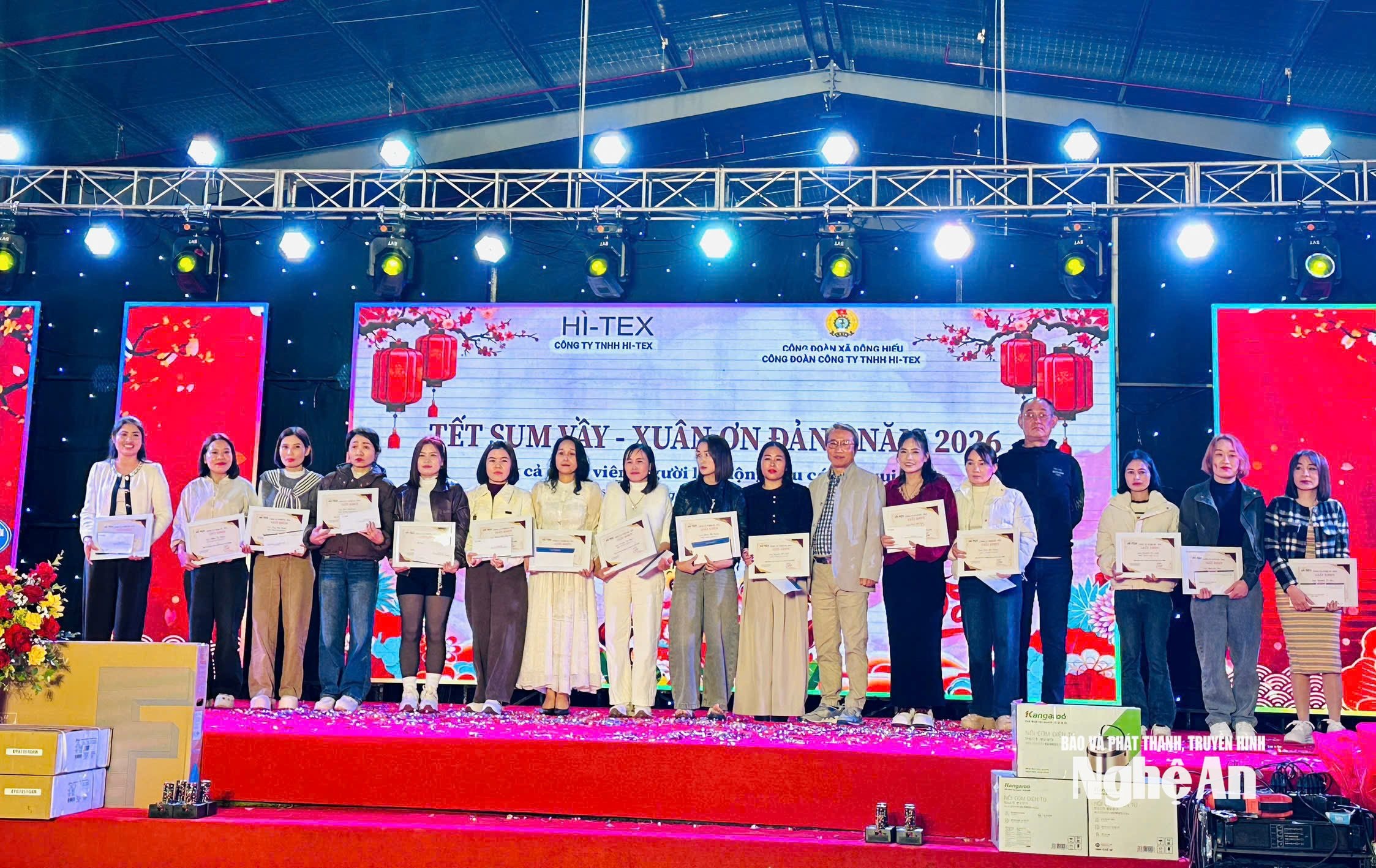
The content of collective labor agreements is becoming increasingly substantive. In some units, meal allowances have been included in the agreements with a fairly high level of support, in some places up to 100,000 VND/day. Regarding income, many businesses commit to providing a 13th-month salary, while also supplementing allowances such as attendance, transportation, seniority, and support for unexpected difficulties, contributing to improving income and stabilizing the lives of workers.
Beyond material benefits, collective bargaining agreements are increasingly focusing on the spiritual well-being of employees. Many businesses organize tours and trips, and prioritize improving the working environment to be safe and friendly. Some companies even proactively extend leave time beyond regulations, such as 6 days off for the Lunar New Year; 5 days off for employees getting married; and longer leave for family bereavement. Some even include leave for death anniversaries, demonstrating concern for the family life and cultural aspects of their employees.
According to Mr. Duong Tuan Anh, Chairman of the Dong Hieu Commune Trade Union, the contents specified in the collective labor agreement have contributed to helping workers feel secure in their jobs, committed to the enterprise, and at the same time limit the occurrence of disputes, creating a foundation for stable labor relations.

Not only in Dong Hieu commune, but throughout the province, many grassroots trade unions have proactively developed and signed collective labor agreements with increasingly improved quality. Some agreements have been adjusted to be more practical, closely aligned with the needs of workers and the actual conditions of businesses.
The first notable improvement is in income and benefits. Some businesses have proactively raised starting salaries by 5-7% above the regional minimum wage, while maintaining significant allowances. At Kyungshin Nghe An Co., Ltd., the minimum wage reaches 5.365 million VND, with an attendance allowance of up to 1.2 million VND/month.
In addition, the bonus policy is designed to be diverse, linked to work performance and employee engagement. Andromeda Vietnam Footwear Co., Ltd. has built a bonus system ranging from attendance and commitment to performance and innovation bonuses; while Plastic Metal Tai Hing Co., Ltd. applies a payment rate of up to 400% of salary for employees working on annual leave.
.jpg)
Beyond just income, many businesses are expanding their efforts to care for the spiritual well-being of their employees. Nghe An Pharmaceutical and Medical Supplies Joint Stock Company maintains activities such as giving gifts during holidays, supporting travel expenses for employees attending weddings or funerals, and rewarding children who achieve good academic results. These visits extend to family members of employees when they are ill, contributing to a stronger sense of community.
Policies for female workers are also becoming increasingly specific and practical. Many companies are implementing support during special periods, arranging rooms for mothers to express and store breast milk for breastfeeding mothers. At Fu Wing Interconnect Technology Co., Ltd., female workers who return to work after maternity leave receive an additional month's basic salary as support.
In addition, improving the skills of workers is also included in collective labor agreements. Some businesses have policies to fully support tuition fees and learning materials for employees who wish to learn a foreign language, thereby creating opportunities for skill enhancement and long-term development.
Ms. Hoang Thi Thu Huong, Head of the Trade Union Affairs Department of the Provincial Federation of Labor, stated that the quality of collective labor agreements has improved thanks to the proactive and dedicated efforts of grassroots trade union officials in negotiating with employers. Improvements in wages, benefits, and special entitlements have contributed to ensuring workers' peace of mind and stabilizing labor relations.
Reduce form, increase quality.
Despite the achievements, the development and implementation of collective labor agreements still face some limitations that need to be addressed. According to Ms. Hoang Thi Thu Huong, Head of the Trade Union Affairs Department of the Provincial Federation of Labor: In some units, the quality of the agreements is not high, the content is still formalistic, mainly repeating legal regulations, while core issues such as wages, bonuses, working hours, and rest periods are not fully addressed. In some places, the agreements only cover matters related to weddings and funerals, failing to accurately reflect the actual needs of the workers.
The implementation process after signing the agreement has not received adequate attention in some units. Gathering employee feedback and disseminating the content of collective labor agreements has not been carried out regularly; monitoring and supervision of implementation remain limited. The number of agreements submitted to the relevant authorities as required is still low.
The changes in the organizational model of trade unions in 2025 also created certain impacts. Some units allowed collective labor agreements to expire without timely negotiation, renewal, or amendment. On the part of trade union officials, negotiation and dialogue skills are still limited in some places, and there is still a mentality of apprehension and dependence on employers.
Furthermore, businesses and workers still lack a full understanding of the role of collective bargaining agreements. Coordination between trade unions and state management agencies in inspecting and handling violations related to collective bargaining agreements is sometimes lacking in tightness and consistency.
To improve the quality of collective labor agreements, the Nghe An Provincial Federation of Labor recently organized a conference to evaluate the implementation of Resolution 01/DCT on Collective Labor Agreements in 2025, and at the same time, strengthen negotiation skills training for grassroots trade union officials.
.jpg)
At the conference, Mr. Nguyen Chi Cong, Standing Vice Chairman of the Provincial Labor Union, emphasized: Labor unions at all levels are required to proactively review and promptly sign new or renew collective labor agreements to avoid disrupting workers' rights; and to include practical provisions such as wages, bonuses, meal allowances, and specific benefits in the agreements. During negotiations, grassroots union officials need to understand the psychology and personality of business owners to propose appropriate content, avoiding rigidity; they need to analyze and explain to business owners that caring for workers helps retain them in difficult times. In negotiations, achieving 7-8 out of 10 proposed items is already a great success because it directly relates to the company's costs.
To effectively implement Resolution 01/DCT, trade unions at all levels must work closely with and provide specific guidance to businesses. Commune and ward trade unions should carefully review the actual number of active grassroots trade unions; direct and urge grassroots trade unions to sign new or renew collective labor agreements according to the provincial targets; and actively inspect and monitor to ensure businesses comply with the signed clauses or to expedite the negotiation process. The Provincial Federation of Labor will digitize all collective labor agreements and build a library of templates on the trade union application for easy reference by all units.
By the end of 2025, 443 out of 576 eligible enterprises in the province had signed collective labor agreements., reaching a rate of 76.9%. Of which, state-owned enterprises achieved an absolute rate of 100%, foreign direct investment (FDI) enterprises reached 87%, and the non-state sector reached 74.9%... In 2026, the Provincial Labor Federation aims for at least 91% of enterprises with labor unions to have signed collective labor agreements, with at least 40% of these agreements achieving a Grade A rating.