

Following President Ho Chi Minh's example, farmers' association members in Nghe An are creating change from the grassroots level.
For farmer association members, "following Uncle Ho's example" doesn't mean grand gestures, but rather starting with concrete actions: developing household economies, helping each other with livestock, contributing bricks to build houses, planting more trees... From the grassroots level, the movement is concretized through practical methods, closely linked to daily life, spreading a spirit of community responsibility, and contributing to the development of rural areas.
Pioneering in wealth creation and partnering with the community.
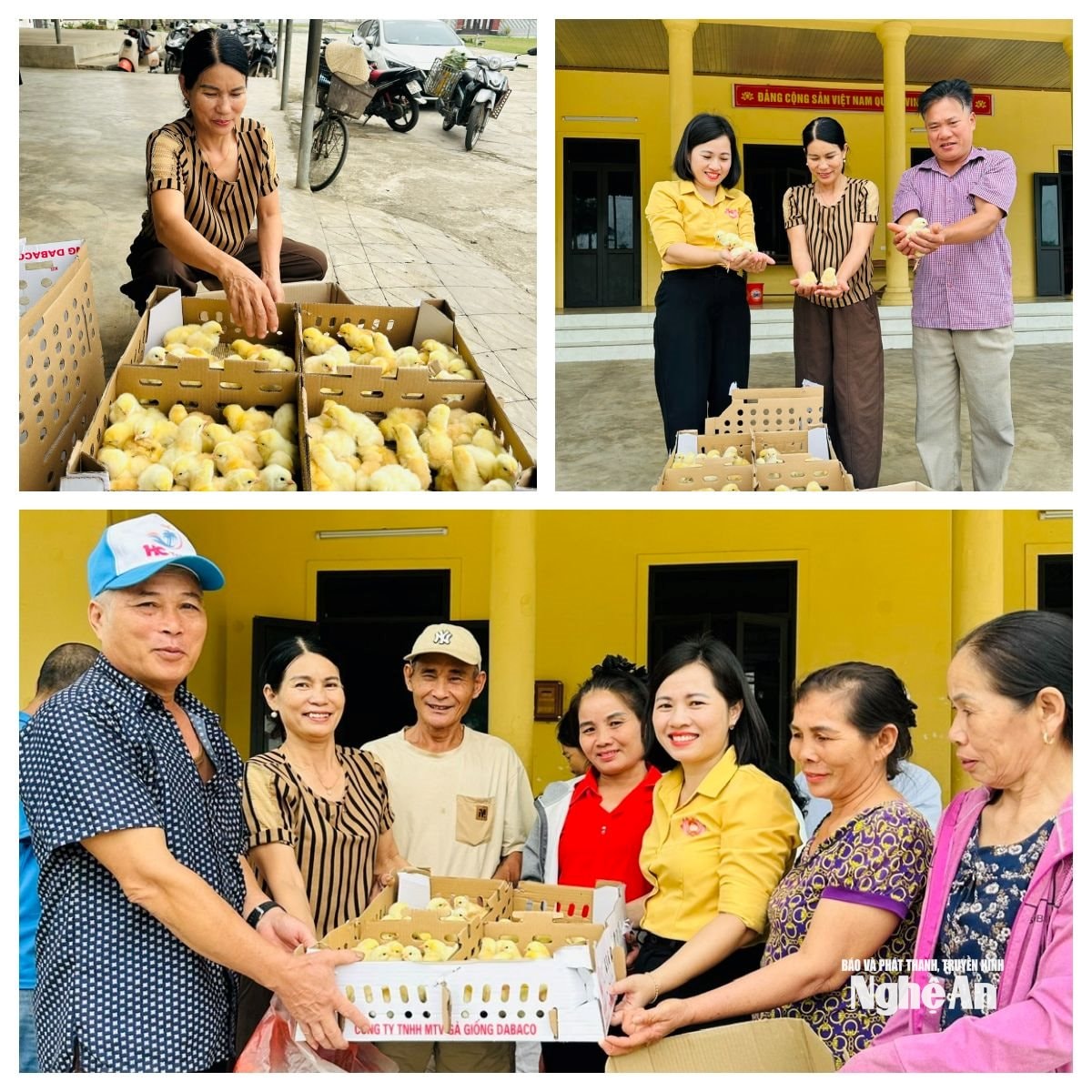
One morning in Binh Hanh hamlet, Nghia Dan commune, Ms. Nguyen Thi Thanh Hue - Head of the Farmers' Association branch in the hamlet - was busy with her familiar tasks: inquiring about the livestock situation of one household, guiding another through the loan application process, and then taking the opportunity to mobilize members to participate in cleaning the self-managed road before the rainy season.
Even in her 50s, she still maintains the habit of visiting local communities every day. For her, doing community work is not just about fulfilling her duties, but also about her responsibility to the people, especially those households facing difficulties.
For many years, the "Turning Waste into Livestock" movement initiated by her has become a familiar practice. Plastic bottles, scrap paper, and scrap iron and steel are collected and sold to raise funds to buy livestock to support members in developing their animal husbandry.
In just five years, nearly 300 breeding animals have been given to 12 poor and near-poor households. The value lies not in the amount of money, but in how these farmers help each other through the simplest things. A few seemingly discarded waste materials have become the initial capital that has helped many families build up their chicken and pig herds, gradually improving their livelihoods.
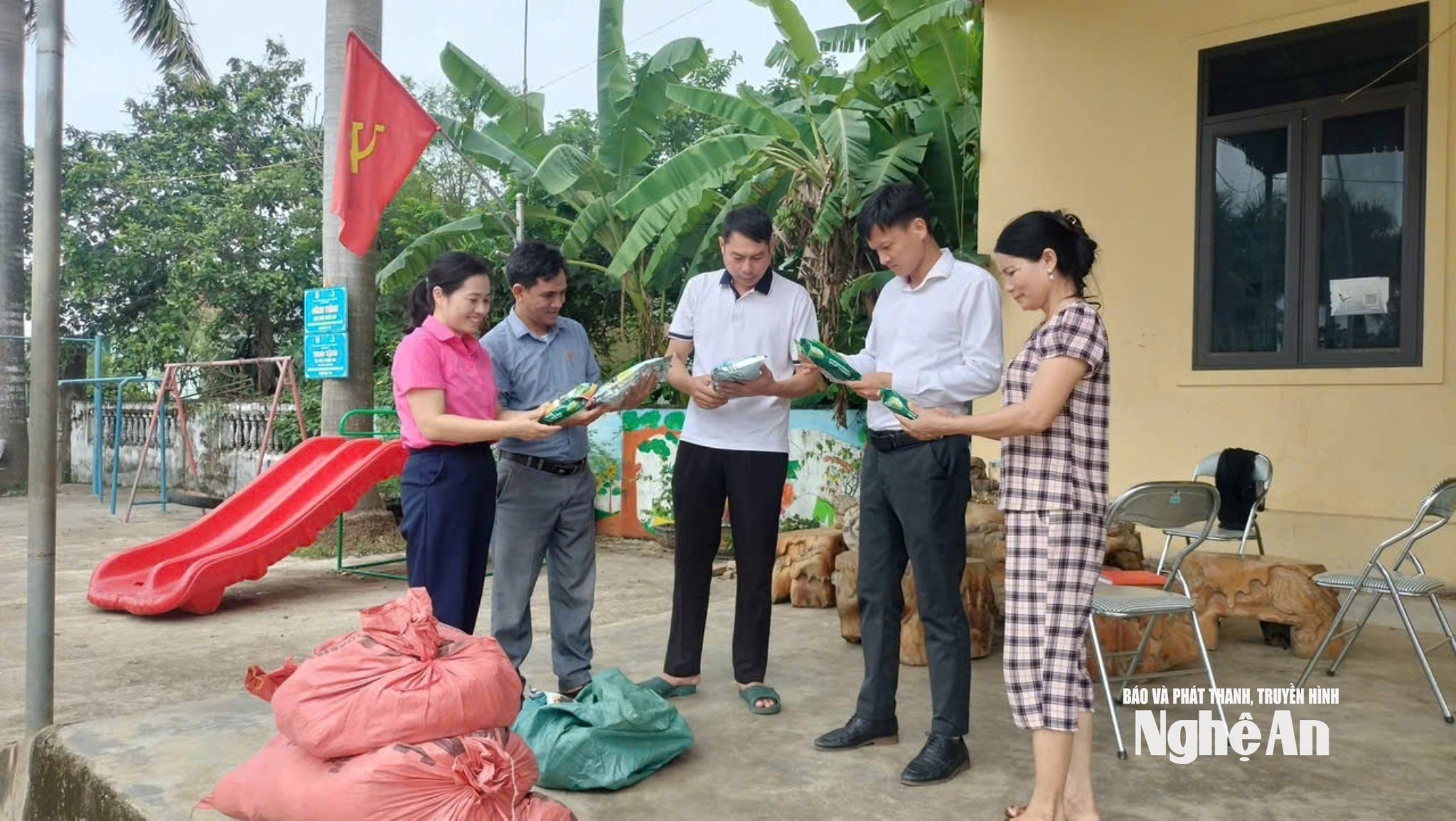
As the head of the Savings and Loan Group of the Social Policy Bank, Ms. Hue also directly manages preferential capital, guiding members to use it for the right purposes to invest in production. At the same time, she encourages people to participate in professional associations, link production, and support each other in terms of technology and product outlets.
From a dedicated branch leader, the story in Binh Hanh hamlet shows how the Nghia Dan Commune Farmers' Association concretizes learning and following President Ho Chi Minh's teachings through actions that are close to and connected with the people. Learning from President Ho Chi Minh is not just about propaganda, but is linked to practical benefits: providing capital support, transferring technology, building economic models, helping each other escape poverty, protecting the environment, and building new rural areas.
In the area, 22 branches and 11 professional associations maintain orderly activities, becoming a place to connect members in the same industry and with similar production needs to share experiences, provide support with materials, and link up for product consumption.
We believe that learning from and following President Ho Chi Minh's example must begin with practical actions closely related to the lives of our members, such as providing capital support, sharing production experiences, helping each other develop economically, protecting the environment, and building new rural areas. When members clearly see the benefits, the movement will spread naturally.”
Ms. Dang Thi Thuy Ha - Chairperson of the Farmers' Association of Nghia Dan Commune
This spirit continues to spread through clubs of successful farmers and business owners, which not only bring together efficient households but also become a point of connection, support, and mutual guidance for development.
In Vinh Hung ward, the club with 14 members is not only a gathering place for dynamic farmers, but also a "support system" for members facing difficulties to learn and improve their economic situation.
Under the leadership of Chairman Duong Hoang Lai, the members have maintained production efficiency while actively sharing experiences and supporting disadvantaged members.
Recently, the club supported three near-poor and disadvantaged households with a biosecure chicken farming model, providing everything from breeding stock and feed to care techniques, opening up opportunities to increase income and stabilize their lives.
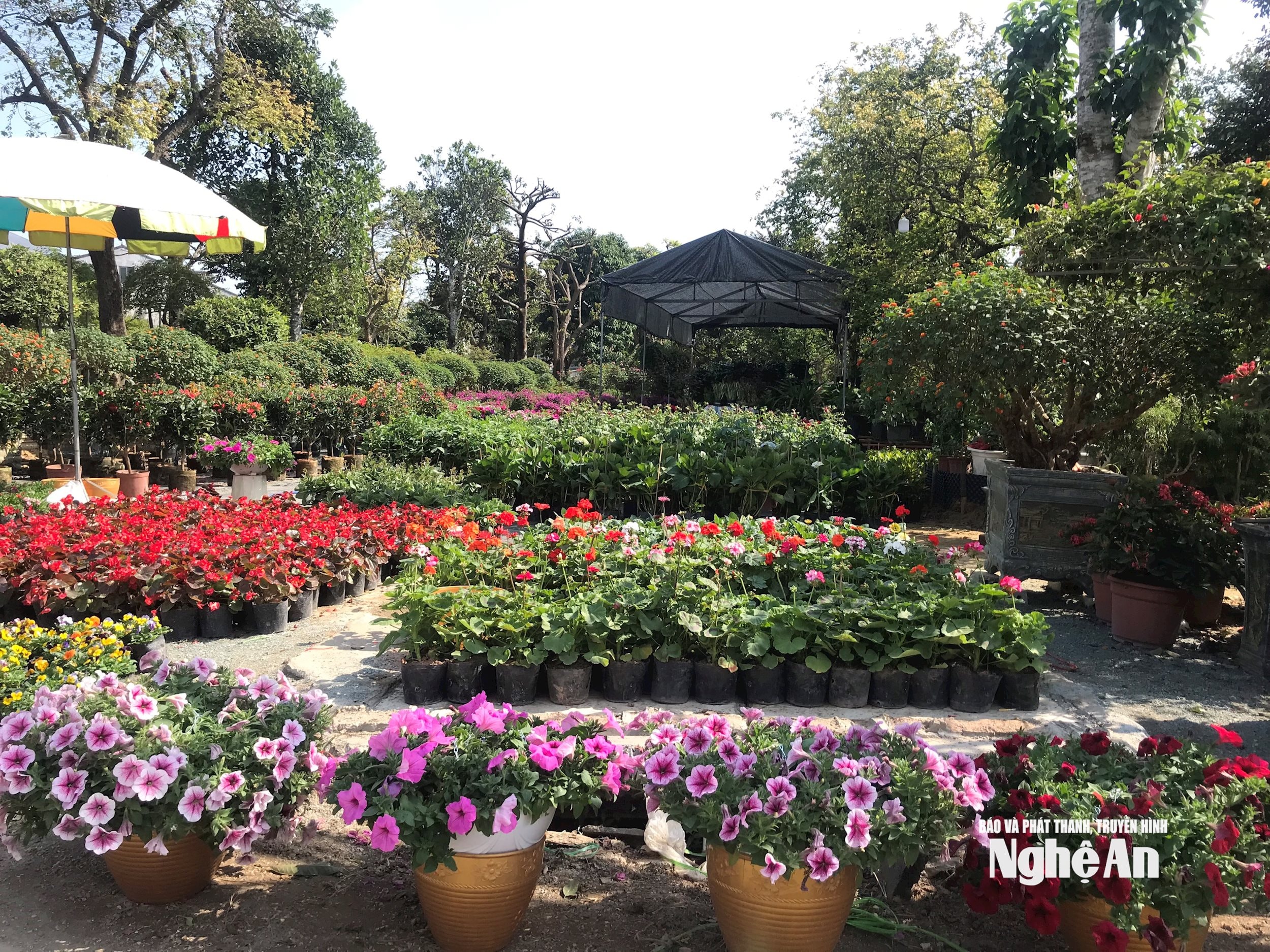
Ms. Tran Thi Hai Yen, a member of the Farmers' Association of Vinh Phu ward, is a prime example. Starting with just a few acres of rice fields, she boldly borrowed capital, learned techniques, and expanded her flower and ornamental plant farming model to nearly 6,000 m², generating an income of 800 million to 1 billion VND per year and creating many jobs for local laborers.
Besides being a successful businesswoman, she actively supports product distribution, shares her experience, and participates in social activities. "When the local community launches a campaign, I have to set an example by participating," she shared.
From "bricks of compassion" to a livable countryside.
On a May morning, the small house of Ms. Nguyen Thi Thien in Nam Loc hamlet, Van An commune, became more lively when the commune's Farmers' Association presented her with 1,500 bricks from the "Bricks of Compassion" program. These bricks may not be of great material value, but for a family classified as poor like Ms. Thien's, they hold special significance.
"For many years, my family hasn't dared to think about building a house. With this support, I feel more motivated to try harder," she said emotionally.
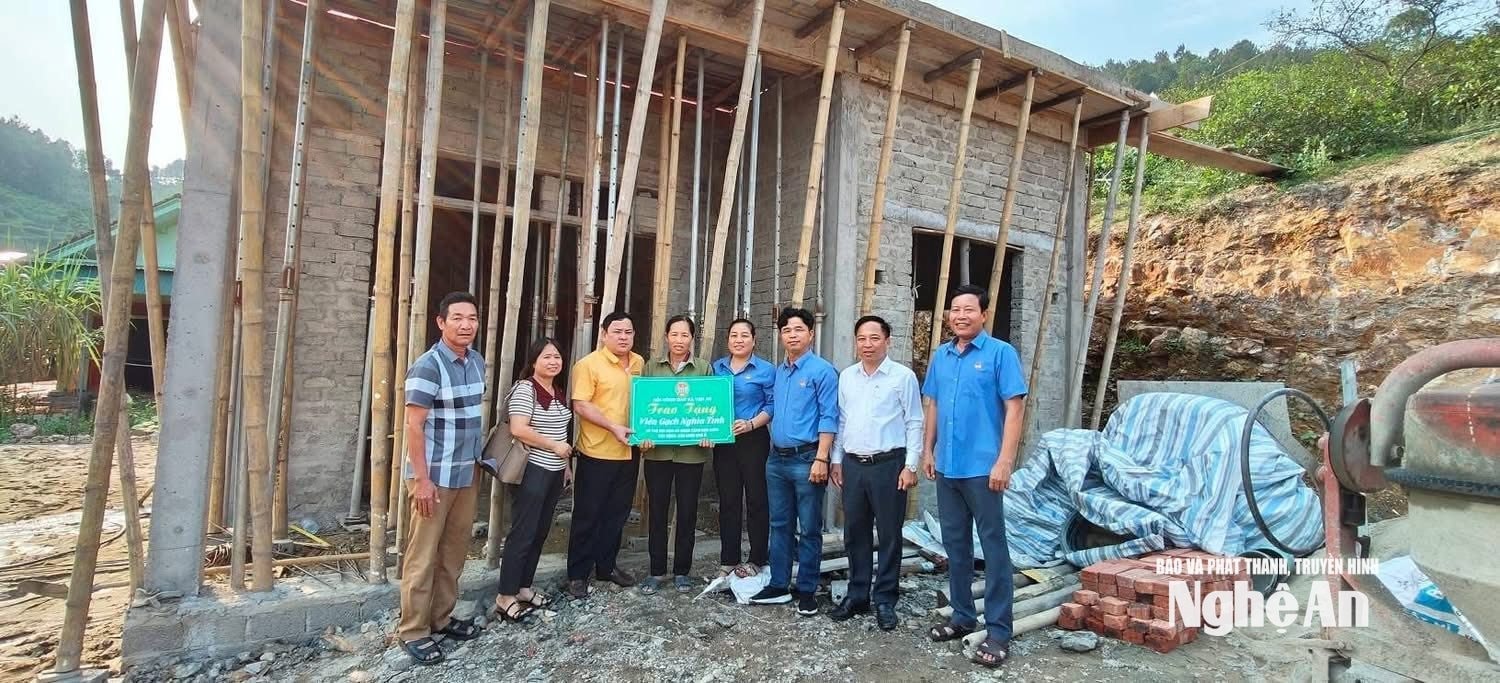
That story continues in Luong Son commune, where Nguyen Thi Tu's family was given 2,000 bricks to rebuild their house.
From small bricks, the "Bricks of Compassion" program has contributed to building dozens of homes for disadvantaged members, helping them to settle down and develop their production. This is also a concrete and practical way of learning from and following President Ho Chi Minh's example, demonstrating the spirit of solidarity and community responsibility.
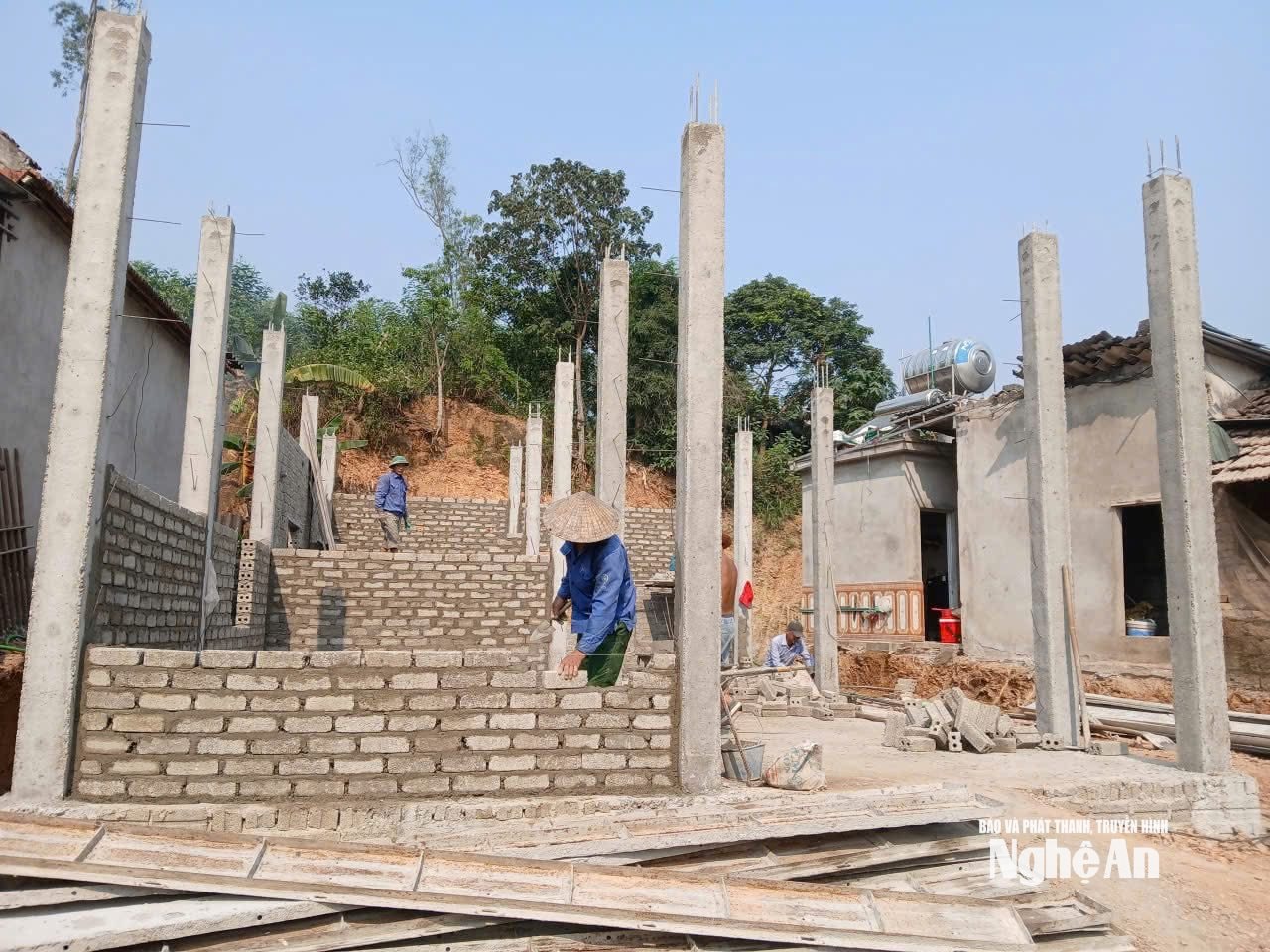
From 2023 to the present, the "Brick of Compassion" program has supported the construction and repair of 461 houses for disadvantaged members, with nearly 2.9 million bricks, a total value of over 6.07 billion VND, and thousands of man-days of labor.
Beyond simply providing material support, the program is a practical way to concretize the "Learning and following the thoughts, ethics, and style of Ho Chi Minh" in the lives of its members. Each brick donated represents a sharing, contributing to helping many families "settle down," confidently develop production, and stabilize their lives.
If the "Brick of Compassion" serves as a foundation for building a warm home, then the journey of building a new rural area is extended by persistent activities aimed at creating a green, clean, and beautiful living environment.
From the "Tree Planting Festival in Eternal Gratitude to Uncle Ho" movement, the various levels of the Farmers' Association have maintained it annually, building hundreds of green roads, rows of trees, and gardens as "farmers' gratitude to Uncle Ho".
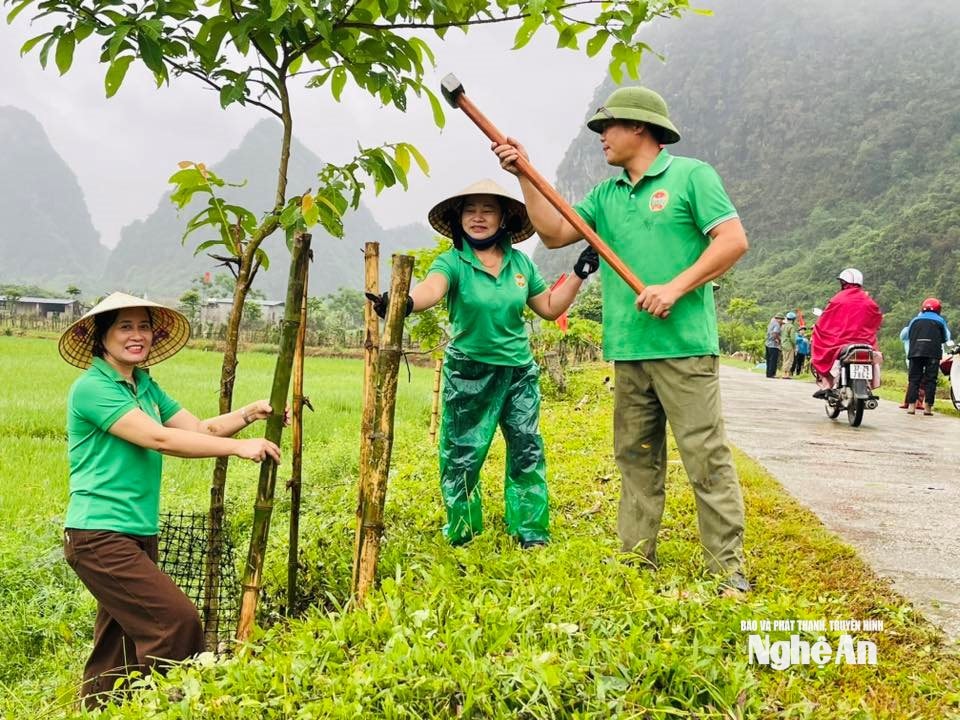
In 2025 and the first quarter of 2026, many activities will continue to be implemented synchronously, such as caring for trees, building national flag-lined roads, launching "Green Sunday" campaigns, and conducting general environmental cleanup. Along with that, the various levels of the Association will build "Bright - Green - Clean - Beautiful and Safe" roads and encourage members to plant bamboo to prevent erosion and landslides along the Lam River.
In particular, during the Tet holiday of 2026, farmers' associations in 130 communes and wards simultaneously launched a campaign to plant more than 121,000 new trees, while also caring for and supplementing nearly 430 rows of trees and gardens as part of the "Farmers' Gratitude to Uncle Ho" initiative.
Tree-lined roads and clean, beautiful residential areas are gradually taking shape, contributing to changing the face of rural Nghe An in a civilized and friendly direction.
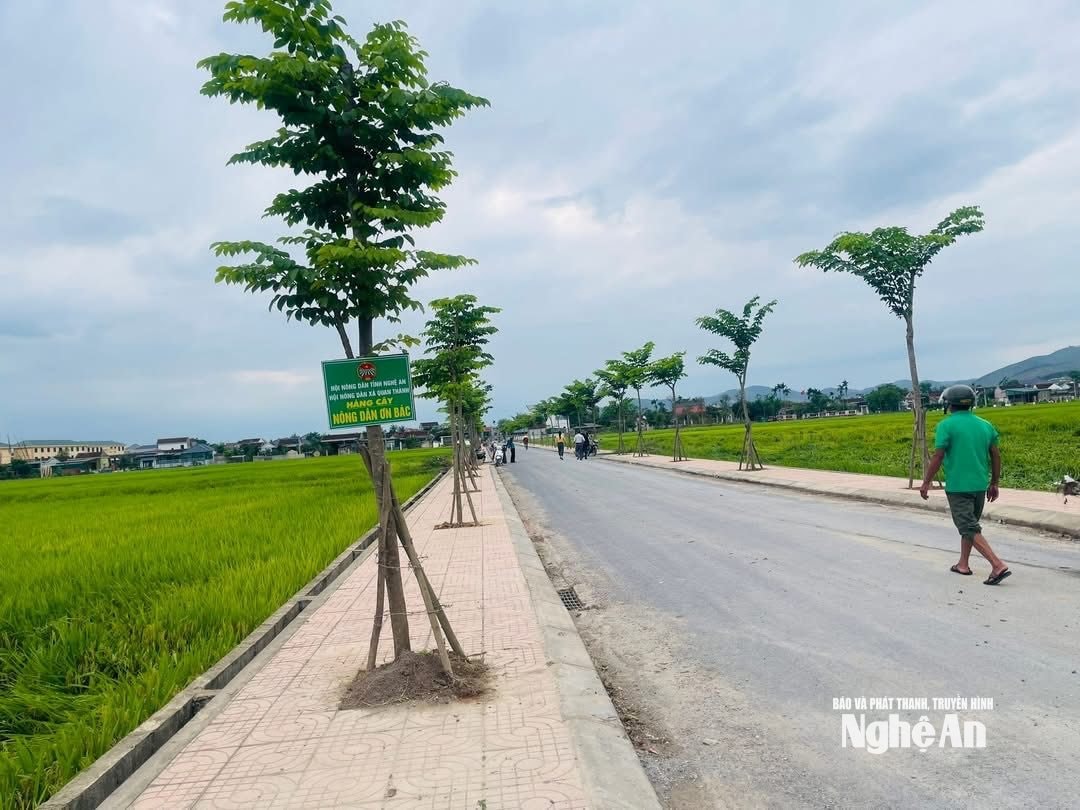
From building bricks to planting trees to greening barren land, from the small actions of each member to the widespread movement, "following Uncle Ho's example" is being concretized through simple yet persistent actions, contributing to the transformation of each village.