

Warning about the dangers of charging your phone during thunderstorms.
Many people still have the habit of using their phones while charging, even during thunderstorms. However, experts warn that this can be a dangerous habit for both the device and the user.
Summer is a time when thunderstorms with lightning frequently occur, causing many people to worry about the safety of using electronic devices indoors.
In particular, the habit of charging phones during thunderstorms raises questions about the potential risk of short circuits, device damage, or user safety.
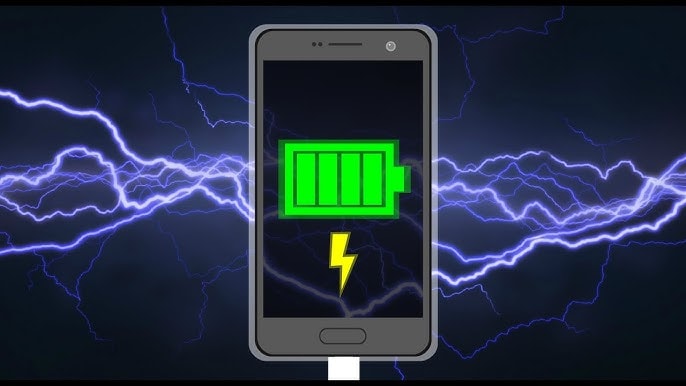
According to recommendations from the U.S. Centers for Disease Control and Prevention (CDC), users should not plug their phones into electrical outlets to charge during thunderstorms.
The issue isn't that phones "attract lightning," but rather the risk of the lightning strike's electrical current traveling through the home's electrical system, damaging equipment or even leading to electric shock.
How dangerous is it to charge your phone during a thunderstorm?
Many people believe that phones that are charging are more likely to attract lightning, but experts say this is incorrect.
In an interview with the popular weather forecasting platform AccuWeather (USA), lightning safety expert John Jensenius stated that no object actually "attracts" lightning. Being struck by lightning is largely random.
However, the problem is that lightning usually travels along power lines, telecommunication lines, or other electrical conductors.
If lightning strikes a power pole near your home, a massive current can travel through the electrical system and into plugged-in devices. In that case, a charging phone could be completely damaged, even explode, or cause electric shock to the user.
Experts say smartphones are not designed to withstand the extremely high voltages from lightning, which can reach tens of thousands of volts.
During thunderstorms, users can still charge their phones using a power bank or by connecting them to a laptop that isn't plugged directly into a power outlet.
It is important that these devices operate on their own batteries, not connected to a direct power source during thunderstorms.
This is considered a safer option if you need to conserve your phone battery for urgent communication or updates.
Many other electronic devices should also be unplugged during thunderstorms.
When thunderstorms begin, experts recommend unplugging many electronic devices in the home, such as TVs, game consoles, washing machines, or refrigerators, if possible.
Even if a family has installed surge protection devices, the risk of damage still exists if a direct lightning strike occurs.
Lightning protection systems can absorb most of the excess surges from the power grid, but they still have limitations. A strong lightning strike can generate a current far exceeding the protective device's capacity to handle.
Therefore, during thunderstorms, the safest measure is to minimize the use of devices plugged directly into an electrical outlet, especially using a phone while it's charging.