

Key takeaways from the talks between President Putin and President Xi Jinping
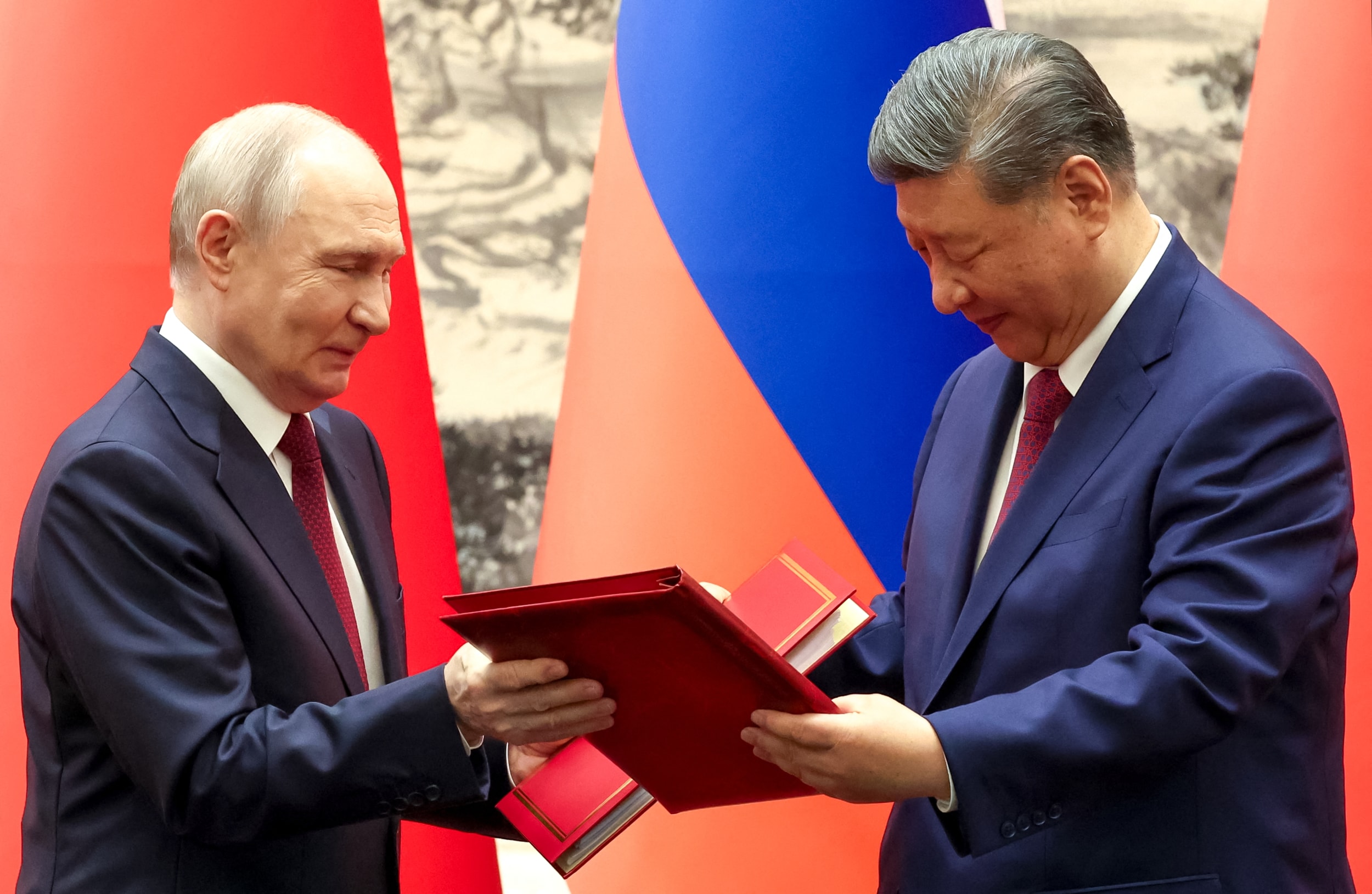
Chinese President Xi Jinping and Russian President Vladimir Putin held talks in Beijing on May 20, shortly after Donald Trump's visit to the Chinese capital, to further affirm and strengthen bilateral relations.
Here are the key takeaways from the talks between the two leaders:
Affirming a strong partnership
Both leaders – who have met dozens of times over the past decade – have expressed a desire to showcase their strong relationship. President Putin asserted that bilateral relations are at an "unprecedented high," while President Xi Jinping described the relationship as "rock solid." The Chinese leader also issued a warning about "rising hegemonic and unilateralist tendencies" in the international system.
During the meeting, the two sides signed a series of cooperation agreements in the fields of trade, media, and energy. At the same time, the two countries also renewed their friendship and cooperation treaty, praising the special relationship between the two nations. President Putin extended an invitation to President Xi Jinping to visit Russia next year and expressed his intention to attend the APEC summit in Shenzhen in November.
Promoting a ceasefire in the Middle East
Discussing the regional situation, President Xi Jinping stated that the Middle East is at a "critical juncture" and called on all parties to "end the conflict soon," especially to ensure energy security.
"A comprehensive ceasefire is the most urgent requirement right now; resuming hostilities is absolutely unacceptable, and maintaining negotiations is especially important," the Chinese President emphasized.
According to a joint statement from the Kremlin, both sides emphasized the need to promote dialogue and negotiations.
However, the tense situation regarding oil and gas supplies from the Middle East has opened up opportunities for Russia to strengthen its position as a supplier of alternative energy. The Russian leader described the energy sector as "the engine of economic cooperation," asserting that Moscow will continue to be a "reliable resource supplier" to Beijing.
No breakthrough yet for the "Power of Siberia 2" project.
China is currently Russia's largest buyer of fossil fuels, becoming a key economic partner for Moscow as the country faces Western sanctions related to the Ukraine conflict.
However, the Kremlin said the talks did not yield any breakthroughs for the "Power of Siberia 2" natural gas pipeline project that Moscow has been pushing for years. This project is expected to transport 50 billion cubic meters of gas annually, helping Russia partially offset its previous exports to Europe.
Kremlin spokesman Dmitry Peskov told Russian media that, although the two sides have reached "basic understandings" – including the route and construction methods – there is still no "clear timeline" and "some details still need further discussion."
Calling for a political solution to the Ukraine crisis.
Regarding the issue of Ukraine, the two leaders agreed on the need to address the "root causes" of the conflict, while also supporting "finding a solution through dialogue and negotiation."
The joint statement of the two countries stated: "The Russian side positively assesses China's objective and unbiased stance regarding the situation in Ukraine, and welcomes China's aspiration to play a constructive role in resolving the Ukrainian crisis through political and diplomatic means."