

The "Soul of Vietnamese Lotus" art program offers a unique emotional experience.
Concluding with resounding applause in the Lotus Village, the "Soul of the Vietnamese Lotus" art program left a profound and lasting impression on the audience. It was not just an artistic evening within the framework of the Lotus Village Festival, but also a gathering of the deepest layers of Nghe An culture, where the story of President Ho Chi Minh was told through music, through memories of his homeland, and through very ordinary emotions.
Where tradition and modernity blend
“The Soul of the Vietnamese Lotus” doesn't choose to tell its story through mere grandeur. What makes the program so captivating is its ability to touch the audience's emotions through familiar images of the Lotus Village, through lullabies and folk songs, and through simple yet profound scenes. Within this flow, viewers not only see the portrait of the beloved leader but also clearly feel the cultural significance of the land that gave birth to him.
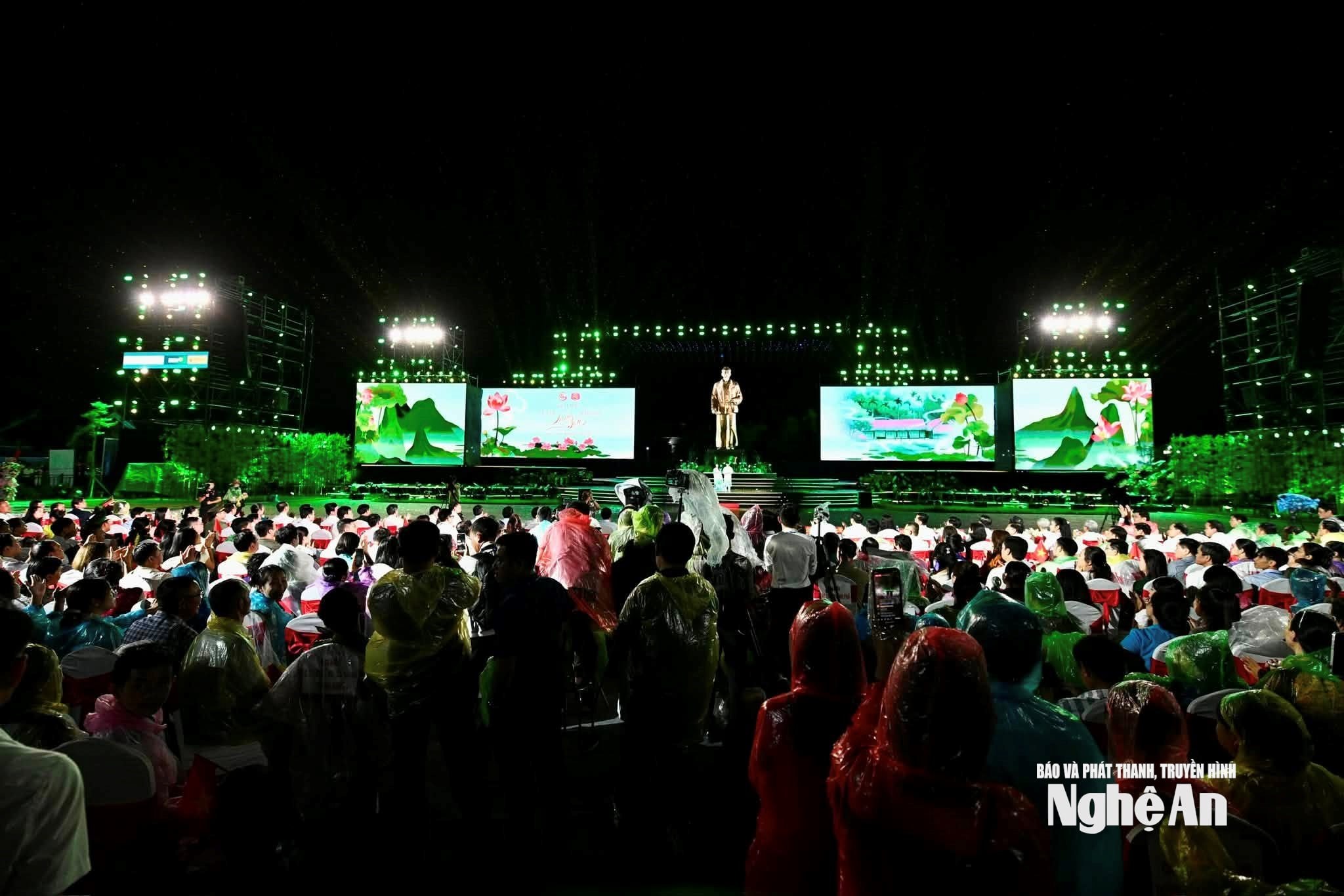
The art program "Vietnamese Lotus Soul" is a large-scale, semi-realistic performance directed by Binh Hung, with artistic commentary written by People's Artist Nguyen An Ninh. The program consists of three chapters: "Lotus Blossoms in the Homeland," "Footprints of the Era," and "Enduring Fragrance," recreating President Ho Chi Minh's journey from his hometown of Lang Sen to his aspiration for national independence, while also portraying the spirit of national unity and the desire for national development in the new era.
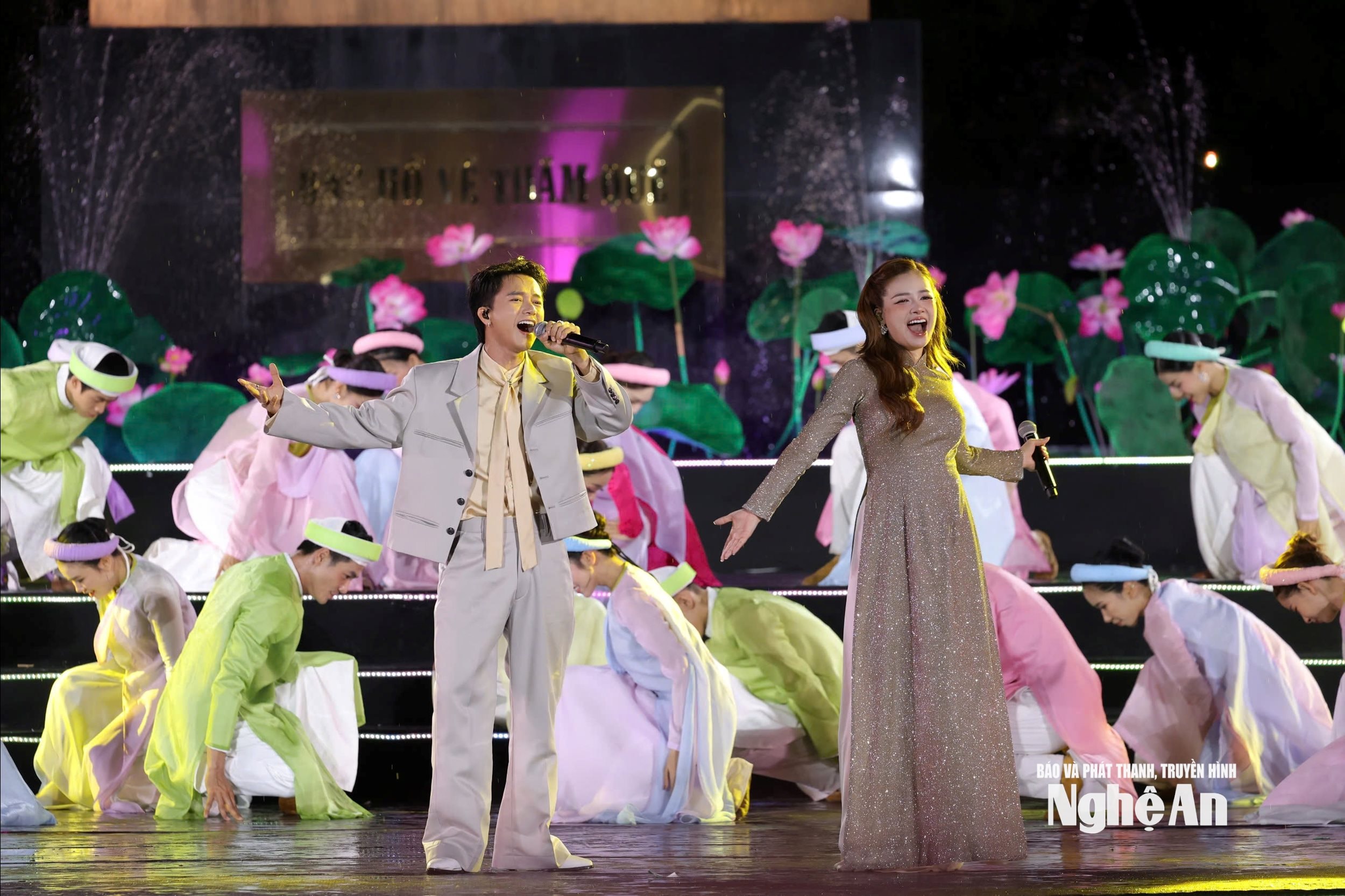
From the opening act, "Lotus Blossoms in the Homeland," the artistic space transported viewers back to President Ho Chi Minh's childhood memories through performances such as "Lullaby Amidst the Lotus Blossoms," "The Sound of the Kite Flute in Childhood," "A Letter from the Homeland," and "From Lullabies to Great Ambitions"... The stage scenes seamlessly combined folk songs, contemporary dance, and images of the old Nam Dan countryside, creating a space that was both familiar and rich in poetic quality.
From the alluvial plains of the Lam River, the sacred Dai Hue mountain, to the simple thatched house where the boy Nguyen Sinh Cung first cried, the program gently unfolds the journey of a great man's growth. In his mother's cradle, amidst the scent of lotus flowers in his homeland and the pain of a nation in the midst of national loss, his virtues, integrity, and aspirations were nurtured and grew stronger.
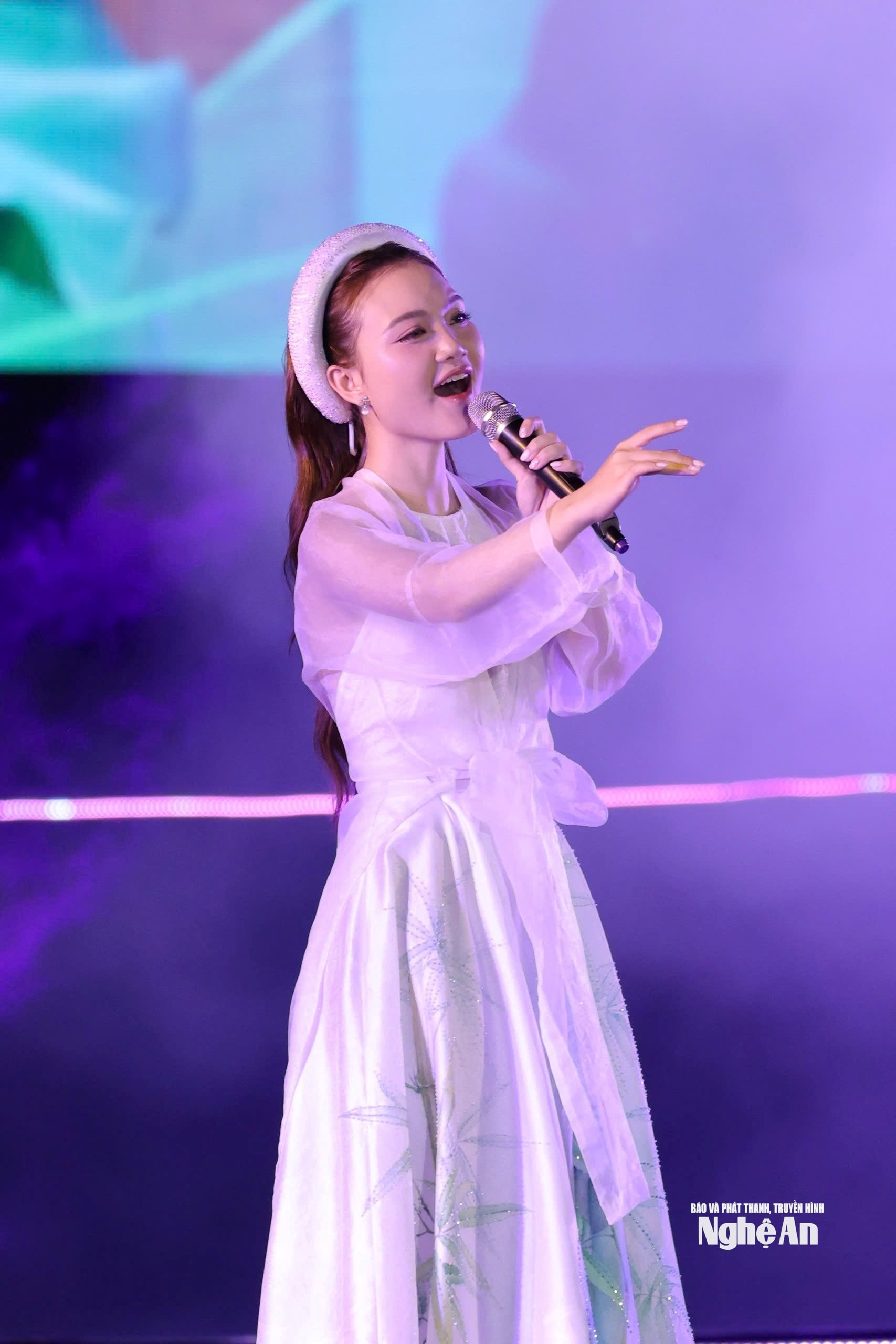
What moved the audience was not only the content but also the way the program handled the music and stage emotions. The performance of "Lullaby Amidst the Lotus Blossoms," performed by Ha Quynh Nhu, Meritorious Artist Dang Thuat, and a group of dancers, opened up a gentle space, where the thatched roof of Uncle Ho's hometown and the sweet lullaby of a mother from Lang Sen village could be seen. Ha Quynh Nhu, with her soft, folk-inspired voice, delivered profound melodies, while Meritorious Artist Dang Thuat added a touch of grandeur to the performance. These two contrasting styles blended together, making the performance a key to evoking emotions and evoking a series of stories about mothers and homeland throughout the first part of the program.
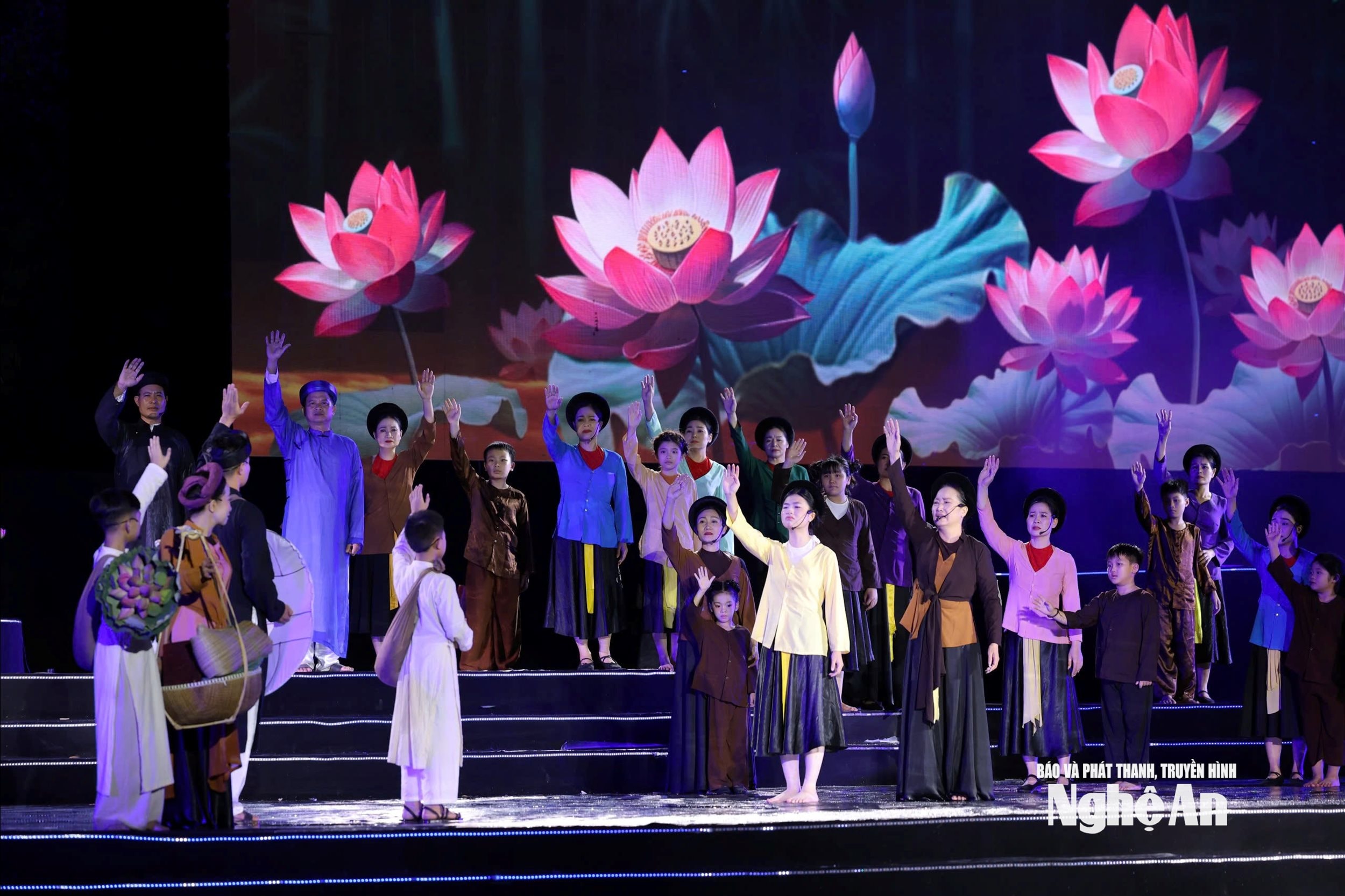
One of the most emotionally impactful moments of the evening was the folk drama "The Homeland's Legacy," performed by People's Artist Hong Luu and the cast of the Provincial Traditional Arts Center. No longer relying on familiar scenes, the drama was built upon a fresh script, recreating the moment when Mr. Nguyen Sinh Sac's family left their hometown for the imperial city of Hue.
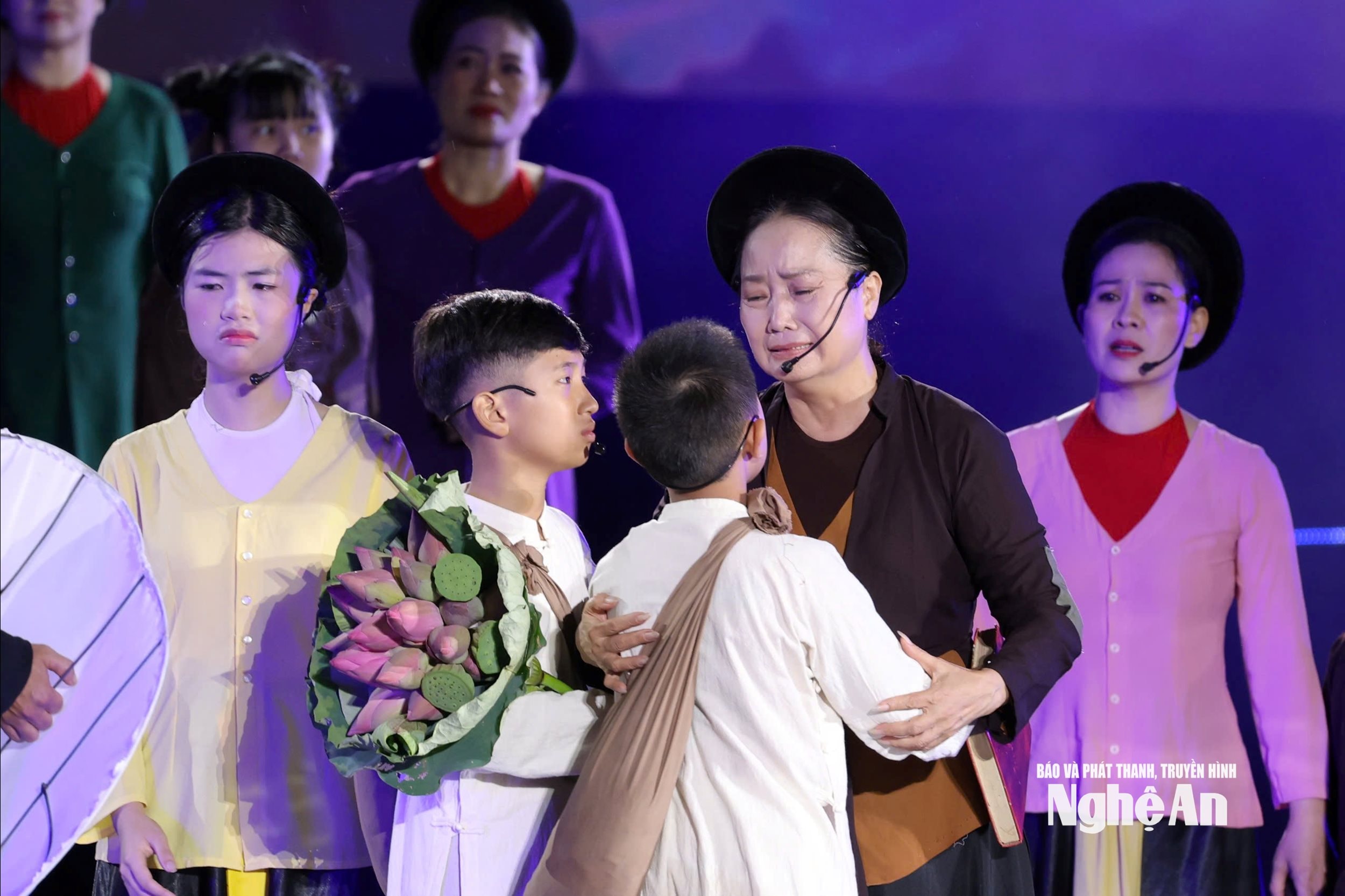
There was the lingering affection of his grandmother, the wistful gaze of the villagers bidding him farewell, and the image of young Nguyen Sinh Cung, though still small, already radiating an extraordinary spirit. When the Nghe An accent of Meritorious Artist Minh Thanh rang out: "The day I followed my mother and father to the Imperial City of Hue with so much longing and affection. Cung only asked to bring along a kite, a lotus flower, and the words of his homeland," many in the audience fell silent, deeply moved.
The program also achieved emotional continuity thanks to its well-executed pacing. After the poignant and moving folk songs in the scene where the grandmother bids farewell to her grandchildren, performed by People's Artist Hong Luu, the music of "Footprints Ahead," sung by Meritorious Artist Vu Thang Loi, along with the singing and dancing, created an emotional transition without interrupting the enjoyment.
While Chapter I takes the audience back to their homeland, Chapter II, "Footprints of the Era," expands the historical space with President Ho Chi Minh's journey to find a way to save the country and his deep affection for the South. Performances such as "Visiting Nha Rong Wharf," "The South in His Heart," and "The Century-Old Path He Walked" are staged using a combination of traditional and modern music, dramatic scenes, and historical documents, creating a depth that is both tragic and relatable.
The highlight of Chapter II is the scene where Uncle Ho sets out to find a way to save the country. In the afternoon setting of Nha Rong Wharf, amidst the golden sunlight falling on the Saigon River, the simple, rustic Đồng Tháp folk song sung by singer Vân Khánh resonates like the voice of the South echoing back to the place where He began His historic journey.
Without the need for grand spectacles, the simplicity of the music and emotion is what makes this segment one of the most memorable moments of the show.
The evening concluded with Chapter III, "Enduring Beauty," featuring modern performances such as "Vietnam's Quintessence," "Uncle Ho's Words Shine Forever," "The Song of Ho Chi Minh," and "Vietnam Proudly Stepping Towards the Future." While the first two chapters focused on the depth of memory, the final chapter opened up a new spirit of the nation today, with aspirations for development and national pride in the new era.
Opening up new cultural spaces.
According to People's Artist Nguyen An Ninh, who wrote the script for the program, as soon as he received the idea from the Ho Chi Minh City directing team, he determined that the Lotus Village had to become the main axis running throughout the entire artistic story.
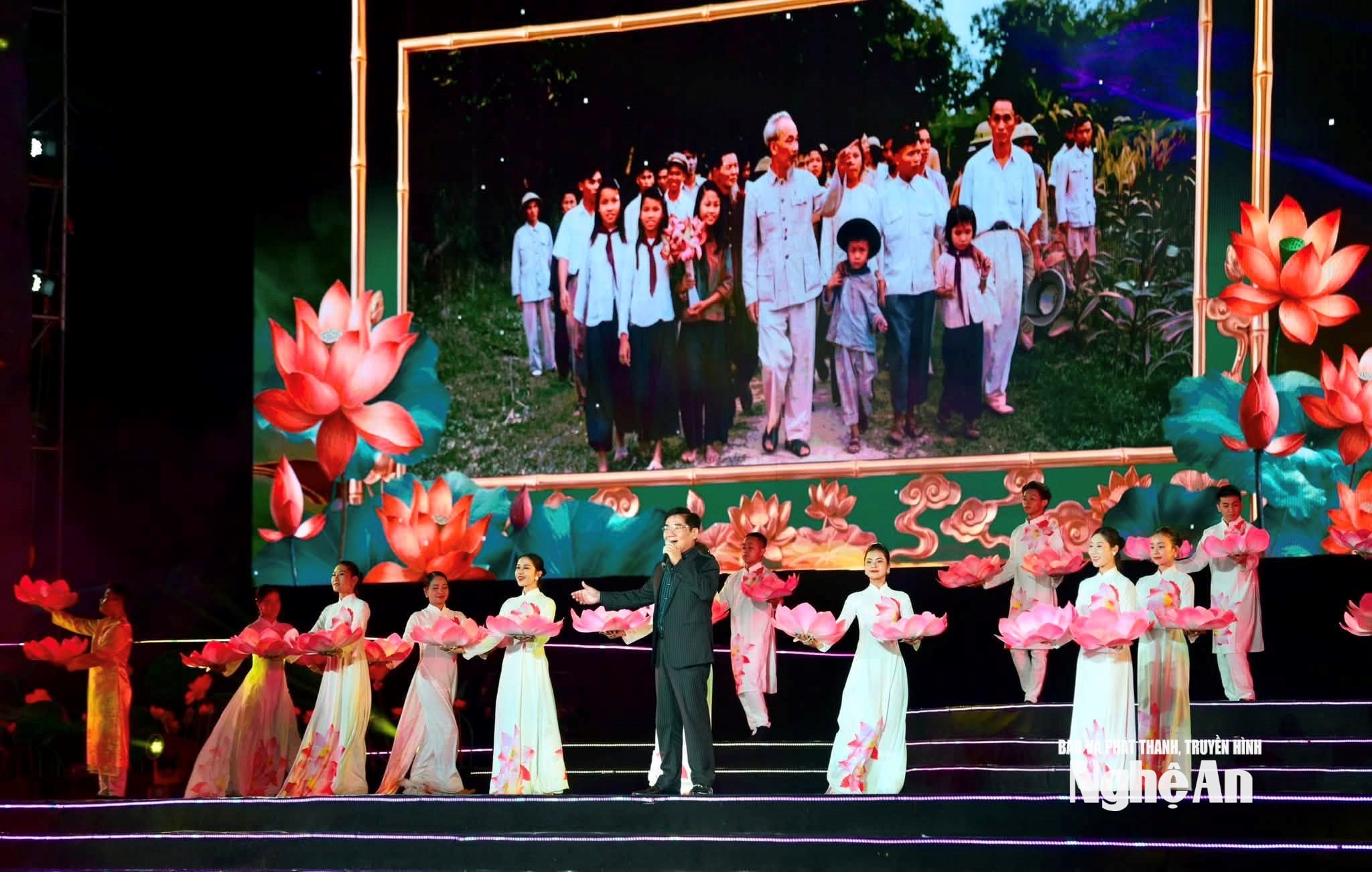
From that starting point, his journey expanded southward, towards the Đồng Tháp Mười region and the changes taking place in his homeland today. Therefore, "The Soul of the Vietnamese Lotus" not only highlights the essence of the Ví and Giặm folk songs but also creates an intermingling between the heritage of Nghệ An province and the Vọng Cổ melodies of the South.
According to People's Artist Nguyen An Ninh, the success of the program lies not only in the selection of songs or the staging but also in the rhythm and emotional tempo throughout the entire performance. Choosing which scenes and songs to perform to connect with the homeland and evoke emotion in the audience is a significant challenge for the creative team. Working with artists from Ho Chi Minh City – who possess extensive experience and modern musical thinking – has given him many memorable experiences.
“The most valuable legacy that ‘The Soul of Vietnamese Lotus’ leaves behind is the opening up of new cultural spaces in the homeland of Lang Sen. It is the intersection of many heritage regions, a deeply emotional encounter between the people of Nghe An and the people of Dong Thap Muoi right in the homeland of President Ho Chi Minh.”
People's Artist An Ninh
"The Soul of the Vietnamese Lotus" is therefore not just an artistic program of the Lotus Village Festival. It is also a special emotional touchpoint, where tradition and modernity meet, where the story of President Ho Chi Minh is told through music, culture, and the sincere feelings of the Vietnamese people towards their homeland.