

Teachers in Nghe An province commented that the 10th-grade exam was appropriate, but the English section was somewhat unfair to outstanding students.
Today, candidates taking the 10th grade entrance exam completed the Literature and English exams. According to many teachers, this year's exam questions were of moderate difficulty and suitable for a wide range of students. The English exam, in particular, was considered easier than in previous years.
The Literature exam questions closely matched the review material.
Having taught Literature for many years at Nghi Lam Secondary School (Phuc Loc commune), teacher Hoang Thi Nga commented that the Literature exam questions...10th gradeThis year's exam in Nghe An closely follows the structure and review guidelines of the Department of Education and Training. However, the exam still has a degree of openness and a clear differentiation in difficulty levels.
According to her, the noteworthy aspect of the exam is that it requires students to integrate historical and social knowledge with literary appreciation and argumentation skills, instead of just memorizing information from textbooks.

Analyzing each question, Ms. Nga noted that, right from the reading comprehension section, many students might feel intimidated when encountering historical issues such as the Dien Bien Phu Campaign. For students with vague social knowledge, the exam might feel more like a history test than a Literature exam. However, upon calm analysis, this type of question is still within the core scope of review and not entirely unfamiliar, as students have regularly encountered this content in their curriculum and in real life.
Regarding the differentiation of the exam questions, it is quite clear in the students' ability to synthesize and apply their knowledge. Students with a solid foundation in the subject matter will easily identify the requirements of the question, correctly recognize the lyrical persona, and know how to select and exploit appropriate historical details. Meanwhile, students with less solid knowledge are prone to rambling, confusing timelines, or providing inaccurate information when trying to write in-depth.
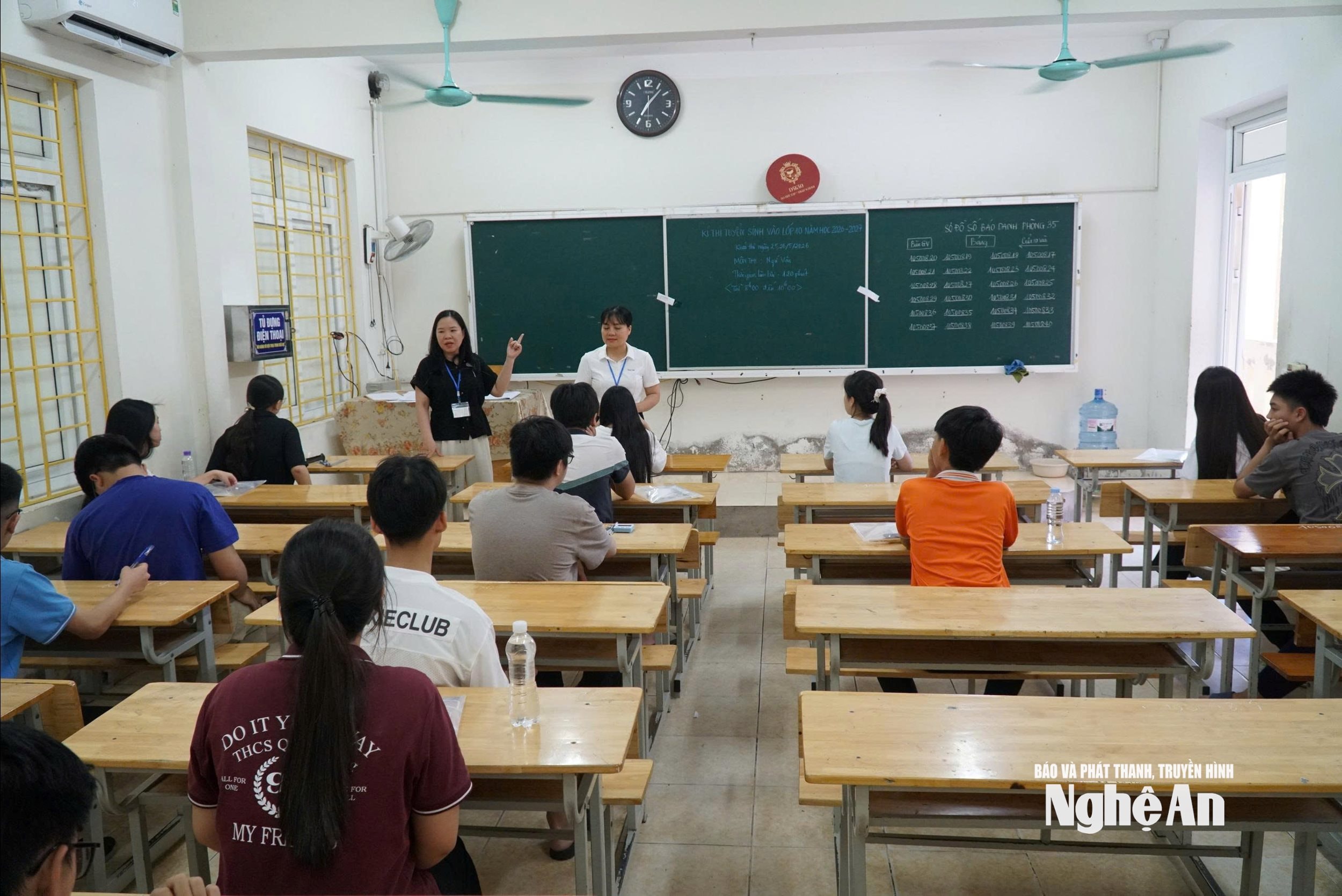
In particular, the social commentary section, which requires students to propose solutions for spreading historical values, is considered a clearly differentiating question. Therefore, students with life experience, social understanding, or good access to information often have an advantage when handling this type of question. However, given the characteristics of many rural areas, achieving a score of 9 or higher is not easy because students need not only knowledge but also critical thinking, the ability to relate to practical situations, and clear personal opinions.
She also noted that this year's exam avoided the "similarity" of answers seen in previous exams. By requiring students to address core historical values and the responsibilities of the younger generation, the examiners were able to more easily identify students with deep thinking and the potential for breakthroughs.
The English exam was manageable, but it was a disadvantage for excellent students.
Commenting on the English exam, teacher Ho Thi Ngoc Diep from Vinh Tan Secondary School (Truong Vinh Ward) said that the exam followed the structure of the previously released sample exam from the Department of Education and Training, with 40 multiple-choice questions in 60 minutes. In terms of difficulty, the exam was very suitable for students; the general knowledge and grammar sections were all within the school curriculum and had been thoroughly reviewed by their teachers.
.jpg)
However, that doesn't mean the exam is easy; there are still some challenging questions, including 4-5 highly challenging ones. For example, there's a question in the reading passage that requires students to reason and think critically to find the correct answer, as it's not readily available in the text. Or question 29, which asks students to rewrite a passive sentence. Normally, students only know the basic form of the passive voice, but this is a special type of question, requiring students to have a deep understanding and solid grasp of grammar to correctly identify it. "With this exam, students with above-average academic results at school who work carefully have a good chance of scoring 7-8 points. Even excellent students can easily achieve 9-10 points," Ms. Diep added.
Commenting on the exam, Ms. Ho Thi Ngoc Diep also said that the questions were quite interesting with many examples relevant to real life. In particular, the examples in the reading comprehension section, the first reading passage, discussed young people and screen time. This topic is very relevant to the current context, where digital technology is developing and students are exposed to phones, computers, and electronic screens a lot. The reading passage closely reflected real life and addressed issues that are familiar to students today.
The second reading is about tourism, and the material relates to Vietnam. This not only helps students understand their country better but also contributes to fostering patriotism and a sense of pride in national values.

In addition, the exam also included content related to an English public speaking competition, which is appropriate and relevant to developing students' communication and speaking skills. "Overall, I find the content of the reading passages quite well aligned with the direction of the 2018 General Education Program. The topics are all topical, closely reflecting reality in the digital age, and help students broaden their understanding of society and the country, while also enhancing their awareness and sense of responsibility towards the nation," Ms. Diep commented.
Overall, according to Ms. Diep, with this year's exam, the average student in rural areas, far from urban centers, and with limited access to extra English classes, can still do well and potentially score 5-6 points. This is because the questions all focus on basic grammar knowledge, and the vocabulary is within the students' capabilities.
For students with above-average grades, she assessed this year's English exam as "easy," with good differentiation among students. However, the line between good and excellent levels is quite blurry, and she predicts many perfect scores: "There will be disadvantages for excellent students, those with foreign language certificates of 7.0 or higher, because the differentiating questions are not really difficult, allowing them to showcase their abilities to the fullest," Ms. Diep said.