

Nghe An's rattan and bamboo weaving industry reaches European market thanks to green consumer trends.
The green consumer trend in European countries is opening up new opportunities for the rattan and bamboo weaving craft in Nghe An. Many handcrafted products such as lanterns, table lamps, gift boxes, and eco-friendly decor items are favored by international customers, contributing to the recovery of production in craft villages and the expansion of export markets.
Export orders are increasing thanks to the green living trend.
In recent years, rattan and bamboo products from Nghe An have received positive feedback in many markets such as France, the Netherlands, Germany, Japan, and South Korea.
Among these, items such as handcrafted lanterns, table lamps, packaging boxes, gift sets, and home decor are favored by European customers due to their use of natural materials, minimalist designs, and alignment with the green living trend.
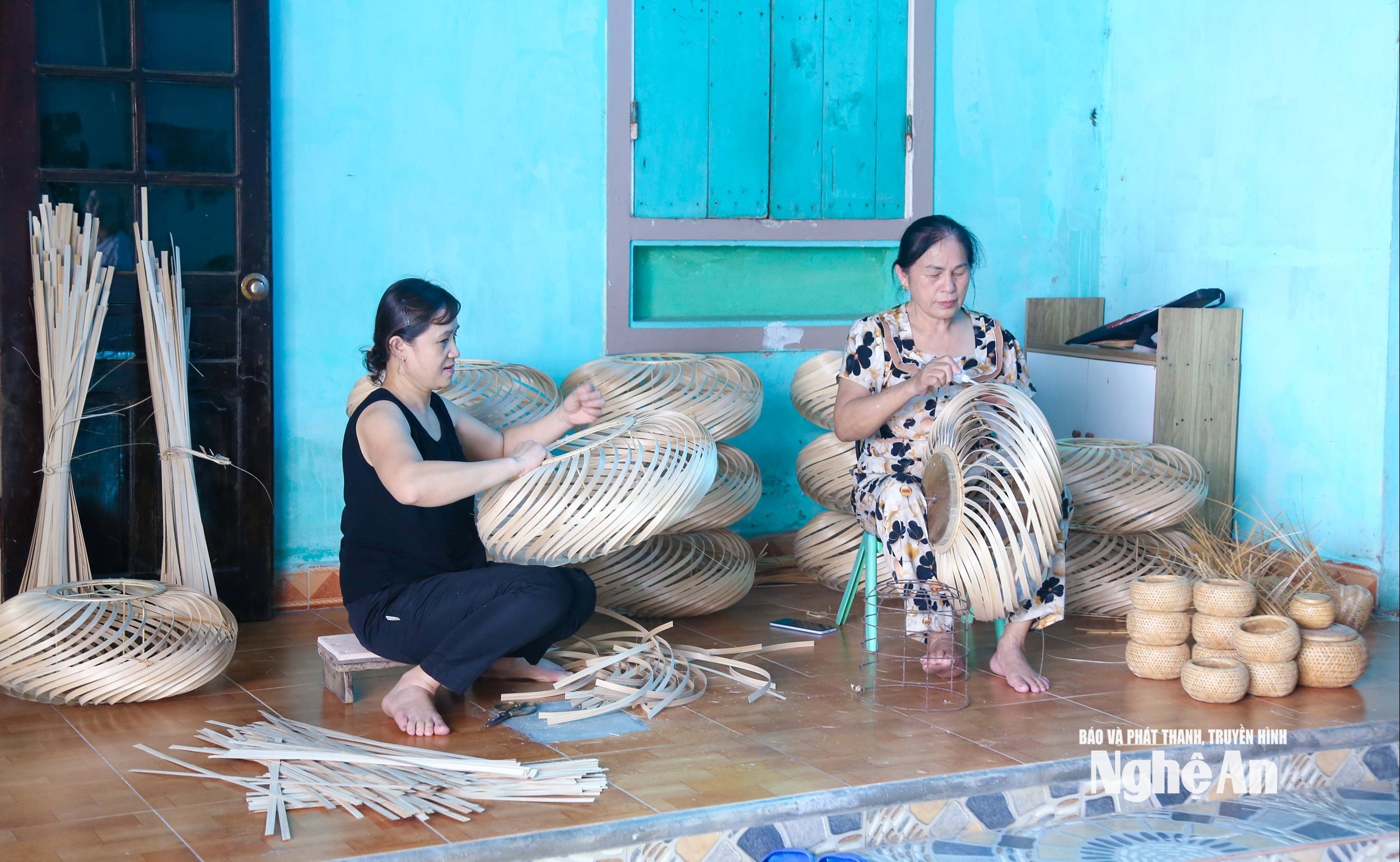
According to manufacturers, the majority of orders are currently secured through trade promotion activities, negotiations at international trade fairs, and the network of affiliated businesses in Hanoi and Ho Chi Minh City. Recently, exports have increased quite strongly, especially for decorative items and handcrafted gifts.
According to statistics, Nghe An province currently has about 200 craft villages, of which more than 40 are rattan and bamboo weaving villages.
Mr. Thai Dai Phong, owner of a rattan and bamboo product purchasing facility in Vinh Phu ward, said that the largest markets currently remain Japan and Europe. In particular, products using natural colors and minimalist designs are especially popular with customers.
"Foreign customers are now very interested in environmentally friendly products with a cultural story behind them. Therefore, in addition to product quality, we also focus on building our brand and promoting the handcrafted production process of the people of Nghe An," Mr. Phong shared.
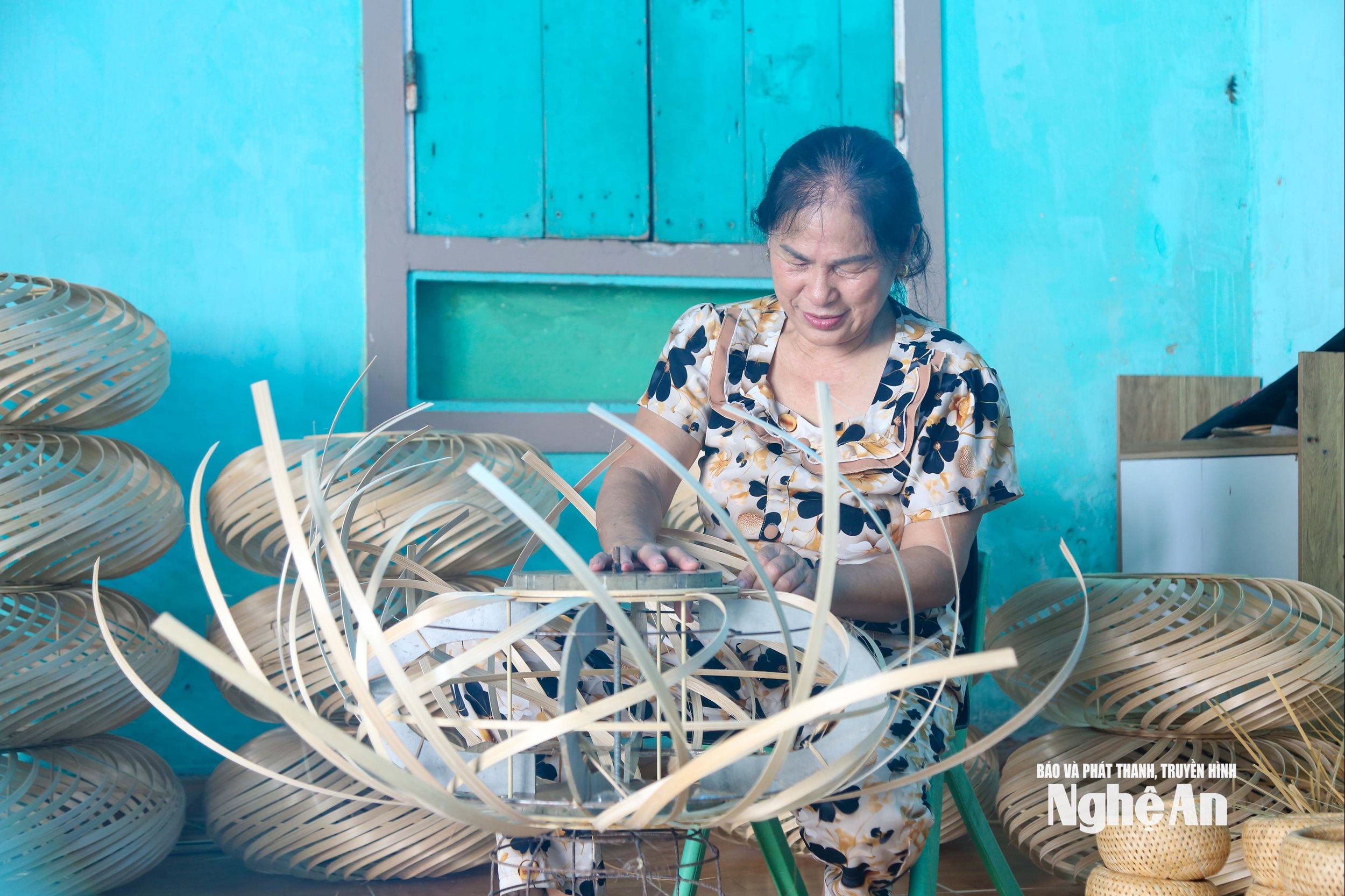
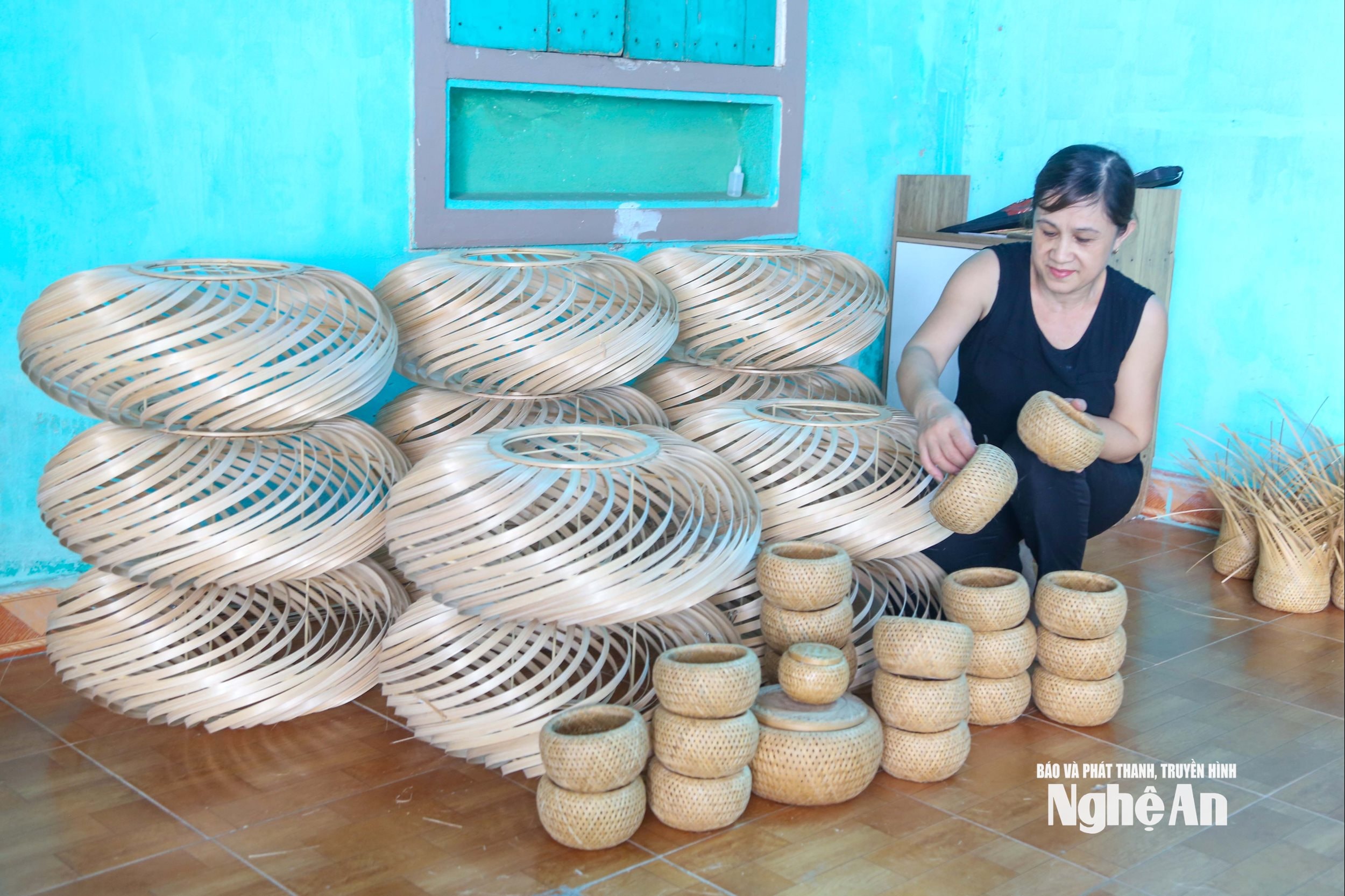
Currently, many rattan and bamboo weaving establishments in Nghe An no longer operate on a small scale but have shifted to chain-linked production with purchasing businesses. Businesses proactively supply raw materials, provide design guidance, and then entrust the processing to local people at home. After completion, the products are purchased, packaged, and exported for consumption.
Popular items include rattan baskets, bamboo trays, handcrafted tables and chairs, decorative lamps, sieves, bamboo trays, and many eco-friendly decor products. Many products have now been recognized with OCOP (One Commune One Product) ratings from 3 to 5 stars, contributing to enhancing the brand value of the craft village.
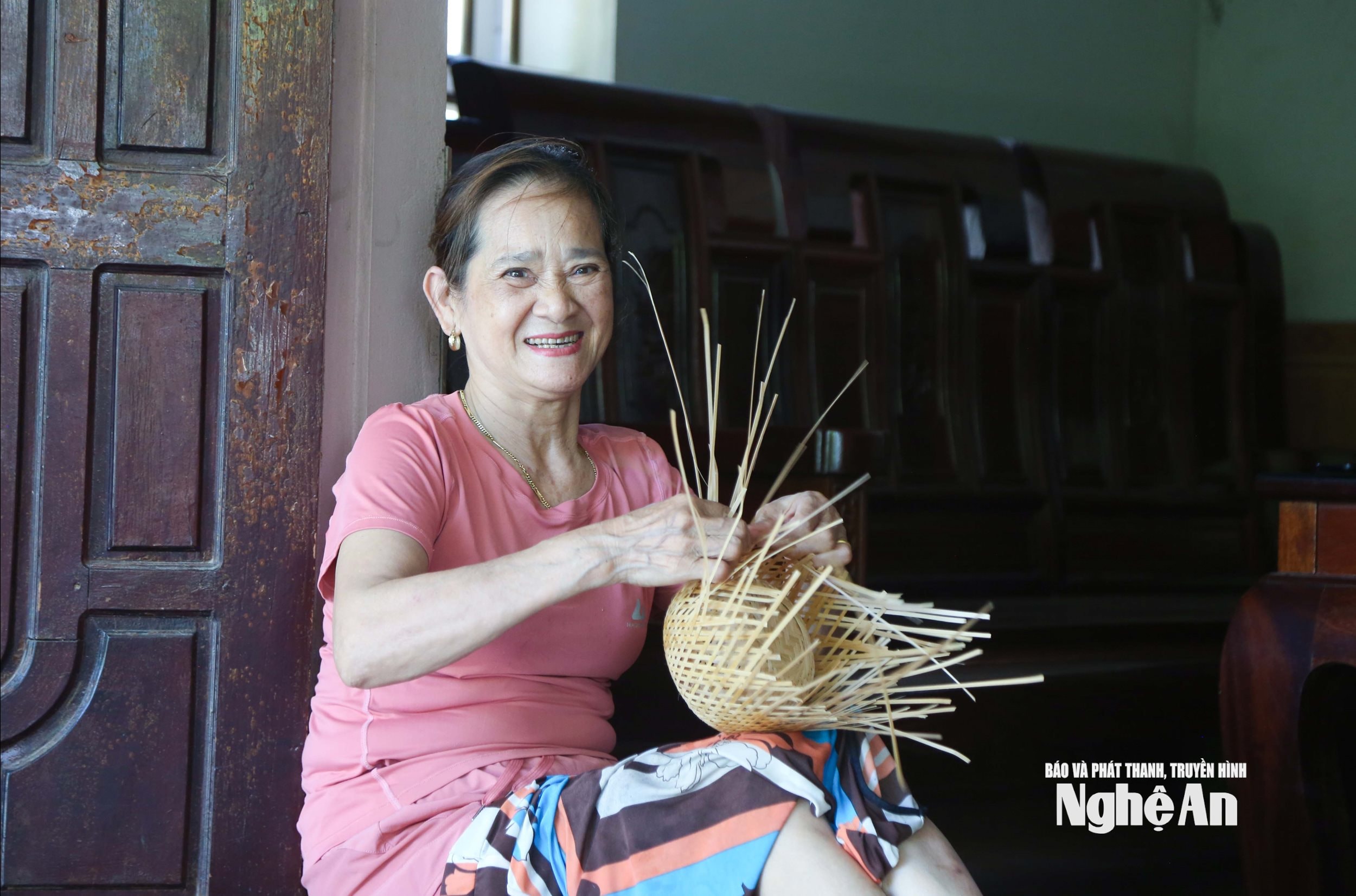
Having been involved in the craft for over 40 years, Ms. Nguyen Thi Oanh from Vinh Loc ward said that the rattan and bamboo weaving craft once flourished, with almost every family participating in production. However, over time, the number of workers in the craft has gradually decreased as many young people choose other jobs.
"Nowadays, fewer young people are pursuing this profession than before, but thanks to stable export orders, those who are still working in the trade have a steady income," Ms. Oanh said.
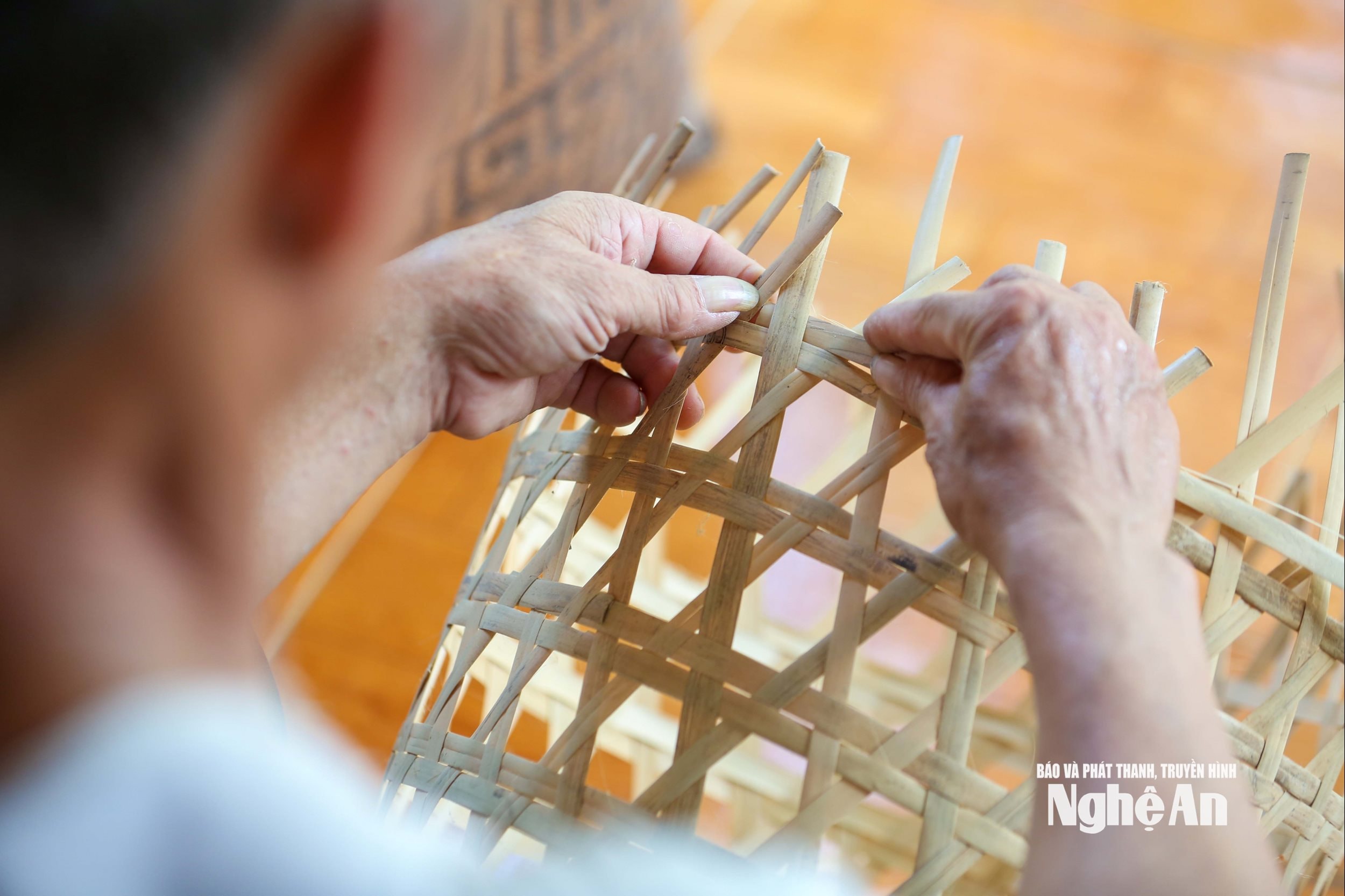
Ms. Nguyen Thi Lan, from Block 10, Vinh Loc Ward, said that her group currently has more than 15 workers regularly participating in weaving. Each day, depending on the type of product, each person can complete about 8 to 10 small products.
Preserving traditional crafts amidst labor shortages.
Not only thriving in the plains, the rattan and bamboo weaving craft is also present in the lives of the people in western Nghe An province. Diem village, Chau Khe commune, located near the Vietnam-Laos border, still preserves the traditional weaving craft of the Thai ethnic group.
The entire village has over 150 households, many families utilize natural resources from the forest to make household items and handicrafts to sell in the market.
However, like many other traditional craft villages, the weaving craft in Diem village once faced difficulties due to slow product sales and low income. Many young workers left their hometowns to work elsewhere, putting the traditional craft at risk of disappearing.
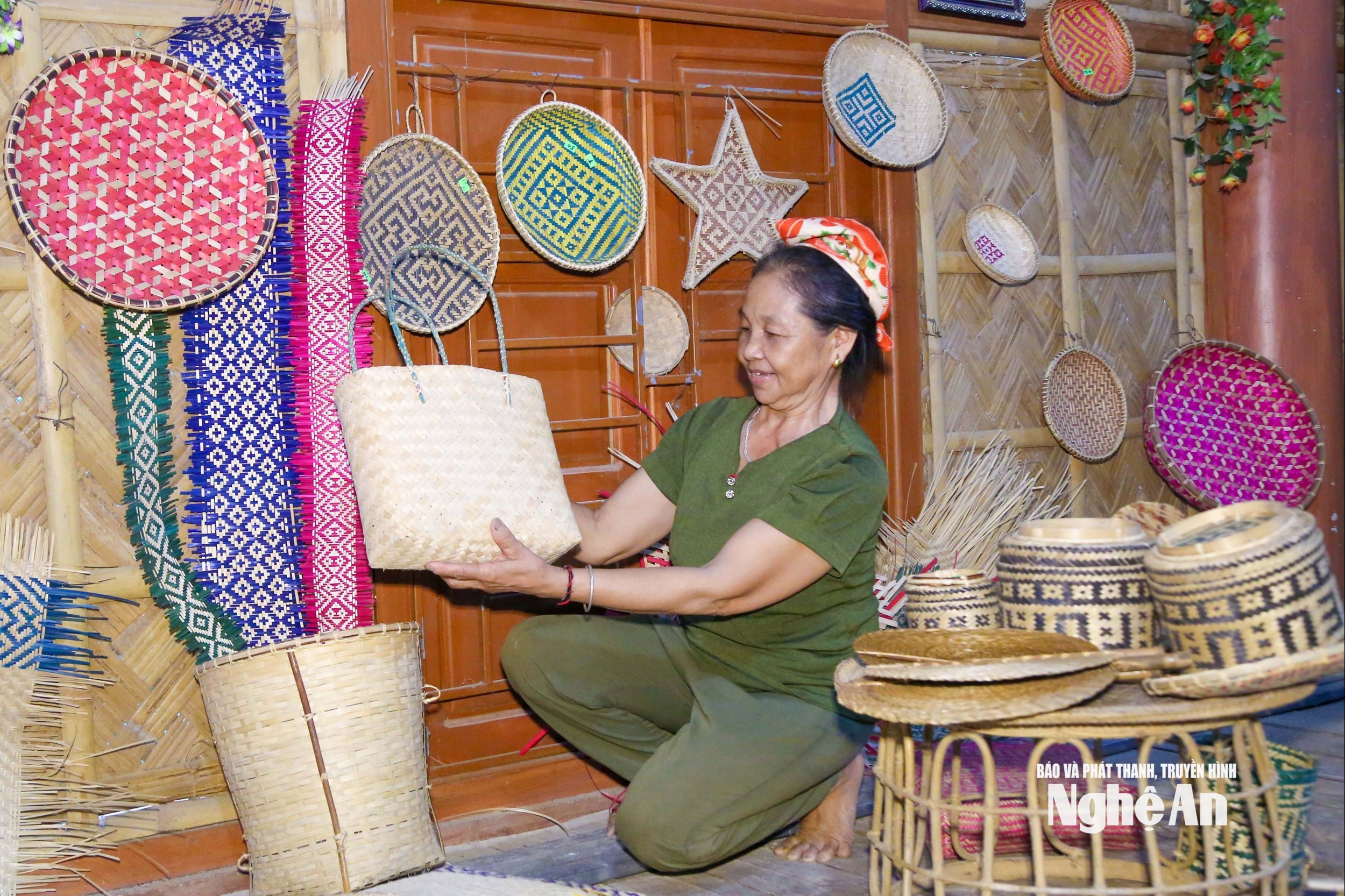
In 2016, Ms. Lang Thi Hoa and other households established the Diem Village Bamboo and Rattan Weaving Cooperative to revive the traditional craft and organize production in a more systematic way. To date, the cooperative maintains about 20 regular members, specializing in the production of bamboo chairs, trays, baskets, bags, and many other handcrafted products for export.
The unique feature of Ban Diem products lies in their natural dyeing techniques and patterns that reflect the distinct identity of the Thai ethnic group. The locals use forest plants, brown roots, turmeric, and many other natural ingredients to color each bamboo and rattan fiber before weaving.
.jpg)
According to Mr. Vy Hung Thien, a resident of Diem village, to complete a large product such as a rattan table or chair, a craftsman needs 3 to 5 days with many steps from selecting raw materials, processing, bending the frame to weaving and finishing.
"Handmade products take a lot of time to make, but they have a unique quality that mass-produced goods find difficult to replicate," Mr. Thien shared.
Thanks to the use of natural materials and dyes derived from forest plants, Diem village's products have rustic colors, are close to nature, and align with the green consumption trend. Many patterns on the products are also inspired by motifs on the traditional clothing of the Thai ethnic group, creating a unique mark for the handicrafts of western Nghe An province.
Mr. Kha Van Thuong, Vice Chairman of the Chau Khe Commune People's Committee, said that the locality is developing a plan to support the maintenance and development of the rattan and bamboo weaving craft in Diem village in a more systematic way, while coordinating with trade promotion units to find stable markets for the products, contributing to preserving the traditional craft and developing the local economy.
According to many production facilities, for the rattan and bamboo weaving craft to develop sustainably, it needs more policies to support vocational training, design, brand building, raw material development, and connections with export businesses.
Promoting products through digital channels and linking them with community tourism and local culture are also considered important directions to enhance the value of Nghe An's handicrafts in the future.