

The government, the Prime Minister, and members of the government are open and transparent in their operations.
On behalf of the Government, Prime Minister Le Minh Hung has just signed Decree 191/2026 promulgating the working regulations of the Government.
Accordingly, the decree states that the Government makes decisions based on the majority principle on matters within its authority. The Government also emphasizes individual responsibility and exemplary conduct of Government members and heads of ministries and ministerial-level agencies. Each task is assigned to only one lead agency, which is primarily responsible, with relevant agencies coordinating its implementation.
According to the regulations, the Government implements assignment, decentralization, and delegation of authority in accordance with the law, coupled with individualization of responsibility, strengthening inspection, supervision, and control of power; ensuring centralized leadership and unified management by the Government.
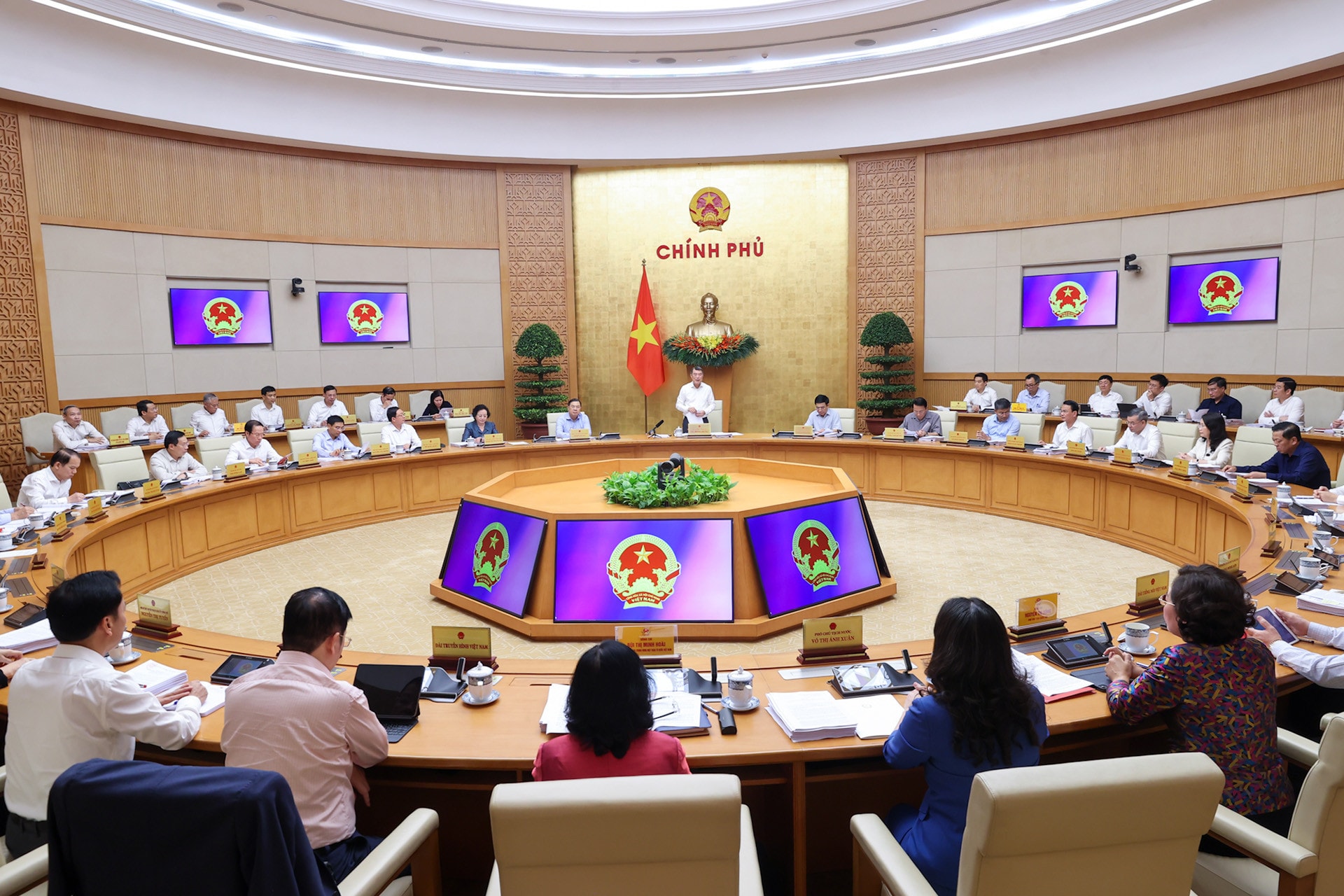
The regulations clearly state the principles of ensuring openness, transparency, and accountability in the organization and operation of the Government, ministries, ministerial-level agencies, and localities in accordance with the law; creating conditions for citizens, businesses, and social organizations to participate in, monitor, and contribute to the development and implementation of policies and laws.
Furthermore, the government encourages and protects officials who dare to think, dare to act, dare to advise, dare to take responsibility, and propose new and complex issues for the common good...
The government uniformly manages the national administration. The government decides on matters within its authority through one or both of the following methods: discussion and decision-making at government meetings; or decision-making by ballot among government members or other written forms.
Government decisions must be approved by more than half of the total number of Government members. In case of a tie vote, the decision voted on by the Prime Minister shall be implemented.
The Government assigns the Prime Minister or the Deputy Prime Minister in charge of the relevant field to consider and decide on urgent issues requiring immediate attention within the Government's authority, on behalf of the Government. The Prime Minister, Deputy Prime Minister, or Minister/Head of a ministerial-level agency assigned to the task shall report on the decisions made at the next Government meeting.
The Government and the Prime Minister shall implement decentralization and delegation of authority in accordance with the law, ensuring compliance with the principle of defining authority while ensuring its implementation, accountability, and the inspection, supervision, and control of power as prescribed by law.
The regulations outline nine specific issues for the Government to discuss and decide upon.
Openness, transparency, information provision, and accountability.
The Government, the Prime Minister, the Deputy Prime Ministers, and members of the Government shall ensure openness and transparency in their operations; they are responsible for providing complete and timely information on policies, decisions, and the results of their direction and management as prescribed by law.
Information disclosure and provision are primarily carried out through mass media, electronic portals, digital platforms, and interconnected information systems, ensuring convenient access, exploitation, and use of information for citizens and businesses.
The Government, the Prime Minister, the Deputy Prime Ministers, and members of the Government shall proactively receive, process, and respond to opinions and suggestions from citizens, businesses, and society in accordance with regulations.
The Minister and Head of the Government Office is the spokesperson for the Government; presides over the provision of information on Government activities, organizes press conferences, and implements other forms of information dissemination as prescribed.
Ministries, agencies, and localities are responsible for coordinating, providing timely and accurate information, appointing leaders from their respective ministries and agencies to attend press conferences, directly answering questions, and being responsible for providing timely information on matters within their areas of expertise.
Ministers, heads of ministerial-level agencies, and chairpersons of provincial People's Committees are directly responsible for directing the serious, full, and timely implementation of the regulations in this document, administrative discipline and order, and resolutions, decisions, and directives of the Government, the Prime Minister, and Deputy Prime Ministers, and are prohibited from making statements or acting contrary to these resolutions, decisions, and directives.
In cases of differing opinions, compliance is still required, but these opinions may be presented to the level of authority that issued the resolution, decision, or directive, and may be reserved. Depending on the nature, extent, and consequences of failing to comply with the above regulations, the Minister, Head of the ministerial-level agency, or Chairman of the Provincial People's Committee shall be responsible for self-criticism and self-criticism, and shall submit a report explaining the situation to the Prime Minister.
Ministers, heads of ministerial-level agencies, and chairpersons of provincial People's Committees are directly responsible for directing the review and handling of cases of non-compliance with the regulations in this document by relevant units and individuals, and publicly disclosing the results of the handling on the Government's e-portal and the e-portals of ministries, agencies, and localities.