

The US is spending $2.2 billion to develop the new E-4C "doomsday" aircraft.
The Pentagon is proposing a $2.2 billion budget for fiscal year 2027 to develop the E-4C airborne command center, replacing the older E-4B aircraft to ensure nuclear command capabilities.
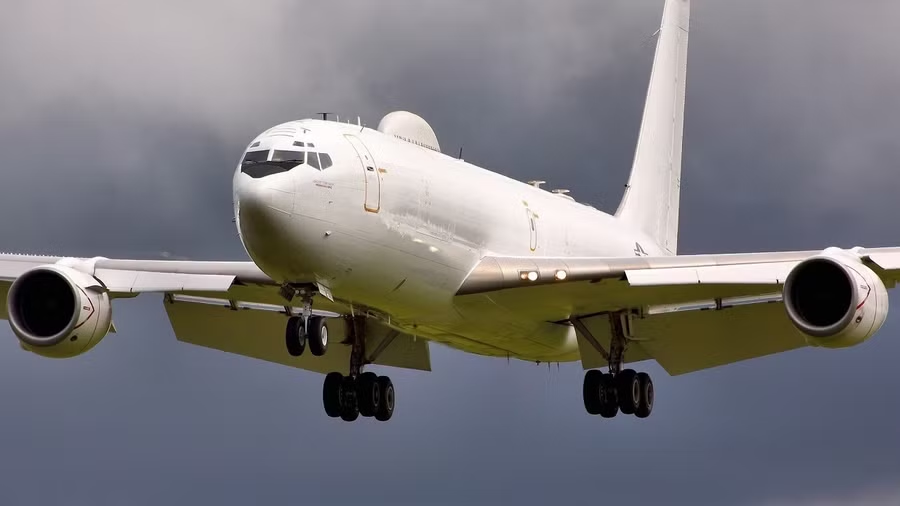
The U.S. Department of Defense has just proposed a $2.2 billion budget for fiscal year 2027 to accelerate the development of the next-generation "doomsday" aircraft, codenamed E-4C. This is a strategic move to replace the outdated E-4B Nightwatch fleet, ensuring the ability to maintain communication and command in a nuclear war scenario or a national emergency.
Upgrading nuclear command and control capabilities and countering electromagnetic pulses.
According to budget documents from the US Air Force obtained by RIA Novosti, the funding required for 2027 has increased by 23.2% compared to the current period. This increase is attributed to a significant expansion of engineering work and field testing procedures to meet the latest military security standards.
Similar to other U.S. special operations vehicles, the E-4C is designed for extreme resistance to nuclear explosions and electromagnetic pulses (EMPs). This vehicle serves as a mobile command center, allowing the U.S. President, Secretary of Defense, and key officials to direct the military in the event that ground-based command centers are destroyed or disabled.

Development partners and strategic roadmap
Sierra Nevada Corporation has been selected by the Pentagon as the prime contractor to develop the E-4C airborne command center. According to the planned timeline, the core engineering design phase will be completed by 2031, paving the way for actual manufacturing.
Besides the US, other military powers are also actively modernizing their airborne command centers to maintain strategic advantage. Russia is currently developing a new presidential command aircraft based on the next-generation Il-96-400M platform. Additionally, the US Air Force One (VC-25B) fleet is undergoing upgrades and is expected to be ready for service after 2028.