

Expectations are raised to resolve practical bottlenecks.
From rice paddies and farms to fishing trips at sea, farmers in Nghe An are placing high hopes on the 2026 Conference of the Chairman of the Provincial People's Committee to meet and dialogue with farmers. What they desire is not only solutions to immediate difficulties but also strong mechanisms and policies to create momentum for sustainable production development in the new phase.
Duy Nam(Take note) /Present:Hong ToaiJune 12, 2026
*****
Rising input costs, uncertain output for many agricultural products, and a lack of linkages in production, coupled with the fact that many support mechanisms have not met practical requirements, have created a favorable environment for farmers in Nghe An to hope that the 2026 Conference of the Chairman of the Provincial People's Committee to meet and dialogue with farmers will become a forum where difficulties and obstacles from the grassroots level are heard and resolved, thereby creating further impetus for agricultural and rural development.

As someone who has been involved with the local main crop for many years, I am very excited that the province has a policy of developing pineapple raw material areas linked to the high-tech fruit processing plant of Dong Giao Export Food Joint Stock Company. This is an opportunity for farmers in western Nghe An to expand commodity production, increase income, and gradually form a concentrated raw material area.
However, what concerns farmers most right now is the sustainability of the link between businesses and producers. Pineapple cultivation requires significant investment and a long cultivation period, so unstable output or fluctuating purchase prices will directly affect production efficiency.
We hope the province will continue to implement concrete solutions to ensure the rights of all parties are protected when the market fluctuates; and at the same time, build a mechanism to monitor and protect the rights of all parties when the market changes. In addition, there is a need for more policies to support access to preferential capital so that people can confidently invest in expanding their cultivated area. When the market is guaranteed and there is support from all levels and sectors, farmers will feel secure in their production, contributing to the sustainable development of the pineapple raw material area.
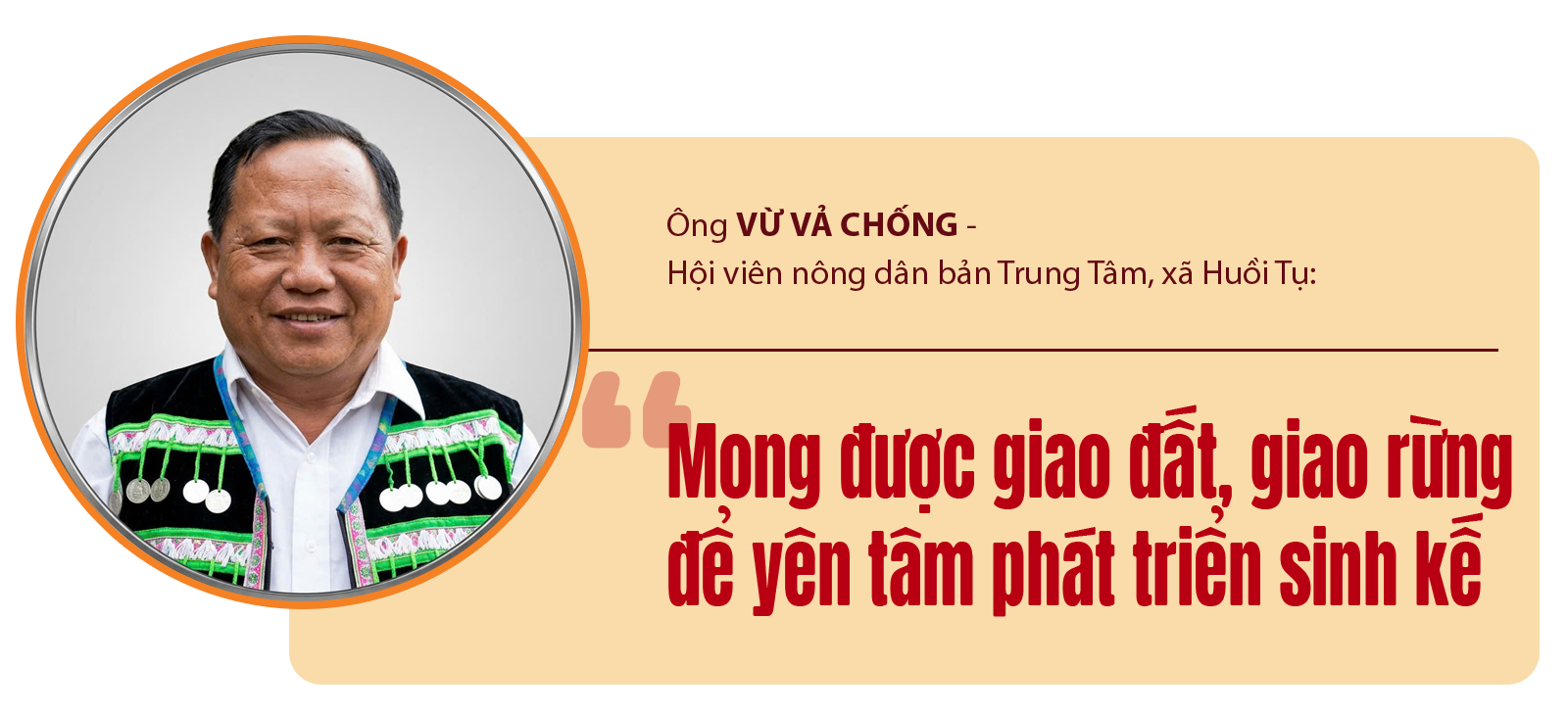
For us people in the highlands, forests are not only a resource but also a vital source of livelihood linked to our daily lives. Over the years, many households have actively participated in forest protection, reforestation, and gradually developing the economy under the forest canopy. However, there are still areas of forest land that have not been allocated to the people for stable management and use, thus failing to fully realize their potential.
What I hope for at this dialogue conference is that the province continues to pay attention to and accelerate the process of allocating land and forests for areas currently under local management but without specific users. When legally allocated land and forests, people will have more motivation to invest in the development of forestry economics, and at the same time enhance their responsibility in forest protection.
Furthermore, people in mountainous areas also hope for better access to policies supporting the planting of large timber forests and native trees with high economic value; technical support, quality seedlings, and models for linking the consumption of forestry products. In particular, more attention needs to be paid to households that have been and are participating in forest protection so that they truly benefit from government policies. We believe that when people become the true stakeholders of the forest, forest management, protection, and development will be more effective, and will create more sustainable livelihoods for people in mountainous areas.
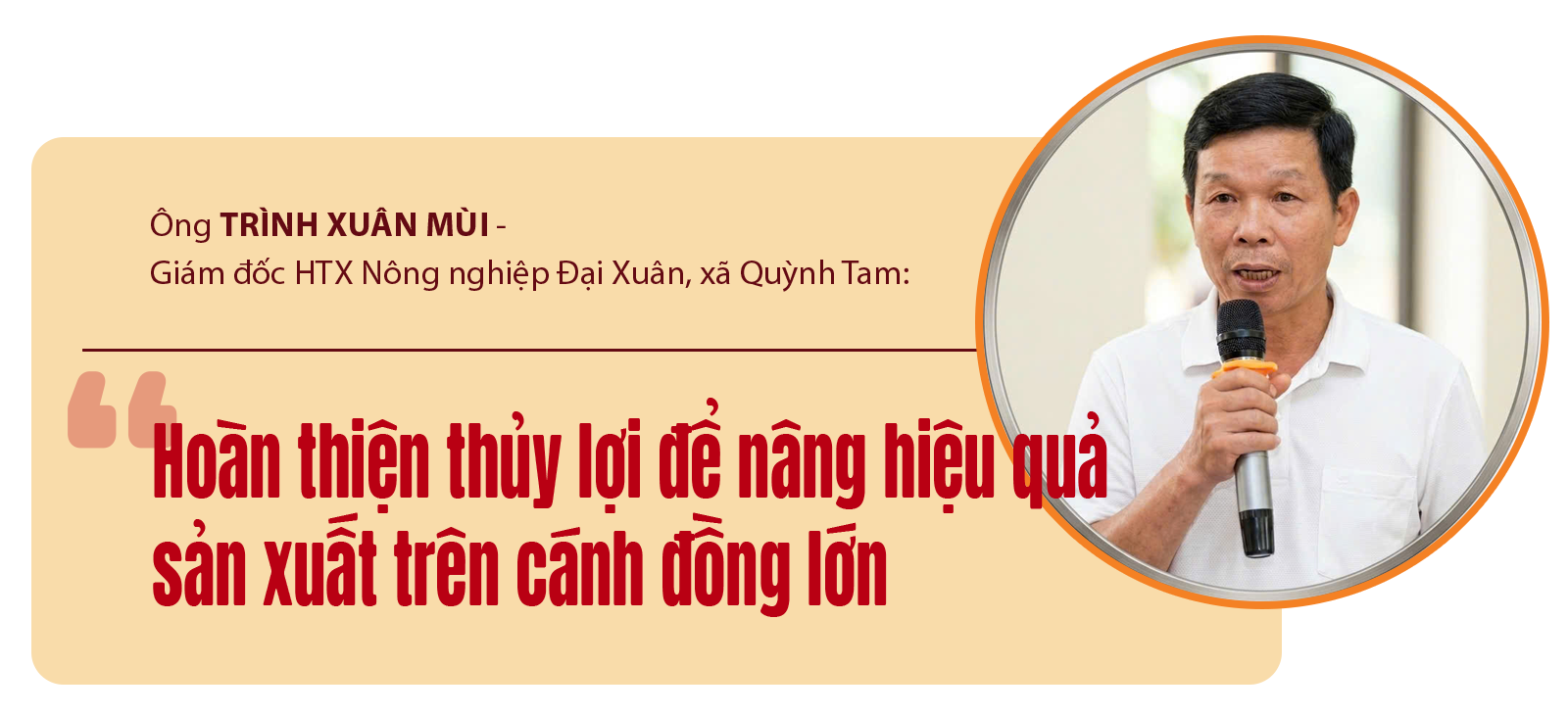
For agricultural production, especially in concentrated production areas, irrigation systems play a particularly important role. In recent years, many canals, reservoirs, and dams in the area have deteriorated, significantly affecting water regulation for production, especially during extreme weather conditions and prolonged heatwaves. Based on the practical experience of the cooperative, I hope the province will continue to pay attention to investing in upgrading the on-farm irrigation system, especially the canals serving concentrated commodity production areas. This is not only a solution to ensure irrigation water but also contributes to improving land use efficiency and reducing production costs for farmers.
Besides irrigation infrastructure, cooperatives also hope to be given access to resources to invest in synchronized mechanization, apply technology to production management, and organize linkages for agricultural product consumption. Once the infrastructure is improved, cooperatives will be better able to play their role in organizing production and linking farmers with businesses.
I expect that through this dialogue, the recommendations from the grassroots regarding irrigation and infrastructure serving production will continue to be addressed by the province, creating a foundation for developing modern agriculture, adapting to climate change, and increasing people's income.

For us fishermen, every fishing trip is fraught with risks from weather and natural disasters. Therefore, having a safe anchorage to shelter from storms has been a long-awaited desire of our community for many years.
Currently, the number of fishing vessels operating in the area is increasing, but the system of fishing ports and mooring areas still does not meet the actual needs. Whenever there is a tropical depression or strong storm, finding a safe place for fishing vessels to moor becomes quite difficult.
We highly expect the province to continue paying attention and promptly implement investment to upgrade the storm shelter and fishing port in the Lach Corn area. This is not only a project serving production but also contributes to ensuring the safety of lives and property of thousands of coastal fishermen.
Besides improving fishing infrastructure, local people also hope for more support in applying technology to fisheries, investing in drying machines, preserving products after harvest, and connecting with markets. With favorable production conditions, fishermen will have more motivation to venture out to sea, contributing to the development of the marine economy and protecting the sovereignty of the nation's maritime territories.
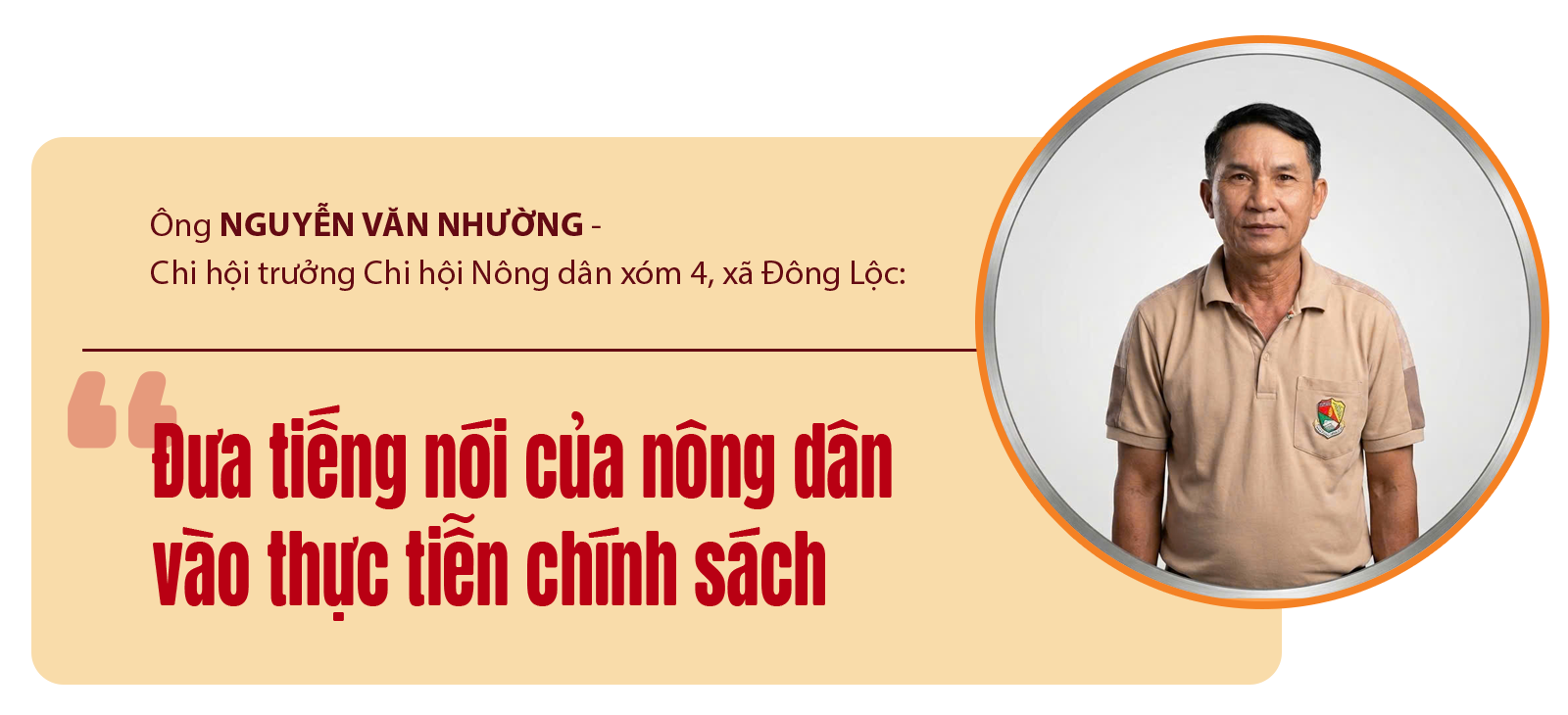
As someone who regularly interacts with members at the grassroots level, I've noticed that farmers are very interested in direct dialogues between provincial leaders and farmers. This is an important forum for difficulties and obstacles arising from production practices to be fully and promptly reflected.
What the people want is not only to be heard, but also for their suggestions made during the dialogue to be addressed promptly with concrete solutions. Currently, many members are interested in issues such as digital transformation in agriculture, vocational training, support for production capital, development of the collective economy, and entrepreneurship in rural areas.
I expect this year's conference to continue to have many practical contents that are closely aligned with the needs of people at the grassroots level. At the same time, I hope that departments and agencies will make clear commitments regarding the roadmap for resolving requests so that people can monitor and supervise. The Farmers' Association at all levels also hopes to continue receiving the province's attention in improving the capacity of its officials, supporting the development of effective economic models, and promoting the role of the Association in accompanying farmers in developing production.
When voices from the grassroots are heard and translated into concrete policies, farmers' trust in agricultural and rural development initiatives will be further strengthened and spread.