

Providing capital and removing market bottlenecks for cooperatives and craft villages in Nghe An.
Addressing the challenges of capital shortages, lack of technical expertise, and market risks for craft villages and cooperatives has always been a major concern in rural economic development. From the story of restoring mulberry fields and upgrading products by the Dang Son Mulberry Cooperative, the Nghe An Provincial Farmers' Support Fund has been affirming its pivotal role in accompanying and guiding farmers to proactively change processes and enhance the value of the production chain.
Opening new avenues for old professions.
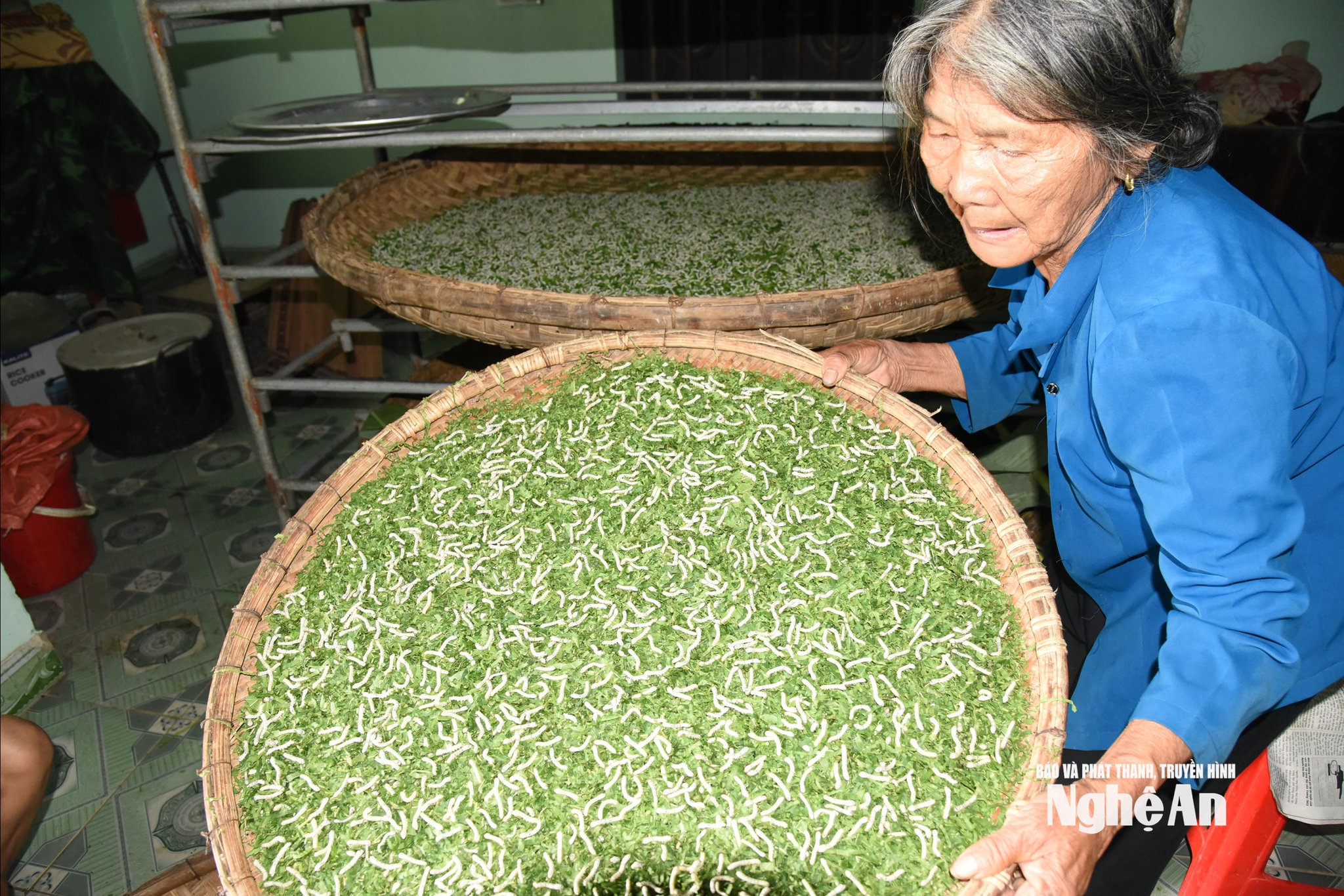
In the small house of Mrs. Nguyen Thi Hoa in Hamlet 3, Dang Son, Do Luong Commune, she dedicates more than half of the space to silkworm trays. Mrs. Hoa is 75 years old and has been raising silkworms for over 50 years. Before her, her parents and grandparents also followed this profession their entire lives. Mrs. Hoa says that raising silkworms is like raising a newborn baby; you have to feed them at the right time and in the right way.
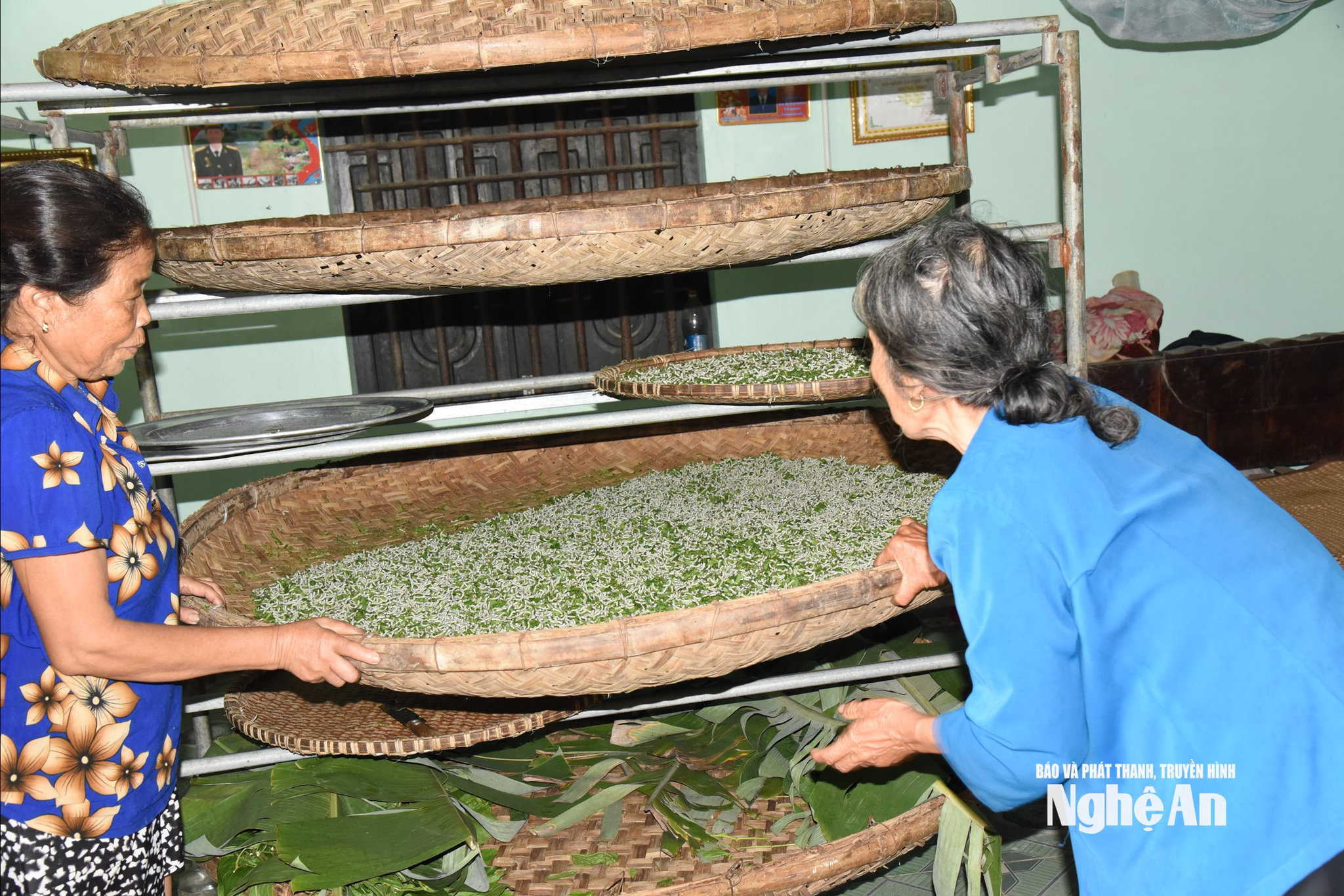
Every small change must be closely monitored to ensure the silkworms develop properly and produce high-quality cocoons and silk. Whenever the weather changes, people have to find ways to maintain a stable temperature for the silkworm trays to prevent the animals from suffering from thermal shock and disease. For Ms. Nguyen Thi Hoa, Ms. Mai Thi Lien, Ms. Mai Thi Loan, and others, raising silkworms is an art that demands utmost meticulousness: silkworms need to eat young mulberry leaves for beauty. The harvested mulberry leaves must be spread out to dry completely; silkworms must absolutely not eat wet leaves as this will cause disease; and they must be fed every two hours, eight times a day and night.
Besides raising silkworms, Mr. Hoa and other elderly people in the village still preserve the traditional craft of weaving bamboo baskets. These skillfully hand-woven bamboo baskets can last for 20 years. A beautiful bamboo basket still fetches around 300,000 VND today, a testament to the value of this long-standing craft.
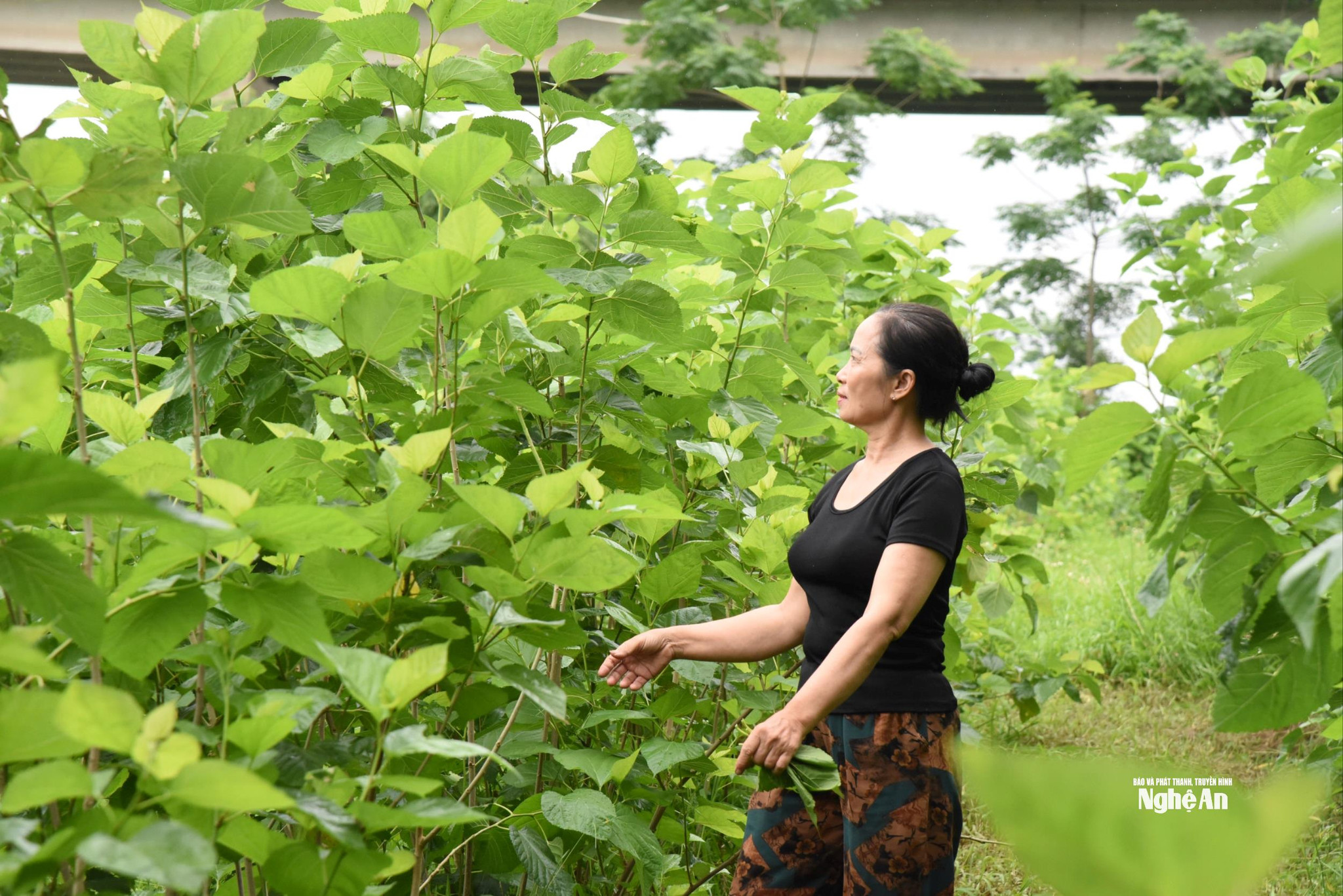
In mid-2025, successive major floods swept away and buried almost the entire mulberry crop, leaving farmers with nothing, not a single mulberry tree left. For example, in the case of Ms. Mai Thi Lien, the recent flood completely destroyed her mulberry field, forcing her to buy or beg for mulberry leaves from elsewhere to sustain her silkworm farming. Other households even had to hire excavators to reclaim the land covered in sand before they could replant from scratch.
Realizing that farmers would remain trapped in poverty due to low prices and dependence on middlemen if they only sold raw cocoons and pupae in the traditional way, the Dang Son Mulberry Cooperative, led by Director Mai Thi Loan, decided to shift from raw production to deep processing to increase value.
This transformation was supported by the Do Luong Commune Farmers' Association, which provided loans of 400 million VND to 7 households. These households have large areas of mulberry cultivation, suffered losses due to flooding, and wish to make changes to upgrade their traditional farming.
From that same 400 million VND loan package, seven households in the Dang Son Mulberry Cooperative also used the funds to purchase breeding equipment, machinery, and quality seedlings from Hanoi and Thai Binh, and to restore their mulberry fields. This financial support, along with participation in technical training courses from the province, has helped the people of Dang Son become more confident in expanding their scale of operations.
Supporting cooperatives and craft villages to improve production efficiency.
Ms. Loan shared that, based on suggestions from Japanese expert teams, the cooperative has successfully researched and produced dried silkworm powder and silkworm wine. High-quality mature silkworms are steamed, dried until crispy, and then finely ground together with lotus seeds and mung beans to create a valuable functional food. This powder not only helps detoxify the body, prevent diabetes, and is beneficial for people with gout, but it is also an excellent source of nutrition for children with rickets. In addition, products such as premium silkworm wine and detoxifying tablets made from mulberry leaves are also being prepared for market launch.
In addition, people have shifted their focus from selling silkworm pupae to selling fresh silkworms, which fetch higher prices and generate more income than before. This change has yielded significant economic benefits. A silkworm's life cycle only takes about 20-25 days, much shorter than the four months it takes to grow corn.
According to calculations, in just 20 days, Mai Thi Lien and her husband can earn about 7 million VND. Compared to corn farming, which is under pressure from rising fertilizer and seed prices, silkworm farming brings in many times more income than other crops. Especially, when the cooperative processes the product itself, they can buy silkworms from farmers at prices ranging from 130,000 to 150,000 VND/kg, significantly higher than the market price.
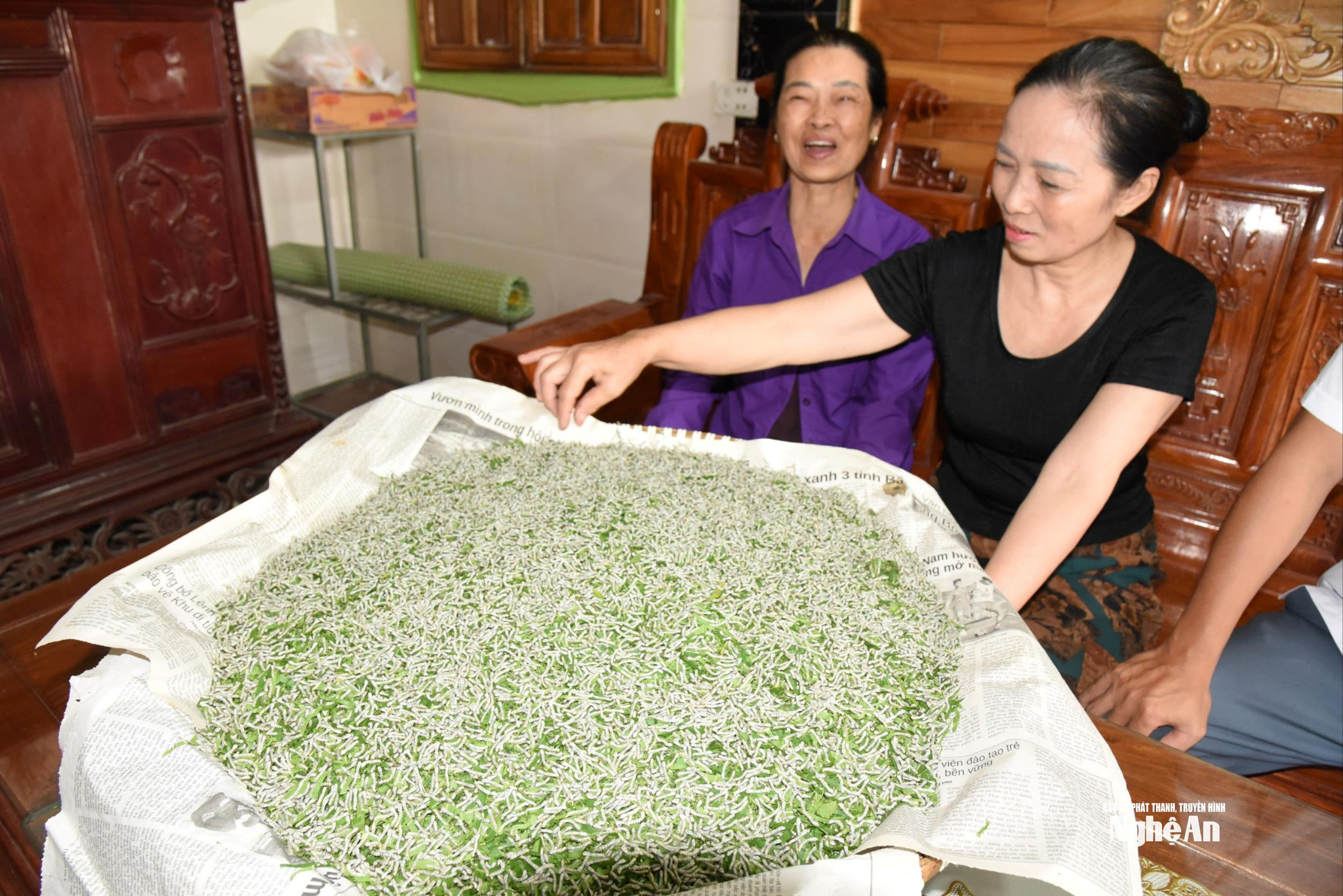
Currently, with approximately 50-70 hectares of mulberry trees and over 30 households actively participating, the silk farming industry in Dang Son is facing opportunities for further development in processing and improving economic efficiency. The combination of traditional experience from the elderly and the modern economic thinking of the cooperative is elevating the value of this traditional craft, creating greater prosperity in the Dang Son region.
Mr. Le Van Dung, Vice Chairman of the Farmers' Association of Do Luong commune, said that not only in Dang Son hamlet 3, but also in the first phase of 2026, the Provincial Farmers' Association's support fund helped households obtain capital for production development. Specifically, two households in Thinh Son hamlet borrowed 200 million VND each, one household in Bac Son hamlet borrowed 100 million VND, and one household in Yen Son hamlet borrowed 200 million VND each. These households all borrowed capital to invest in raising fish, eels, and black snails.
Across the province, by April 30, 2026, the total capital of the Nghe An Provincial Farmers' Support Fund will reach 95.8 billion VND. During the 2021-2025 period, the Fund supported the construction of 490 economic models with nearly 6,000 households borrowing capital, contributing to the formation of hundreds of cooperatives, professional associations, and cooperatives, and creating jobs for nearly 20,000 rural workers. At the beginning of 2026, the Fund will be restructured and begin disbursing funds from May 2026. Many model farms and livestock production facilities have received support from this fund to increase their production value, such as vegetable and tomato production models in Dien Chau commune; potato cultivation models in Duc Chau commune; high-tech shrimp farming models in An Chau and Hai Chau communes; deer farming models in Quynh Anh commune;…
Mr. Nguyen Viet Hung, a member of the Provincial Party Committee and Chairman of the Provincial Farmers' Association, stated that the objectives of the Farmers' Support Fund, in addition to providing loans, also aim to support farmers in many other aspects. These include support in terms of market access and product distribution; addressing resource bottlenecks; providing technical and production process support; and offering policy advice.
Specifically, the Farmers' Association collaborates with cooperatives to implement product procurement models. The Association directly works with companies to sign procurement contracts with stable prices, helping farmers feel secure in their production without worrying about fluctuations in the external market. For example, they signed an agreement with Dong Dao Pineapple Factory to develop raw material areas and guarantee product procurement. The Farmers' Association also assists farmers with technical matters and guides them on production schedules according to the seasons.
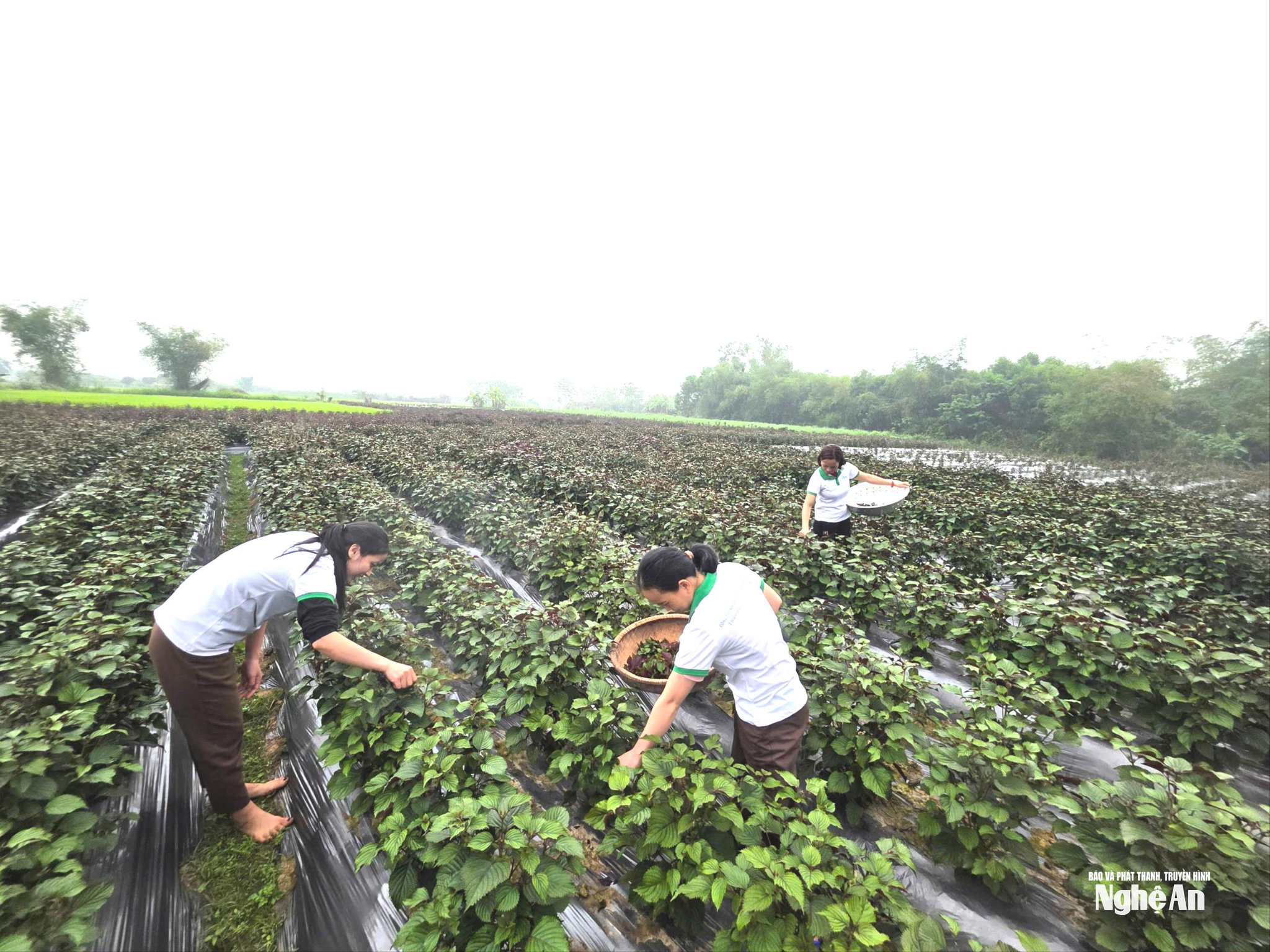
In some cooperative models, farmers also benefit from not having to incur upfront costs; the total costs are deducted after income is received. When cooperatives face difficulties related to policies, the Farmers' Association plays a consultative role in developing mechanisms and policies to implement these regulations in practice.
Thanks to the support of the Farmers' Association, many cooperatives have transformed to more efficient new models, with over 62% of cooperatives in the province operating effectively and 278 cooperatives having implemented production linkages along the value chain.