

President Trump: The Strait of Hormuz will reopen starting Friday.
US President Donald Trump announced that the Strait of Hormuz would be fully reopened on June 19th after Washington and Tehran reached an agreement to end the months-long conflict in the Middle East. However, many key terms of the agreement have yet to be fully disclosed.
Iran and the United States have announced that maritime traffic through the Strait of Hormuz has begun to resume, amid the two countries' announcement of an agreement to end the conflict in the Middle East.
According to President Donald Trump, this strategic energy transportation route will be "fully open" starting Friday.
"Ships are starting to move again, including many oil tankers. This shipping lane will be fully open on Friday (June 19)" - US President Donald Trump posted on social media on June 15.
The reopening of one of the planet's most critical energy choke points marks a major turning point, bringing to an end months of fierce conflict and global economic instability – a consequence of the US and Israeli attacks on Iran in late February.
News of the agreement had a positive effect on financial markets. The Dow Jones index hit a new record high, while crude oil prices fell by nearly 5%.
Previously, Iran imposed maritime restrictions in the Strait of Hormuz after hostilities broke out, causing global energy prices to surge. In response, the US implemented shipping restrictions on Iranian ports.
Unexpected electronic signing and signals from the strait.
The US, Iran, and Pakistan—the mediating nation—announced that the peace agreement would be formally signed in Switzerland on Friday. However, a senior US official revealed that President Trump, Vice President JD Vance, and Iranian Parliament Speaker Mohammad Bagher Ghalibaf signed the document electronically.
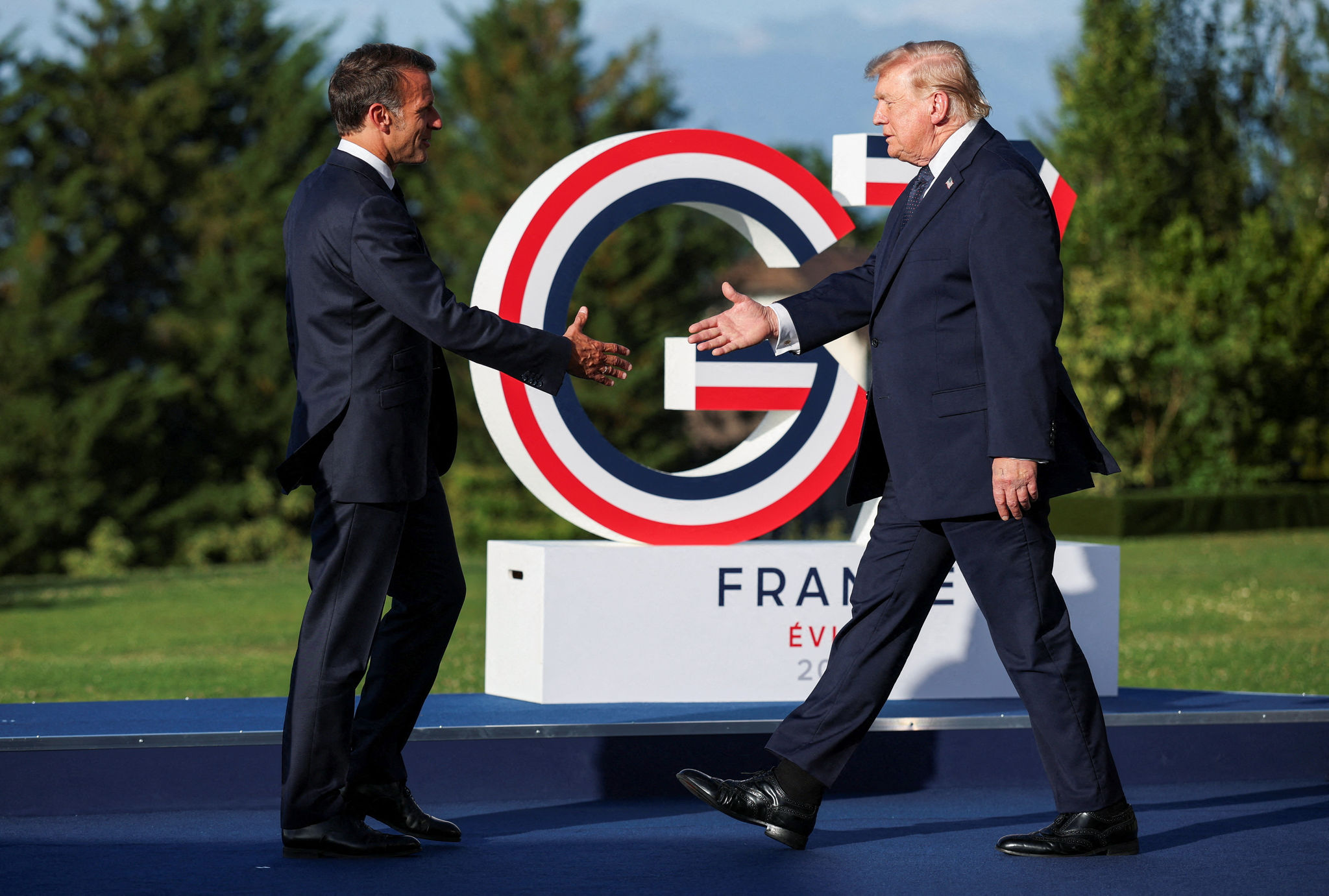
"I want to sign this in person because I want to show my determination to bring this issue to a successful solution. This is a very important document and will soon be made public," President Trump said on the sidelines of the G7 summit in France.
Meanwhile, Iranian Deputy Foreign Minister Kazem Gharibabadi declared that the agreement had helped to immediately end military operations and paved the way for negotiations toward a more comprehensive agreement within the next two months.
Iranian President Masoud Pezeshkian called it "a great achievement" for the region, while the Iranian military described the outcome of the negotiations as a strategic victory. However, Iranian Foreign Minister Abbas Araghchi remained cautious.
""We have witnessed broken commitments and torn-up agreements. We have not forgotten those things," said Iranian Foreign Minister Abbas Araghchi.
Iranian Foreign Ministry spokesman Esmaeil Baqaei said Washington has committed to releasing some frozen assets and compensating for war-related damages. Mehr News Agency Reports indicate the US will release $12 billion in frozen Iranian assets before negotiations begin. Baqaei stated that Tehran will request UN Security Council approval after a final agreement on its nuclear program is reached.
On the US side, Vice President JD Vance immediately reassured voters on Fox News, asserting that "not a single penny of American taxpayers' money will go to Iran" under this agreement.
Meanwhile, President Trump revealed that the two sides are still discussing the possibility of Iran temporarily suspending its uranium enrichment activities for an extended period.
Regarding the Strait of Hormuz, Iran stated that it will apply maritime service fees instead of the previously mentioned transit fees.