
Memories of the Laotian Forest
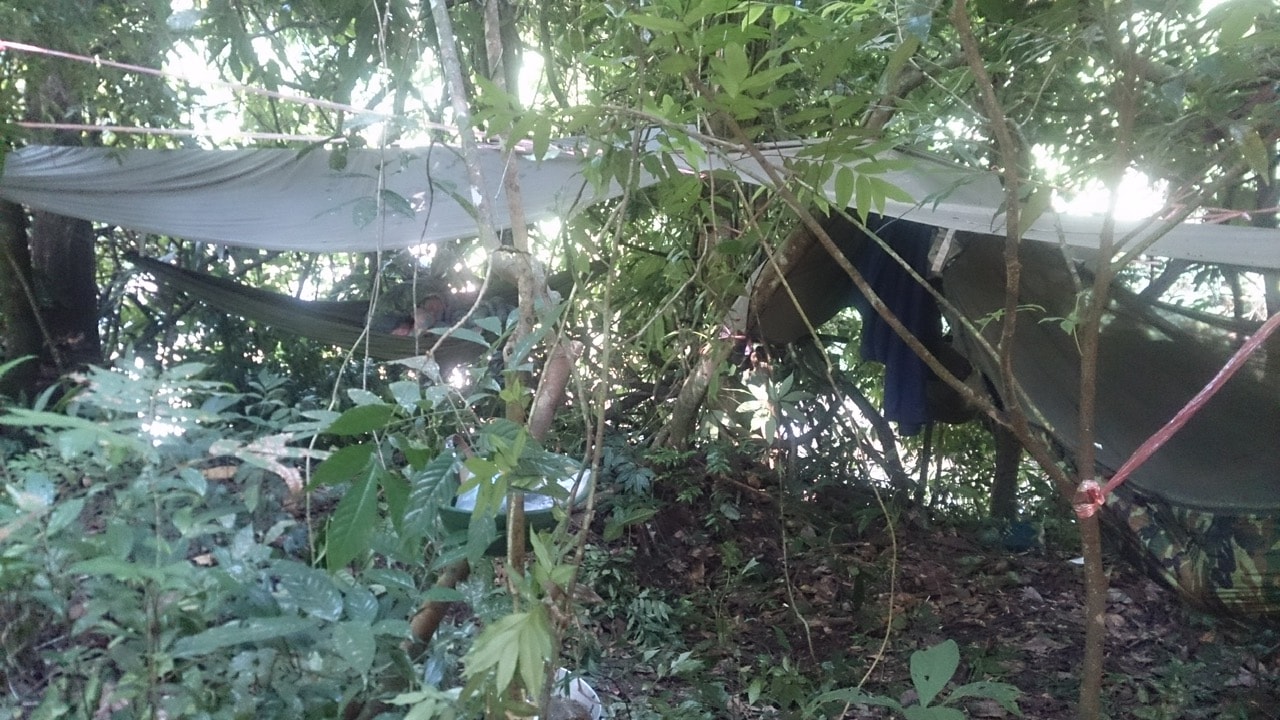
During our trips accompanying the teams collecting the remains of fallen soldiers in the Laotian jungle, we reporters felt like we were soldiers ourselves. From hurried meals by the stream, to sleeping in the rainforest, to marches searching for graves through the forest, we were no different from the soldiers collecting the remains. On one occasion, in the middle of a desolate forest, we discovered a low-lying area suspected of containing a grave, helping the soldiers find the remains of a fallen soldier…
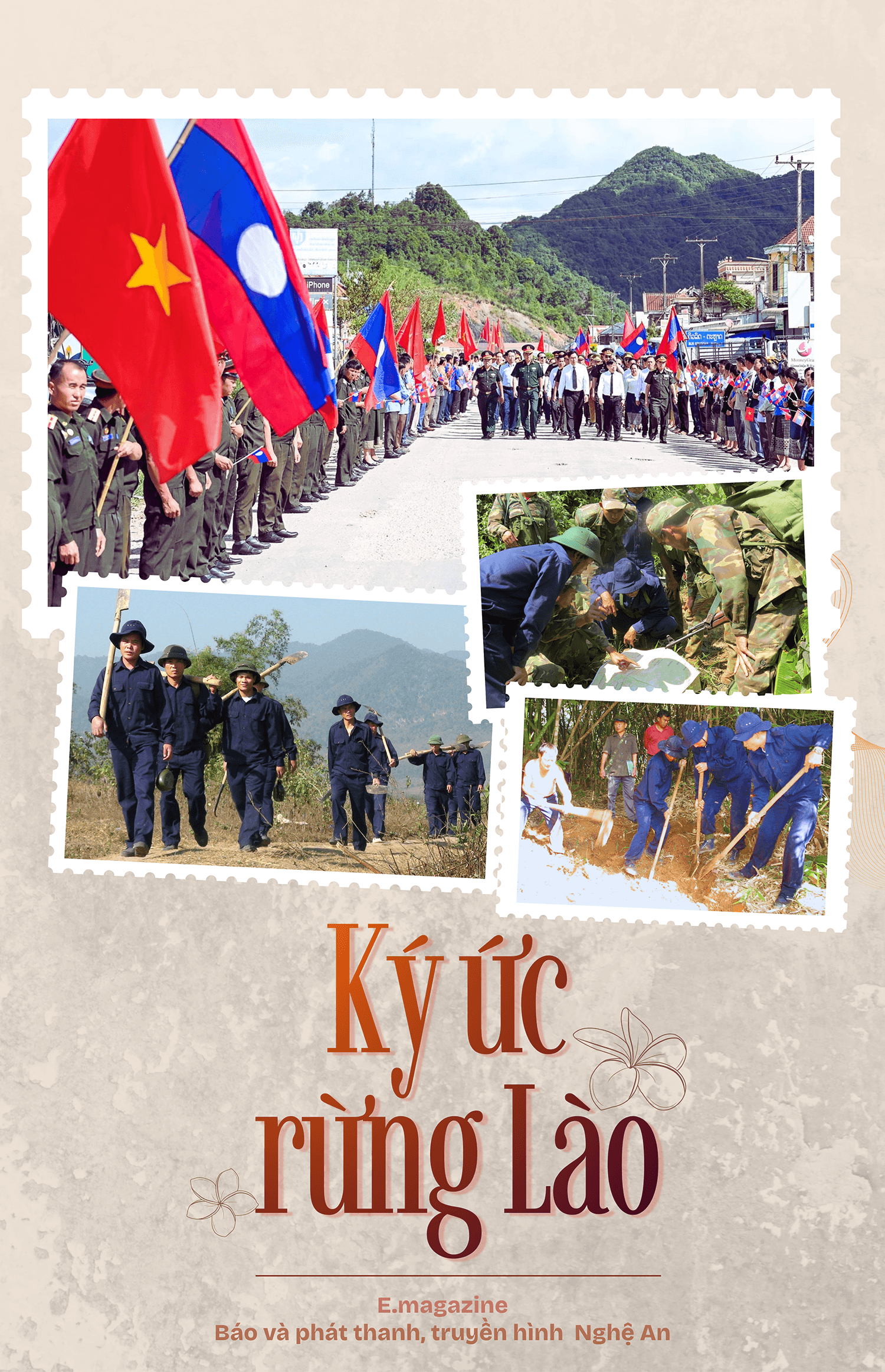
VU TOAN
During our trips accompanying the teams collecting the remains of fallen soldiers in the Laotian jungle, we reporters felt like we were soldiers ourselves. From hurried meals by the stream, to sleeping in the rainforest, to marches searching for graves through the forest, we were no different from the soldiers collecting the remains. On one occasion, in the middle of a desolate forest, we discovered a low-lying area suspected of containing a grave, helping the soldiers find the remains of a fallen soldier…





One cold, foggy night in the dry season of 2005, in the forest area near Phuon Sa Van town, Xieng Khouang province (Upper Laos), we stopped at the base of the Fallen Soldiers' Remains Collection Team under the Military Command of Nghe An province.
Back then, Lieutenant Colonel Ho Trong Binh, the team leader, welcomed us with warm handshakes amidst the cold wind and fog of the Laotian forest. We were exhausted, but no one thought about sleeping or resting; instead, we asked about the latest developments in the repatriation efforts; the hardships and difficulties on the journeys to find the remains of fallen soldiers; the challenges in "hunting" for information and the people pointing out graves…
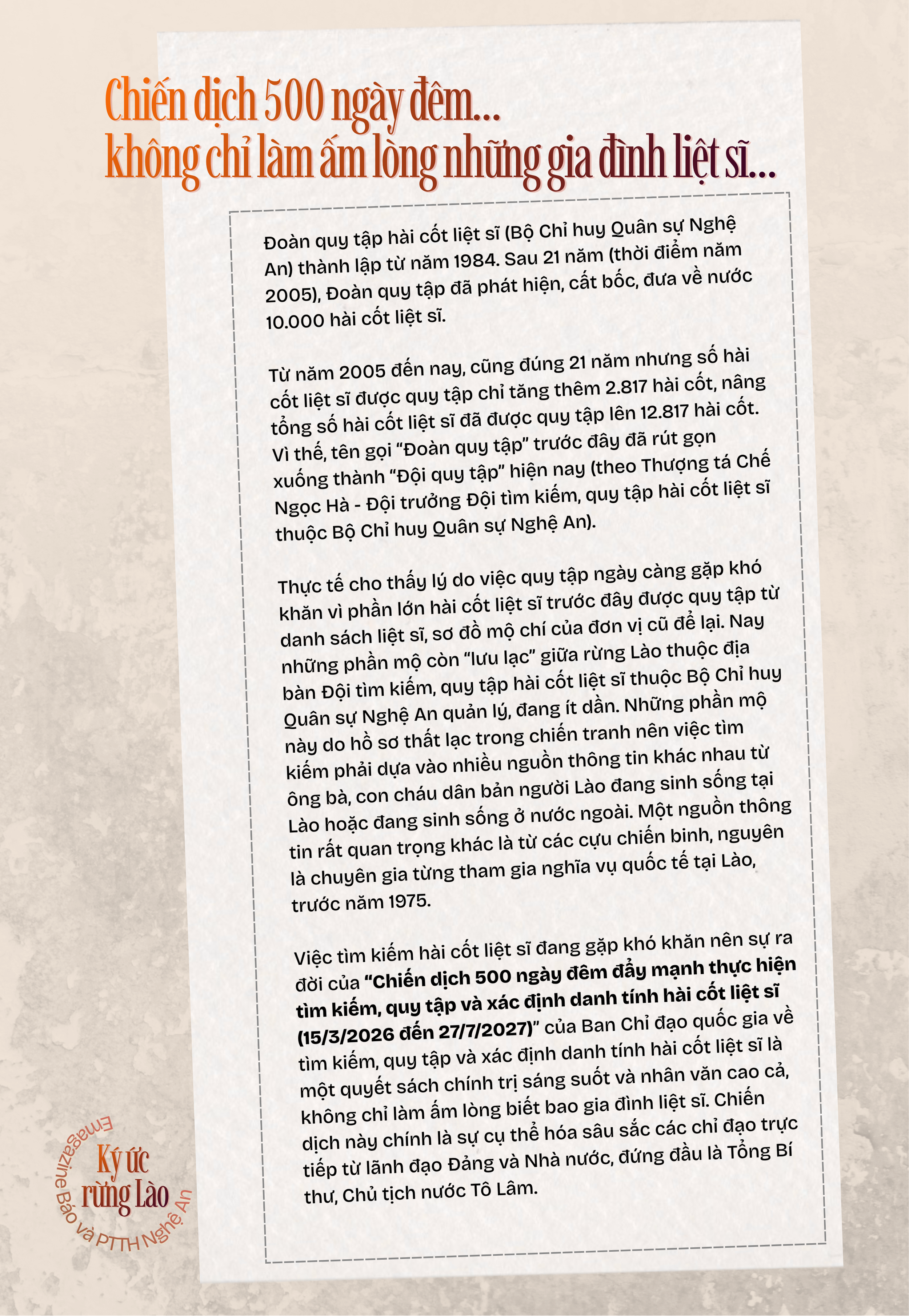
Lieutenant Colonel Binh directed us towards a map fluttering in the wind, hanging on the largest wall of the rear base's assembly hall. The map displayed the words "Plan for surveying and collecting the remains of fallen soldiers, since 1991." He spoke just loud enough for us to hear: "Our province's team for collecting the remains of fallen soldiers has been in operation since July 1984. Twenty-one years have passed, and the officers and soldiers have searched for, exhumed, and brought 10,000 remains of fallen soldiers to the Vietnam-Laos International Cemetery. Many graves still remain in the forests of Laos. The number of graves means countless difficulties."
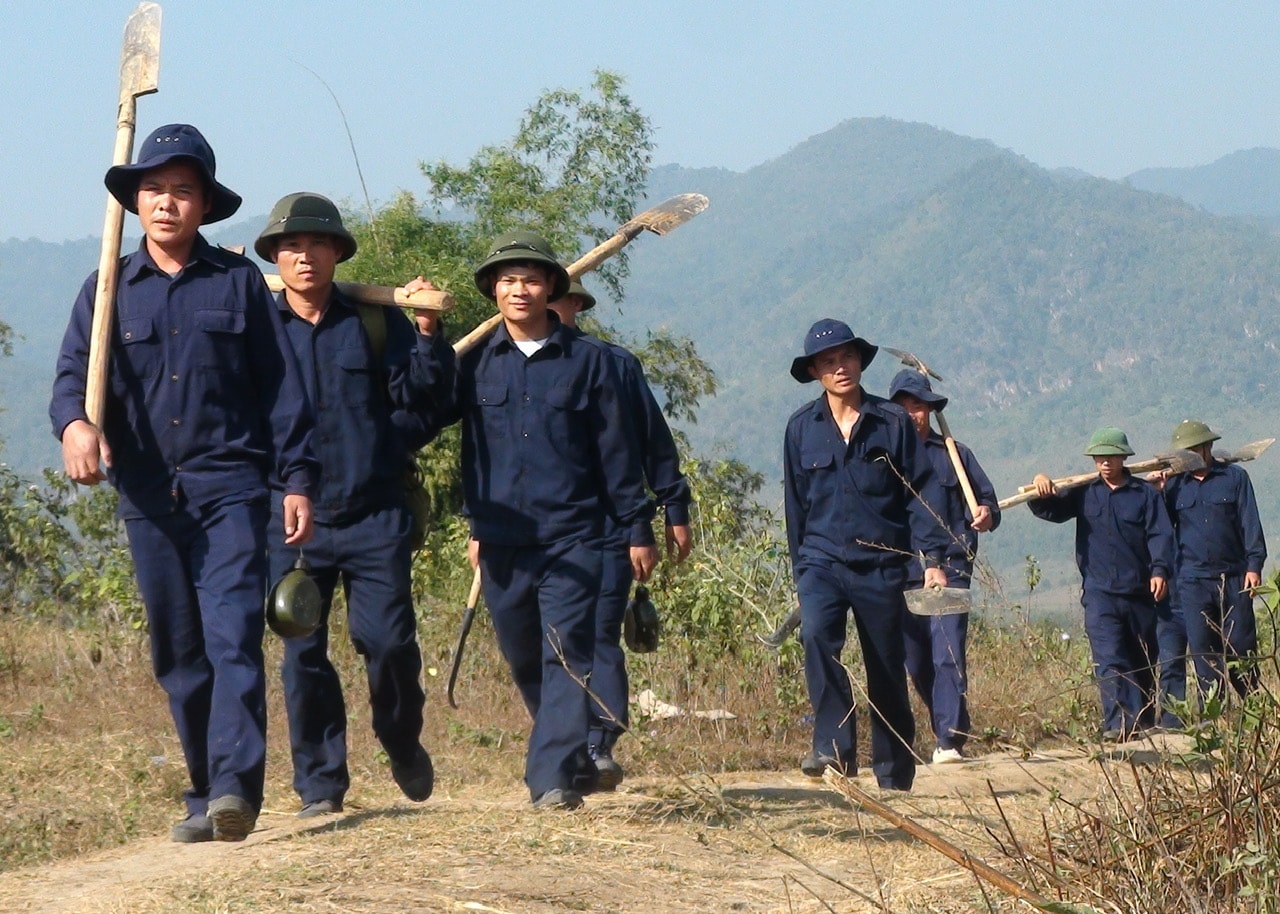
We wanted to know about the swirling red markings densely scattered across the steep slopes of the large, faded map. Lieutenant Colonel Binh, carefully manipulating the map with his pen, cautiously said, "These are 'hot' areas, very 'hot' areas that our team has memorized every detail of, from geographical location and terrain to the local population... 'Hot' means areas with many graves and many enemy forces operating in the forest (remnants of bandits operating in the jungle) mixed with underground enemy forces (remnants of bandits operating secretly among the local population) causing trouble." "Our soldiers and the Laotian soldiers have suffered casualties due to clashes with these two extremely dangerous, elusive bandit groups," Lieutenant Colonel Binh said, showing concern when we expressed our desire to go to Long Cheng, the area once home to the infamous Vang Pao "capital," to contact the repatriation team there. Lieutenant Colonel Binh looked up at Long Cheng, perched atop the Phu Moc mountain range, his face tense: "The road to Long Cheng is over 100 kilometers. It's very dangerous because the bandits harass us day and night to prevent our search for graves. It's very difficult to travel. Unless absolutely necessary, we shouldn't go now." But faced with our determination, Lieutenant Colonel Binh told us to go to the "Martyrs' House" to light incense, inform the spirits of the martyrs about our work, and then rest until morning, when the repatriation team would decide what to do.
At dawn, we woke up. Before breakfast, Lieutenant Colonel Binh led us to the "Martyrs' House" to light incense as usual at the start of a new day. Only now did we clearly see that the "Martyrs' House" was only about 20 square meters in size.2Located next to the office of the head of the repatriation team, between two rows of single-story buildings of the rear base, the altar is adorned with fragrant incense and a plate of colorful fruit. In the middle of the room is a fairly large square coffin. Inside are the remains of the fallen soldiers recently repatriated, awaiting repatriation at the end of the dry season. Two national flags, one of Vietnam and one of Laos, rest silently on the coffin's surface. Lieutenant Colonel Binh said that calling it the "House of the Fallen Soldiers" or "The House of the Heroes" is fine. The spirits of the heroes are sacred. Here, our unit usually has two types of reports. First, a report on the work and the results achieved. Second, a "report" including shortcomings and specific ways to overcome them, aiming towards the highest goal: no matter how difficult or arduous, we are determined to find as many graves of our comrades as possible.
That day, Lieutenant Le Hap, a tall and slender man, drove us in a yellow truck along a road that constantly turned right and left towards Long Cheng. Driver Hap explained that this was the only road our troops used to attack Long Cheng before 1975. He said that now the bandits were lurking and fighting fiercely. More than an hour later, we got out of the truck and onto motorbikes that had been arranged for us to continue our journey. This stretch of forest road had many spiral-shaped "rocky passes." Near noon, we got off the motorbikes again and back into the truck, continuing along the dusty red roads to reach the foot of Phu Moc mountain, which surrounds the "capital" of Vang Pao.

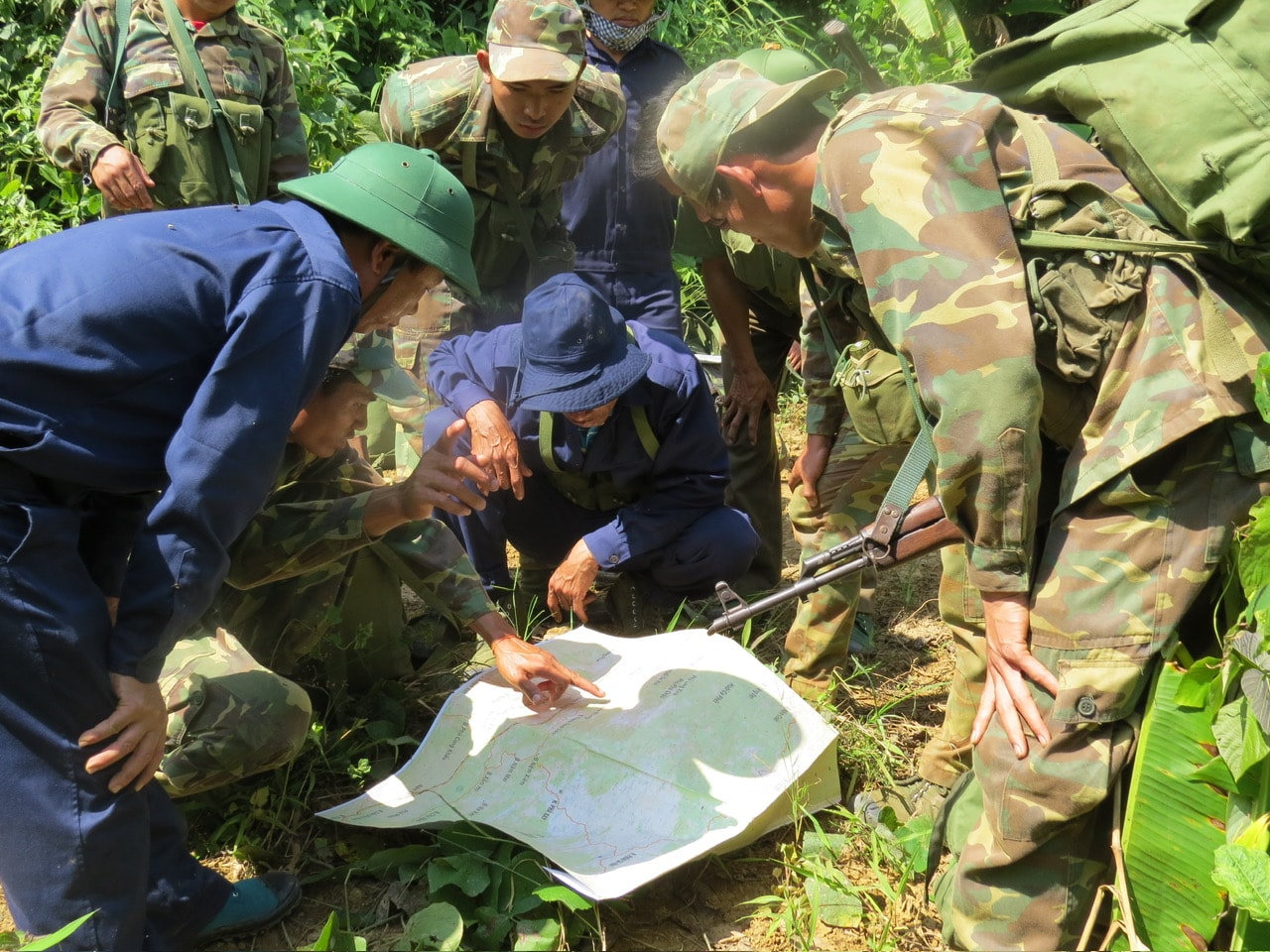
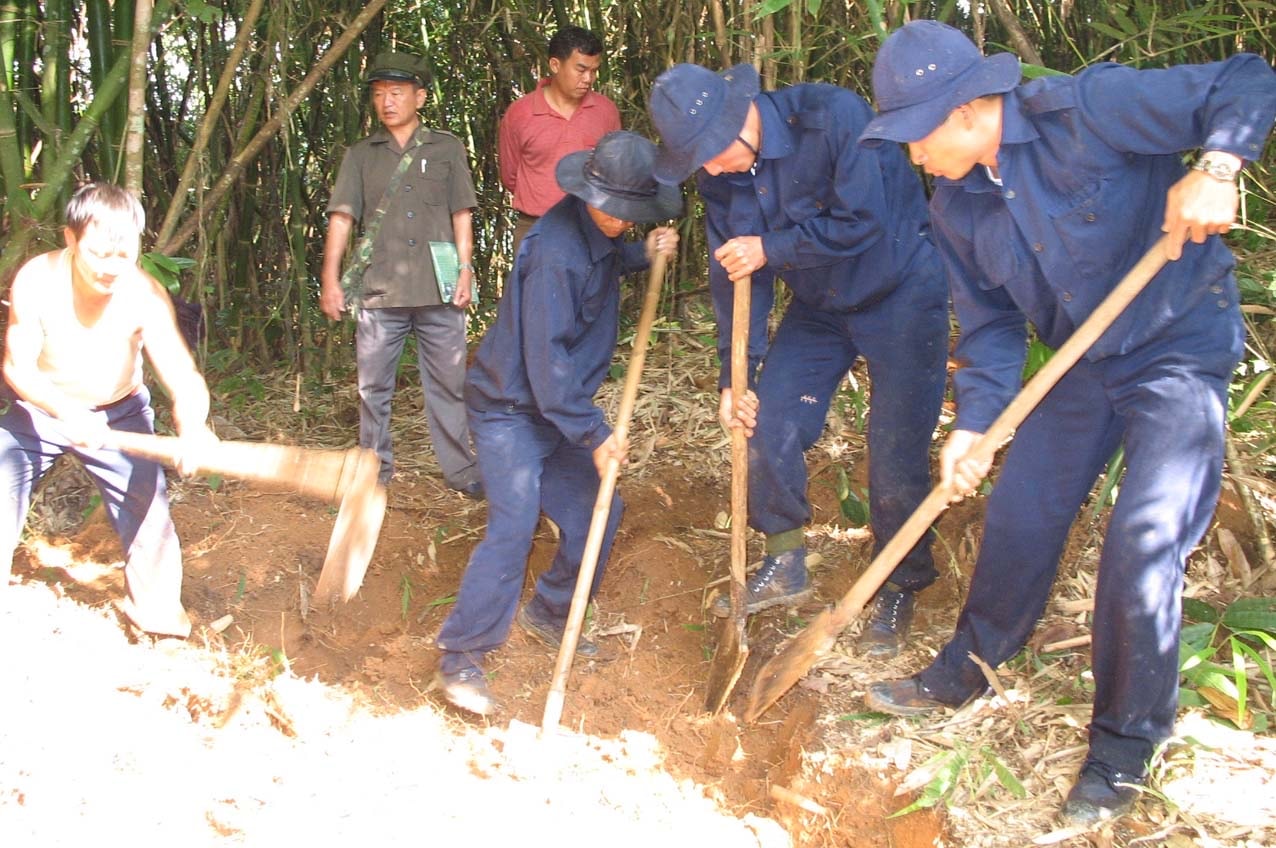
During our time in Long Chẹng, we followed the search team looking for the remains of fallen soldiers. One day, while traversing a bamboo forest, Lieutenant Colonel Nguyễn Văn Thành – the team leader of Long Chẹng and deputy leader of the search team – said: “From a single bamboo pole used as a stretcher in front of a soldier’s grave, it has now become a whole bamboo forest.” After the bamboo forest came the banana forest, and Lieutenant Colonel Thành recounted the “story” of the banana forest, which was exactly the same as the “story” of the bamboo forest. “This is a key area, a ‘Dien Bien Phu in the Laotian jungle,’ so our team has found many remains of fallen soldiers based on the old unit’s maps.”
Upon returning to the base, we learned that, to make our journey a "risky" one, the repatriation team had contacted Lao authorities to organize key security lines to ensure our safety. Thanks to this, we learned about the Long Chẹng military airfield, the rebel camp, and Vàng Pao's "capital." We saw a house that was half house, half underground bunker, with stone walls crisscrossed with mortar emplacements. There was a helicopter landing pad on Vàng Pao's roof. We spoke with Mr. Hủa Phăn, Vàng Pao's skilled driver, who regularly drove him to inspect the battlefield after each battle. He knew and pointed out many graves of fallen soldiers to the repatriation team.
Leaving the Long Chẹng search and recovery unit, we followed the Khệt Phằn unit led by Lieutenant Colonel Nguyễn Ngọc Lân. Like Lieutenant Colonel Thành, Lieutenant Colonel Lân was the unit leader and deputy leader of the search and recovery team. Khệt Phằn was also the main unit, having searched for and recovered many remains of fallen soldiers. On this trip, we entered the Na Hổi forest, a very well-trodden area. After recovering three sets of remains, we continued our march. Suddenly, my feet felt heavy as I came across a depression in the ground on the trail. I told Lieutenant Colonel Lân to try digging in this area; I suspected there was a grave. Lieutenant Colonel Lân immediately told the men to stop, take off their backpacks, and dig. The first shovelful felt soft. The second shovelful felt loose and porous. After the third and fourth shovelfuls, all the men in the Khệt Phằn unit shouted: "There's a grave! There's a grave!" That was when the soldier's trembling hand lit an incense stick beside his hand, which was fiddling with a handful of earth and sand to pick out a few brown buttons, some meager, decayed bone fragments, and a faded red piece of parachute fabric…

In 2018, we returned to the Laotian jungle for only one professional reason: "The Long Chẹng Cape will be the site of the remains of eight fallen soldiers, right in a remote village." Despite some warnings about potential misfortune, we eagerly set off.
That time, from the Long Chẹng base, Lieutenant Colonel Phạm Quang Tám – Political Commissar and commander of the search team – led the team to collect remains for another 20 kilometers by Gaz 66 truck (an artillery towing vehicle used by the army, which had participated in the 1966 Vàng Pao campaign) to Nậm Ngừm stream, then "cut" through the forest and waded through streams for another two hours. Knowing beforehand that this was a perilous journey to Tả Phà Nhang village (the old village of Vàng Pao, now uninhabited but a bandit's operating area), in addition to the 20 officers and soldiers involved in the search, there was also a special forces unit and troops from Long Chẹng district as reinforcements. Suddenly, at the crossroads of the forest, it rained heavily for four days and nights. We had to watch out for the rain and the bandits, while anxiously searching for the graves. The coordinates of the eight fallen soldiers' remains were covered in tall grass, which seemed to grow even thicker in the rain. The situation was such that we couldn't just wait for the rain and couldn't search the graves in the vast expanse of grass, so Lieutenant Colonel Tám ordered the team to retreat temporarily.
On the way out of the forest, the old Gaz66 crawled slower than a turtle on the winding and treacherous curves of the dense jungle. The vehicle was so old that it constantly stalled, forcing the driver to attach a steel wire to the gas pedal and have two soldiers sit behind the cab (at a distance from the truck bed) to control the wire when the engine was weak but needed to shift into neutral. We continued like this, more apprehensive than fear of facing the lurking remnants of the bandits. Just as the vehicle was struggling to climb to the top of the forest, the wire snapped. The Gaz66 rolled back down the slope. I looked back; on one side was a steep embankment, on the other a deep, dark one. Some of the soldiers jumped out to avoid an accident. I and a few others stood up, watching the direction the vehicle was rolling backward. If it rolled towards the embankment, I would jump out. Fortunately, the Gaz66 rolled close to the steep embankment and stopped.
We suddenly thought, "Perhaps the spirits of the fallen soldiers helped our group escape death at the top of this forest."
Vu Toan