
Convergent power supply circuit
Amidst the torrent of digital technology, where social media, artificial intelligence, and digital platforms are fundamentally changing media landscapes, unlocking the "convergent source of power" is not only an organizational requirement but also a vital necessity for mainstream journalism to maintain its role as the primary source of information, protect social trust, and contribute to the development of the homeland.
.jpg)
.png)
More than a century has passed since the founding of Thanh Nien Newspaper by leader Nguyen Ai Quoc, yet the revolutionary journalistic tradition continues to flow. Revolutionary journalism not only conveys information but is also an integral part of social life, a bridge between the Party's will and the people's aspirations, and a vanguard force that ignites aspirations and propels the nation's development.
That source of inspiration flows deep within the Soviet-era homeland of Nghe Tinh. From the clandestine newspapers of the revolutionary movement to the generations of reporters present on the front lines, Nghe An's journalism has always possessed a unique quality: rich in fighting spirit yet deeply humane; politically astute yet close to the people's lives. Through many stages of development, each type of journalism has created its own distinct mark. But in the digital age, the boundaries between these types are gradually blurring, creating a more powerful demand for innovation than ever before.
Today's public no longer waits for information according to broadcast schedules or newspaper issues. News appears every second on their phones. Social media has created a massive information highway, where mainstream journalism is no longer the sole source of information. This necessitates change: Journalism must adapt to survive and thrive in the digital age.

Looking back at the province's recent major milestones, from implementing the Party Congress resolutions and spreading ideological values at the Lotus Village Festival, to accompanying major policies such as administrative unit restructuring, building a two-tiered local government, administrative reform, digital transformation, and implementing key projects like the Quynh Lap LNG terminal and the Vinh - Thanh Thuy expressway, the role of the press has always been clearly evident.
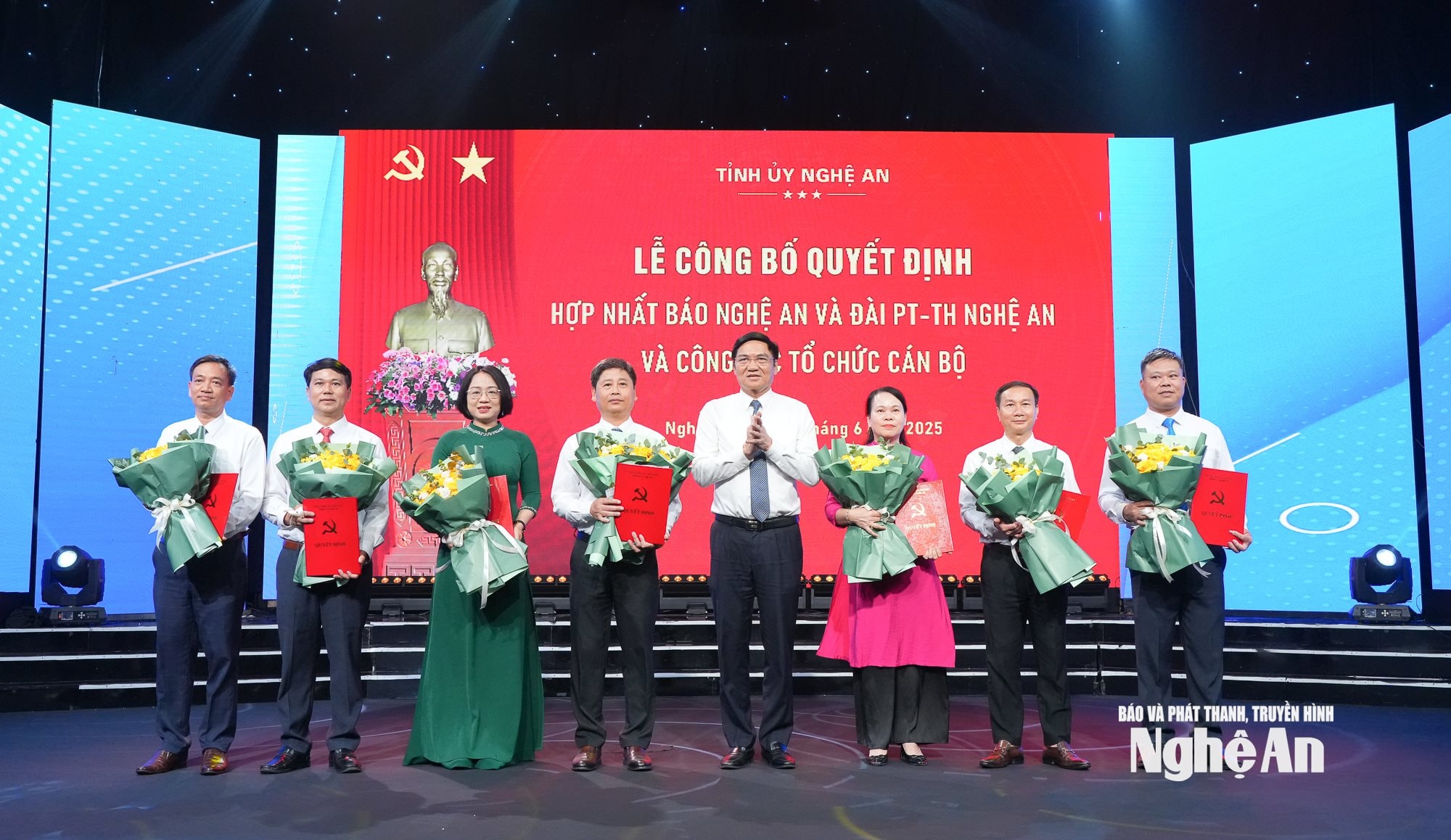
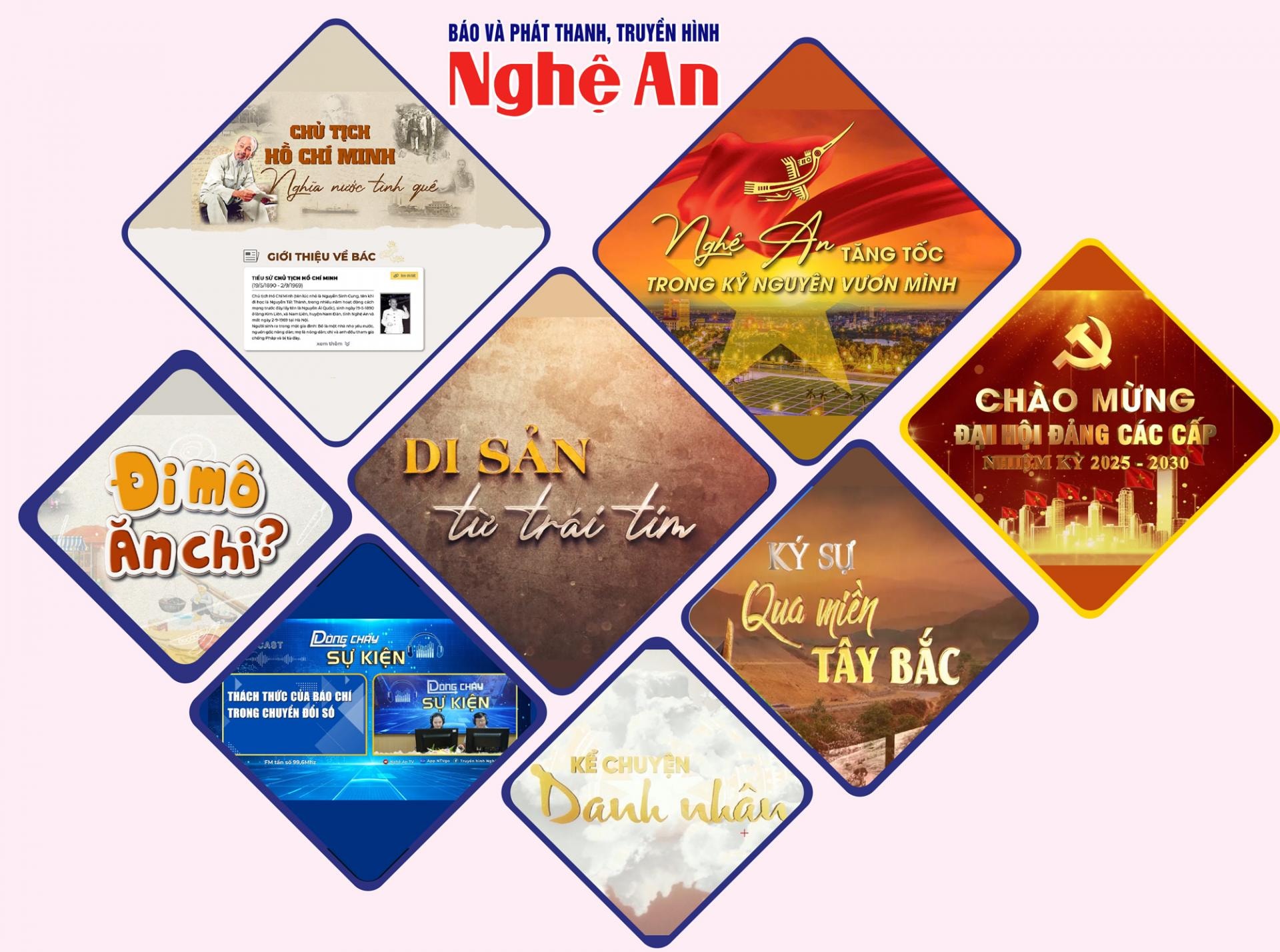
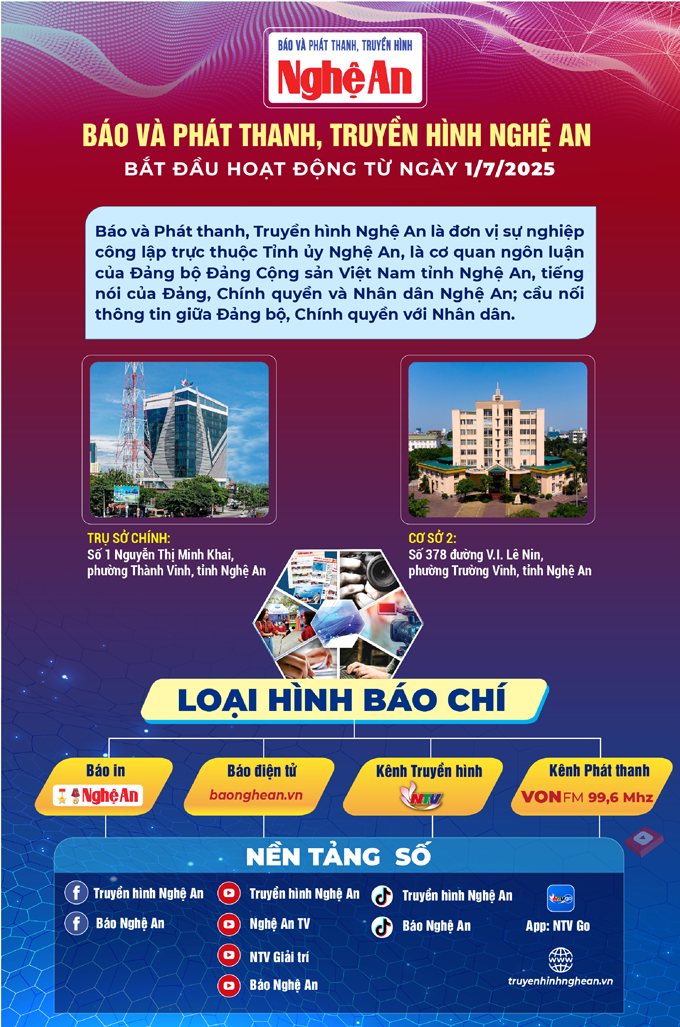
The decision to merge Nghe An's key media outlets is therefore not merely about reorganizing the structure. It is a strategic shift aimed at forming a modern media center capable of competing in the digital environment. Convergence does not mean erasing the unique characteristics of each type of media. On the contrary, it is a process of combining the best values to create greater strength. When writing, sound, images, data, and technology are all integrated into a common ecosystem, journalism will have the capacity to move faster, further, and deeper into social life.

.png)
Today, the press in Nghe An cannot simply reflect reality. The press must participate in shaping the future. This shaping can be achieved by fostering social consensus; by removing bottlenecks in development; and by demonstrating commitment, critical thinking, and social responsibility.
Behind every major project or policy decision lies not only an economic story but also a challenge to social trust. The press must help people understand policies correctly, help businesses see opportunities, and help the government recognize bottlenecks in practice. To achieve this, today's journalists must possess a dual mindset: sharp political insight while maintaining the simplicity and closeness to everyday life.
Insightfulness is demonstrated in the ability to identify issues amidst the chaotic information "matrix" on the internet. When fake news and misinformation spread at breakneck speed, mainstream journalism must become the "anchor" of trust. Every article on public investment, administrative reform, the operation of the two-tiered local government model, or pressing social issues requires a clear and unambiguous stance.
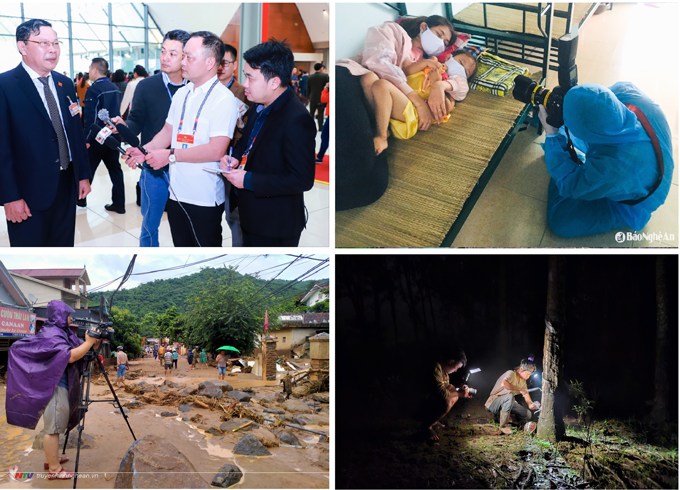
A constructive press does not shy away from issues, does not sugarcoat reality, and does not compromise with stagnation. However, the press cannot distance itself from the lives of the people. The vitality of revolutionary journalism stems from reality, from the simple stories of everyday life. It is from this reality that the press builds social trust, spreads positive values, and contributes to unlocking resources for development.
For a locality to develop rapidly, it needs modern infrastructure, a favorable investment environment, and a high-quality workforce. But for a locality to develop sustainably, it also needs a sufficiently strong mainstream information flow to connect trust, unlock resources, and guide social awareness.

We live in an era where artificial intelligence can write news articles in seconds, algorithms determine the reach of information, and every individual can become a "publisher" on social media. Digital transformation is profoundly changing how information is produced and distributed. Artificial intelligence opens up many new opportunities for journalism, from data processing to supporting content creation. But technology is only truly meaningful when it better serves the mission of information dissemination and contributes to society.
Technology, ultimately, is just a tool. AI can synthesize data about storms and floods, but it cannot empathize with the eyes of people who have lost their homes after a natural disaster. AI can create videos faster than humans, but it cannot replace the courage of an investigative journalist who dares to get to the bottom of the truth. The core value of journalism has never lay in speed alone, but in verification, accountability, professional ethics, and humanity.
In these turbulent times, when the economics of journalism face fierce challenges regarding viewership, advertising revenue, and the pressure for self-sufficiency, the digital age cannot be an excuse for journalists to lower professional standards or compromise with vulgar tastes. As journalists in our revolutionary homeland, we resolutely say no to sensationalist content, clickbait, distortion of the truth, or misleading editing. We must also declare war on opportunistic journalism, the use of social media for harassment, personal gain, and the tarnishing of the reputation of writers.
The reputation of a major news organization is not built on short-term numbers or fleeting algorithmic clicks. That reputation is built on meticulous attention to detail in every word, accuracy in every news report, and social responsibility in every journalistic product.


This June, the atmosphere in newsrooms, studios, editing rooms, and on every vehicle used by journalists in Nghe An province is heating up day by day. This is not only the month of the traditional day of Vietnamese Revolutionary Journalism, but also the period when the convergent journalism model enters a high-intensity operational rhythm. The pressure today is not just about being faster or more prolific, but about being deeper, more accurate, and more persuasive.

Convergence is not just a change in organization or production processes. More importantly, it's a shift in journalistic thinking: from single-platform to multi-platform; from information dissemination to value creation; from competing on speed to competing on quality and trust.
Looking ahead, the digital age will continue to change the economic model of journalism, information consumption habits, and pose new technological challenges. But no matter how much technology develops, what constitutes the lasting value of revolutionary journalism remains political integrity, professional ethics, and a spirit of service to the people.

When the source of strength has converged into a great flow, when the passion for writing still burns brightly and the desire for innovation remains intact, Nghe An's newspapers, radio, and television have the right to believe in a new path of development: more modern but without losing its identity; faster but not complacent; strong in technology but still deeply committed to the people.
That source of inspiration continues to flow. And from that flow, journalists in Nghe An today choose innovation without losing core values; they choose technology but do not distance themselves from people; they choose speed but do not compromise the truth.
The goal is for each journalistic work to not only reflect life but also contribute to making life better. The goal is for each piece of information to not only tell of development but become a part of that development. This is the path that Nghe An's journalism is choosing in the digital age.

.