
Illustrations: Visual impressions on the newspaper page
Amidst the powerful currents of digital technology and artificial intelligence, illustrations remain a unique language on the pages of newspapers. Behind each illustration lies a process of reading, reflecting, refining, and transforming the content and message of the work into lines and shapes. This is also the silent journey of many generations of artists who have contributed to shaping the face of Vietnamese journalism in general, and Nghe An journalism in particular.
Perform: Phuoc Anh •21/06/2026
Amidst the powerful currents of digital technology and artificial intelligence, journalistic illustrations remain a unique language on the newspaper page. Behind each illustration lies a process of reading, reflecting, refining, and transforming the content and message of the work into lines and shapes. This is also the silent journey of many generations of artists who have contributed to shaping the face of Vietnamese journalism in general, and Nghe An journalism in particular.
For generations of readers, literary magazines have always held a unique appeal. Alongside essays, notes, short stories, prose, and poetry, there are black-and-white illustrations that possess a powerful ability to evoke strong emotions. Before readers even enter the world of words, these drawings open a door for their imagination to take flight.
Newspaper illustration appeared quite early in Vietnamese journalism. Many renowned artists of the country's fine arts have participated in illustrating for newspapers and literary magazines. In Nghe An, this journey has been continued by many generations of artists who have been associated with local newsrooms. The late artists Dao Phuong, Ho Thiet Trinh, and Hoang Hai Tho are names frequently mentioned by professionals and colleagues when discussing the evocative illustrations in literary publications. With a solid artistic foundation and a refined ability to appreciate literature, they did not stop at simply depicting a story through images but also distilled the essence of the work to transform it into the language of painting.
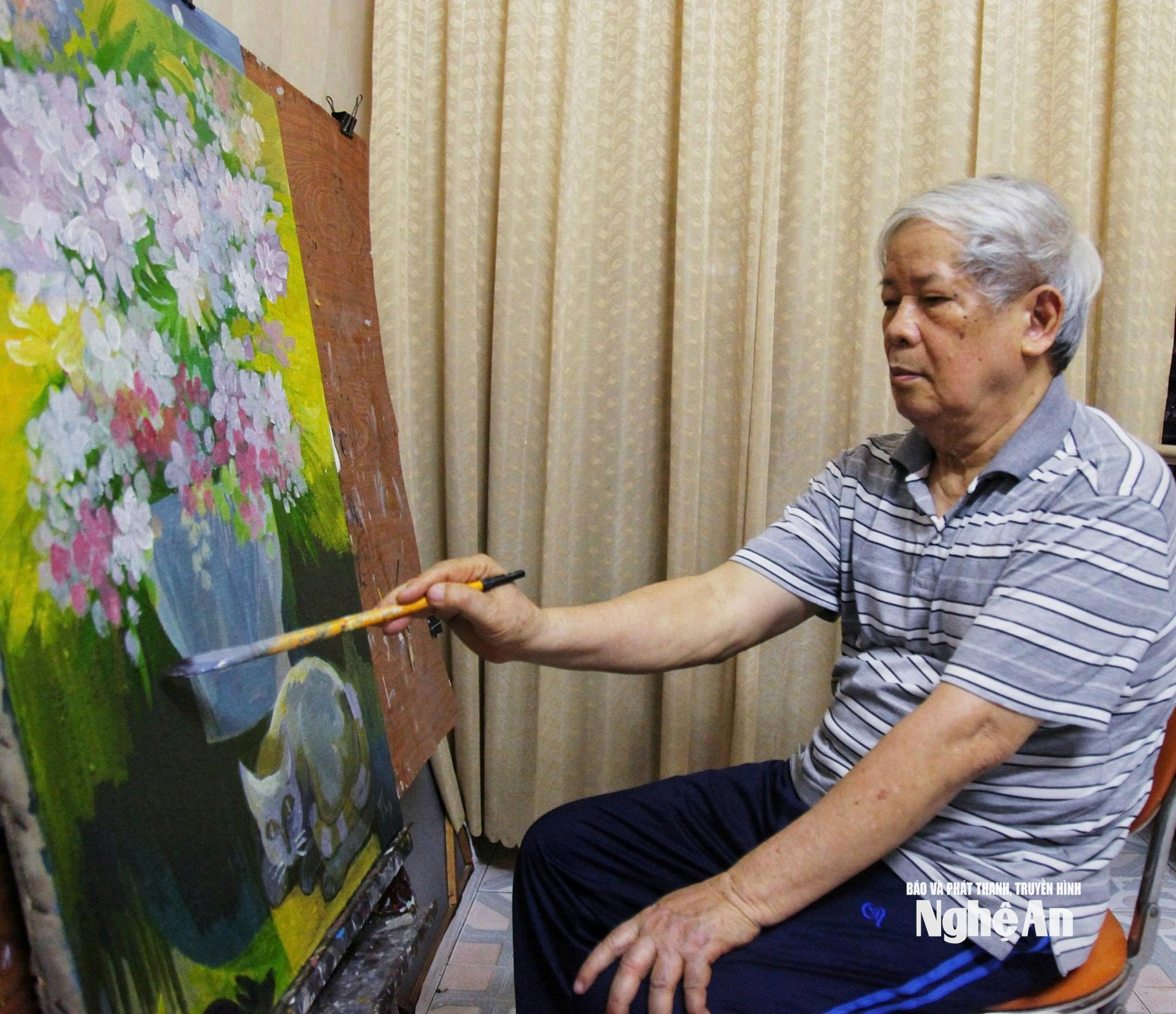
Artist Hoang Hai Tho (born 1945) is one of the long-standing figures in newspaper illustration in Nghe An province. Working at the Provincial Cultural Center since the 1990s, he has regularly collaborated on illustrations for Song Lam Magazine and designed many newspaper exhibition booths at the province's Spring Newspaper Festivals. Whenever he receives a manuscript from the editorial office, he takes the time to carefully read the work, reflecting on the characters, setting, and message the author intends. According to him, illustration is not about reproducing what is already in the text, but rather a process of refining to find the most evocative image, thereby transforming words into visual language.
Typically, it takes him about two days to complete an illustration. On tracing paper, with ink and a small brush, the artist quietly creates areas of light and shadow, condensed lines to preserve the essence of the work. Now over 80 years old, after two strokes, artist Hoang Hai Tho still perseveres in practicing to recover and maintain his creative rhythm.
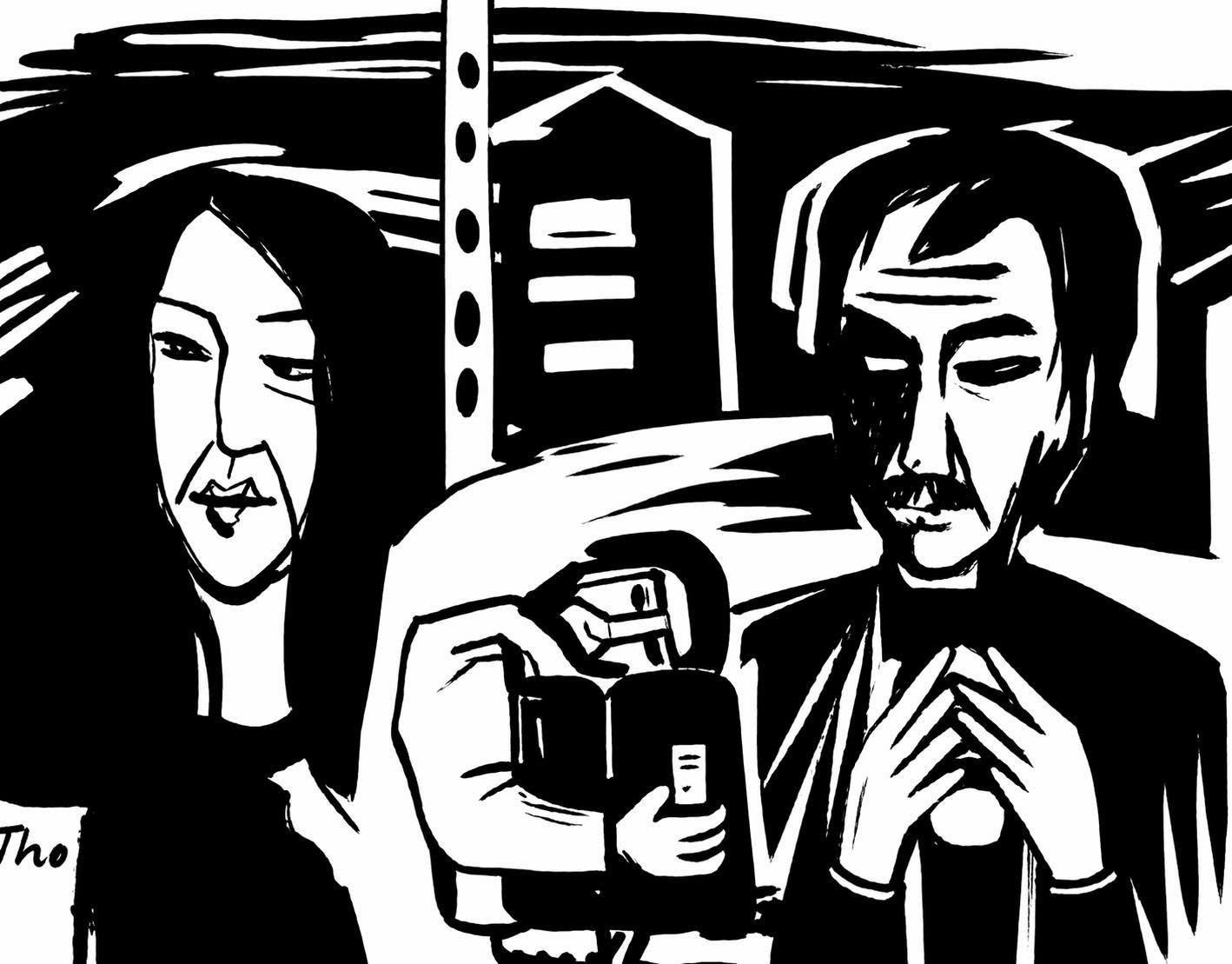
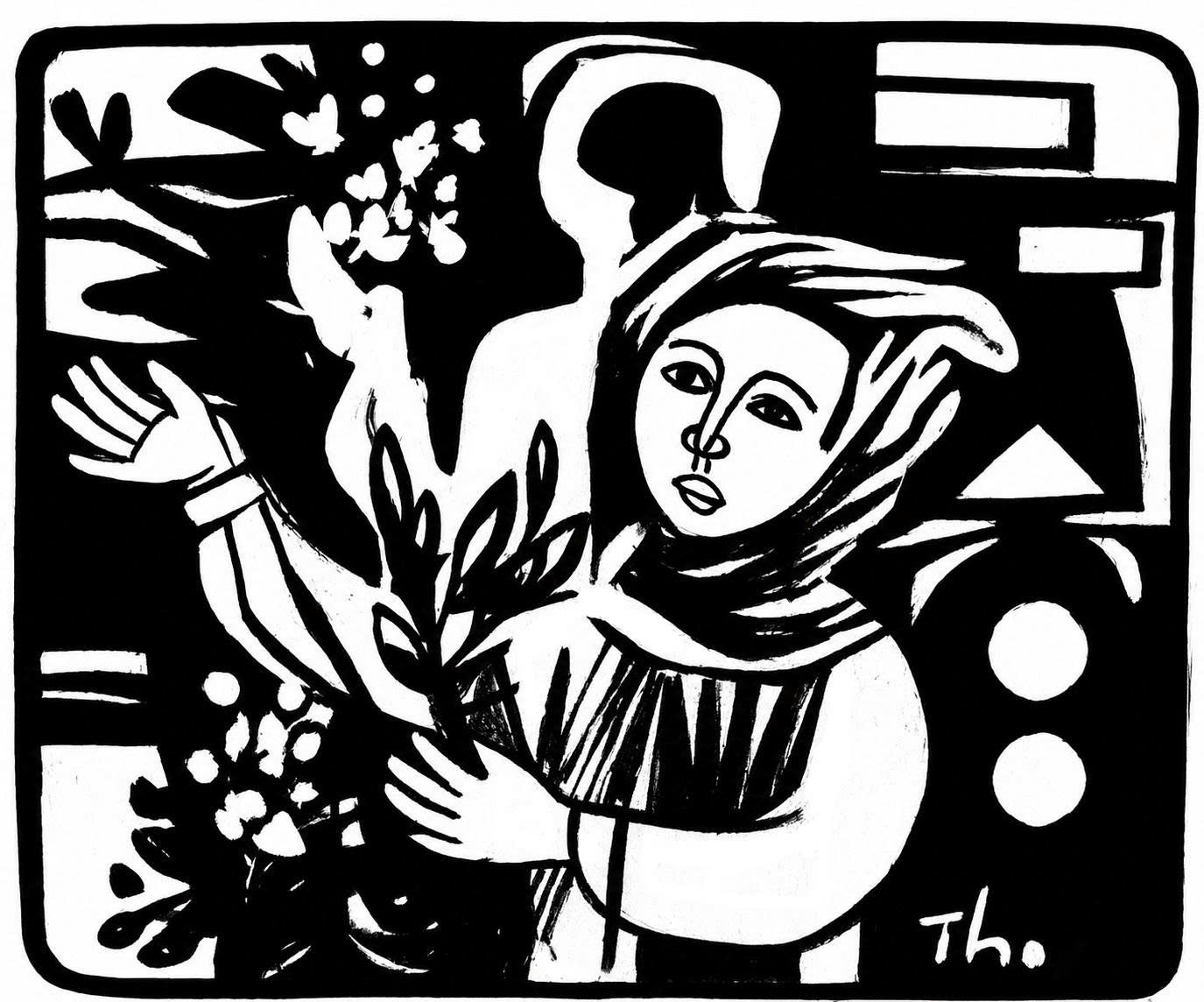
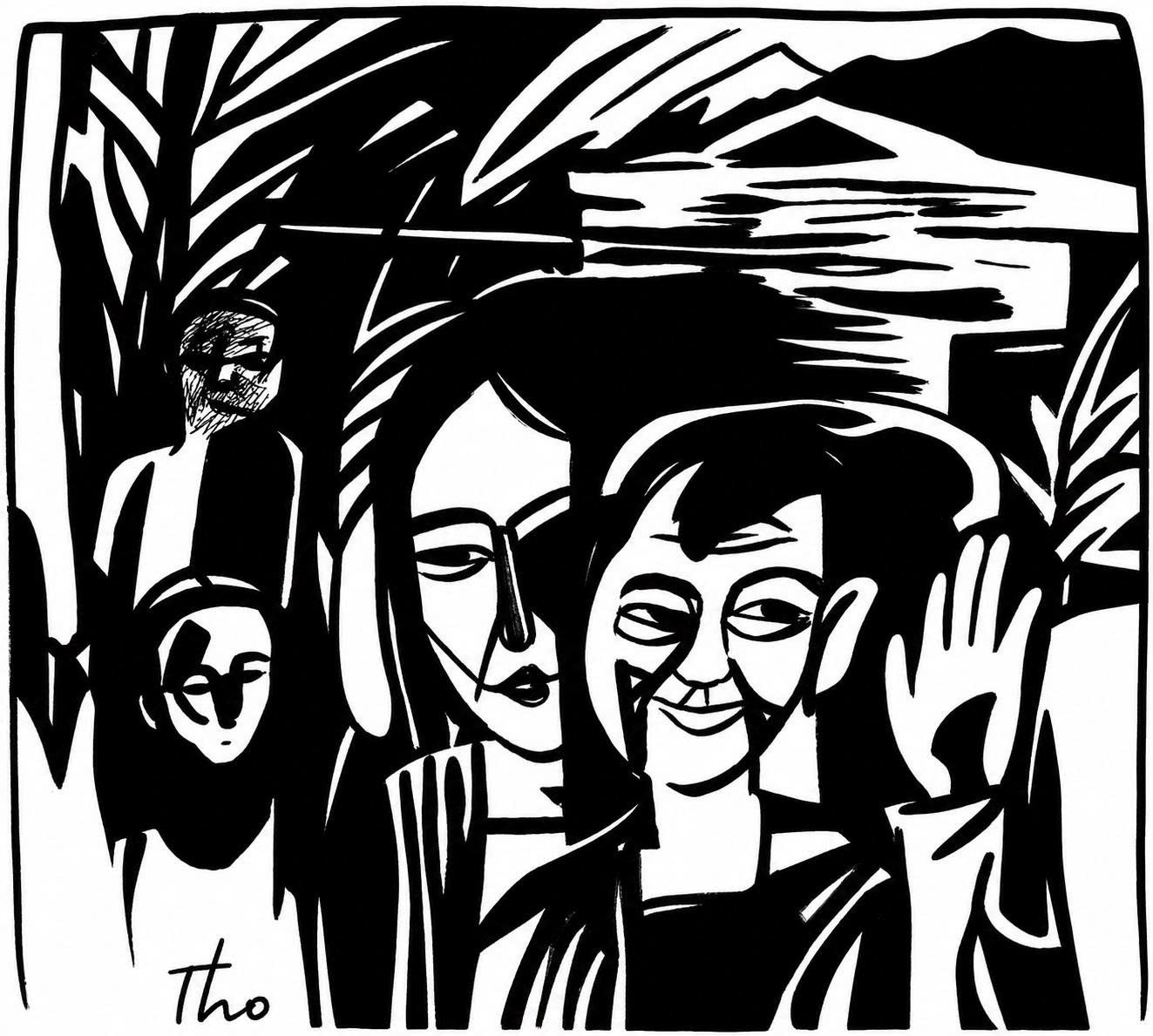
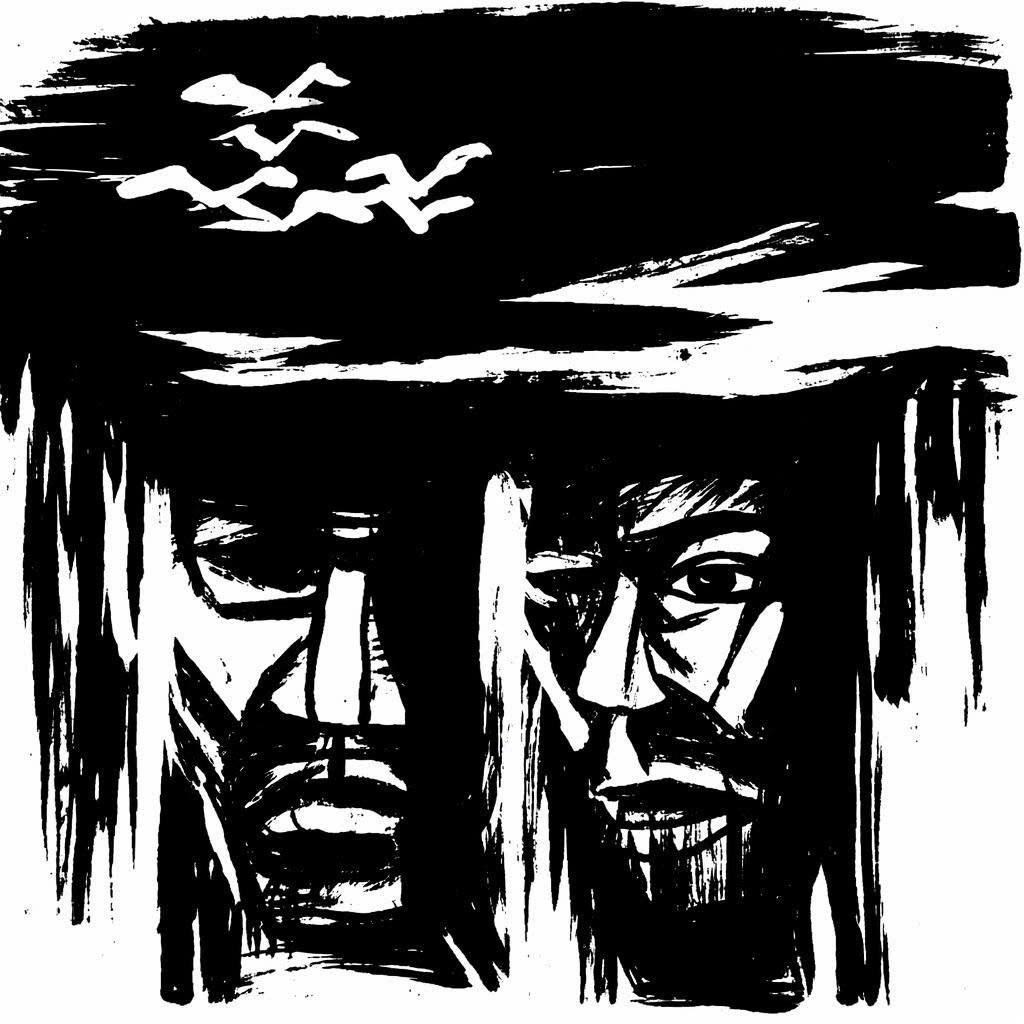
What earned him the respect of many colleagues was his literary sensibility. He believed that an illustrator must empathize with a literary work to capture the "essence" of a short story, poem, or essay. It was this ability to read, reflect upon, and empathize with the works that allowed his illustrations to transcend mere illustration, becoming works of art with a life of their own on the newspaper page.
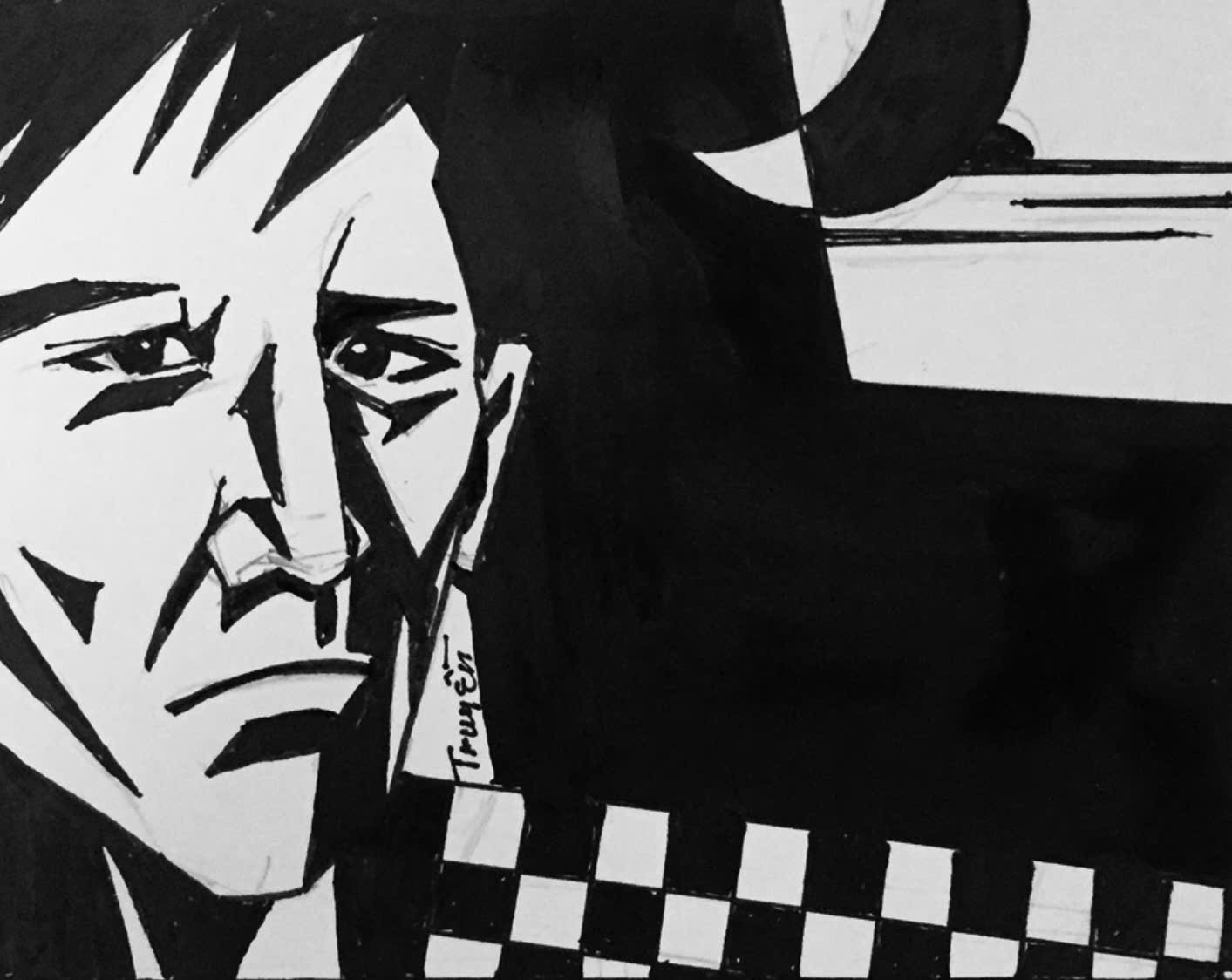
While Hoàng Hải Thọ's work reveals the experience and depth of an artist deeply involved with literature and art, artist Nguyễn Đình Truyền (born in 1958) leaves his mark with a concise and highly generalized style of painting.
.png)
According to artist Nguyen Dinh Truyen, illustrating for newspapers is more challenging when it's concise. The illustration must be simple enough for readers to easily understand, yet still ensure artistic depth and the ability to evoke associations. That's why he chose a style of illustration using clean, minimalist shapes, emphasizing lines and black and white tones.
"Essays, short stories, and novels often span many pages, featuring numerous characters and layers of events, but illustrations only consist of a single frame. Therefore, the artist must know how to select the central details and images that best evoke the spirit of the entire story," he shared.
Despite the ever-advancing graphic technology, artist Nguyen Dinh Truyen remains faithful to traditional painting methods. He believes that each direct brushstroke carries the emotions and creative personality of the artist. The shades of light and dark created by the pen and the artist's hands always possess a softness and fluidity that digital tools can hardly match.
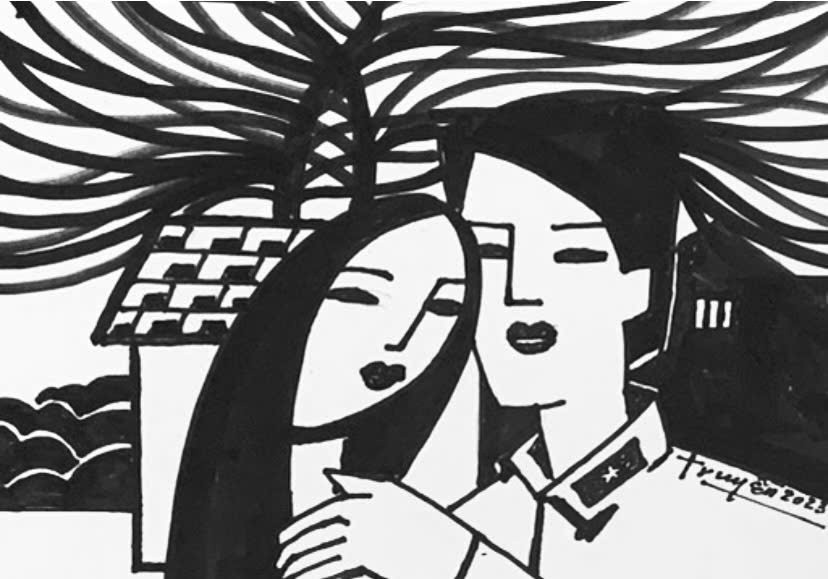
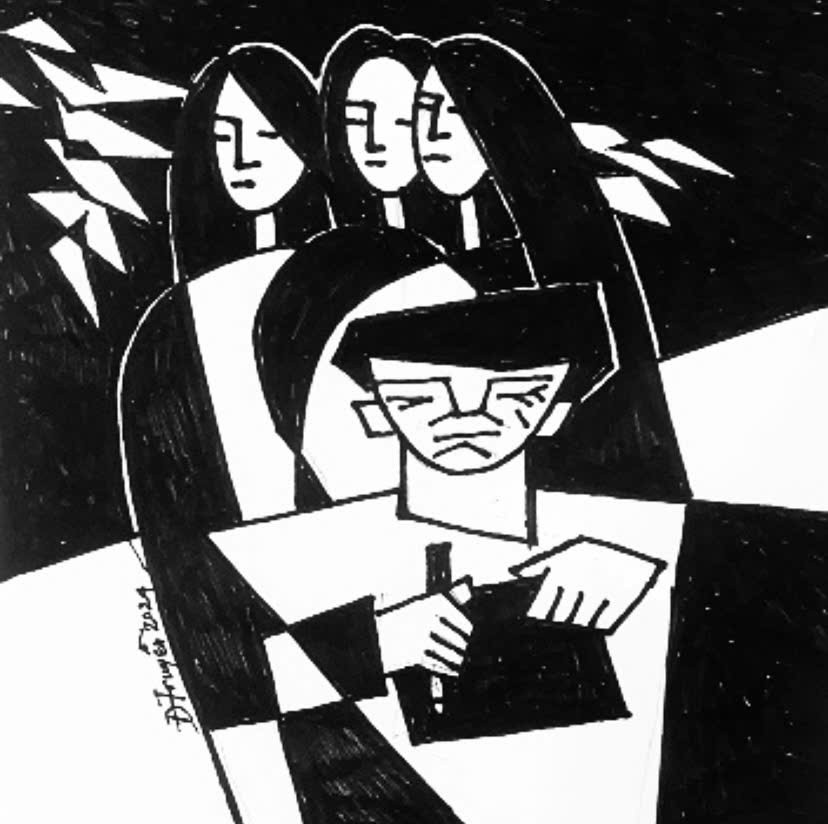
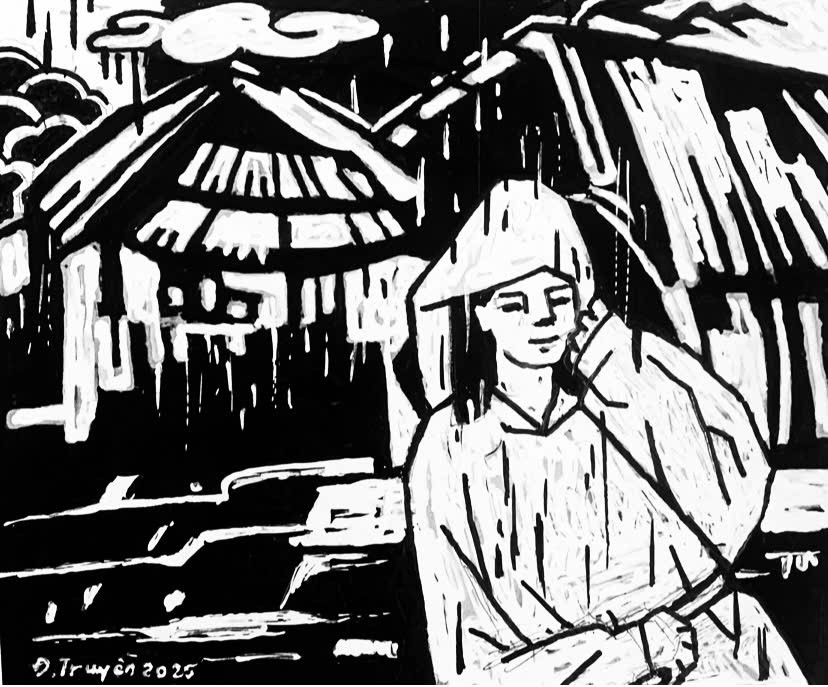
For artist Nguyen Huu Tuan, who worked for nearly 30 years at Nghe An Newspaper (now Nghe An Newspaper, Radio and Television), illustration has become an unforgettable milestone in his career. Under the pseudonym Vu Thuy, he has created over 1,000 illustrations for outstanding literary works.
He witnessed almost the entire shift in newspaper illustration from the manual to the digital age. In the late 1990s and early 2000s, illustrations were done entirely with ink. After completion, the drawings had to be photographed for plate making before being printed. Each illustration was the result of an elaborate process, requiring the artist to possess both artistic skill and the ability to adapt to the fast-paced nature of journalism.
.jpg)
One of the memories that he cherishes most is the story of the late artist Nang Dac, his predecessor in charge of illustration for Nghe An Newspaper. In 1998, when artist Nang Dac suddenly passed away, Nguyen Huu Tuan was assigned to take over the work. On his desk at that time, there were still unfinished sketches from his predecessor. Based on those lines, artist Huu Tuan continued to complete the work in time for publication. Many years have passed, and the specific content of the painting is no longer fully remembered, but the feeling of continuing a colleague's unfinished work remains in his memory as a meaningful story about the silent continuity between generations of artist-journalists, each brushstroke carrying both professional responsibility and respect for those who came before.
An illustrator's joy comes from very simple things. In his early years as an artist, Nguyen Huu Tuan received a letter from writer Dan Hoa, sent from Hanoi to Nghe An. In the letter, the writer expressed his admiration for the illustration for his short story and offered sincere encouragement to the young artist. For Huu Tuan, amidst days of hard work with ink and paper, and nights spent poring over newspaper clippings, that letter gave him renewed faith and motivation to persistently refine each brushstroke.
.jpg)
Between 2008 and 2010, having been familiar with traditional hand-drawing, artist Nguyen Huu Tuan began to teach himself to draw on a computer using Photoshop software.
It wasn't an easy change. The artist had to learn to master the computer mouse and entirely new graphic tools. The first strokes were clumsy, the shapes didn't quite convey the intended idea, but perseverance helped him adapt to the new way of working. Technology changed the tools of expression, but he affirmed that what never changed was the requirement to carefully read the work, find the most valuable details, and convey the spirit of the story through the language of painting.
Artist Nguyen Huu Tuan also recalls another significant milestone: the time when illustrations prominently appeared on the front page of Nghe An Newspaper in April 2012. Before that, illustrations were usually only found on the literary pages, in the inner pages, alongside the artwork as a supplement to the content. Gradually, the approach to newspaper presentation changed. Some illustrations for literary essays and notes were boldly placed on the front page, creating a distinct impression for some issues of the political newspaper.
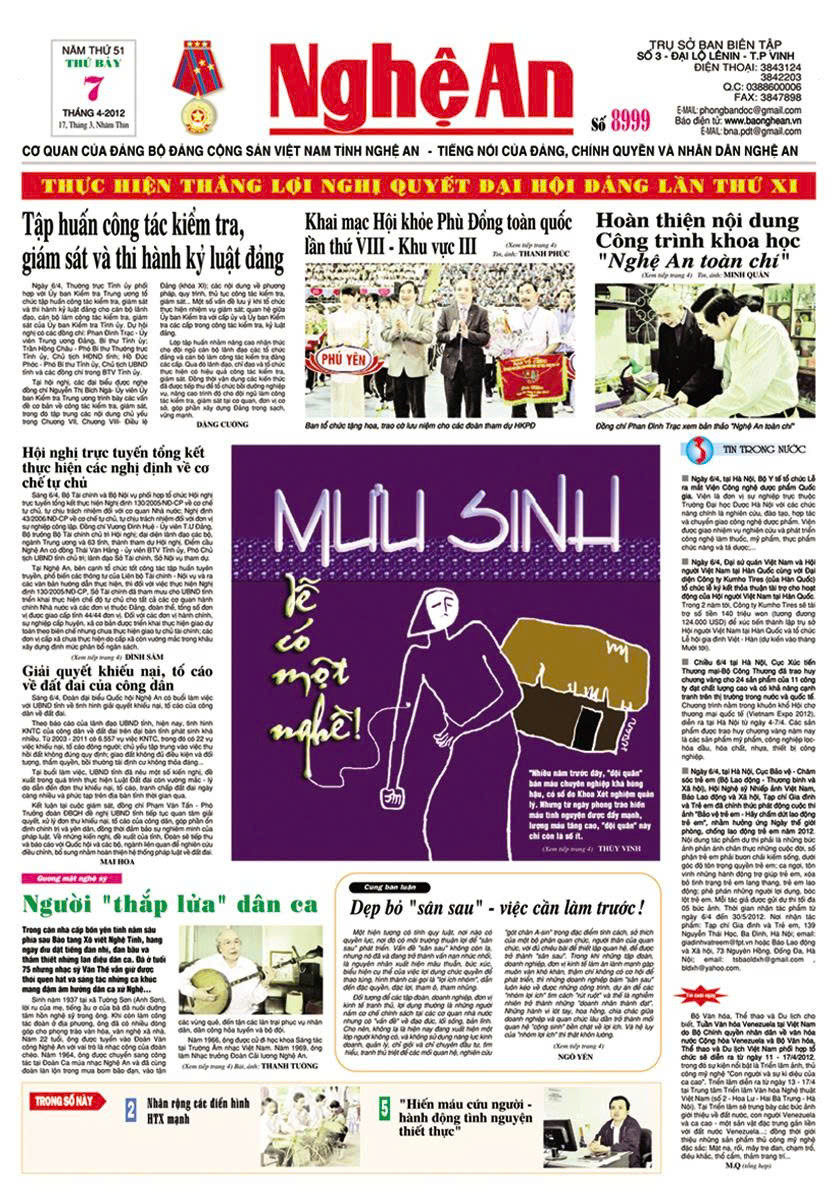
Recalling that period, Nguyen Huu Tuan said that the encouragement and trust of the leaders and editors of the editorial office gave him much creative inspiration. When illustrations were given a more prominent position, the artist also set higher standards for each work. Every line, every color was no longer simply to illustrate the article, but had to be strong enough to create visual impact, helping to guide the reader from the very first page. That was also the time when he began to more extensively explore computer graphic techniques, combining his artistic thinking with modern newspaper presentation to create works with a unique style.
Ngày nay, sự xuất hiện của tranh minh họa trên trang nhất có thể là điều bình thường. Thế nhưng, ở thời điểm ấy, đối với một tờ báo chính luận, đó là một bước đi khá táo bạo. Nó cho thấy sự trân trọng của tòa soạn đối với lao động sáng tạo của người họa sĩ, đồng thời khẳng định rằng, tranh minh họa không chỉ làm đẹp cho trang báo mà còn có khả năng tham gia vào quá trình kể chuyện, truyền tải cảm xúc và tạo bản sắc thị giác cho một ấn phẩm báo chí.
Những năm gần đây, sự xuất hiện của trí tuệ nhân tạo đã tạo ra một thay đổi lớn trong lĩnh vực sáng tạo hình ảnh. Chỉ với vài dòng mô tả, người dùng có thể nhận được một bức tranh hoàn chỉnh sau vài phút. Tốc độ ấy đặt ra nhiều câu hỏi về tương lai của minh họa báo chí. Dẫu vậy, các họa sĩ đều nhìn nhận rằng AI chưa thể thay thế phần cốt lõi nhất của nghề.
Theo họa sĩ Nguyễn Hữu Tuấn, một bức minh họa báo chí thực chất là quá trình chuyển dịch ngôn ngữ từ văn học sang hội họa thông qua bộ lọc cảm xúc và tư duy của người nghệ sĩ. Người vẽ phải đọc kỹ tác phẩm, hiểu nhân vật, hiểu bối cảnh, hiểu tâm trạng rồi mới lựa chọn hình tượng phù hợp. Điều hiện diện trong tác phẩm là kỹ năng tạo hình và hơn cả là sự thấu cảm đối với văn bản.
Ông cho rằng, AI có thể tạo ra hình ảnh trực quan đẹp và nhanh chóng, song vẫn thiếu đi dấu ấn cá nhân. Thực chất, những gì người xem cảm nhận được từ một bức tranh minh họa thành công thường đến từ phần vô hình của tác phẩm, đó là tâm trạng, trải nghiệm sống, sự rung động trước số phận con người hay vẻ đẹp của ngôn từ. Đó là thứ rất khó chuyển hóa thành “câu lệnh”.
.jpg)
.jpg)
.jpg)
.jpg)
Họa sĩ Nguyễn Đình Truyền cũng bảo lưu quan điểm tương tự. Sau nhiều năm gắn bó với mực tàu và giấy vẽ, ông vẫn lựa chọn phương pháp thủ công bởi tin rằng, nét bút của con người luôn mang một thần thái riêng. Trong cảm nhận của ông, tranh AI thường quá trơn tru, quá hoàn hảo về hình thức nhưng lại thiếu sự bất ngờ, phóng khoáng và cá tính. Một bức tranh minh họa đẹp cần có sự cách điệu, có những biến tấu nghệ thuật mang đậm dấu ấn của người cầm bút.
Tuy nhiên, nhìn AI như một “đối thủ tuyệt đối” cũng không phản ánh đầy đủ thực tế. Một số hoạ sĩ trẻ cho rằng, nên xem AI là công cụ hỗ trợ hữu ích; vấn đề nằm ở người sử dụng. Để tạo ra một hình ảnh phù hợp với tác phẩm văn học, người ra lệnh vẫn phải đọc kỹ, hiểu sâu và diễn đạt thật chính xác ý tưởng của mình. Chất lượng sản phẩm cuối cùng phụ thuộc rất lớn vào năng lực cảm thụ và tư duy của hoạ sĩ. AI có thể rút ngắn thời gian thực hiện, hỗ trợ xử lý hình ảnh hoặc mở rộng khả năng biểu đạt, thế nhưng việc lựa chọn lát cắt nào của tác phẩm, nhấn vào chi tiết nào, gửi gắm cảm xúc gì cho người đọc vẫn là quyết định mang tính sáng tạo của hoạ sĩ.
Nhìn từ một góc độ khác, giá trị của tranh minh họa báo chí còn nằm ở khả năng vượt ra khỏi vai trò phụ trợ cho văn bản để tồn tại như một tác phẩm nghệ thuật độc lập, ẩn chứa đời sống thẩm mỹ riêng. Khi tách khỏi bài viết, bức tranh vẫn có thể gợi mở cảm xúc, truyền tải thông điệp và được thưởng thức bằng chính ngôn ngữ hội họa của nó.
Thực tế cho thấy, không ít tác phẩm minh họa báo chí đã bước ra khỏi khuôn khổ trang báo để tham gia các cuộc triển lãm mỹ thuật chuyên nghiệp. Họa sĩ Hoàng Hải Thọ từng đoạt giải C tại Triển lãm Mỹ thuật khu vực Bắc Trung Bộ năm 1999 cho chùm tranh minh họa trên Tạp chí Sông Lam. Hoạ sĩ Nguyễn Hữu Tuấn từng có chùm tranh minh hoạ tham gia Triển lãm minh hoạ toàn quốc năm 2023. Để thấy, những nét bút được tạo nên từ sự rung cảm trước văn chương vẫn giữ một vị trí riêng; phía sau mỗi bức tranh minh họa là sự đối thoại âm thầm giữa hội họa và văn học, giữa người nghệ sĩ với tác phẩm và với chính bạn đọc.
Phước Anh