Artist Nguyen Dinh Truyen and his enduring "dialogue" with paper.
Phuoc Anh•June 27, 2026 10:40
In an era where art is increasingly caught up in the speed of technology, digital printing, and surfaces created very quickly with software, the studio of artist Nguyen Dinh Truyen (Thanh Vinh ward) still maintains its own steady rhythm.
Perform:Phuoc Anh •27/06/2026
In an era where art is increasingly caught up in the speed of technology, digital printing, and surfaces created very quickly using software, the studio of artist Nguyen Dinh Truyen remains a significant challenge.(Thanh Vinh Ward)still maintaining its own rhythmenduringThere was paper, a knife, glue, paint, and repetitive tasks that seemed almost impossible.like austerity. And there, there isA man nearing seventy years of age remained quiet.,Working meticulously with the most delicate material, yet demanding an exceptionally strong and unwavering will., that isPaper cutout art.
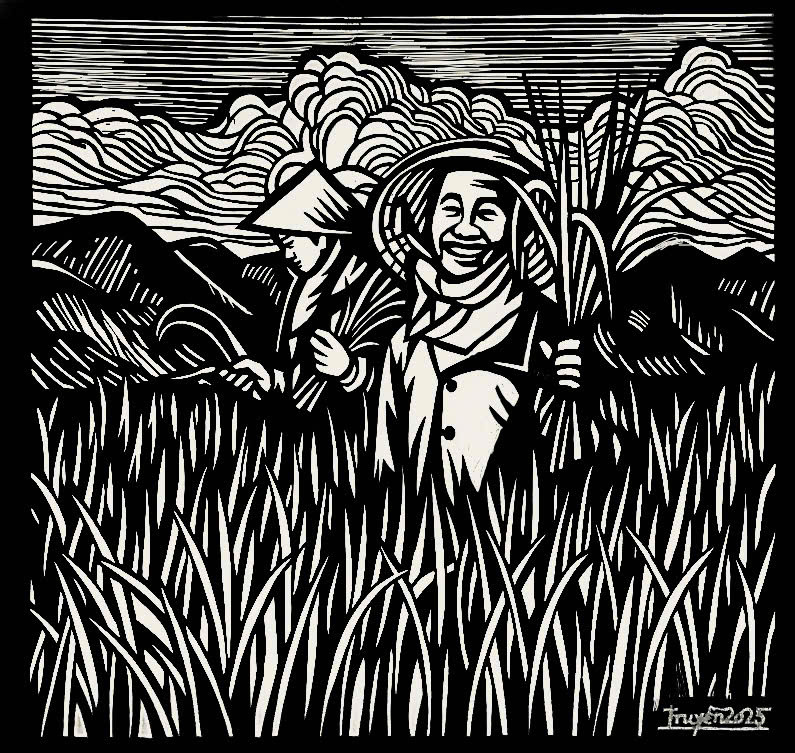
Nguyen Dinh Truyen is a familiar face in the art scene of Nghe An and the North Central region of Vietnam. Having dedicated almost his entire life to painting, he has experimented with and left his mark in many mediums, from graphic art and woodblock printing to propaganda paintings and thematic paintings. However, in recent years, when mentioning Nguyen Dinh Truyen, art professionals and enthusiasts immediately think of paper-cutting art – a difficult path requiring patience, high precision, and persistent hard work. From this delicate medium, the artist has created a world of visual art imbued with the breath of life, where the rhythm of labor, the beauty of the countryside, and folk aesthetic sensibilities "meet" in each stroke of the carving knife.
In a small house nestled deep in an alley on Dang Tat Street, Thanh Vinh Ward, the living space of painter Nguyen Dinh Truyen is almost entirely his art space. From the narrow courtyard in front of the house to the inner room, everywhere you look you see paper, paints, picture frames, stacks of sketches, and the faint smell of glue on his work desk. In this space, Nguyen Dinh Truyen sits silently beside sheets of paper already marked with numerous lines, meticulously working with a small carving knife. This scene makes it easy for anyone to forget that they are facing an artist who has passed the age of seventy; he still retains the focus, perseverance, and patience of someone deeply committed to each stroke of the knife, each piece of paper.
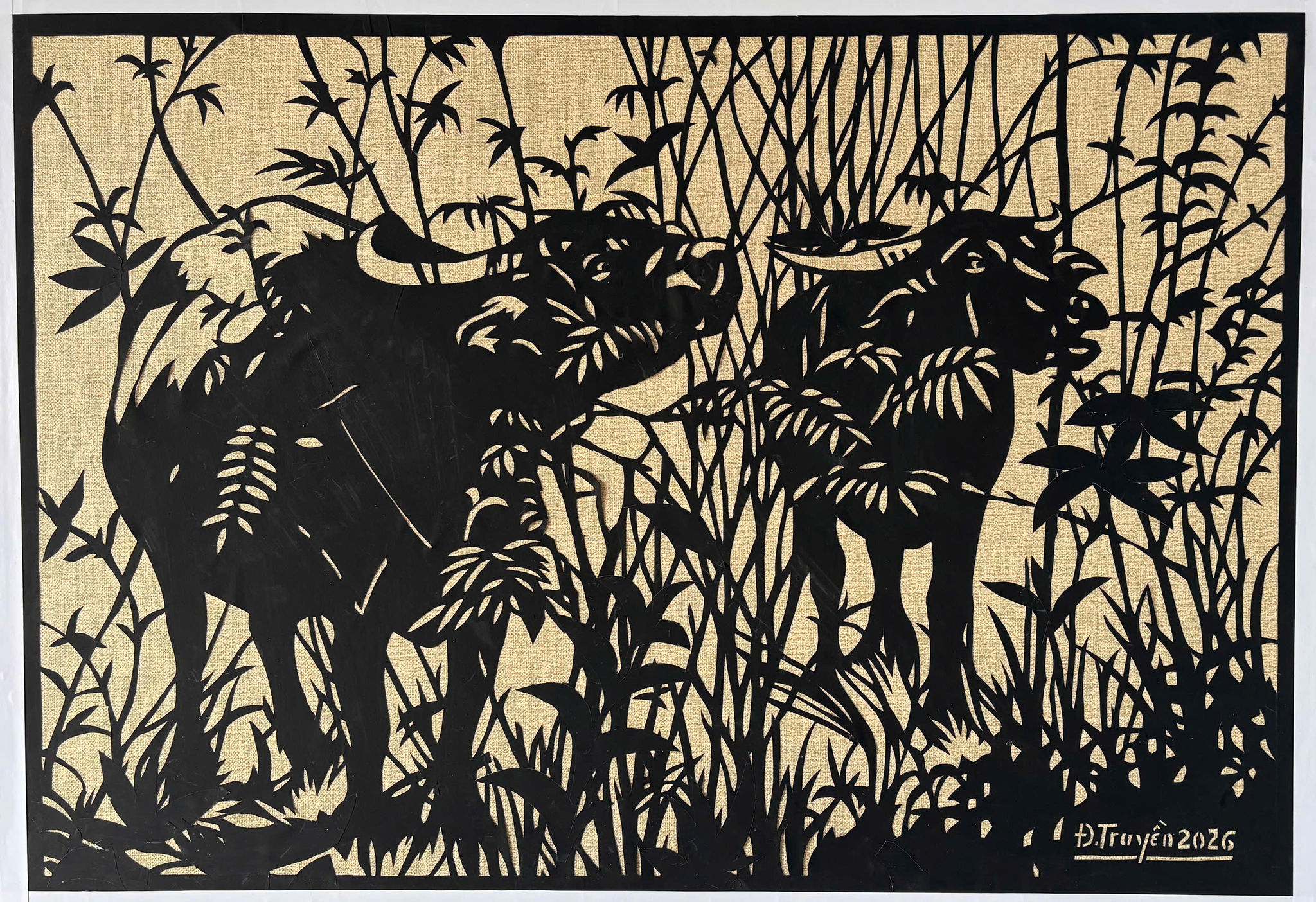
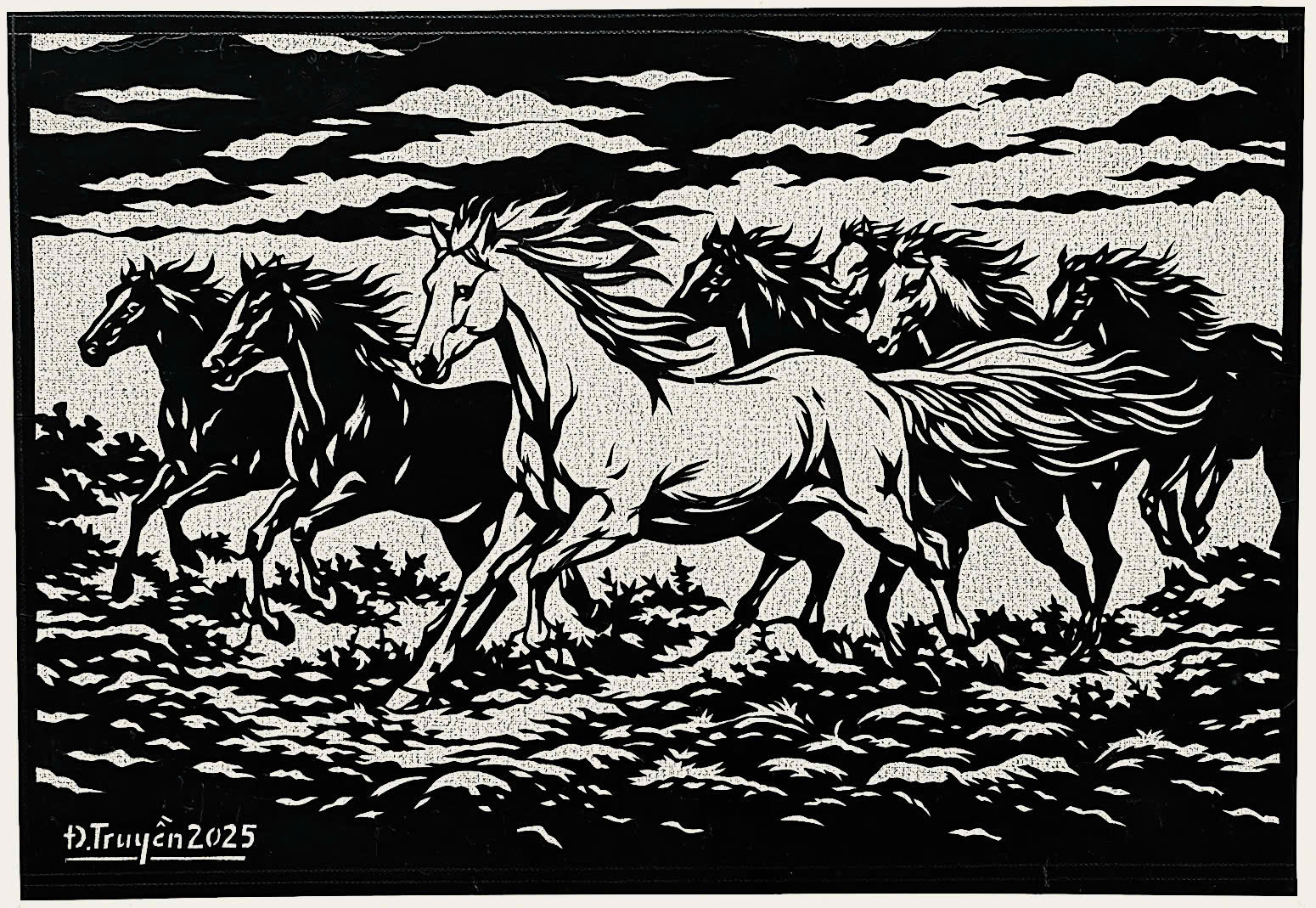
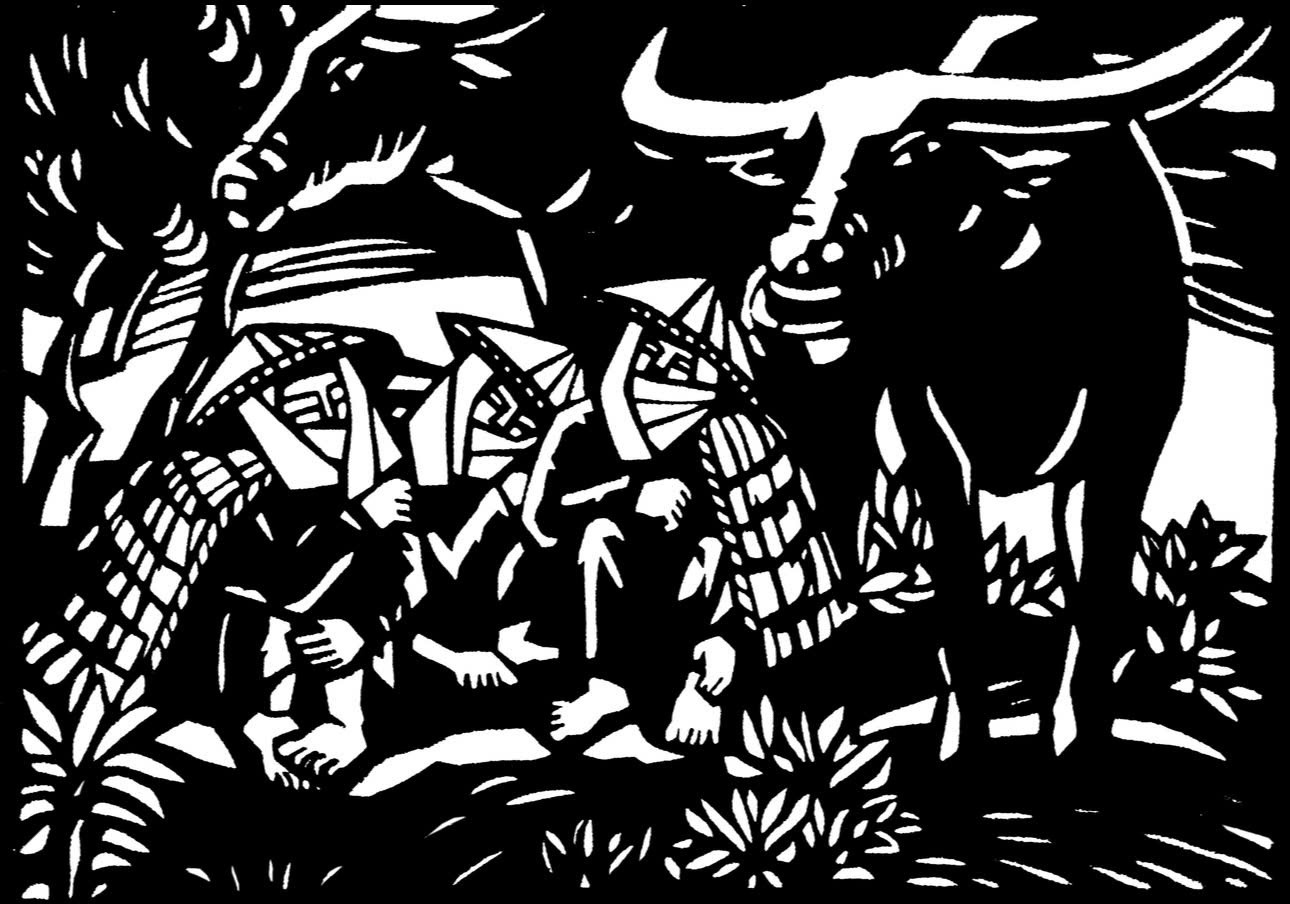
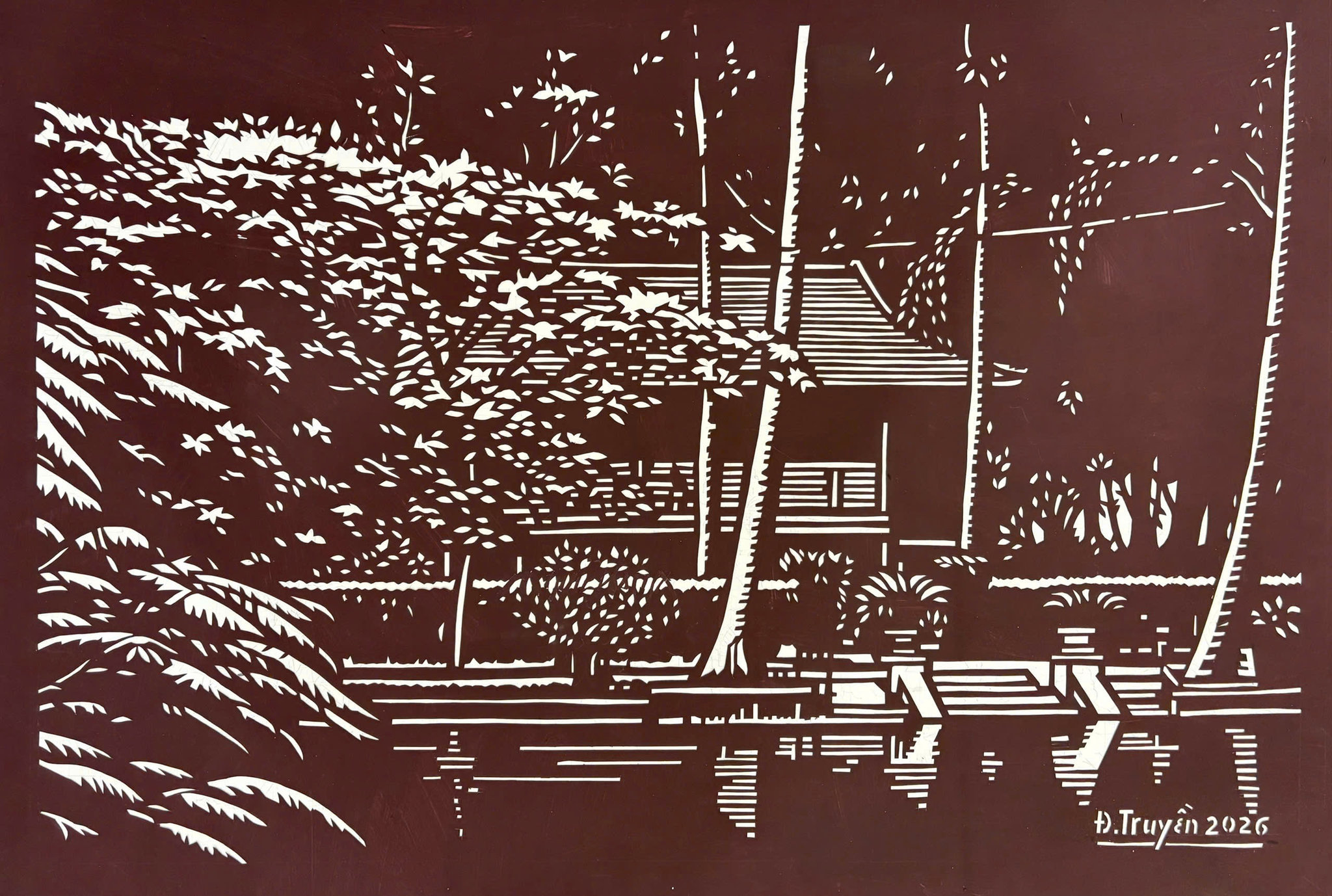
The familiar animals in Vietnamese life are vividly and exquisitely depicted in paper-cut paintings by artist Nguyen Dinh Truyen. (Photo: Provided by the artist)
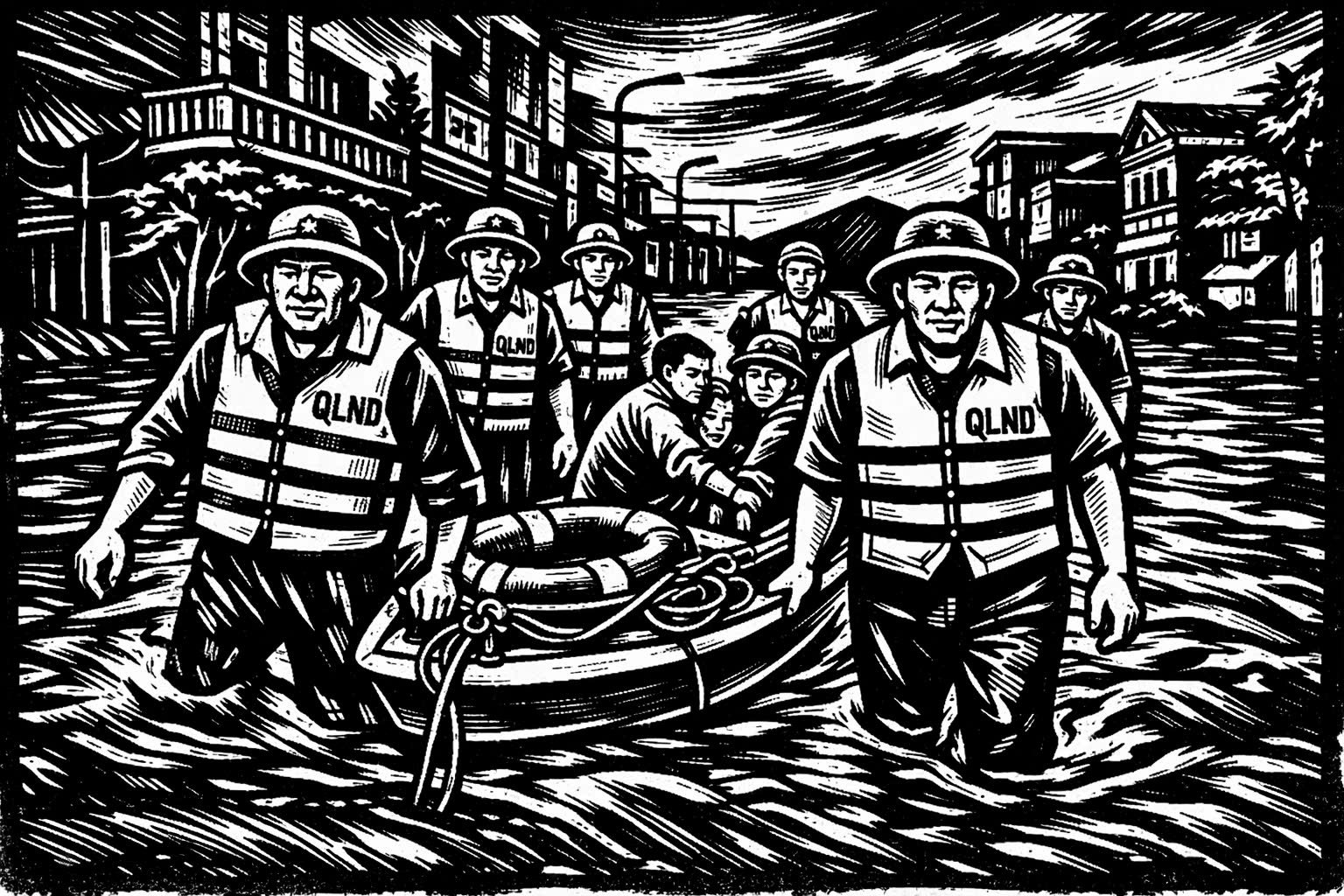
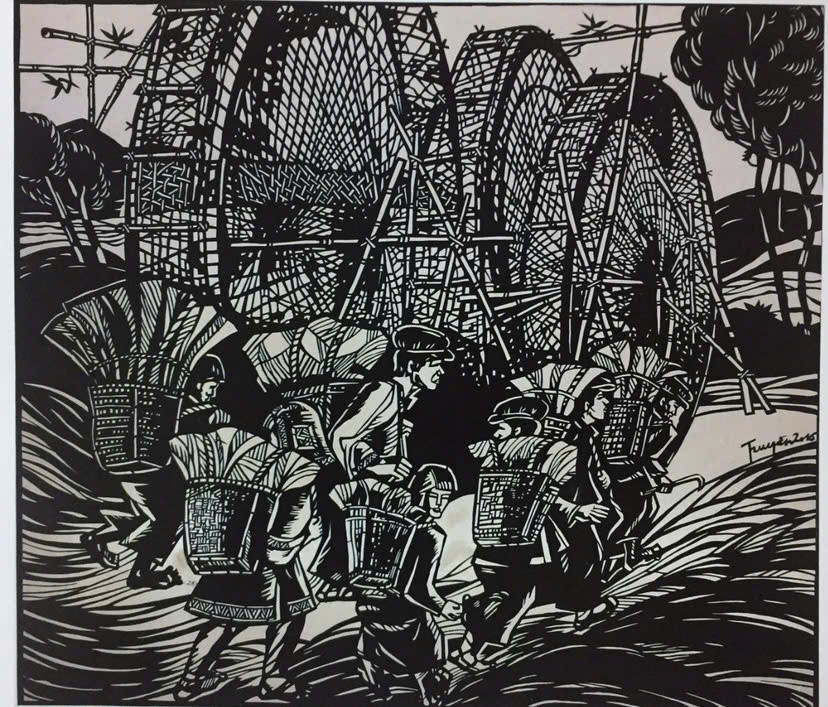
Looking at Nguyen Dinh Truyen's paper-cutting artworks, from "Soldier on the Construction Site," "Sunset on Lach Corn Bridge," "Forest Changing Leaves," "Young Buffaloes,"... to "Areca Flowers," "Forest Flowers,"... what strikes the viewer first is the sheer depth of his labor. His paintings don't create an immediate visual impact through flashy effects. Instead, they captivate the viewer with the density of detail, the rhythm of solid and void spaces, and the feeling of images being gradually carved out from the paper. There are construction sites with cranes and scaffolding, the rhythmic movement of groups of workers; there are highland markets, festivals, forest flowers, and paintings depicting President Ho Chi Minh, the sea and islands, and sunsets of his homeland... All are constructed with knife strokes across the paper as if navigating a treacherous "terrain." A single misstep, a broken support structure, a misaligned base layer, or a failed foundation work could mean the entire painting has to be redone from scratch.
"Making small paintings is easy, but making large-scale paintings is extremely difficult. This genre leaves no room for impatience. It's very easy for artists to get discouraged and want to give up everything," confided artist Nguyen Dinh Truyen.
It's understandable why paper-cutting art isn't a genre many artists choose to pursue long-term. Broadly speaking, paper-cutting art in Vietnam isn't a traditional art form as strongly developed as woodblock prints, woodblock prints, or folk art for worship. In the treasury of folk art, the clearest traces of this art form remain in Dong Ho village, existing as a separate branch, situated at the intersection of painting and crafts serving religious beliefs and festivals. The artisans use knives, chisels, and pointed tools to cut open the paper, creating decorative motifs and familiar images from folk life such as pine, chrysanthemum, bamboo, plum blossom, and the 12 zodiac animals…
For artist Nguyen Dinh Truyen, his journey into paper-cutting art wasn't driven by a trendy new medium, nor by a fleeting desire to experiment. Its roots lie deep within his own life of manual labor.
Before becoming known as a paper-cutting artist, he was involved in his family's manual printing business during a time of economic hardship, when hand-cutting, stenciling, and plate-making were commonplace. These seemingly purely manual tasks quietly honed his skills in cutting, eye perception, and precision. Combined with formal graphic design training, he gradually realized that his past experiences could be further developed into an independent creative style. Around 2008, Nguyen Dinh Truyen began devoting significant effort to paper-cutting art; just a few years later, his first works in this genre brought him considerable success.
Nguyen Dinh Truyen believes that paper-cutting art is a genre capable of handling grand themes, complex compositions, and even contemporary aesthetic ideas. Only by examining each stage of the paper-cutting process can one truly appreciate its meticulousness. The artwork usually begins with a small, black-and-white sketch. Unlike conventional painting, paper-cutting requires the artist to visualize the work in a "mirror" style, with many details calculated in reverse so that when the painting is flipped over, the image returns to the desired orientation.
From that sketch, he enlarged the image onto a large sheet of paper, then began the carving process. This stage demanded almost absolute concentration. Each stroke of the knife was both a shaping operation and a structural decision. Cutting too much could tear the paper apart; holding too tightly would make the carving stiff and heavy; even a single weak stroke could ruin the rhythm and emotion of the entire painting. Some works with fewer details allowed the artist to proceed slowly; but with large-scale paintings, with many layers of images and densely packed figures like "Soldier on the Construction Site," "New Rhythm of Life," or paintings of festivals and markets, the carving process could last for weeks, even months.
After the paper cutting is complete, the next step is mounting the paper – a process that artist Nguyen Dinh Truyen considers the greatest challenge in paper-cutting art. The cut paper is now more fragile than ever; a slight misalignment will tear it, and a slight misalignment will cause it to wrinkle. Once wrinkled or misaligned, it's very difficult to salvage. He chooses a mica base material with good flexibility, flatness, and moisture resistance, then uses a specially formulated glue to mount the image. This step requires as much precision as handling a knife, because if the base doesn't adhere well to the paper, or the glue isn't strong enough, the artwork is very likely to peel, blister, or become moldy over time. It can be said that paper-cutting art is only truly complete after overcoming the mounting process; only then can everything the artist has painstakingly created stand firm as a whole.
Finally, color comes last. This also shows that Nguyen Dinh Truyen has moved quite far from the traditional folk paper-cutting style. Traditional Dong Ho paper-cutting paintings tend to lean towards decorative function; if colors are used, they follow a simple folk style, associated with a familiar symbolic system. But with Nguyen Dinh Truyen, color not only serves as a background for the cut areas but directly participates in creating the aesthetic atmosphere of the work. He uses color to highlight the depth of space, to emphasize the rhythm of the composition, and to increase the vibrancy of already densely packed shapes. The color in Nguyen Dinh Truyen's paper-cutting paintings helps prevent the work from becoming rigid and technical.
The most significant difference lies in the artistic approach. While traditional Dong Ho paper-cutting paintings primarily operate on stable, decorative, and folk-inspired motifs, artist Nguyen Dinh Truyen infuses this medium with a modern graphic mindset, a strong awareness of grand composition, and the breath of contemporary life. He inherits from traditional paintings the spirit of restraint and rhythmic lines, yet elevates paper-cutting paintings beyond the realm of "handicrafts." Nguyen Dinh Truyen chooses a challenging style of expression, incorporating construction sites, massive architectural structures, labor groups, and scenes of daily life with numerous characters and layers of space. This choice alone shows that he does not consider paper-cutting a mere decorative pastime. He wants this medium to carry the breath of contemporary life, the scale of the new rhythm of life, and the social spirit within the paintings.
Therefore, when viewing Nguyen Dinh Truyen's paintings, one can discern two layers of time coexisting. One layer belongs to tradition, in the cutting and carving techniques, in the craftsmanship, in the almost ascetic patience with the paper. The other layer belongs to modernity, in the way he expands the scope of subject matter, organizes space, and treats the paintings as a graphic whole capable of engaging in dialogue with contemporary life.
At nearly seventy years old, artist Nguyen Dinh Truyen still chooses to sit quietly and patiently at his paper-cutting table, persistently pursuing a genre that is both demanding in its practitioners and discerning in its viewers. Over 18 years dedicated to paper-cutting art is also the same amount of time he has maintained a quiet "dialogue" with this fragile yet challenging medium – a "dialogue" through his craftsmanship, his patience, and the experience accumulated after each time he picks up the knife, prepares the paper, and handles the colors. Looking at this journey, one can see that Nguyen Dinh Truyen's paper-cutting art is the result of many years of serious work, of an artist who wants to pursue his chosen path to the very end…
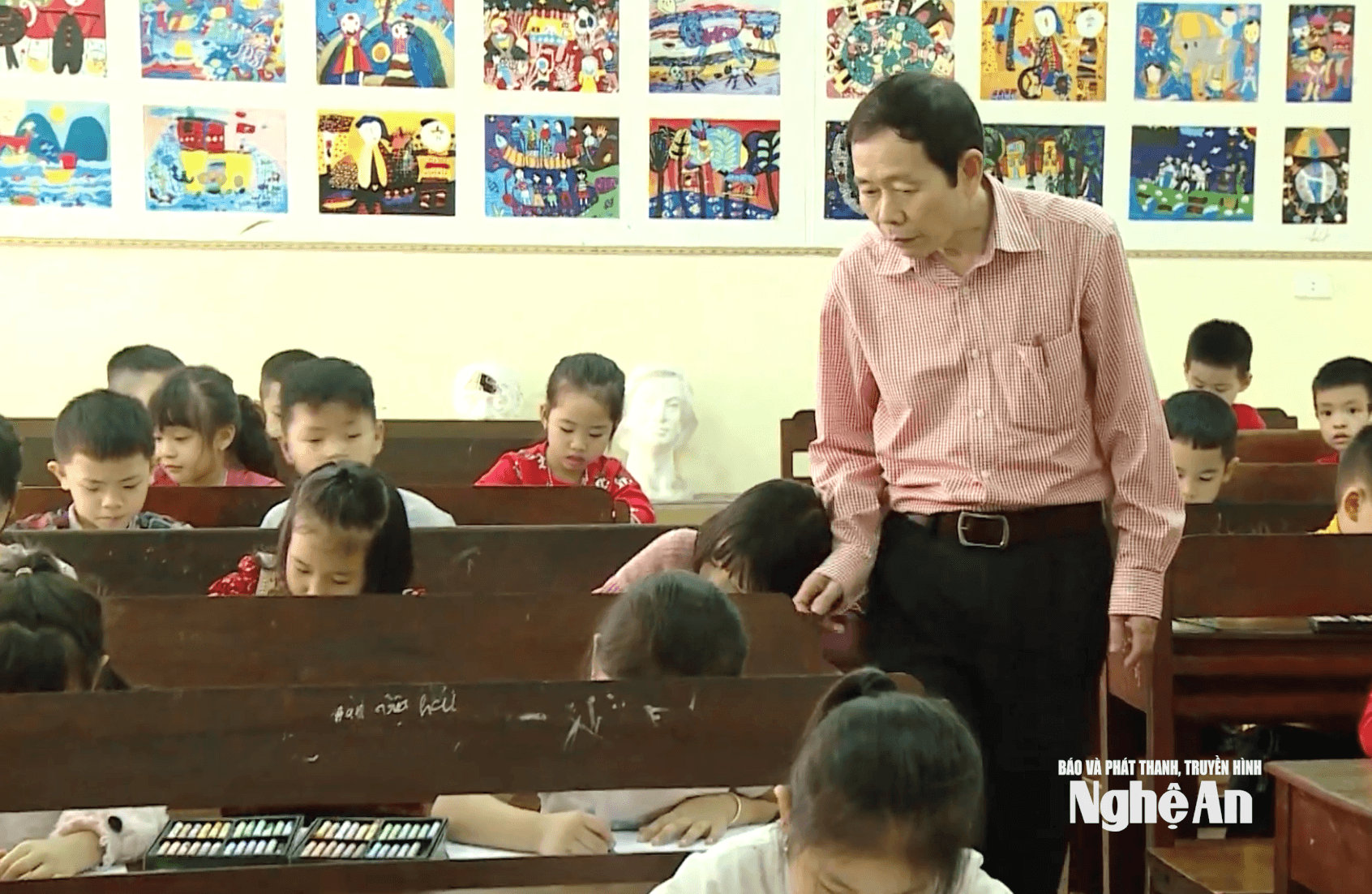
Artist Nguyen Dinh Truyen in a drawing class for children.
Artist Nguyen Dinh Truyen (born 1958) Notable awards: - Medal for Contributions to Vietnamese Fine Arts. - Third Prize of the Vietnam Union of Literature and Arts Associations (2002) with the work "Evening in the Village". - Second prize in the North Central region (2016) with the work "Forest Flowers" (paper cutout painting). - Encouragement Award in the North Central region (2019) with the work "Highland Market" (paper cutout painting). - Third Prize at the Northern Central Region Fine Arts Exhibition (2021) with the work "Soldier on the Construction Site" (paper cutout painting). - Second Prize at the North Central Vietnam Fine Arts Exhibition (2023) with the work "New Rhythm of Life" (paper-cutting painting). - Participate in the ASEAN Fine Arts Exchange Exhibition 2025.


.png)